SDS rotary hammers: SDS-plus vs SDS-max, joules and chisel mode
How a rotary hammer differs from a hammer drill, what SDS-plus and SDS-max mean, how to read impact energy in joules, and how to drill and chisel masonry well.
Anyone who has tried to drill concrete with an ordinary hammer drill knows the feeling: lots of noise, lots of pushing, and a hole that barely deepens. An SDS rotary hammer does the same job with a fraction of the effort, and many can also chisel off tiles or cut channels for cables. This guide explains how rotary hammers work, the difference between SDS-plus and SDS-max, what the impact energy figure in joules tells you, and how to drill masonry cleanly and safely.
Why a rotary hammer beats a hammer drill
A hammer drill uses two ridged discs that ride over each other, producing a fast, light vibration. The hammering comes largely from you pressing on the tool, which is fine for a few holes in brick for wall plugs, but slow in concrete.
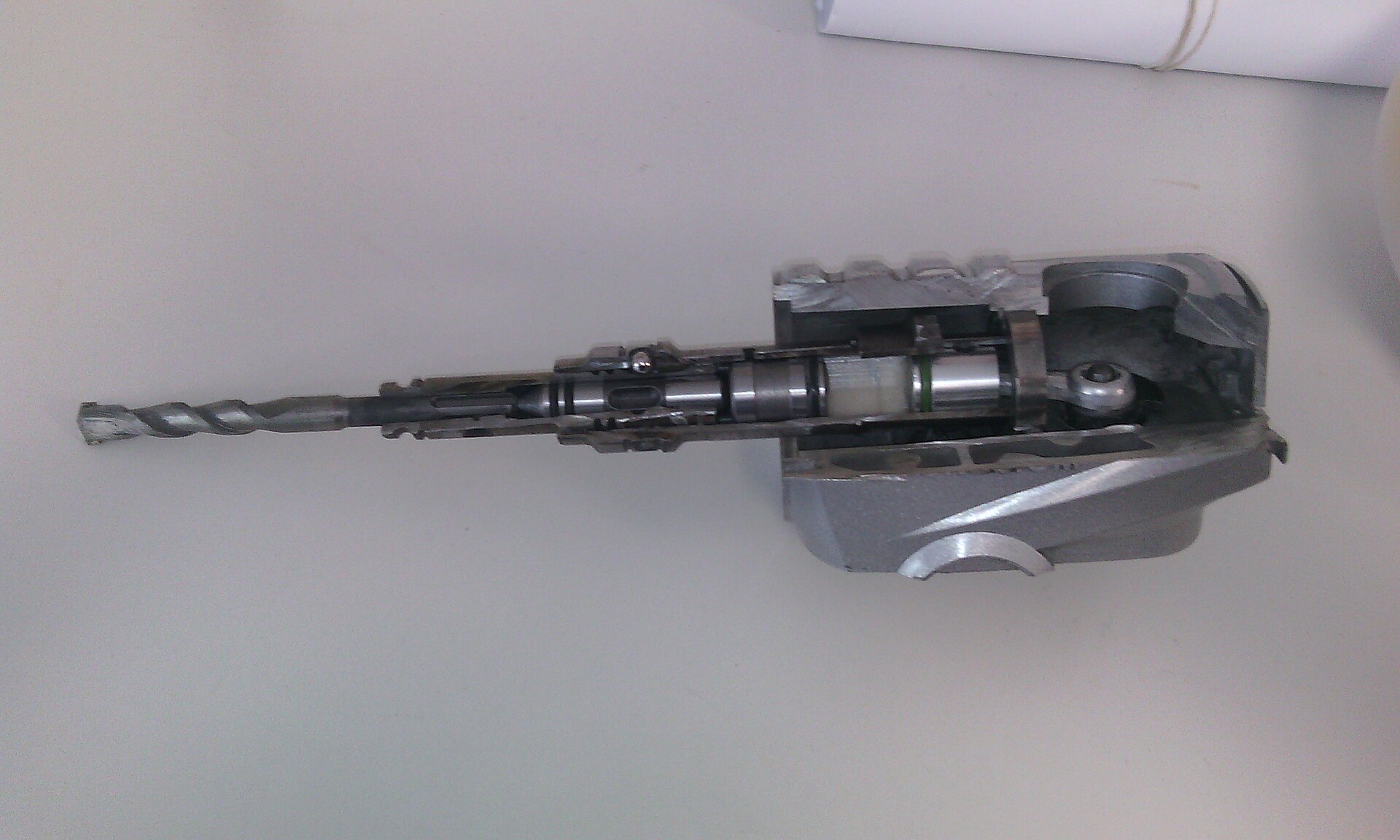
A rotary hammer uses an electro-pneumatic mechanism. The motor drives a piston back and forth, which pushes a cushion of air against a free-moving striker, and the striker hits the back of the bit. The blows are much harder and come from the tool, not from your weight, so you only need to guide it with light, steady pressure.
| Hammer drill | SDS rotary hammer | |
|---|---|---|
| Mechanism | Ridged discs (mechanical) | Piston and air cushion (electro-pneumatic) |
| Impact | Many light blows | Fewer, much harder blows |
| Bits | Round or hex-shank masonry bits in a chuck | SDS bits that slide in the holder |
| Chiselling | No | Usually, on models with a chisel mode |
| Best for | Occasional small holes in brick | Concrete, stone, frequent or larger holes |
Our guide to drills and impact drivers explains where the hammer drill fits.
What SDS means
SDS is a bit-holding system developed in Germany in the 1970s and now used across the industry. The bit's shank has grooves that lock into the tool. It isn't clamped like a drill chuck: the bit can slide back and forth inside the holder, which lets the striker hit it directly instead of shaking the whole tool. You push the bit in until it clicks, and pull back the collar to release it.
- SDS-plus bits have a 10 mm shank and are by far the most common. SDS-plus tools are typically two to four kilograms and suit drilling holes for fixings, anchors, pipes and cables in walls and floors, typically up to around 26–30 mm in diameter with solid bits, plus light chiselling.
- SDS-max bits have an 18 mm shank and are made for heavier tools, larger holes, core drilling and demolition work. SDS-max machines are heavier and are typically used by trades, or hired for specific jobs.
The two shank types aren't interchangeable without an adapter, and adapters are best avoided for heavy work. A third, less common size, SDS-top, sits between them.
Joules: reading impact energy
The most useful figure for comparing rotary hammers is single-impact energy, in joules (J): how hard each blow hits.
- Compact SDS-plus models: roughly 1–2 J, for smaller holes and lighter jobs.
- Mid-size SDS-plus models: roughly 2–4 J, the all-rounders for general DIY and renovation.
- SDS-max models: from around 5 J up to well over 10 J for large combination hammers and demolition hammers.
Manufacturers now generally quote energy using a common European measurement procedure (EPTA 05/2009), which makes figures more comparable than they used to be. Older or unspecified figures may be inflated, so compare tools whose energy is measured the same way.
You'll also see blows per minute (bpm) and speed (rpm). More blows at the same energy drill faster, but a higher joule figure usually matters more in hard concrete.
Rule of thumb: 2 to 3 J of SDS-plus covers most home jobs, from shelf fixings in concrete to cable holes through walls. Choose SDS-max only for regular large holes or demolition, or hire one when you need it.
Modes and chisel work
Most SDS-plus tools have a selector with three or four positions:
- Rotation only: for drilling wood or metal. You need a separate keyless chuck adapter for round-shank bits. A rotary hammer has no clutch and is heavy, so a normal drill does this better.
- Rotary hammer: rotation plus hammering, for drilling masonry.
- Hammer only: for chiselling, on models that offer it.
- Chisel position (often called vario-lock or similar): frees the chisel to rotate so you can set its angle, then lock it.
In chisel mode, SDS-plus handles light demolition: lifting tiles with a wide tile chisel, cutting small channels for cables, removing mortar, cleaning up concrete edges. Pointed and flat chisels and wide scaling blades are all available with SDS shanks. For larger demolition, such as breaking up a slab, an SDS-max tool or a dedicated demolition hammer is the right tool.
Corded or cordless, L-shape or inline
Cordless SDS-plus hammers in the 18 V class are now common and handle most household work well, especially with a higher-capacity battery. Larger cordless models use higher-voltage platforms. Corded tools still give the most sustained power for long sessions and are often lighter for their energy. Our guide to cordless tool battery platforms explains how to choose a system.
Shape affects handling:
- Inline (pistol) designs are compact and lighter, good for overhead work and tight spaces.
- L-shaped designs, with the motor upright, are usually more powerful and better balanced for horizontal drilling and chiselling.
Other useful features:
- Safety (slip) clutch: disengages the drive if the bit jams. Some tools add electronic kickback control, which cuts the motor if the body starts to spin.
- Anti-vibration handles reduce fatigue over long sessions.
- Side handle with a depth rod for consistent hole depths.
- Dust extraction attachments that capture dust at the hole.
Drilling masonry cleanly and safely
- Check for cables and pipes before drilling into walls and floors. Our guide to stud finders and detectors explains how they help, but they aren't infallible.
- Use the right bits. SDS masonry bits with four-cutter carbide heads cope better with hard aggregate and stay on line. Our drill bits guide covers bit types.
- Start gently. Begin at low speed to locate the hole, then increase.
- Through tiles: drill the tile with rotation only, using a tile bit, then switch to hammer mode for the masonry behind.
- Let the tool work. Light, steady pressure; pushing hard slows the blows and overheats the bit. Pull the bit out occasionally to clear dust.
- Hitting steel reinforcement: if progress suddenly stops in concrete, you may have hit rebar. Stop and move the hole if you can. In structural concrete, don't cut reinforcement without advice from a qualified professional.
- Hold it with both hands and brace for the bit catching, especially with larger bits.
Concrete and masonry dust contains crystalline silica, which is harmful to breathe. Use dust extraction or a suitable respirator, plus eye and hearing protection. See our guides to workshop safety gear and dust extractors, and check the current rules for work on older buildings, where materials may contain hazardous substances.
Buy or hire
If you only need a rotary hammer for one renovation, hiring makes sense, particularly for SDS-max. If you regularly hang things on concrete walls, run cables or renovate, a mid-size SDS-plus tool quickly earns its place alongside a regular drill.
The short version
- Drilling concrete regularly? An SDS rotary hammer is far faster than a hammer drill.
- SDS-plus (10 mm shank) for home and general trade use; SDS-max (18 mm) for large holes and demolition.
- Compare impact energy in joules: about 2–3 J suits most home jobs.
- Look for hammer-only and chisel-position modes if you want to chisel.
- Choose cordless for convenience, corded for long sessions.
- Check walls for cables and pipes, use four-cutter bits, and control silica dust.
Bloiq is reader-supported. Some links may earn us a commission; it never affects what we write. How we make money.
Cover photo: Hoëlig, CC BY-SA 3.0, via Wikimedia Commons