Drill or impact driver? How they differ and which one you need
Clutch versus impact mechanism, torque figures, brushless motors, battery voltage and amp-hours, and when you need a hammer drill, explained in plain terms.
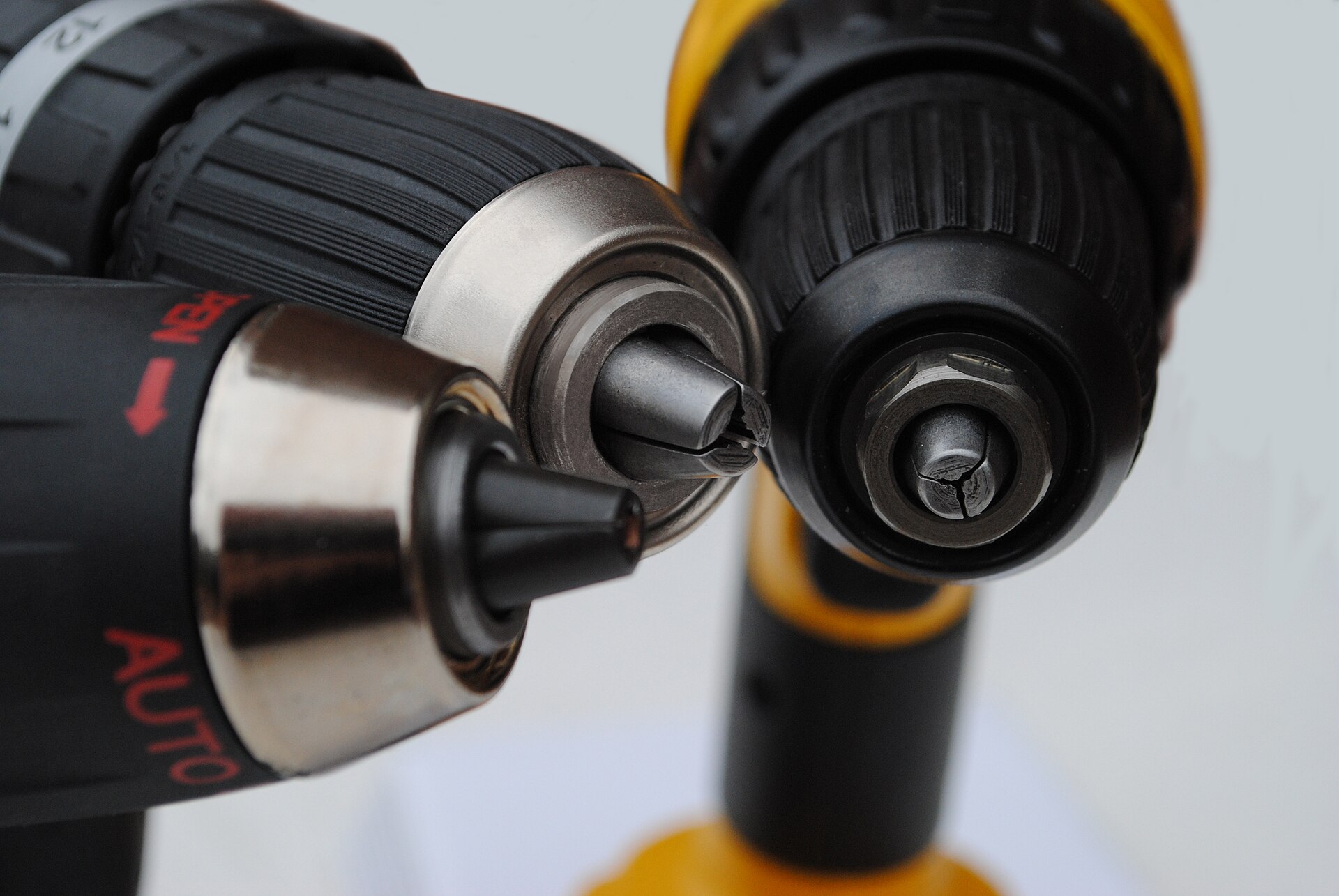
A cordless drill and an impact driver look similar, run on the same batteries and are often sold together, so it's easy to assume one is just a stronger version of the other. They actually work in quite different ways, and each is better at certain jobs. This guide explains how they differ, what the specifications mean and when you'd also want a hammer drill.
The drill/driver: versatile and controllable
A standard cordless drill, usually sold as a drill/driver, turns the bit with steady, continuous rotation. It has three features that define it:
- A chuck with adjustable jaws, commonly 10 mm or 13 mm (3/8 or 1/2 in), that grips round-shank drill bits, hole saws, spade bits and hex screwdriver bits alike.
- A clutch, the numbered ring behind the chuck. When the resistance reaches the level you've set, the clutch slips with a clicking sound instead of driving further. This stops you from sinking screws too deep, stripping heads or cracking delicate material.
- Two gear ranges: a low speed with more torque for driving screws, and a high speed for drilling.
That makes the drill/driver the more versatile tool. If you can only own one, this is it.
The impact driver: built for fasteners
An impact driver is designed mainly for driving screws and bolts. It turns the bit normally until the load increases, then an internal hammer-and-anvil mechanism starts delivering rapid rotational blows, typically thousands per minute. Those blows add a lot of turning force in short bursts.
That brings some real advantages:
- High torque with little kickback. The blows do the work, so less twisting force comes back into your wrist than from a drill at full power.
- Less cam-out. The bit stays seated better in the screw head.
- Compact size. Impact drivers are usually shorter and lighter than drills of similar capability.
And some limitations:
- 1/4 inch hex collet only. It takes hex-shank bits, not round-shank drill bits. Hex-shank drill bits exist for smaller holes, but a drill is better for drilling.
- No clutch. It's easy to overdrive screws into soft material or snap small screws. Some models have speed modes or a self-tapping-screw mode to help.
- Noise. The impact mechanism is loud; hearing protection is sensible for extended use.
- Bit wear. Use impact-rated bits, which are made to cope with the blows.
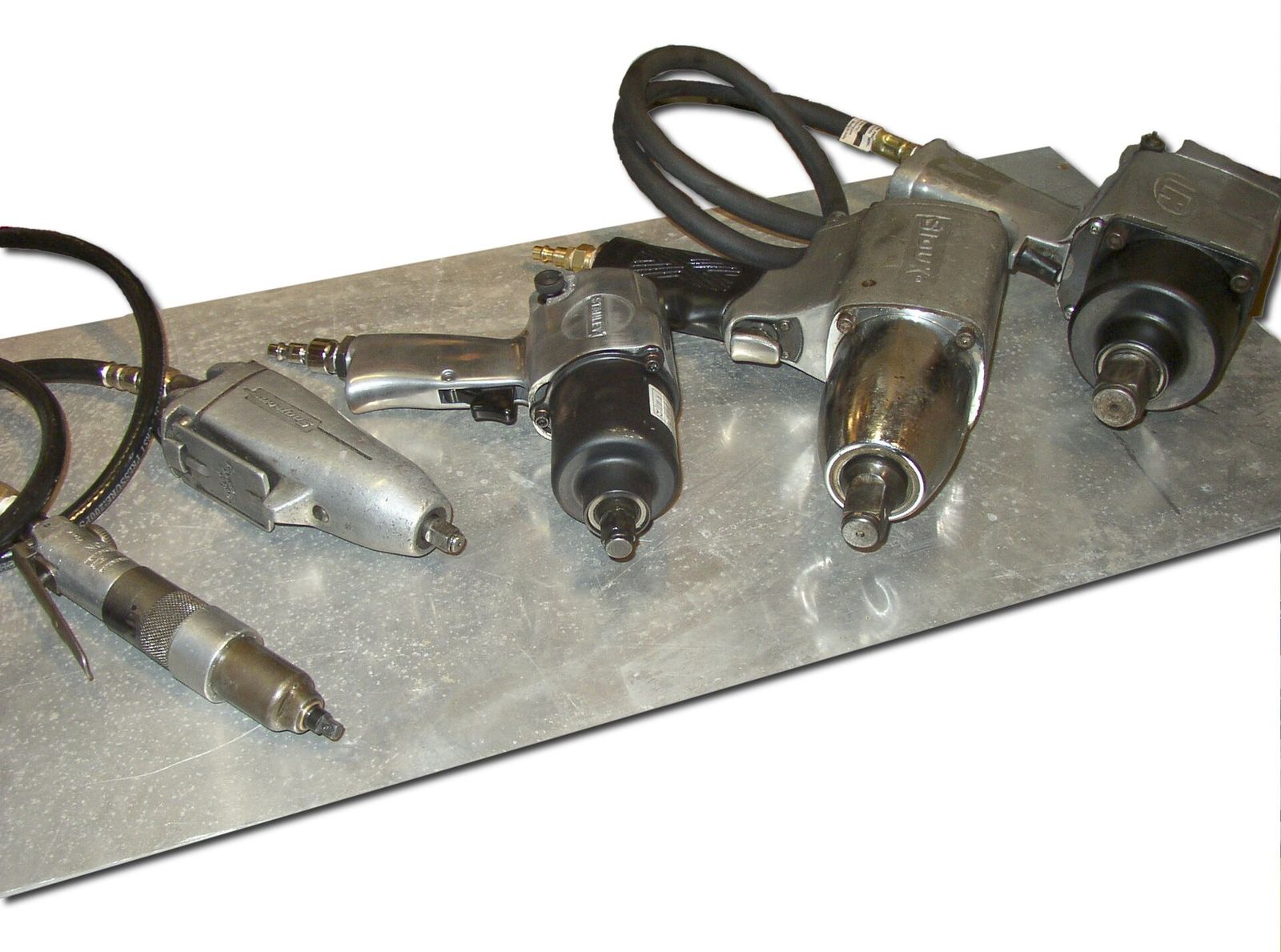
Don't confuse an impact driver with an impact wrench, which has a square drive for sockets and is intended for nuts and bolts, such as wheel nuts.
Which tool for which job
| Job | Better choice |
|---|---|
| Drilling holes in wood, metal and plastic | Drill/driver |
| Assembling flat-pack furniture | Drill/driver on a low clutch setting |
| Small screws into soft or delicate material | Drill/driver |
| Long screws for decking, fencing and framing | Impact driver |
| Lag screws and coach bolts | Impact driver |
| Driving many screws in a row | Impact driver |
| Mixing paint or plaster with a paddle | Drill/driver (at low speed) |
| Drilling brick or block | Hammer drill |
Many people who do regular DIY end up using both: the drill for holes, the impact driver for fastening, without swapping bits all day.
Torque figures and why they don't compare
Torque is turning force, quoted in newton-metres (Nm) and sometimes inch-pounds. Compact drills may be rated around 30–60 Nm, larger ones well over that, and impact drivers commonly quote figures of well over 100 Nm.
Be careful with these numbers:
- Drill and impact torque are measured differently. An impact driver's figure reflects peak force from the blows, so it isn't directly comparable with a drill's figure.
- Brands measure differently too. Test methods vary, and some manufacturers quote output in watts rather than torque.
- More isn't always better. For furniture and small fixings, control matters more than maximum torque.
Use torque to compare tools within the same brand and type, and for anything else read the task the tool is designed for.
Brushless or brushed motors
Traditional brushed motors use carbon brushes to deliver power to the spinning part of the motor. Brushless motors do the same job electronically.
Brushless motors are typically:
- more efficient, giving more work per battery charge;
- cooler running and longer lasting, with no brushes to wear out;
- more compact for the same power, and often better at adjusting output to the load.
Brushed tools are cheaper and perfectly adequate for occasional household jobs. For regular use, or for an impact driver doing heavy work, brushless is usually worth the extra cost.
Battery voltage and amp-hours
Voltage indicates the power class of the platform:
- 12 V class (sometimes labelled 10.8 V): light and compact, well suited to furniture, fixtures and tight spaces.
- 18 V class (often labelled "20 V max" in North America; it's the same class, quoted at peak rather than nominal voltage): the mainstream choice for general DIY and trade work.
- 36 V and above: mainly for heavy-duty tools such as large saws and rotary hammers.
Amp-hours (Ah) indicate capacity, and therefore runtime.
Battery energy: watt-hours = volts × amp-hours. An 18 V, 4 Ah pack holds about 72 Wh; an 18 V, 2 Ah pack about 36 Wh.
A 2 Ah battery keeps the tool light for overhead work; 4–5 Ah or more suits long sessions and demanding tools. Many people keep one of each.
Batteries are usually only compatible within a brand's own platform, and often only within one voltage class. Choosing a tool means choosing a battery system, so consider which other tools you might want later.
When you need a hammer drill
A hammer drill adds a rapid forward-and-back hammering action to the rotation, which chips away at masonry as the bit turns. You need one, with masonry bits, to drill brick, block and mortar. Many drill/drivers are sold in a "combi" or hammer version with a mode selector for drilling, hammer drilling and driving.
For occasional holes in brick for wall plugs, a hammer drill is fine. For frequent drilling in concrete, or larger holes, an SDS rotary hammer is far more effective: it uses a piston mechanism to deliver much harder blows and takes special SDS bits.
Switch the hammer function off for wood, metal and tiles, where it would only damage the material or the bit.
Other details worth checking
- Chuck quality: an all-metal ratcheting chuck grips better than a plastic sleeve.
- Speed range, in rpm, for each gear.
- LED work light position, which shouldn't be blocked by your hand.
- Belt clip and weight with the battery fitted.
- What's included: "bare tool" listings come without battery or charger.
The short version
- One tool only? A drill/driver, as a hammer version if you drill brick.
- Lots of long screws or bolts? Add an impact driver.
- Regular concrete drilling? Use an SDS rotary hammer.
- Choose brushless for regular or heavy use.
- 12 V for light work, 18 V class for general use.
- Compare Ah for runtime, and pick a battery platform you'll stay with.
Bloiq is reader-supported. Some links may earn us a commission; it never affects what we write. How we make money.
Cover photo: Mark Hunter, CC BY 2.0, via Wikimedia Commons