Cordless tool batteries explained: 12 V, 18 V, 20 V max and 40 V+
What voltage, amp-hours and brushless motors really mean for cordless tools, and why the battery platform you pick matters more than any single tool.
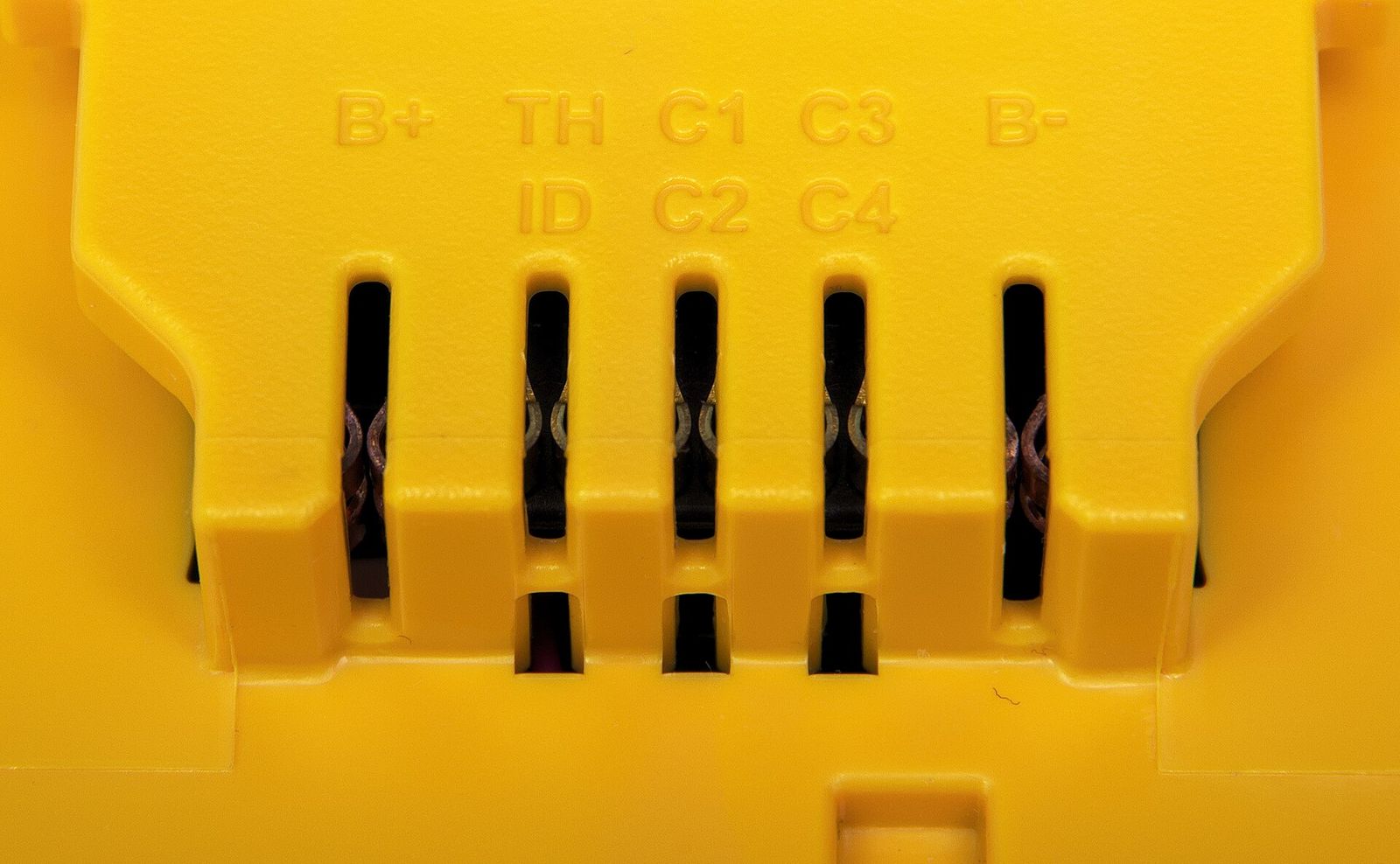
When you buy your first cordless drill, you're not really buying a drill. You're buying into a battery system, and every tool you add later will probably run on the same packs. The labels don't make the choice easy: 10.8 V, 12 V max, 18 V, 20 V max, 36 V, 40 V max, amp-hours and "brushless" all appear side by side. This guide explains what the numbers mean and how to pick a platform you'll be happy with for years.
Why "18 V" and "20 V max" are the same thing
Almost all modern tool batteries are built from lithium-ion cells with a nominal voltage of about 3.6 V each. When fully charged, a cell briefly reads about 4.2 V. Manufacturers can quote either figure:
- Nominal voltage is the average the cell delivers under load. This is the convention used in Europe and much of the world.
- "Max" voltage is the fully charged, no-load figure. It's common on North American packaging.
So a pack of five cells in series is 18 V nominal or 20 V max. It's the same class of battery described two ways, not a more powerful one. The same logic applies across the range:
| Cells in series | Nominal | "Max" label | Typical use |
|---|---|---|---|
| 3 | 10.8 V | 12 V max | Compact drills, drivers, small saws |
| 5 | 18 V | 20 V max | Mainstream DIY and trade tools |
| 10 | 36 V | 40 V max | Garden tools, larger saws, some heavy tools |
| 15 | 54 V | 60 V max | Heavy-duty trade and outdoor tools |
| 20 | 72 V | 80 V max | Mowers and large outdoor equipment |
Some brands sell packs that switch between two voltages depending on the tool they're fitted to, and some heavy tools take two 18 V packs at once to run at 36 V. Either way, compare like with like: nominal against nominal, or "max" against "max".
What each voltage class is good at
12 V class. Light, compact and comfortable to hold overhead or in cabinets. Ideal for furniture assembly, hanging shelves, electrical and plumbing work, and small cutting jobs. The trade-off is less power and runtime for demanding tools like large saws or big-bit drilling.
18 V / 20 V max. The centre of the market. Almost every tool type is available in this class, from drills and impact drivers to circular saws, grinders, sanders, nailers, lights, fans and garden tools. For most households, this is the default choice.
36 V / 40 V max and above. More power for tools that draw a lot of current for a long time: lawn mowers, chainsaws, leaf blowers, large mitre and table saws, rotary hammers. Many garden-tool brands build their whole range around 36–40 V. These packs are bigger and heavier, and the range of workshop tools is often narrower than in the 18 V class.
Higher voltage doesn't automatically mean a better tool. A well-designed 18 V saw can outperform a poorly designed higher-voltage one. Voltage tells you the class of tool; the motor and electronics decide how well it uses the power.
Amp-hours: the fuel tank
Amp-hours (Ah) measure capacity. Multiply by voltage to get the energy in the pack:
Watt-hours = volts × amp-hours. An 18 V, 5 Ah pack holds about 90 Wh; a 12 V class (10.8 V), 2 Ah pack holds about 22 Wh.
That's why watt-hours are the fairest way to compare packs across voltages.
Capacity affects more than runtime:
- Weight and balance. A 2 Ah pack keeps a drill light for overhead work; an 8 Ah pack on the same drill makes it noticeably heavier.
- Power delivery. Larger packs usually contain more cells or newer high-output cells, so they can supply more current with less heat. High-draw tools such as circular saws, grinders and mowers often perform better, and cut out less, on bigger packs.
- Heat. Small packs working hard get hot, and heat is what ages lithium-ion cells fastest.
A practical approach is to own one compact pack for light tools and one or two larger packs for saws and grinders.
Brushless motors
Brushless motors replace the carbon brushes of a traditional motor with electronic control. In cordless tools that typically means more work per charge, less heat, a more compact tool and no brushes to wear out. The electronics can also adjust power to the load. Brushed tools are cheaper and fine for occasional use; brushless is usually worth it for tools you use often or hard, especially saws and grinders. Our guide to drills and impact drivers covers this in more detail.
Why sticking to one platform makes sense
Batteries and chargers are a large part of what a cordless tool costs. Once you own a few packs, you can buy further tools as "bare tool" or "skin only" versions with no battery or charger, which are much cheaper. Mixing brands means duplicate chargers, packs that don't fit, and a drawer full of adapters.
Before committing, check:
- Range. Does the platform include the tools you might want in five years: a circular saw, a sander, a nailer, garden tools, a work light, a vacuum?
- Compatibility across generations. Some manufacturers have kept the same battery connection for many years, so old packs fit new tools. Others have changed designs. Check whether current and older packs are interchangeable.
- Shared systems. A few multi-brand battery alliances exist, where several manufacturers build tools around one pack design. That can widen your choice.
- Garden tools. If you want a mower or chainsaw, check whether the brand runs them on the same packs as its workshop tools or on a separate higher-voltage system.
- Availability of spare packs and chargers where you live, plus warranty terms on batteries, which are sometimes shorter than on tools.
Third-party batteries and adapters
Non-original packs and cross-brand adapters are widely sold. Some are fine; many are not. Counterfeit and low-quality packs can have much less capacity than claimed and may lack the protection circuits that stop a cell from overheating. Adapters can also bypass the tool's own protections. If you use them, buy from a reputable source and treat any pack that swells, gets unusually hot or smells odd as a fire risk.
Looking after lithium-ion packs
- Avoid heat. Don't leave packs in a hot car or in direct sun, and let a hot pack cool before charging.
- Don't charge in freezing temperatures. Most chargers delay or refuse charging when a pack is too cold or too hot; let it reach room temperature.
- Store partly charged in a cool, dry place if you won't use a pack for months, and top it up occasionally.
- Keep contacts clean and covered in a toolbox, where loose screws or bits could short them.
- Retire damaged packs. A dropped pack with a cracked case, or one that swells, should be taken to a battery-recycling drop-off, not thrown in household waste.
If you also want to run lights or charge packs away from mains power, see our guide to portable power stations.
The short version
- 18 V and 20 V max are the same class, as are 36 V and 40 V max. Compare like with like.
- 12 V class for light, compact tools; 18 V class for general DIY; 36 V and up for garden tools and heavy cutting.
- Compare watt-hours (volts × amp-hours) for runtime, and use larger packs on high-draw tools.
- Choose brushless for tools you'll use often.
- Pick one platform with the range you'll need, then save money with bare tools.
- Keep packs cool, charge them at room temperature and recycle damaged ones.
Bloiq is reader-supported. Some links may earn us a commission; it never affects what we write. How we make money.
Cover photo: DragonLord, CC BY-SA 3.0, via Wikimedia Commons