Portable power stations and solar panels: how to size and choose them
Watt-hours versus watts, surge ratings, LiFePO4 versus NMC batteries, inverters, MPPT and real solar output explained, for camping trips and power cuts.
A portable power station is a large rechargeable battery with built-in sockets, an inverter and usually a solar charge controller. It can run lights and a cool box at a campsite, or keep a router, phones and a fridge going during a power cut, silently and without fumes. Choosing one means understanding a handful of specifications that are easy to confuse. This guide explains them and shows how to size a system for your needs.
Watt-hours and watts: capacity versus output
Two numbers matter more than any others, and they measure different things:
- Watt-hours (Wh) are capacity: how much energy the battery stores. Think of it as the size of the fuel tank.
- Watts (W) are output: the most power the inverter can deliver at any moment. Think of it as the size of the engine.
A 1,000 Wh unit with a 600 W inverter can run a 50 W load for many hours, but can't run a 1,200 W kettle at all. A small unit with a big inverter can run a kettle, but only for a few minutes.
Runtime estimate: hours ≈ (capacity in Wh × 0.85) ÷ load in watts. The 0.85 allows for inverter and conversion losses; on DC outputs, efficiency is usually a little better.
For example, a 1,000 Wh power station running a 60 W load gives roughly 1,000 × 0.85 ÷ 60 ≈ 14 hours.
Surge power and start-up loads
Appliances with motors or compressors, such as fridges, freezers, pumps and some power tools, draw several times their running power for a moment when they start. Power stations quote a surge or peak rating to cover this.
Check that the surge rating comfortably exceeds the start-up demand of anything with a motor. If a fridge's start-up surge is too much, the power station will shut down or refuse to start it.
Some units offer a mode that lets them run resistive appliances, such as kettles and heaters, above the inverter's rating by lowering the voltage. The appliance runs more slowly or at lower heat. It isn't suitable for electronics or motors, and it drains the battery quickly.
LiFePO4 or NMC batteries
Most power stations use one of two lithium chemistries:
| LiFePO4 (LFP) | NMC (lithium nickel manganese cobalt) | |
|---|---|---|
| Typical rated cycle life | Commonly 3,000+ cycles to 80% capacity | Commonly around 500–1,000 cycles |
| Weight for the same capacity | Heavier | Lighter |
| Thermal stability | Very good | Good, but less tolerant of abuse |
| Best for | Frequent use, long service life, home backup | Keeping weight down for occasional trips |
Most newer models use LiFePO4. It's heavier, but for anything you'll cycle often, its much longer life usually makes it better value.
Whatever the chemistry, lithium batteries shouldn't be charged below freezing unless the unit has built-in battery heating, and capacity drops in the cold. For storage, keep the unit partly charged (manufacturers often suggest somewhere between half and 80%) and top it up every few months.
Inverters, sockets and UPS claims
The inverter converts battery power to mains-style AC. Look for a pure sine wave inverter, which produces a smooth waveform like the grid. Cheaper modified sine wave inverters can make some devices buzz, run hot or misbehave, particularly motors, CPAP machines and some chargers. Most reputable power stations now use pure sine wave, but check.
Also check the socket mix: the type and number of AC outlets, USB-C Power Delivery ratings (useful for laptops), USB-A, and a 12 V car-style socket for cool boxes and DC devices. Running things from DC outputs avoids inverter losses.
Some units offer pass-through or UPS/EPS mode, switching to battery when mains power fails. Check the stated switchover time: a few tens of milliseconds is fine for most devices, but not every computer will ride through it, and these units are not the same as a dedicated online UPS.
Solar panels: rated watts versus real output
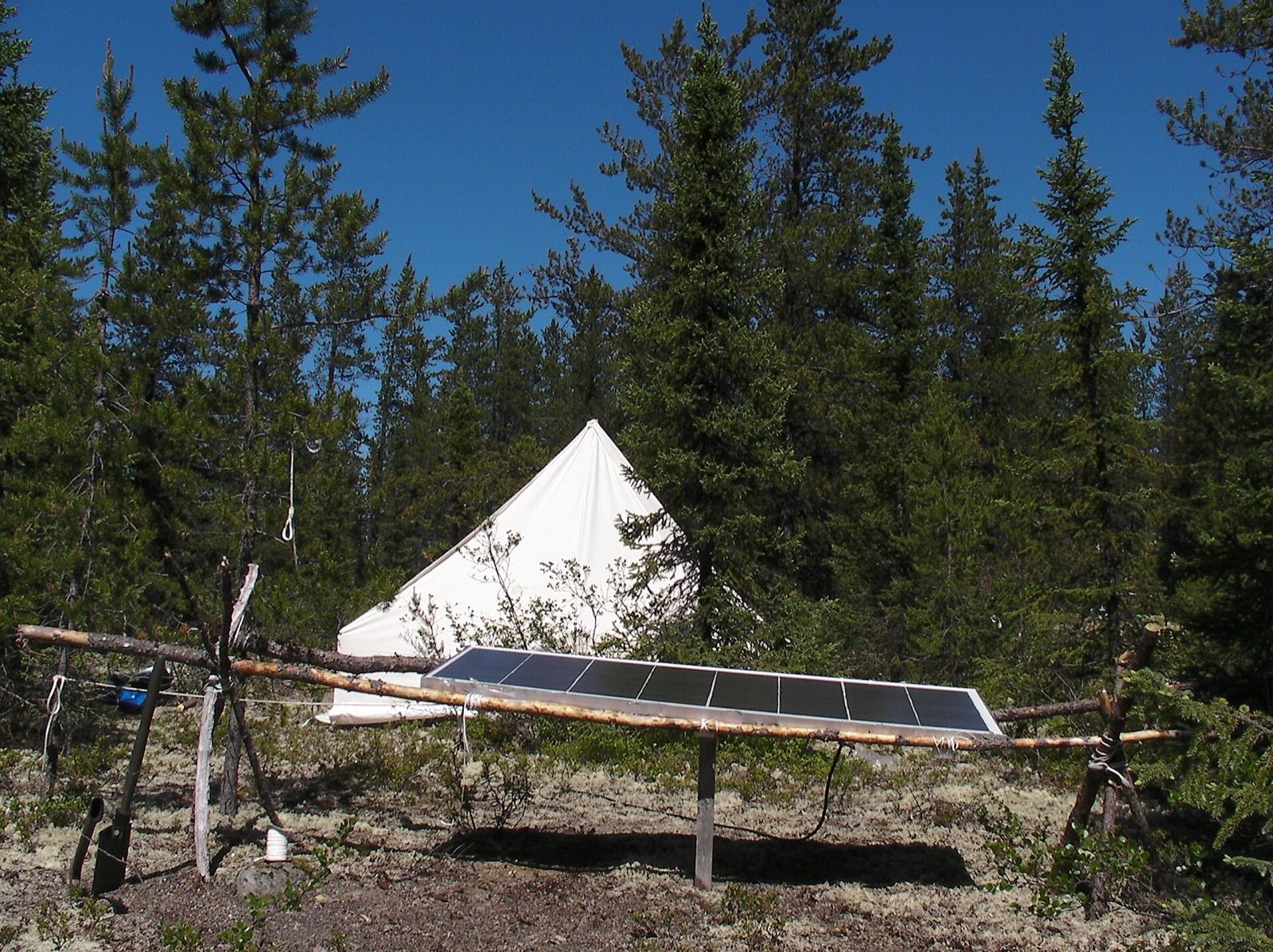
A solar panel's watt rating is measured under standard test conditions: strong sunlight of 1,000 W per square metre and a cell temperature of 25°C. Outdoors, conditions are rarely that good. Panel angle, haze, heat, dust and time of day all reduce output. In good sun, portable panels commonly deliver around 50–80% of their rating, and much less in cloud or partial shade. Even shading part of one panel can cut its output dramatically.
To estimate daily energy, multiply the panel's rating by the local peak sun hours (the equivalent number of hours at full-strength sun, which varies widely with location and season) and allow for real-world losses. A 200 W panel in a summer location with five peak sun hours might realistically deliver somewhere around 600–800 Wh in a day; in winter at higher latitudes, far less.
Practical tips:
- Angle the panel towards the sun and adjust it through the day if you can.
- Keep panels cool; output falls as they heat up.
- Choose folding panels for portability; rigid panels are cheaper per watt and more durable for fixed use.
MPPT and the solar input
A charge controller manages power from the panels into the battery. MPPT (maximum power point tracking) controllers continuously adjust to extract the most power from the panel as conditions change, and typically harvest noticeably more than simpler PWM controllers. Most modern power stations have MPPT built in.
Match your panels to the power station's solar input specification:
- Voltage range: the panels' open-circuit voltage (Voc) must stay within the input limit, including in cold weather, when voltage rises. Connecting panels in series adds their voltage; in parallel adds their current.
- Maximum input wattage: extra panel wattage above this is wasted, though slight oversizing can help in poor light.
- Connectors: check the plug types and whether adapters are included.
How much capacity you need
List your devices, their power draw and how many hours a day you'll use them, then add up the watt-hours. Some typical examples:
- Weekend camping (phones, lights, a small fan, a camera): a few hundred Wh is often enough.
- Camping with a 12 V compressor cool box: these commonly use several hundred Wh a day depending on size and temperature, so consider 500–1,000 Wh plus a solar panel.
- Home power cuts: a router uses roughly 10–20 W, a laptop 30–90 W; a full-size fridge may use 1–2 kWh a day and has a start-up surge. Keeping a fridge running through a long outage points towards 1,500 Wh or more, with solar or car recharging.
- Medical devices such as CPAP: check the manufacturer's power figures. Humidifiers and heated tubes can increase consumption considerably.
High-wattage heating appliances, such as kettles, hair dryers and space heaters, drain power stations quickly and are rarely practical beyond brief use.
Safety and practical points
- Power stations produce no exhaust and can be used indoors. Fuel generators must never be run indoors or near open windows.
- Don't connect a power station to your home's wiring unless an electrician has installed a proper transfer switch or inlet.
- Most power stations exceed airline limits for lithium batteries and can't be taken on flights.
- Check the recharge options: AC charging speed, car charging (slow, but useful on the road) and solar input.
The short version
- Add up your devices' watt-hours per day and choose capacity with some margin.
- Make sure the inverter wattage and surge cover your biggest load.
- Prefer LiFePO4 for frequent use and long life.
- Insist on a pure sine wave inverter.
- Expect solar panels to deliver well below their rating most of the time.
- Match panel voltage, wattage and connectors to the solar input.
Bloiq is reader-supported. Some links may earn us a commission; it never affects what we write. How we make money.
Cover photo: peupleloup, CC BY-SA 2.0, via Wikimedia Commons


.jpg)