Camping stoves explained: canister, liquid-fuel and two-burner stoves
How canister, liquid-fuel, alcohol and two-burner camping stoves compare, why gas struggles in the cold, and the safety rules that matter for every type.
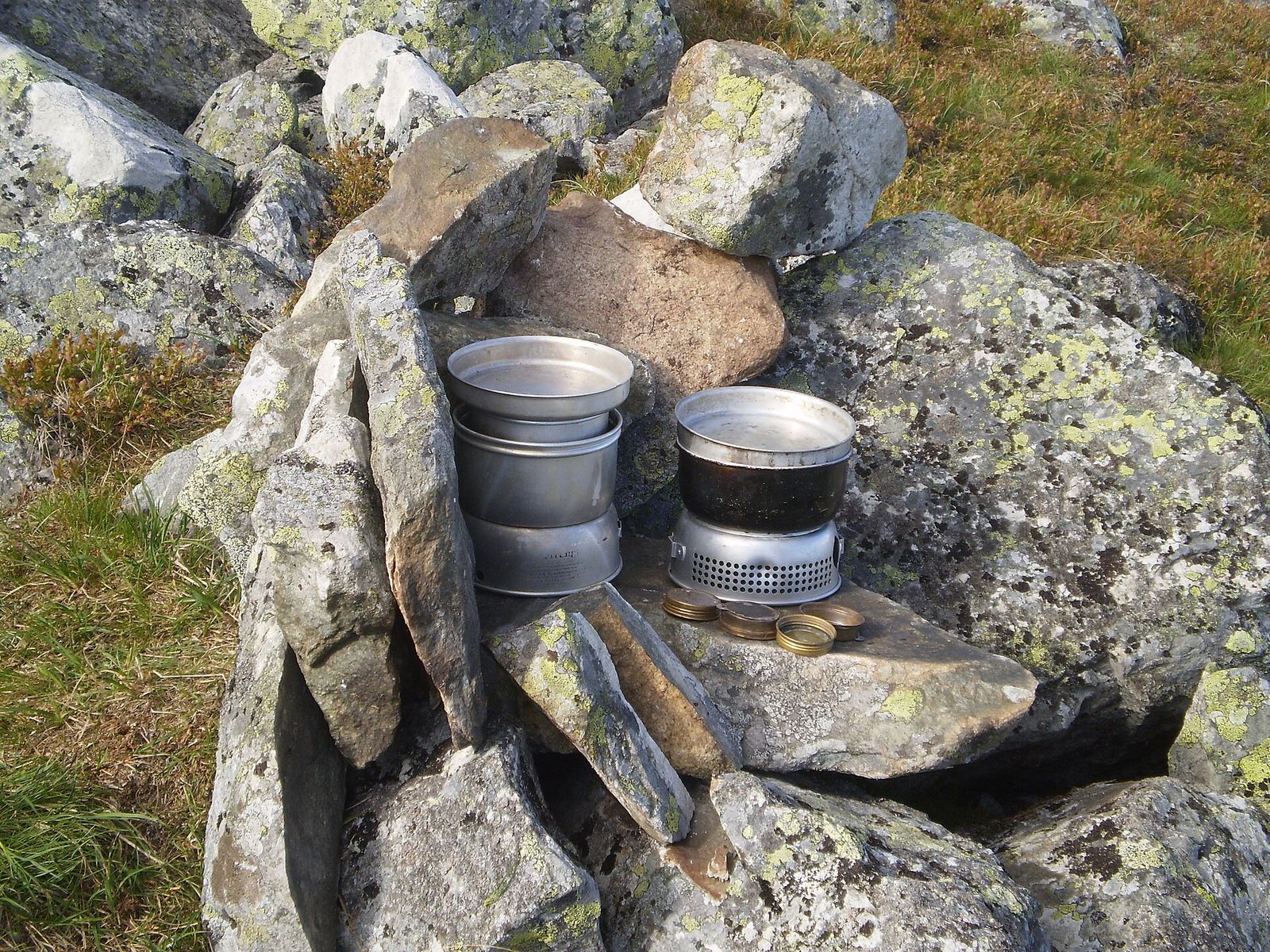
The right camping stove depends less on brand or boil-time claims than on three questions: how far you carry it, what you cook, and how cold it gets. A tiny canister stove is ideal for a summer hike but can splutter on a frosty morning, while a two-burner stove that cooks a proper breakfast for a family is far too heavy for a backpack. This guide explains the main types, how fuel behaves in cold weather, and the safety habits that apply to all of them.
The main types at a glance
| Type | Fuel | Best for | Main drawback |
|---|---|---|---|
| Upright canister | Screw-on isobutane/propane canister | Backpacking, quick meals | Weaker in cold; tippy with big pots |
| Integrated canister system | Same canisters | Boiling water fast, windy places | Poor for real cooking |
| Remote canister | Same canisters, via a hose | Stability, larger pots, colder trips | Heavier than upright stoves |
| Liquid-fuel | White gas, sometimes kerosene or petrol | Cold, altitude, long or remote trips | Priming, pumping, maintenance |
| Alcohol | Methylated spirits / denatured alcohol | Ultralight hiking | Slow; invisible flame; often limited during fire bans |
| Two-burner | Propane cylinders or tanks | Car camping, groups | Bulky and heavy |
| Tabletop cartridge | Butane cartridges | Picnics, car camping in mild weather | Poor in the cold |
Canister stoves
Most backpackers use a small burner that screws onto a pressurised canister of isobutane and propane, sometimes with butane. The threaded valve is a widely used standard, so many stoves and canisters are interchangeable, but check that yours match. Canisters come in a few common sizes, roughly 100 g, 230 g and 450 g of gas.
There are three designs:
- Upright stoves sit directly on the canister. They're the lightest and simplest, and many simmer well. With a large pot they become top-heavy, so set them on firm, level ground.
- Integrated systems combine burner, windshield and a pot with a heat exchanger on its base. They boil water quickly and use fuel efficiently, especially in wind, but they're designed for boiling rather than frying or simmering.
- Remote canister stoves sit low on legs, with the canister connected by a hose. They're more stable with larger pots, and some are designed so the canister can be turned upside down in the cold (see below). Only do this if the manufacturer says the stove supports it.
Canister stoves are clean and need almost no maintenance. The downsides are that it's hard to tell how much gas is left (weighing the canister helps), empty canisters have to be disposed of under local rules, and performance falls as the temperature drops.
Liquid-fuel stoves
Liquid-fuel stoves burn fuel from a refillable bottle that you pressurise with a hand pump. White gas (also sold as naphtha or camping fuel) is the usual choice, and multi-fuel models can also burn kerosene, unleaded petrol and sometimes other fuels, often with a different jet. Check your manual for which fuels it accepts.
Because you supply the pressure with the pump, they keep working in deep cold and at altitude, and the right fuel is available in many parts of the world where specific gas canisters aren't. That's why they remain popular for winter camping, expeditions and long trips abroad.
The trade-offs:
- Priming: most need a small amount of fuel burned in a cup under the burner to preheat it, which can cause a flare. Learn this outdoors, well away from anything flammable.
- Simmering is harder on many models; they tend to be all or nothing.
- Maintenance: jets and fuel lines need occasional cleaning, especially with dirtier fuels, and pump seals wear out. Carry the maintenance kit.
Alcohol, solid-fuel and wood stoves
Alcohol stoves are small burners that run on methylated spirits or denatured alcohol. They're light, silent and almost unbreakable, but slow and easily affected by wind. The flame can be nearly invisible in daylight, which makes spills and refills a real fire risk; never refill one that's still burning or hot. Solid-fuel tablets are compact and simple but leave residue on pots. Wood-burning stoves need no fuel to be carried but depend on dry fuel being available.
Many areas restrict open flames during dry periods. Restrictions sometimes allow only stoves with a shut-off valve, which rules out alcohol, solid-fuel and wood stoves. Check the current fire rules for the area before you go.
Two-burner stoves for car camping
If you're cooking for a group from the car, a two-burner stove is the most practical choice. In North America most run on small disposable propane cylinders or, with an adapter hose, a refillable propane tank. Elsewhere you'll also find stoves for butane cartridges or local gas bottles with a regulator.
What to look at:
- Output: often given in BTU per hour in North America and kilowatts in Europe (1 kW is about 3,400 BTU/h). Higher output boils faster; good simmer control matters more for real cooking.
- Wind protection: side and back panels that fold up help a lot outdoors.
- Burner spacing: two large pans need room side by side.
- Ignition: push-button igniters are convenient but can fail, so always carry a lighter or matches.
Small tabletop stoves that take slim butane cartridges are common for picnics and mild-weather camping. Never use them with a pan or griddle that overhangs the cartridge compartment, or side by side with another stove under one large griddle: reflected heat can overheat the cartridge. Follow the maximum pan size in the manual.
Fuel in cold weather
Gas canisters rely on the fuel boiling inside to produce pressure. Each gas stops doing that at a different temperature:
- Butane: around 0°C (32°F)
- Isobutane: around −12°C (11°F)
- Propane: around −42°C (−44°F)
In practice, canister stoves weaken well before those figures, because drawing gas cools the canister further. Mixed canisters also burn off their propane first, so a part-used canister performs worse in the cold than a full one. Tabletop butane stoves are the most affected.
Rule of thumb: keep the canister warmer than the air. Sleep with it in your sleeping bag on cold nights, keep it in a jacket until you cook, and stand it on a foam pad rather than snow. Never warm it with a flame or put it near the burner.
For regular trips below freezing, a liquid-fuel stove or a remote canister stove designed for inverted use is the reliable choice. Two more cold-weather points:
- Melting snow for water uses far more fuel than heating water. Start with a little liquid water in the pot to avoid scorching it, and bring extra fuel.
- Spilled white gas at sub-zero temperatures can freeze skin almost instantly. Wear gloves when filling and pumping.
Our guide to sleeping bag temperature ratings covers staying warm on the same trips.
Safety for every stove
- Never cook inside a tent, a closed porch, a vehicle or any enclosed space. Stoves produce carbon monoxide, which can kill without warning, and tent fabric burns quickly. Our guide to smoke and carbon monoxide alarms explains how CO harms people.
- Check for leaks when connecting: look at the seal or O-ring, listen for hissing and smell for gas. Don't overtighten.
- Use a stable, level, non-flammable surface, clear of dry grass, overhanging branches and your tent. A well-pitched tent should be several metres away.
- Windscreens: wrap-around windscreens suit liquid-fuel and remote canister stoves. Don't fully enclose an upright canister stove, because trapped heat can overheat the canister.
- Let everything cool before detaching a canister or refilling a fuel bottle, and store fuel away from heat and direct sun.
- Flying: fuel canisters and liquid fuel are generally prohibited in both checked and carry-on baggage. Plan to buy fuel at your destination and check your airline's rules.
- Children and pets should stay well clear of a lit stove, and of pans on top of a tippy one.
If you'd rather have a campfire, see our guide to fire pits and fire safety.
The short version
- Summer backpacking: an upright canister stove, or an integrated system if you mostly boil water.
- Cold, high or remote trips: a liquid-fuel stove, or a remote canister stove rated for inverted use.
- Ultralight with care: alcohol stoves, but check the fire restrictions.
- Car camping and groups: a two-burner propane stove with good simmer control and wind panels.
- Always: cook outside, check for leaks, carry a backup lighter, bring more fuel than you think, and keep canisters warm in the cold.
Bloiq is reader-supported. Some links may earn us a commission; it never affects what we write. How we make money.
Cover photo: Samiland, CC BY-SA 4.0, via Wikimedia Commons