Sleeping bags explained: temperature ratings, down vs synthetic, shapes
What the ISO 23537 comfort, limit and extreme ratings mean, how down and synthetic insulation compare, and which sleeping bag shape suits the way you camp.
A sleeping bag's label usually carries two or three temperatures, and it's easy to pick the lowest one and assume you'll be warm at that temperature. Often you won't be. The figures come from a standard laboratory test, and each one answers a different question. This guide explains what the ratings mean, how down and synthetic insulation compare, and how shape and fit change both warmth and comfort.
How sleeping bags are rated: ISO 23537
Most sleeping bags sold by established outdoor brands are tested to ISO 23537, the international standard that replaced the older European standard EN 13537. A heated manikin fitted with sensors, dressed in a base layer and lying on an insulated mat, is placed inside the bag in a cold chamber. The heat it loses is measured and converted into temperatures.
The value of the standard is that it lets you compare bags from different brands on the same basis. A bag with a single temperature and no mention of a standard may have been rated by the manufacturer's own method, which could be optimistic.
The standard covers adult bags for general use. Children's bags and expedition bags for extreme cold are outside its scope, so their ratings are the maker's own estimate.
Comfort, limit and extreme: which number to use
| Rating | What it means | How to use it |
|---|---|---|
| Comfort | The temperature at which a "standard woman" sleeps comfortably in a relaxed position | The figure to plan with if you feel the cold, and for most women |
| Limit (lower limit) | The temperature at which a "standard man", curled up, is just warm enough for a full night | The edge of the bag's useful range for warm sleepers |
| Extreme | A survival figure: cold stress is severe and hypothermia is a real risk | Never plan a trip around it |
The range between comfort and limit is sometimes called the transition range. In it, you may sleep, but not necessarily well.
Many brands name unisex and men's bags after the limit rating and women's bags after the comfort rating. Two bags with the same number in their names can therefore differ by several degrees, so read the label, not the model name.
Rule of thumb: choose a bag whose comfort rating is at or below the coldest night you expect. If you sleep cold, allow about 5 °C more.
Why the same bag feels different to different people
The laboratory figures assume a rested, fed adult in a base layer, on an insulated mat, inside a shelter. Real nights vary:
- Your mat. Insulation squashed beneath your body does very little, so the mat keeps you warm from below. Mats are rated by R-value, and a higher figure means more insulation. Roughly, R 2–4 suits three-season camping, and R 4 or more suits frozen ground.
- You. Tiredness, hunger, dehydration, age and body size all change how warm you sleep.
- Fit. A bag that is too large leaves air for your body to heat. One that is too tight squashes the insulation at your shoulders, hips and feet.
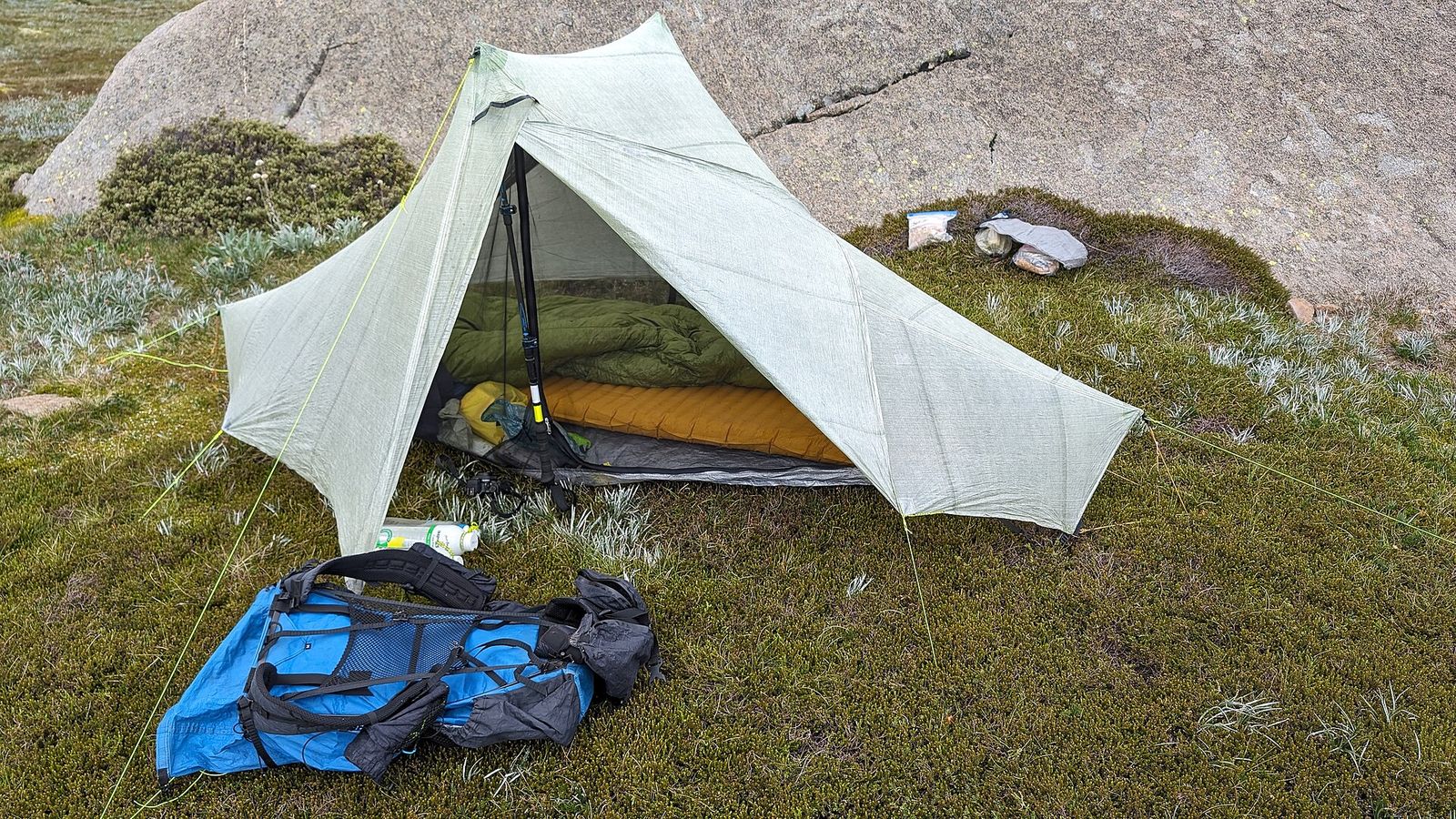
- Shelter. Wind and damp take heat away quickly. A suitable tent with good ventilation keeps you out of the wind and limits condensation, which would otherwise dampen the bag.
Season labels
Season ratings aren't standardised, but they roughly correspond to the following comfort temperatures.
| Label | Typical comfort rating | Use |
|---|---|---|
| Summer (1–2 season) | About +8 °C and above | Warm nights, huts and hostels |
| 3-season | About 0 to +5 °C | Spring to autumn, most camping |
| Winter (4-season) | About −5 °C and below | Frost, snow and high altitude |
Down or synthetic insulation
Both trap still air. They differ in weight, bulk, cost and how they behave when damp.
Down is the fluffy under-plumage of ducks and geese.
- Strengths: the best warmth for its weight, packs very small, and lasts many years if cared for.
- Weaknesses: it clumps and loses most of its insulation when wet, dries slowly, costs more and needs careful washing.
- Fill power measures loft: the volume, in cubic inches, that one ounce of down fills. Higher numbers (700, 800 and above) give more warmth for the same weight. Fill power isn't warmth by itself; fill weight, the amount of down in the bag, matters just as much.
- Water-resistant down has a treatment that helps it resist moisture and dry faster. It helps with damp, but it doesn't make a down bag suitable for soaking conditions.
- Look for responsible-sourcing certification such as the Responsible Down Standard (RDS).
Synthetic insulation is made of polyester fibres.
- Strengths: it keeps much of its warmth when damp, dries quickly, costs less and is easy to wash. It's a sensible choice for wet climates, canoe and kayak trips, children and occasional campers.
- Weaknesses: it's heavier and bulkier for the same warmth, and it gradually loses loft after years of being compressed.
For car camping, weight and bulk hardly matter, and synthetic bags offer good value. For backpacking in mostly dry or cold conditions, down saves a good deal of weight and pack space.
Shapes: mummy, rectangular and in between
- Mummy: tapered from shoulders to feet, with a fitted hood. It has the least air to heat and the least fabric to carry, so it's the warmest shape for its weight. Some people find it restrictive.
- Rectangular: roomy, and it often unzips fully into a blanket. Two matching bags can usually be zipped together. It's heavier, bulkier and colder in low temperatures, since warm air escapes at the open top. Best for summer and car camping.
- Semi-rectangular (tapered or barrel): a compromise with more room than a mummy and less dead space than a rectangle. It suits side sleepers and people who turn a lot.
- Double bags: for two people at a fixed site; bulky to carry.
- Quilts: a backless design with no hood, which relies on the mat for insulation underneath. Popular with weight-conscious backpackers in milder conditions.
- Women's-specific bags: usually shorter, narrower at the shoulders and wider at the hips, often with extra insulation at the feet and torso.
Check the length too. Bags come in regular and long sizes, and your feet shouldn't press against the end.
Features that affect warmth
- Hood with a drawcord: a lot of heat is lost from an uncovered head.
- Draught collar: an insulated tube around the neck that stops warm air being pumped out when you move.
- Draught tube: an insulated flap behind the zip.
- Zip: a full-length, two-way zip lets you vent your feet on warm nights. Left- and right-hand zips matter if you plan to join two bags.
- Baffles: in down bags, box-wall baffles hold the down in chambers without cold spots. Sewn-through seams are lighter and cheaper, but they leave thin lines of little insulation.
- Shell fabric: a water-repellent finish sheds condensation drips. It isn't waterproof.
- Liner: a separate liner adds a little warmth and keeps the bag clean, so it needs washing less often.
Sleeping warmer and looking after the bag
- Eat before bed, and change into dry base layers and socks. Wear a hat.
- Don't breathe inside the bag; the moisture dampens the insulation.
- Shake the bag out when you pitch camp so that it can loft before you get in.
- Never use a stove or fuel-burning heater to warm a tent. They produce carbon monoxide.
- At home, air the bag until it's fully dry, then store it loose in a large cotton or mesh sack, not in its compression sack.
- Wash it rarely, following the label. Down needs a suitable down cleaner, a front-loading machine and long, gentle drying.
The short version
- Plan with the comfort rating, not the limit, and never the extreme.
- Look for ISO 23537 (or EN 13537) on the label, so that you can compare bags fairly.
- Add a margin of about 5 °C if you sleep cold.
- Match the mat: a warm bag on a thin mat is still a cold night.
- Down for low weight and small pack size in dry or cold conditions; synthetic for damp conditions, easy care and lower cost.
- Mummy for warmth and weight; rectangular for space in summer.
- Store it loose and dry, and it will keep its loft for years.
Bloiq is reader-supported. Some links may earn us a commission; it never affects what we write. How we make money.
Cover photo: Steve Bittinger, CC BY 2.0, via Wikimedia Commons