Camping tents explained: capacity, seasons and waterproof ratings
What tent person ratings, season ratings and hydrostatic head figures really mean, how fabrics and poles differ, and how to pitch a tent that stays dry and upright.
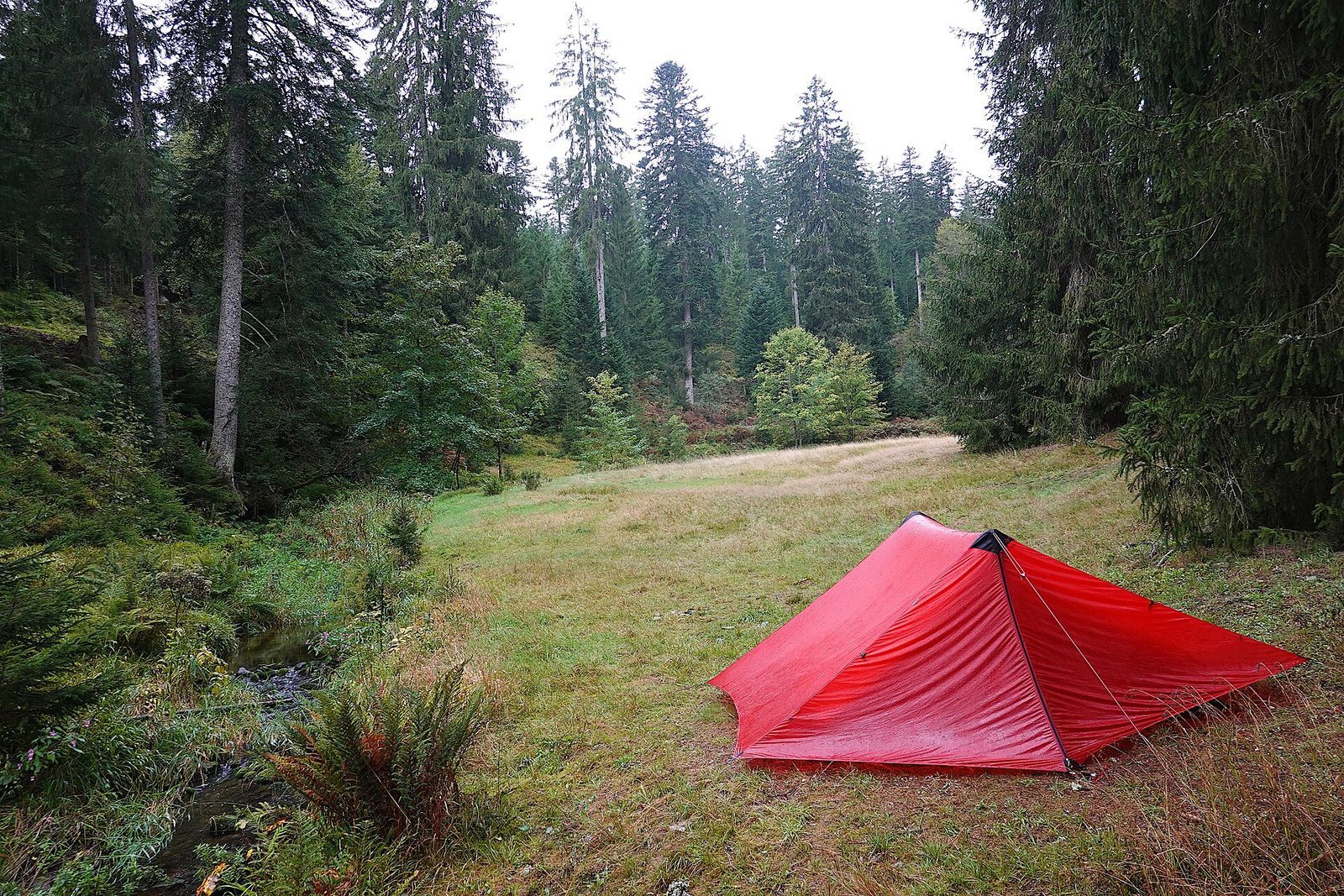
A tent's specifications look precise, but many of them need interpreting. A "four-person" tent may fit four sleeping pads with no room for bags, a "3-season" tent may struggle in a mountain storm, and a waterproof rating says little about whether you'll wake up to condensation. This guide explains what the numbers mean, how materials and designs differ, and the pitching and safety basics that decide how well any tent performs.
Capacity: what "person" ratings mean
Tent capacity is usually based on how many standard sleeping pads fit side by side on the floor, with little space to spare. There's no single industry standard, so two "two-person" tents can differ noticeably in floor area.
What to check instead:
- Floor area in square metres (or square feet), and the floor's shape; tapered floors lose space at the foot end.
- Floor length: tall people should look for about 210 cm (83 in) or more.
- Peak height and wall steepness: steep walls give far more usable space than a high central peak alone.
- Vestibules: covered porches outside the inner tent for boots and packs.
- Doors: two doors on a two-person tent means no climbing over each other.
Rule of thumb: for comfort, or if you carry a lot of gear, choose a tent rated for one more person than will sleep in it. Backpackers counting every gram often accept the snug fit instead.
Season ratings
- 1–2 season tents: light, often inexpensive tents for warm, settled weather and festivals.
- 3-season tents: the most common type, designed for spring, summer and autumn conditions, including rain and moderate wind. They often have a lot of mesh for ventilation, which makes them chilly in cold wind and unsuitable for heavy snow.
- 3–4 season or "extended season": sturdier poles, less mesh and a fly that reaches closer to the ground; for shoulder seasons and exposed sites.
- 4-season tents: built for snow loads and strong winds, often with a geodesic pole structure and solid inner walls. Heavier and warmer, and can be stuffy in summer.
Waterproof ratings: hydrostatic head
Waterproofness is usually given as hydrostatic head (HH) in millimetres: the height of a column of water the fabric can hold back before water is forced through, measured with a standardised test.
Rough guidance:
- Flysheet around 1,500 mm: a common baseline for waterproof tent fabric.
- 2,000–3,000 mm: comfortable for most camping in regular rain.
- 3,000 mm and above: for long spells of heavy, wind-driven rain.
- Groundsheets often have much higher ratings, sometimes 5,000 mm or more, because kneeling and lying on wet ground pushes water through.
Higher numbers aren't automatically better. Heavier coatings add weight and can make fabric stiffer, and a well-designed tent with a modest rating can outperform a poorly designed one with a big figure. Just as important are:
- Taped or sealed seams, since stitching makes needle holes.
- Fly coverage reaching close to the ground.
- Ventilation. Condensation from your breath forming on the inside of the fly is the most common cause of a "leaking" tent. Vents, mesh panels and a gap between inner and fly help.
Fabrics and poles
Polyester is the usual fly and inner material on family and budget tents. It stretches little when wet and resists UV damage fairly well. Nylon is lighter and stronger for its weight, so it's common on backpacking tents, but it stretches when wet, so you may need to re-tension guylines in rain. The number followed by D (denier) indicates yarn thickness; higher numbers are generally tougher and heavier. Ripstop weave limits how far a tear can spread.
Coatings matter too. Polyurethane (PU) coatings are common and allow seam taping, but can break down over years, especially if a tent is stored damp. Silicone-coated fabrics are strong and water-shedding; their seams are often sealed with a liquid sealer instead of tape.
Cotton and polycotton (canvas) tents breathe well, reduce condensation and stay cooler in sun, but are heavy and must be dried thoroughly before storage to avoid mildew. New cotton tents are usually "weathered" by being pitched and soaked before first use so the fibres swell and seal the stitch holes.
Poles:
- Aluminium alloy: light, strong and repairable with a splint sleeve. Standard on better tents.
- Fibreglass: cheaper and heavier; can crack or splinter, particularly in cold.
- Steel: used on large family and cabin tents for rigidity.
- Air beams: inflatable tubes that replace poles on some family tents; quick to pitch, and they flex in wind rather than snap. Carry the pump and a repair kit.
Tent designs
- Dome: freestanding with crossing poles; easy to pitch and move. Good all-rounders.
- Tunnel: hoops in a row, needing stakes and guylines to stand. Excellent space for the weight; pitch with the narrow end into the wind.
- Geodesic: multiple crossing poles for strength in wind and snow.
- Cabin: near-vertical walls and room to stand; for car camping in sheltered sites.
- Instant and pop-up: pre-attached poles for very fast set-up, but bulky to carry and sometimes less weather-resistant.
- Trekking-pole shelters: use hiking poles instead of tent poles to save weight.
Some tents pitch inner first, others fly first or both together. Fly-first pitching keeps the inner dry when setting up in rain.
Pitching well
- Practise at home before the trip, and check all parts are there.
- Choose the site: flat, slightly raised ground; avoid hollows where water collects, dead branches overhead, and the very edge of rivers and lakes. Follow campsite rules on where to pitch.
- Use a footprint or groundsheet protector slightly smaller than the tent floor, so it doesn't catch rain and channel it underneath.
- Stake properly: drive pegs at an angle, leaning away from the tent, and use all the guylines in wind.
- Tension evenly so the fly doesn't touch the inner.
Safety and care
- Never use a stove, heater, barbecue or charcoal inside a tent or closed porch. They produce carbon monoxide, which can kill without warning, and tent fabric burns quickly.
- Keep tents well away from campfires; see our guide to fire pits and fire safety.
- For power at camp without fumes, a portable power station can run lights and small devices.
- Dry the tent fully before long-term storage, store it loosely in a cool, dry place, and keep it out of prolonged sun when not in use, since UV weakens fabric over time.
- Clean with water and a soft sponge; avoid detergents and washing machines, which can strip coatings.
If your camping involves the water, our guide to kayaks and paddle boards covers boards, boats and safety gear.
The short version
- Capacity: check floor area, length and height, not just the person rating; size up one for comfort.
- Seasons: 3-season for most summer camping; sturdier designs for exposed or shoulder-season trips.
- Waterproofing: about 2,000–3,000 mm on the fly with sealed seams suits most camping, and good ventilation matters as much.
- Materials: aluminium poles and polyester or nylon fabrics for most people; canvas for comfort at fixed sites.
- Always: practise pitching, choose a sensible site, and never bring a flame or fuel-burning heater inside.
Bloiq is reader-supported. Some links may earn us a commission; it never affects what we write. How we make money.
Cover photo: Robbie Morrison (RobbieIanMorrison), CC BY 4.0, via Wikimedia Commons