Smoke and carbon monoxide alarms: types, placement and replacement
Ionisation, photoelectric and dual-sensor smoke alarms, how CO alarms work, where to fit them, why interconnection matters, and when to replace them.
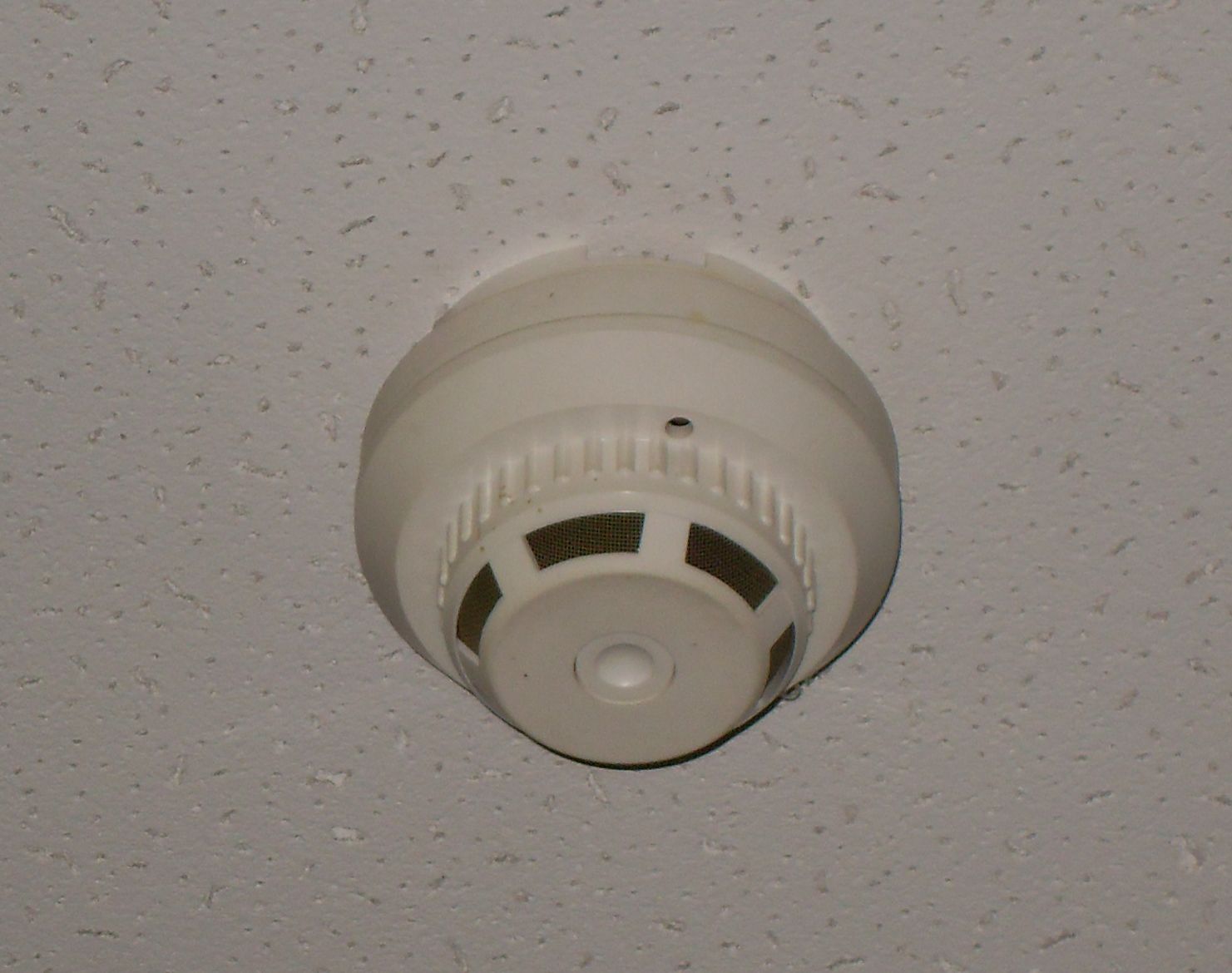
Smoke and carbon monoxide alarms are the cheapest safety equipment in most homes and among the most important, but only if they're the right type, in the right places, and still working. Many homes have alarms that are past their replacement date, mounted where they false-alarm, or too far apart to be heard from a bedroom. This guide explains the sensor types, where alarms go, why linking them matters, and when to replace them.
Why you need both
A smoke alarm detects the particles produced by fire. A carbon monoxide (CO) alarm detects an invisible, odourless gas produced when fuel burns incompletely: in gas, oil or wood-burning boilers, furnaces, water heaters, fireplaces and stoves, and in vehicle exhaust from an attached garage. Neither type detects the other's hazard, though combination alarms contain both sensors in one unit.
Many places legally require smoke alarms on every storey, and CO alarms where there's a fuel-burning appliance or an attached garage. The details differ by country, province or state, and for rented homes, so check the current rules where you live.
Ionisation versus photoelectric smoke alarms
Smoke alarms use one of two sensing methods, or both:
| Type | How it works | Responds fastest to | Drawbacks |
|---|---|---|---|
| Ionisation | A tiny radioactive source ionises the air in a chamber; smoke disrupts the small current | Fast, flaming fires with small particles | More nuisance alarms from cooking |
| Photoelectric (optical) | Smoke scatters a light beam onto a sensor | Slow, smouldering fires, such as furniture or bedding | Can be set off by steam or dust |
| Dual-sensor | Both methods in one alarm | Both kinds of fire | Can be more prone to nuisance alarms |
Because you can't predict which kind of fire you'll have, fire-safety organisations generally recommend photoelectric or dual-sensor alarms, or a mix of both technologies around the home. Smouldering fires are particularly dangerous at night, so many people choose photoelectric alarms for bedrooms and hallways. Recent editions of the North American smoke alarm standard also test whether alarms can tell ordinary cooking smoke from a fire, so newer alarms should cause fewer false alarms near kitchens.
Heat alarms are a third option for kitchens and garages, where smoke and fumes make smoke alarms impractical. They react to a high or rapidly rising temperature, so they're slower and don't replace smoke alarms in living areas or bedrooms.
Look for certification to the relevant standard: UL 217 for smoke and UL 2034 for CO in the United States, CAN/ULC-S531 for smoke and CSA 6.19 for CO in Canada, and EN 14604 for smoke and EN 50291 for CO in the UK and Europe.
How carbon monoxide alarms work
Most CO alarms use an electrochemical sensor. They don't sound at the first trace of gas: the standards set alarm points based on concentration over time, so a low level triggers the alarm after hours, while a high level triggers it within minutes. Models with a digital display show the current reading and often the highest recent peak, which helps when a technician investigates.
CO poisoning can feel like flu: headache, dizziness, nausea, tiredness and confusion. Warning signs include several people or pets feeling ill at the same time, and symptoms that ease when you leave the house.
If a CO alarm sounds, get everyone into fresh air immediately, then call emergency services or your gas emergency number from outside. Don't go back in until the home has been checked and cleared.
An alarm is a backstop, not a substitute for having fuel-burning appliances serviced regularly. Never run a generator, barbecue, patio heater or camping stove indoors or in a garage; see our guides to portable generators and camping stoves.
Where to put smoke alarms
Typical guidance in North America is a smoke alarm inside every bedroom, outside each sleeping area, and on every level, including the basement. In the UK, the minimum is usually one on every storey in hallways and landings, with stricter requirements in some parts of the country. Beyond the minimum, more alarms mean earlier warning.
- Ceilings are best, because smoke rises. If an alarm must go on a wall, mount it high, with the top within about 30 cm (12 in) of the ceiling.
- Sloped ceilings: fit the alarm near, but not right at, the highest point, where trapped air can keep smoke away.
- Keep away from cooking appliances (common North American advice is at least about 3 m, or 10 ft) and from bathrooms, where steam causes false alarms.
- Avoid draughts from windows, doors, fans and air vents, which can blow smoke away from the sensor.
- Follow the instructions for spacing from walls, lights and other alarms.
Where to put CO alarms
Carbon monoxide mixes with room air, so CO alarms are less fussy about height than smoke alarms; follow the manufacturer's instructions. Common advice is:
- Outside each sleeping area, and in bedrooms where a fuel-burning appliance or flue is nearby.
- On every level with a fuel-burning appliance, and near the door from an attached garage.
- In the room with the appliance, a short distance from it (UK guidance commonly suggests about 1–3 m), rather than directly above it.
- Not in bathrooms, near windows or vents, or where furniture or curtains block airflow.
Interconnection: when one sounds, all sound
In a larger or multi-storey home, an alarm in the basement may not wake someone in a bedroom with the door shut. Interconnected alarms solve this: when one detects smoke or CO, every alarm in the home sounds. Many building codes now require interconnection in new homes, and it's worth adding to existing ones.
- Hardwired: mains-powered alarms linked by wiring, with backup batteries for power cuts. Installation is a job for an electrician.
- Wireless: battery alarms that link by radio, which makes them easy to retrofit. They usually only link with alarms from the same maker and system, so check compatibility before mixing models.
- Smart alarms: some send phone notifications or work with home hubs. That's useful when you're away, but the loud local alarm is what saves lives. Our guide to smart home standards explains the networks involved.
Research has found that many children can sleep through a standard alarm, and anyone who is deaf or hard of hearing may not hear one. Accessories with strobe lights or bed shakers are available, and it's important to make an escape plan that includes waking children.
Batteries, testing and replacement dates
- Power: alarms run on replaceable batteries, a sealed long-life battery designed to last the life of the alarm, or mains power with battery backup. Replace replaceable batteries as the manufacturer recommends, often once a year.
- Chirping usually means a low battery or that the alarm has reached its end of life; the manual explains the different signals.
- Test monthly with the test button, and dust or vacuum the vents gently as the instructions describe. Never paint an alarm.
- Never remove batteries to stop nuisance alarms. Use the hush button, and if it keeps happening, move the alarm or change its type.
Replacement rule of thumb: replace smoke alarms 10 years after the date of manufacture printed on the back. CO sensors wear out too, typically after 5 to 10 years depending on the model, so follow the replacement date or end-of-life warning.
Write the installation date on each new alarm. Ionisation alarms contain a very small radioactive source, so check local guidance on disposal; some manufacturers take old alarms back.
The short version
- Fit both: smoke alarms throughout, plus CO alarms wherever there's fuel-burning equipment or an attached garage.
- Smoke sensor type: photoelectric or dual-sensor, or a mix of technologies; heat alarms for kitchens and garages.
- Placement: every level, outside sleeping areas and ideally in bedrooms, on ceilings, away from cooking and steam.
- Interconnect them, wired or wireless, so one alarm sets off all of them.
- Maintain: test monthly, replace smoke alarms at 10 years and CO alarms at the date the manufacturer gives, and practise your escape plan.
Bloiq is reader-supported. Some links may earn us a commission; it never affects what we write. How we make money.
Cover photo: Georg Pik, Public domain, via Wikimedia Commons


.JPG)