Milk frothers: handheld, jug-style and steam wands, hot and cold foam
How handheld whisks, electric jug frothers, manual plungers and steam wands compare, what makes hot or cold foam work, and which plant milks foam best.
A good cappuccino or latte is as much about the milk as the coffee. Milk frothers range from a small battery whisk to the steam wand on an espresso machine, and they make very different kinds of foam: stiff and airy, silky and pourable, hot or cold. This guide explains how each type works, what the foam is like, and how to get good results with dairy and plant milks.
The four main types
| Type | How it works | Heats milk? | Foam | Suits |
|---|---|---|---|---|
| Handheld whisk | Battery-powered spinning wire coil | No | Light, bubbly, fades fairly fast | Occasional drinks, travel, small budgets |
| Manual plunger | Mesh plunger pumped in a jug | Some jugs can go on the hob or in the microwave | Thick, dense | Cheap, no power needed |
| Electric jug | Magnetic whisk spins in a heated jug | Yes, with cold options | Consistent, from airy to fairly smooth | Daily lattes and cappuccinos without an espresso machine |
| Steam wand | Steam injected into milk in a pitcher | Yes | Silky microfoam, best for latte art | Espresso machine owners willing to practise |
Handheld whisks
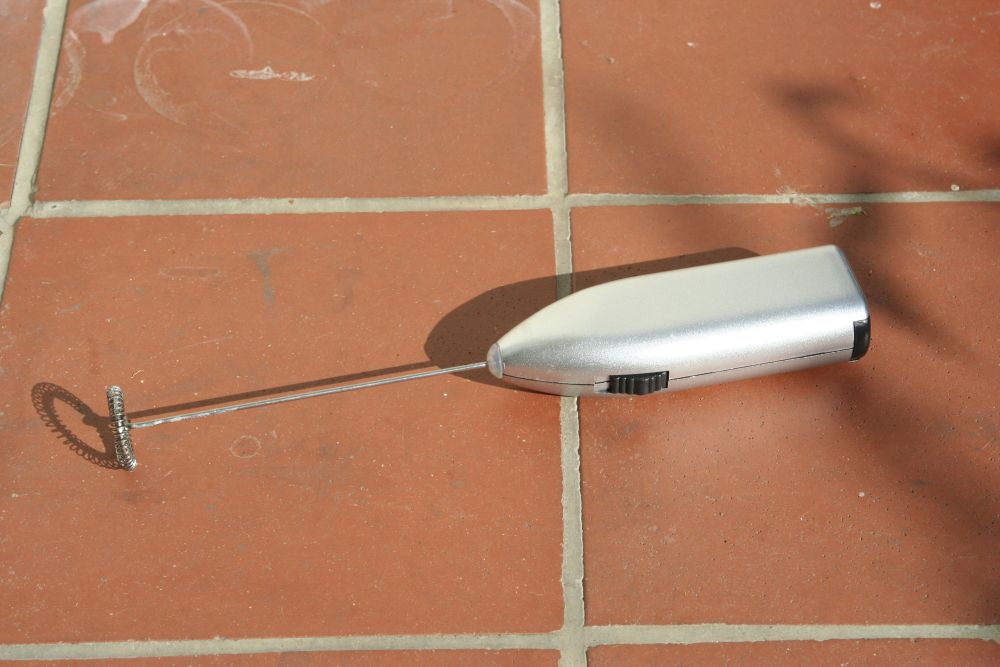
A handheld frother is a small motor in a handle with a wire whisk on a thin shaft. It's inexpensive, small enough for a drawer and works in a mug.
It doesn't heat the milk, so for hot drinks you warm the milk first in a pan or microwave, then whisk it. The foam is lighter and bubblier than from other types and tends to separate within a few minutes, which suits cappuccinos and hot chocolate better than latte art. The whisk also mixes powders, such as matcha or cocoa, very well.
Look for a sturdy shaft that doesn't wobble, a stand or wall holder, and a rechargeable battery (USB-C is handy) or easy-to-change cells. Rinse the whisk under the tap right after use.
Manual plunger frothers
A plunger frother looks like a cafetière: you pour in warm milk and pump the mesh plunger up and down quickly for 20 seconds or so. It makes a surprisingly thick foam with no electricity.
Some stainless steel models can be heated directly on a hob; glass ones often go in the microwave. Check the manufacturer's instructions, as not all can. It's a low-cost, durable option, but the foam is stiffer than steamed milk and harder to pour neatly.
Electric jug frothers
An electric jug frother heats and froths at the press of a button. A small whisk sits at the bottom of the jug and is spun by a magnet in the base, while a heating element warms the milk to a set temperature and switches off automatically.
What to compare:
- Settings: most offer at least hot foam and warm milk; many add cold foam, and some let you choose foam thickness or temperature.
- Capacity: jugs have two maximum lines, a lower one for frothing (foam expands) and a higher one for heating milk only. Check the frothing capacity fits the number of drinks you make at once.
- Detachable jug: a jug that lifts off a power base is easier to pour and clean. Some are dishwasher-safe; most non-stick interiors last longer if washed by hand.
- Whisk storage: the small whisk is easy to lose. Look for a clip in the lid or base.
- Heating type: most jugs use a standard element; some use induction-style heating with a plain stainless steel jug, which is easier to clean.
Jug frothers make very consistent foam and suit people who drink milky coffee from capsule or filter machines. The foam is usually thicker than a well-steamed microfoam, so pouring detailed latte art is harder.
Steam wands
A steam wand on an espresso machine pushes steam through the milk. It heats the milk and, when the tip sits just below the surface, draws in air to make foam. Done well, it produces microfoam: tiny bubbles that make the milk glossy and pourable, which is what latte art needs.
There are two kinds:
- Panarello or auto-froth wands have a sleeve that draws in air automatically. They're forgiving but make bubblier foam.
- Traditional (professional-style) wands are plain metal tips with one or more holes. They take practice, but give the most control.
Basic technique: start with cold milk in a stainless steel pitcher, stretch the milk (add air) briefly with the tip near the surface, then lower the tip to spin the milk into a whirlpool until it's hot. Most baristas stop at around 55 to 65°C (130 to 150°F); hotter milk loses sweetness and the foam breaks down. Wipe the wand and purge it with a short burst of steam immediately, before milk dries on.
For more on choosing a machine, see our guide to espresso machines for beginners.
Rule of thumb: start with cold milk, stop at a temperature where the jug is just too hot to hold comfortably, and clean the frother or wand straight away.
Hot foam vs cold foam
Cold foam is frothed milk without heating, spooned or poured on iced coffee and cold brew. Many jug frothers have a cold setting, and handheld whisks work too. The foam is usually lighter and holds its shape well over a cold drink.
What matters for foam, hot or cold:
- Protein builds the bubbles. Milk proteins form the walls that hold air, so milks with more protein foam more easily.
- Fat adds creaminess but reduces volume. Skimmed milk makes a tall, stiff foam with large bubbles; whole milk makes a smaller, richer and silkier one. Semi-skimmed sits between.
- Freshness counts. Milk close to its date foams less well.
- Temperature limits. Overheating milk, roughly above 70°C (160°F), gives a cooked flavour and weaker foam.
Plant milks
Plant milks vary a lot in how well they foam, mainly because of their protein content and added ingredients.
- "Barista" versions of oat, soy, almond and other milks contain added fats, emulsifiers or stabilisers so they foam and mix with coffee more like dairy milk. If foam matters to you, choose these.
- Soy usually foams well, thanks to its relatively high protein.
- Oat gives a creamy, mild foam, especially in barista versions.
- Almond, rice and coconut drinks in their standard forms often make thin foam that collapses quickly.
- Splitting: some plant milks curdle in hot coffee, especially acidic or very hot coffee. Heat them a little less than dairy and pour the coffee in after the milk.
Some jug frothers have a setting for plant milks, and manufacturers sometimes advise against certain milks in the jug, so check the manual.
Cleaning and care
Milk proteins stick and burn quickly on heated surfaces.
- Rinse jugs and whisks straight after use, before milk dries.
- Use a soft sponge on non-stick interiors; never use abrasive pads.
- Don't immerse an electric base or a handheld frother's motor in water.
- Never run an electric jug frother empty or overfill it past the maximum line.
- Clean steam wands after every use, and soak the tip occasionally in the cleaner the manufacturer recommends.
The short version
- For occasional drinks or matcha and cocoa, a handheld whisk is enough.
- For daily milky coffee without an espresso machine, choose an electric jug with hot and cold settings and a detachable jug.
- For silky microfoam and latte art, you need a steam wand and practice.
- Use cold, fresh milk; skimmed gives more foam, whole milk richer foam.
- Pick barista versions of plant milks, and heat them gently.
- Clean straight away, every time.
Bloiq is reader-supported. Some links may earn us a commission; it never affects what we write. How we make money.
Cover photo: Andrew Fogg, CC BY 2.0, via Wikimedia Commons