Drill bits explained: twist, brad-point, spade, Forstner and masonry
Which drill bit suits wood, metal, masonry or tile, what HSS, cobalt and carbide mean, what bit coatings really add, and how to drill cleaner, safer holes.
A drill is only as good as the bit in its chuck. The wrong bit wanders across the surface, burns the wood, goes blunt in seconds on steel or simply refuses to enter a brick. Bits are also sold with a confusing mix of shapes, metals and colourful coatings. This guide explains what each type is designed for, what the materials and coatings mean, and how to get clean holes without ruining the bit.
Twist bits: the general-purpose standard
The familiar twist bit has a pointed tip and spiral flutes that carry chips out of the hole. It drills metal, plastic and wood, which is why it fills most general-purpose sets.
Two details are worth knowing:
- Point angle. A 118° point is the common general-purpose shape. A flatter 135° point, usually ground as a split point, starts more easily on hard metal and is less inclined to skate across the surface.
- Shank. Most bits have a round shank for a three-jaw chuck. Hex-shank bits fit the quick-change collet of an impact driver, and larger bits often have a reduced shank so that they fit a 10 mm or 13 mm chuck.
In wood, a twist bit works but tends to wander at the start and can tear the fibres around the hole. For neat woodwork, use one of the dedicated wood bits below.
What the bit is made of
The metal matters more than the colour.
- High-speed steel (HSS): the standard material for twist bits. It copes with wood, plastic, aluminium and mild steel, and it can be resharpened.
- Cobalt: HSS alloyed with a few per cent of cobalt, often marked M35 or M42. It keeps its hardness at higher temperatures, so it suits stainless steel and other hard metals. The cobalt runs through the whole bit, so it survives resharpening. Cobalt bits are more brittle than plain HSS, so avoid bending them.
- Carbon steel: found on inexpensive wood bits. It's fine for timber but softens quickly if it overheats.
- Tungsten carbide: extremely hard and heat-resistant, but brittle. On DIY bits it's usually a small tip brazed onto a steel body, as on masonry and tile bits.
Coatings: what they add and what they don't
A coating is a thin surface layer on top of the base metal. It can reduce friction and wear, but it doesn't turn a soft bit into a hard one.
| Finish | What it does | Worth knowing |
|---|---|---|
| Bright (uncoated) | Nothing added; chips slide off easily | Good for wood, plastic and aluminium |
| Black oxide | Mild rust resistance; holds lubricant | A modest step up for general use |
| Titanium nitride (TiN), gold-coloured | Harder, slicker surface; longer life in metal | Sharpening the tip grinds the coating off the cutting edge |
| TiAlN or AlTiN, dark violet-grey | Handles more heat than TiN | Aimed at hard metals and production work |
"Titanium" bits are HSS bits with a titanium nitride coating, not solid titanium. For occasional holes in steel, a good HSS or cobalt bit used at the right speed with cutting oil matters more than the finish.
Wood bits: brad-point, spade and auger
A brad-point bit (also called a lip-and-spur or dowel bit) looks like a twist bit with a sharp centre spike and two raised spurs at the rim. The spike fixes the bit exactly on your mark, and the spurs slice the wood fibres before the cutting edges lift the waste. The result is a round, clean-edged hole. Use brad-point bits for dowel joints, shelf-pin holes and any visible hole in timber or sheet material. They're for wood and soft plastics only; metal ruins the spurs.
A spade bit (or paddle bit) is a flat blade with a centre point. It's cheap and quick, and it bores holes from roughly 6 mm to nearly 40 mm (1/4 to 1 1/2 in). The holes are rough, and the bit splinters the wood where it breaks through. Spade bits are ideal for running cables and pipes through studs and joists, where nobody will see the result.
An auger bit has a threaded tip that pulls the bit into the wood and a deep spiral that clears chips. It's the better choice for deep holes in thick timber. That self-feeding screw pulls hard, so use a low speed and brace the drill's side handle.
Forstner bits and hole saws for large, neat holes
A Forstner bit is guided by its circular rim instead of a long centre point, and it cuts a clean hole with a flat bottom. That lets it do things other bits can't:
- stop partway through the board, for example for the 35 mm cup of a concealed cabinet hinge;
- drill overlapping holes, or a hole at the edge of a board;
- start at an angle to the surface.
Forstner bits need firm, steady pressure and a slow speed, and they heat up in deep holes, so lift the bit often to clear the chips. They work best in a drill press or a drill guide. In a hand-held drill, clamp the work to a solid bench.
A hole saw, a toothed cup on an arbor with a pilot bit, cuts only a ring and removes a disc. It's the practical choice for large through-holes, such as those for door locks, pipes and downlights.
Masonry, tile and glass bits
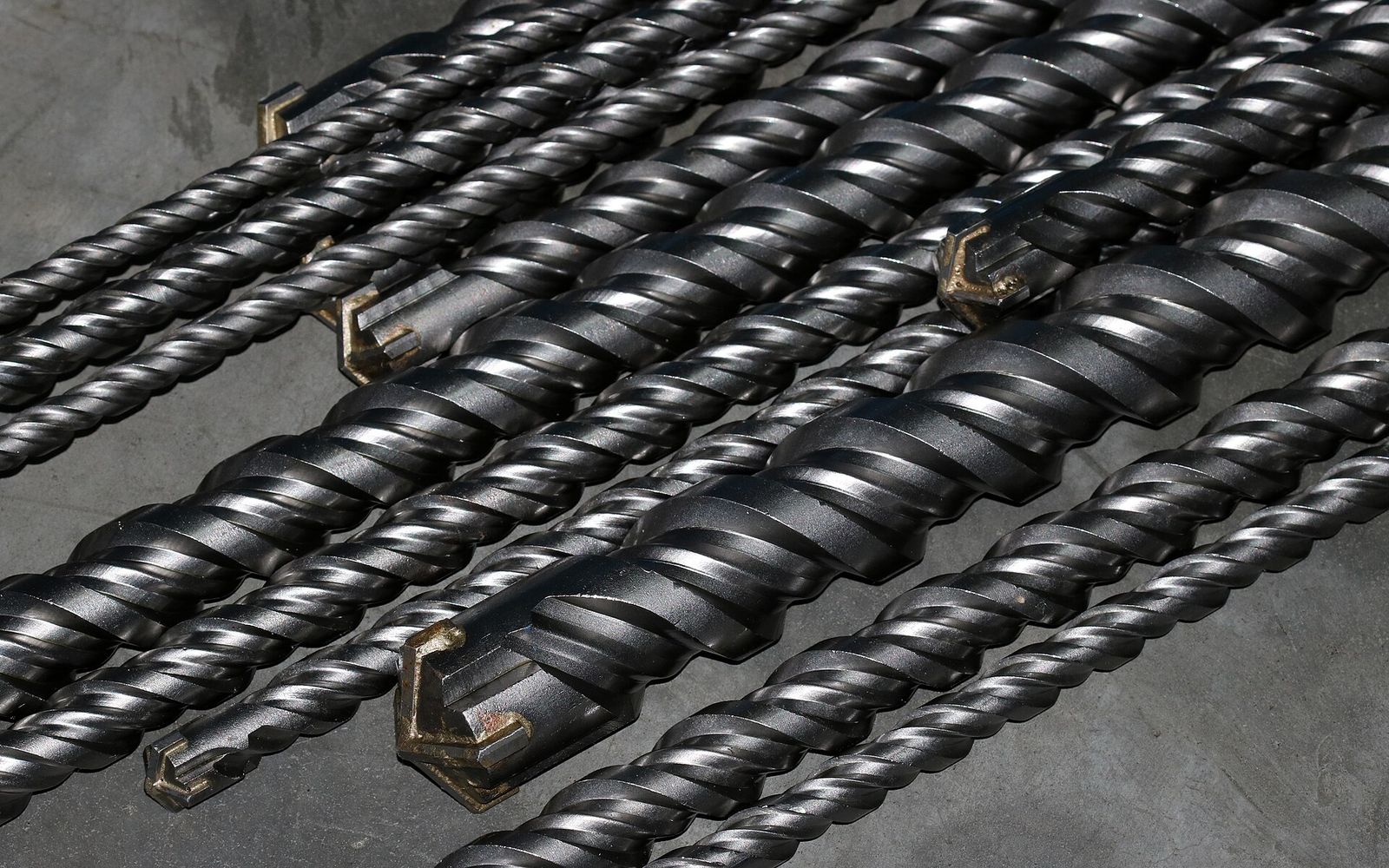
A masonry bit has a carbide tip that is wider than its shaft. Used in a hammer drill, it chips brick, block and mortar as it turns, and the shallow flutes carry out the dust. Rotary hammers take bits with a slotted SDS shank, which slides in the chuck so that the hammer blows reach the tip; they're the right tool for concrete. Our guide to drills, impact drivers and hammer drills explains which machine does what.
Tile and glass need a different approach. Use a spear-point carbide bit or a diamond bit, with the hammer action switched off, at low speed and light pressure. Hard porcelain usually needs diamond, cooled with water. For larger openings, see our guide to tile saws and tile tools.
Step bits for sheet metal
A step bit is a cone with a series of stepped diameters. One bit drills many hole sizes in thin sheet metal and plastic, enlarges existing holes, and leaves a round, nearly burr-free edge where a twist bit would grab and leave a ragged, three-sided hole. Each step is only a few millimetres tall, so step bits suit material thinner than one step: electrical boxes, panels, ducting and car body work.
Speed, pressure and lubrication
Rule of thumb: the larger the bit and the harder the material, the slower the speed. Small bits in wood run fast; large bits, and any bit in steel, run slow.
- Mark the spot. A centre-punch dimple stops a twist bit wandering on metal. Masking tape helps on tile.
- Use cutting oil on steel. It carries heat away and keeps the edge sharp. Blue or straw-coloured chips mean the bit is too hot.
- Step up in metal. Drill a small pilot hole first, then the final size.
- Clear the chips. Pull the bit back regularly in deep holes.
- Prevent tear-out in wood. Clamp a scrap board behind the work, or stop when the point breaks through and finish from the other side.
- Let the bit cut. If you have to lean hard on the drill, the bit is blunt or the speed is wrong.
Safety basics
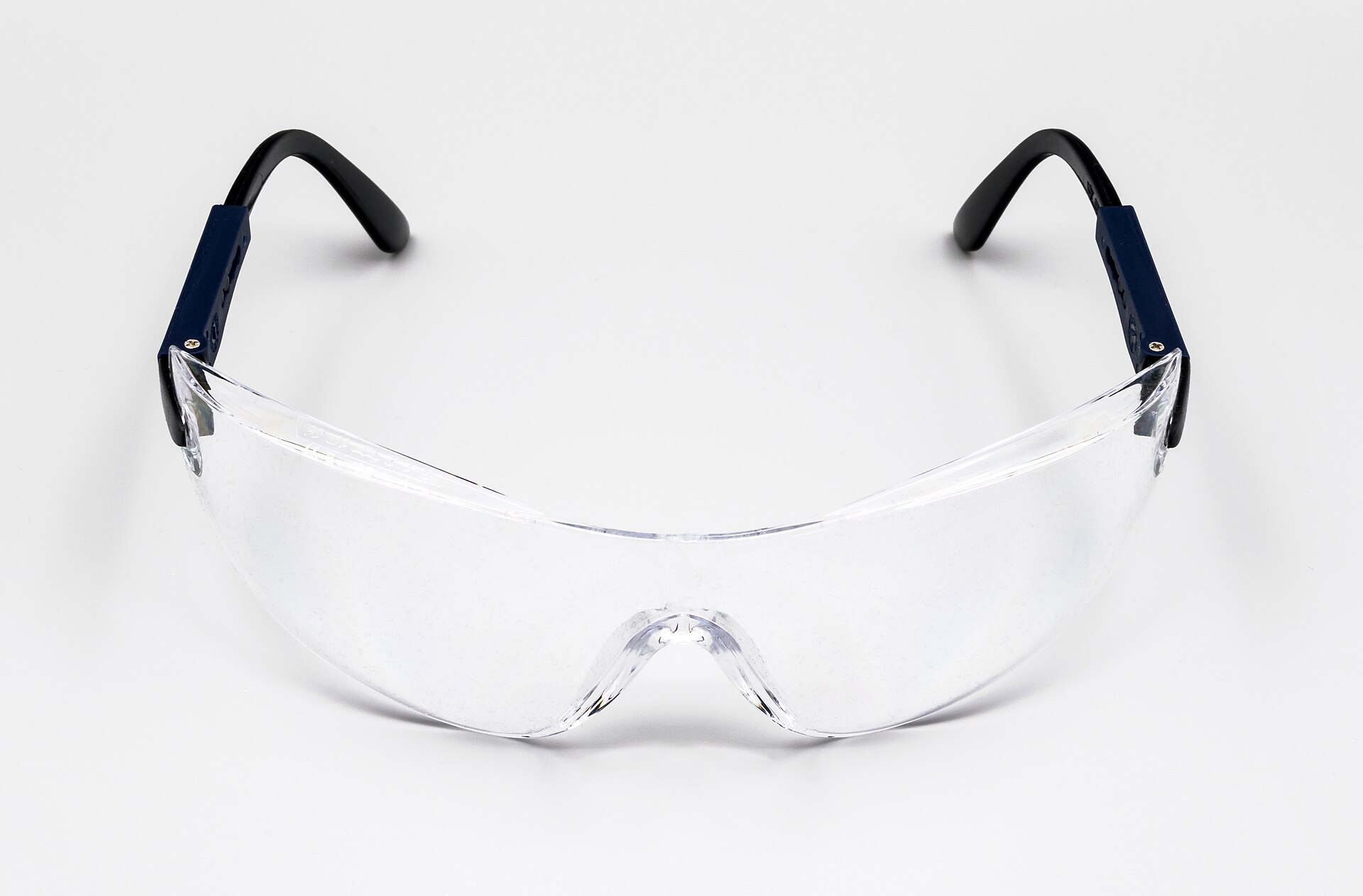
- Wear eye protection, and a dust mask when drilling masonry.
- Clamp small workpieces; never hold them by hand, especially sheet metal.
- Keep loose sleeves, hair and jewellery away from the rotating bit.
- Check walls for hidden cables and pipes before drilling.
- Large bits can jam and twist the drill in your hands. Use the side handle and a low gear.
The short version
- Metal and general use: HSS twist bits; cobalt for stainless and hard steel.
- Clean holes in wood: brad-point bits; Forstner bits for large or flat-bottomed holes.
- Rough holes for cables and pipes: spade or auger bits.
- Brick and block: carbide-tipped masonry bits in a hammer drill; SDS bits in a rotary hammer for concrete.
- Tile and glass: spear-point or diamond bits, with no hammer action.
- Thin sheet metal: a step bit.
- Coatings extend life but don't replace the right material, speed and lubrication.
Bloiq is reader-supported. Some links may earn us a commission; it never affects what we write. How we make money.
Cover photo: George Chernilevsky, Public domain, via Wikimedia Commons