Hand saws explained: panel, tenon, coping and Japanese pull saws
Panel, tenon, coping or Japanese pull saw? How teeth per inch, rip and crosscut tooth patterns, set and hardened teeth affect the cut, and which saw suits which job.
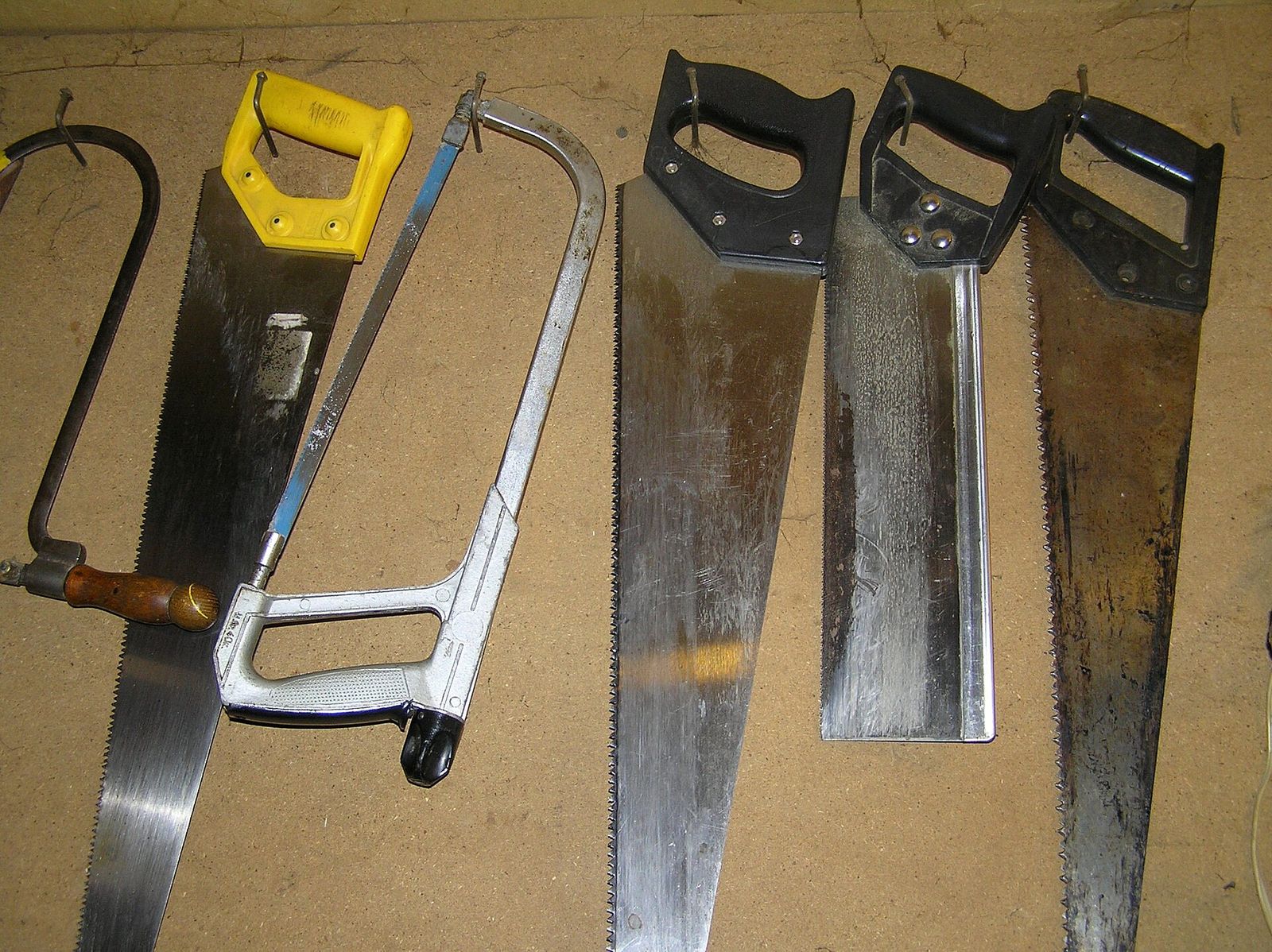
Power saws do the heavy lifting in most workshops, but a good hand saw is still the quickest way to make one cut, trim a joint or work where there's no socket. Hand saws look alike, though, and their labels mean little at first glance. This guide explains the main types, what teeth per inch and tooth patterns actually do, and how Japanese pull saws differ from Western push saws, so you can pick the one or two saws that cover your work.
The main types at a glance
| Saw | Typical blade | Typical TPI | Best for |
|---|---|---|---|
| Panel / hand saw | 450–560 mm (18–22 in), no back | 7–10 | Cutting boards and sheet material to size |
| Tenon saw | 250–350 mm (10–14 in), stiff back | 10–15 | Joints, mitre-box work, accurate cross cuts |
| Dovetail / gent's saw | 150–250 mm (6–10 in), stiff back | 15–20+ | Fine joinery, small mouldings, models |
| Coping saw | Thin blade in a C-shaped frame | 15–25 | Curves, cut-outs, coping skirting joints |
| Japanese pull saw | Thin blade, cuts on the pull | Varies (often fine) | Clean, fast cuts in timber; joinery |
| Hacksaw | 300 mm (12 in) blade in a frame | 18–32 | Metal, plastic pipe, bolts |
Sizes and tooth counts vary by maker, so treat these as typical ranges rather than rules.
What TPI means, and how to choose it
TPI (teeth per inch) is the number of teeth along 25 mm of blade. Some makers quote PPI (points per inch) instead, which counts the tooth tips and comes out one higher than TPI for the same saw, so a 7 PPI saw is roughly a 6 TPI saw.
- Fewer, larger teeth (5–8 TPI) remove more wood per stroke. They cut fast but leave a rougher edge and more splintering on the exit side.
- More, smaller teeth (10–20 TPI) cut slowly but leave a cleaner surface, and they suit thin stock, hardwoods and accurate joints.
Rule of thumb: keep at least three teeth in the material at all times. Fewer than that and the saw snags and jumps; that's why thin sheet and small sections need a fine-toothed saw.
Rip, crosscut and universal teeth
Wood behaves differently along and across the grain, and traditional saws are sharpened for one or the other.
- Rip teeth are filed straight across, like a row of small chisels. They chop efficiently along the grain (ripping a board lengthwise) but tear when cutting across it.
- Crosscut teeth are filed at an angle so each tip acts like a knife, severing fibres cleanly across the grain. They are slow when ripping.
- Universal or triple-ground teeth, found on most modern hardpoint saws, have extra bevels that cut reasonably in both directions and through sheet materials such as plywood and MDF. They're the practical choice for general DIY.
Set is the slight bending of teeth alternately left and right, which makes the cut (the kerf) wider than the blade so it doesn't bind. Too little set and the saw sticks in damp timber; too much and the cut wanders and is rough. Fine joinery saws have very little set.
Hardpoint (induction-hardened) teeth stay sharp far longer than ordinary steel but can't be resharpened with a file. When they dull, the saw or blade is replaced. Traditional saws with softer teeth can be sharpened for decades, which some woodworkers prefer and others find a chore.
Panel saws: the general-purpose saw
A panel saw (often simply called a hand saw) has a long, unbacked blade and is the one to reach for when cutting a board, a length of studding or a sheet of plywood to size. A universal-tooth version around 500–550 mm long with 7–9 TPI suits most home jobs. For long cuts in sheet material, support both sides of the cut so the offcut doesn't drop and tear the last few centimetres.
If you make lots of long, straight cuts, a power saw is quicker and more accurate; see our comparison of circular, mitre and table saws and our guide to track saws.
Tenon, dovetail and other backsaws
Backsaws have a folded strip of brass or steel along the top edge that keeps a thin blade straight. The back also limits the depth of cut, which is why they suit joints rather than thick boards.
- Tenon saws are the all-rounders: cutting tenon shoulders, trimming timber square in a bench hook or mitre box, and cutting small mouldings.
- Dovetail saws are smaller and finer, for the precise cuts of drawer joints and small work. Many are filed rip, since dovetail cuts run along the grain.
- Gent's saws have a straight, in-line handle and fine teeth, popular for models, picture frames and small trim.
A bench hook (a simple board with stops) or a vice holds the work steady; see our guides to workbenches and vices and clamps.
Coping saws for curves
A coping saw holds a thin, narrow blade under tension in a deep C-shaped frame. The blade is held by small pins and can be turned in the frame, which lets you steer around tight curves and cut shapes out of thin wood. For an internal cut-out, drill a hole, thread the blade through and reattach it.
Its classic job is "coping" skirting boards and mouldings at internal corners: shaping the end of one piece to fit the profile of the other, which hides gaps better than a simple mitre. Many people fit the teeth pointing towards the handle so the saw cuts on the pull stroke, which keeps the thin blade in tension; either way works. Blades are inexpensive and break easily, so keep spares. A fret saw is similar but with a deeper frame and finer blades for delicate work.
Japanese pull saws
Japanese saws cut on the pull stroke. Because the blade is in tension when it cuts, it can be much thinner than a Western push saw, which means a narrower kerf, less effort and a cleaner cut. Many people find them easier to start and steer accurately.
The common types:
- Ryoba: double-edged, with rip teeth on one edge and crosscut teeth on the other. A versatile general saw.
- Dozuki: a thin blade with a stiffening back, for fine joinery, much like a Western dovetail saw.
- Kataba: single-edged with no back, so it can cut deeper than a dozuki.
- Kugihiki (flush-cut saw): a flexible blade whose teeth have no set, so it trims dowels and plugs flush without scratching the surface.
Many modern pull saws have replaceable, impulse-hardened blades. The trade-off for the thin blade is fragility: twisting the saw in the cut, forcing it, or hitting a nail can snap teeth or kink the blade. Let the saw do the work, keep strokes straight, and keep it for timber rather than demolition.
Saws for other materials
- Hacksaws cut metal and plastic. Use finer blades (24–32 TPI) for thin tubing and sheet, coarser (18 TPI) for thick bar, and fit the blade with the teeth pointing away from the handle.
- Junior hacksaws handle small bolts and pipe in tight spots.
- Pruning saws have aggressive teeth for green wood, not finished timber.
For curved cuts in thicker material or demolition work, a powered option makes more sense; see our guide to jigsaws and reciprocating saws.
Technique and care
- Mark the line clearly and cut on the waste side of it.
- Start a Western saw with a few light strokes, guiding the blade against your thumb knuckle; start a pull saw with gentle pulls.
- Use the full length of the blade and let the saw's weight do the cutting rather than pressing down.
- Clamp the work; holding it with one hand near the blade is how most saw cuts to hands happen.
- Fit a blade guard when the saw is stored or carried, keep blades dry, and wipe them with a light oil to prevent rust.
- Wear eye protection when cutting metal or overhead; see our workshop safety gear guide.
The short version
- One saw for general DIY: a universal-tooth panel saw around 500–550 mm with 7–9 TPI, or a ryoba pull saw.
- Accurate cross cuts and joints: a tenon saw, ideally with a mitre box or bench hook.
- Fine joinery: a dovetail saw or dozuki.
- Curves and coping skirting: a coping saw and spare blades.
- Metal and pipe: a hacksaw with the right blade for the thickness.
- Before buying: check the TPI, the tooth pattern (rip, crosscut or universal), whether the teeth are hardpoint, and whether replacement blades are available.
Bloiq is reader-supported. Some links may earn us a commission; it never affects what we write. How we make money.
Cover photo: Epukas, CC BY-SA 3.0, via Wikimedia Commons