Jigsaws and reciprocating saws: blades, orbital action and uses
Both saws cut with a blade that moves back and forth, but one is for curves and the other for demolition. Here's how they differ and how to pick the right blade.
Jigsaws and reciprocating saws both drive a straight blade rapidly back and forth, so they're often mentioned together. In practice they do very different jobs: a jigsaw is a shaping tool for curves and cut-outs, while a reciprocating saw is a demolition and rough-cutting tool. This guide explains what each is for, what orbital action does, and how to choose blades so either saw cuts cleanly.
The jigsaw: curves, cut-outs and shaping
A jigsaw holds a short blade that points downwards from under the motor. A flat shoe (base plate) rests on the workpiece, and you steer the saw along a line.
Good for:
- Curves and shapes in plywood, MDF and boards up to moderate thickness
- Cut-outs for sinks, hobs and electrical boxes in worktops and panels
- Notches and short straight cuts where a circular saw would be awkward
- Plastics, thin metal sheet and laminate with the right blade
Most jigsaws have a stroke length of roughly 18–26 mm (about 3/4 to 1 in). Longer strokes use more of the blade's teeth and clear sawdust faster. Variable speed lets you slow down for metal, plastics and tight curves.
The shoe tilts, usually up to 45°, for bevel cuts. Two handle styles exist: top-handle (a D-shaped grip, the most common in North America) and barrel-grip (you hold the motor body, which puts your hand lower and is preferred by some for control on curves). Try both if you can.
What orbital (pendulum) action does
With orbital action switched on, the blade doesn't just move up and down: it also swings forward into the cut on the upstroke and back on the downstroke. That makes the saw cut much faster in wood, at the cost of a rougher edge.
- Setting 0 (off): straight up-and-down. Use for metal, plastics, laminates, tight curves and fine work.
- Middle settings: general cutting in softwood and plywood.
- Highest setting: fast, rough cuts in softwood, where finish doesn't matter.
Many jigsaws have three or four orbital settings. When in doubt, start low.
Getting a clean edge
Standard jigsaw blades cut on the upstroke, so the top face of the workpiece tends to splinter. You can:
- Cut with the good face down, marking your line on the back.
- Use a reverse-tooth (down-cut) blade that cuts on the downstroke, especially for laminate and veneered panels.
- Apply masking tape along the line, or use a splinter guard insert if your saw has one.
Thick material is the jigsaw's weak point: the blade can bend and produce a cut that isn't square to the face. For long, straight cuts, a circular saw with a guide is usually more accurate.
Jigsaw blades
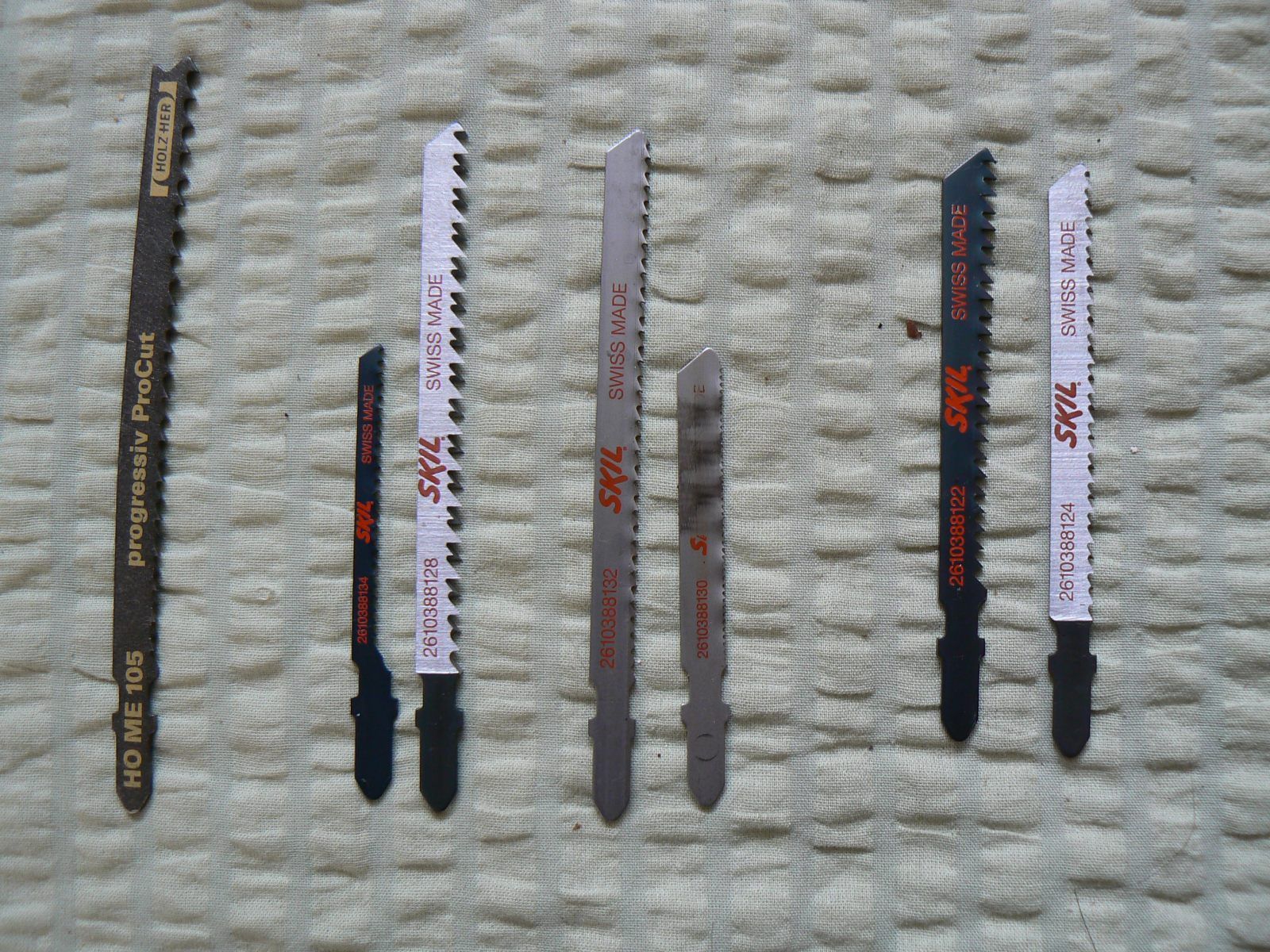
The shank is the part that fits the saw. T-shank blades are now the most common and fit most tool-free blade clamps; older saws may use U-shank blades. Check which your saw takes.
Then choose by material:
| Material | Blade type | Teeth per inch (TPI) |
|---|---|---|
| Softwood, fast cuts | HCS (high-carbon steel), large set teeth | about 6–8 |
| Plywood and hardwood, cleaner cuts | HCS, ground teeth | about 8–12 |
| Laminate and veneered panels | Reverse-tooth HCS | about 10–12 |
| Thin sheet metal | HSS or bimetal | about 21–36 |
| Thicker metal, pipe | Bimetal | about 14–18 |
| Tile, fibre cement | Carbide grit or carbide-tipped | — |
Narrow blades turn tighter curves; wider, thicker blades track straighter. Bimetal blades combine a flexible body with hardened teeth and last longer in tough or mixed materials.
The reciprocating saw: demolition and rough cuts
A reciprocating saw (sometimes called a sabre saw) holds a longer blade that points forward from the front of the tool, like a powered hacksaw. It's built for power and reach, not precision.
Good for:
- Demolition: cutting through studs, old window frames, and wood with nails in it
- Cutting metal pipe, conduit, bolts and threaded rod
- Pruning branches and cutting roots (with a pruning blade)
- Cutting openings in walls and floors, and trimming in places other saws can't reach
Stroke lengths are commonly about 28–32 mm (around 1-1/8 to 1-1/4 in). Many models include orbital action for faster cutting in wood; switch it off for metal. A pivoting shoe at the front should be kept pressed against the work: it steadies the saw and reduces vibration.
Full-size saws need two hands. Compact one-handed models are lighter and handy for overhead work, plumbing and pruning, though slower in heavy cuts.
Reciprocating saw blades
Reciprocating blades use a standard 1/2 in (about 13 mm) tang that fits almost all saws. Common lengths are 6, 9 and 12 in (roughly 150, 225 and 300 mm): use one long enough to pass through the material with some to spare, but no longer than needed, as long blades flex and whip.
| Job | Blade | TPI |
|---|---|---|
| Green wood, pruning | Coarse pruning blade | about 3–6 |
| Demolition, wood with nails | Bimetal demolition (thicker body) | about 6–10 |
| Thick metal, pipe | Bimetal | about 10–18 |
| Thin metal, sheet, conduit | Bimetal | about 18–24 |
| Cast iron, masonry, abrasive materials | Carbide-tipped or carbide grit | — |
A rule of thumb for metal: aim to have at least three teeth in contact with the material at all times. Too coarse a blade snags on thin metal; too fine a blade clogs in wood.
Which one do you need?
| If you mainly... | Choose |
|---|---|
| Cut shapes, curves and cut-outs | Jigsaw |
| Build furniture, crafts or shelving | Jigsaw |
| Renovate, demolish or remove fixtures | Reciprocating saw |
| Cut pipe, bolts or nail-embedded wood | Reciprocating saw |
| Prune branches occasionally | Reciprocating saw with pruning blade |
Many DIYers eventually own both. If you're on a cordless platform, both are widely available as bare tools; see our guide to cordless battery platforms.
Safety
- Check before cutting into walls, floors and ceilings. Pipes and cables hide behind surfaces; switch off the relevant circuit and use a detector first. Our guide to stud finders and laser levels explains what detectors can and can't find.
- Clamp the workpiece and make sure the blade has clearance underneath.
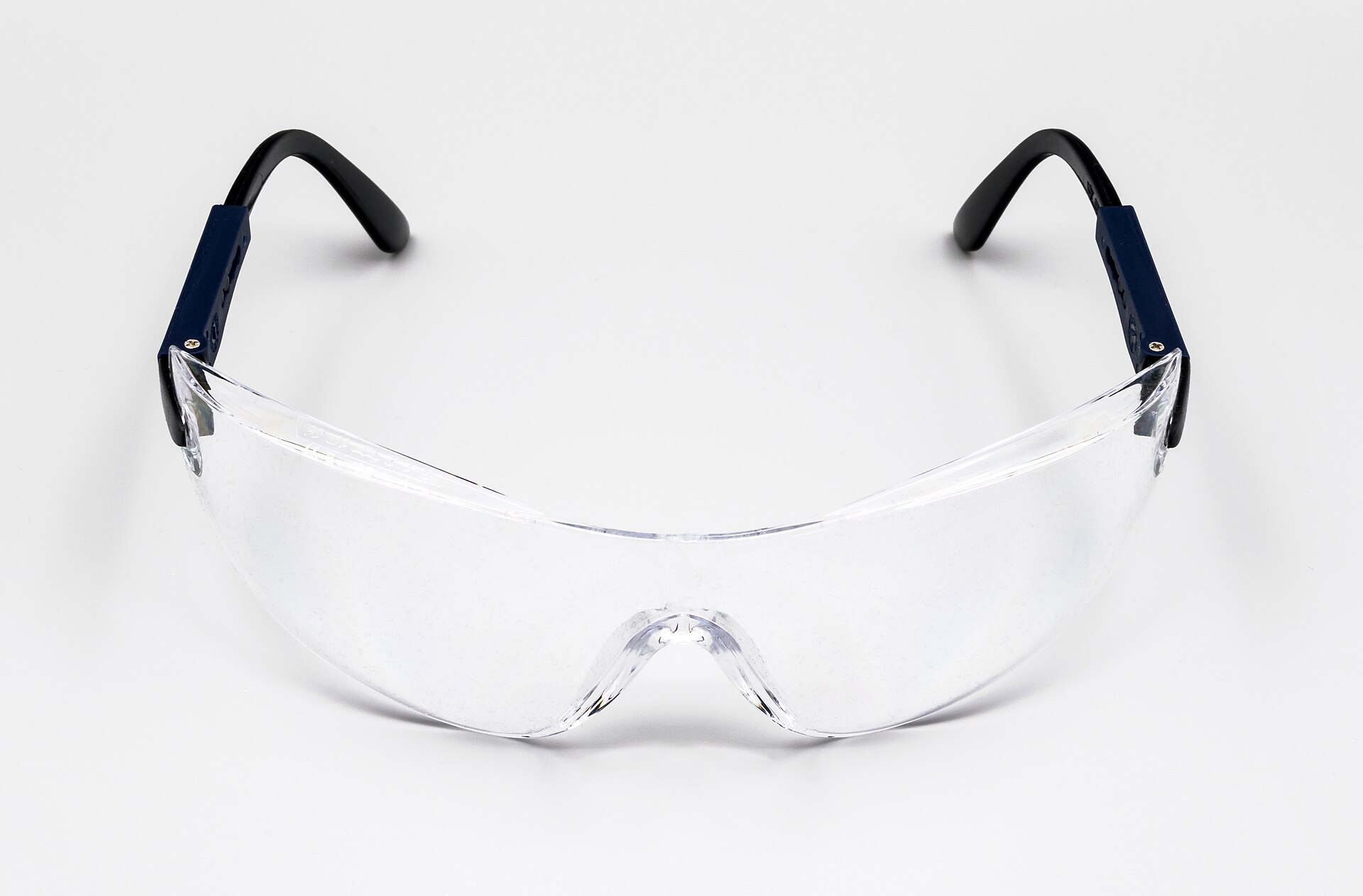
- Wear eye protection, and hearing protection for reciprocating saws and long cuts.
- Let the blade stop before lifting it out of the cut, and don't touch a blade straight after use: it gets hot.
- Disconnect power before changing blades.
- Watch for pinching when cutting overhead or through branches under tension: the blade can bind and the saw can jerk.
The short version
- Jigsaw for curves and cut-outs, reciprocating saw for demolition and rough cuts.
- Orbital action speeds up wood cutting; turn it off for metal and fine work.
- Buy the right blade: TPI and material matter more than the saw's power.
- Cut good face down or use a reverse-tooth blade to avoid splintering.
- Check for cables and pipes before cutting into any wall.
Bloiq is reader-supported. Some links may earn us a commission; it never affects what we write. How we make money.
Cover photo: Zosma, CC BY-SA 3.0, via Wikimedia Commons