Bluetooth speakers: size, sound, waterproofing and battery explained
Why speaker size decides bass and volume, what IP67 means for the beach, how battery claims are measured, and how stereo pairing and party modes work.
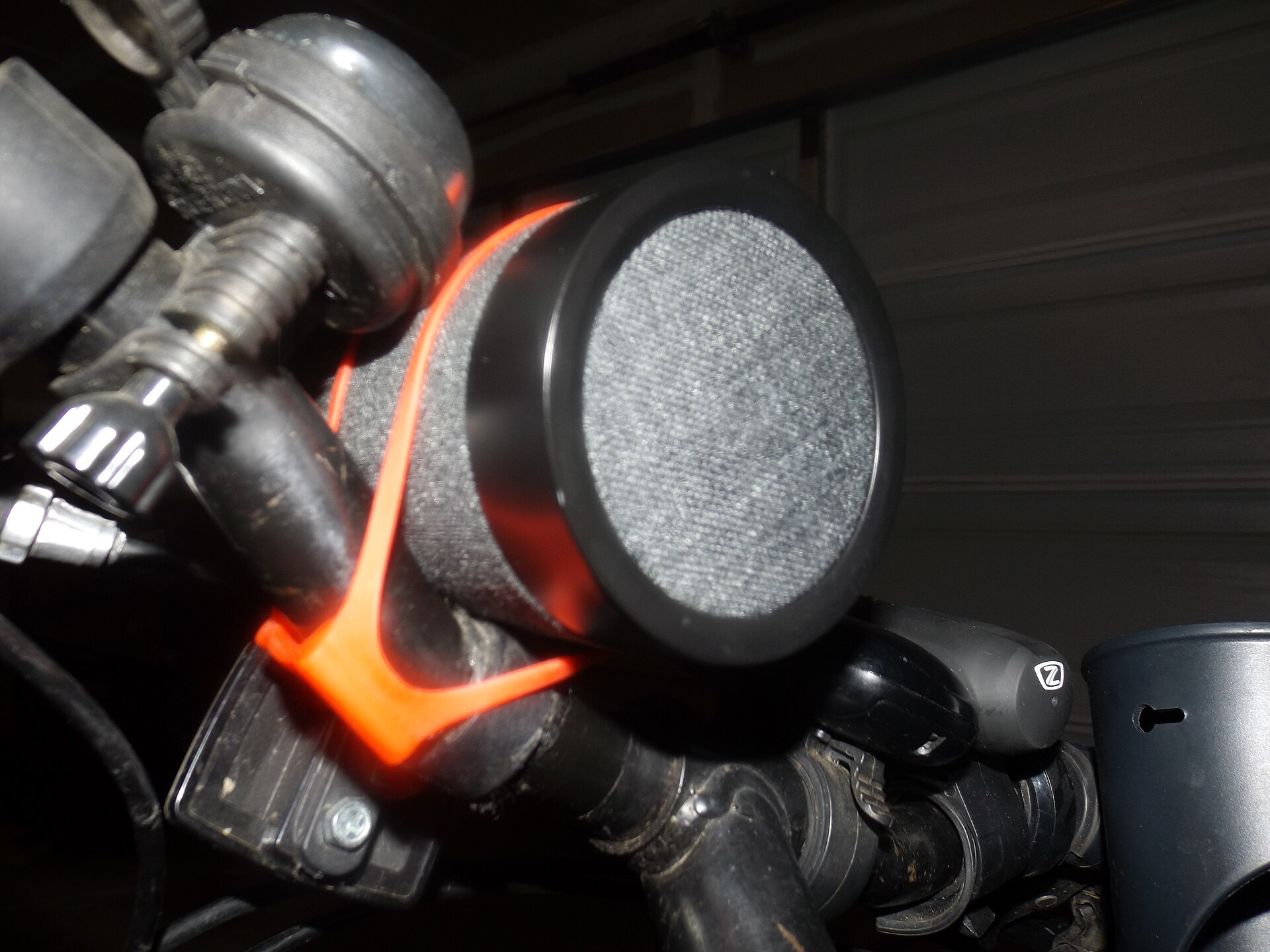
Portable Bluetooth speakers range from pocket-sized cylinders to suitcase-sized party boxes, and almost all of them promise big sound, long battery life and toughness. The physics of sound puts real limits on what a small speaker can do, and the most important specifications, water resistance and battery life, are easy to misread. This guide explains how size relates to sound, what the ratings mean, and how to pair speakers for stereo or bigger spaces.
Why size still matters
Bass is made by moving air. Deep notes need a large surface pushing a lot of air, or a smaller one moving a long way, and a cabinet big enough to support it. That is why size is still the best single predictor of how full and loud a speaker will sound.
- Pocket speakers are fine for speech, podcasts and background music close by. Bass is limited, and they distort or compress when pushed.
- Bottle and lunchbox sizes offer a noticeable step up in bass and volume for a picnic table or a small room.
- Large portables and party speakers move enough air for a garden or a big room, but they are heavy and sometimes need mains power for full volume.
Many speakers use passive radiators, unpowered diaphragms that vibrate in response to the main driver, to extend bass from a small box. Digital processing also helps, often by boosting bass at low volume and reducing it as you turn up to avoid distortion. That is why a small speaker can sound surprisingly full at moderate volume and thinner when pushed.
Rule of thumb: for a given design, a speaker roughly twice the size will sound noticeably fuller and play louder with less strain. No amount of processing fully replaces cabinet size.
Watts, decibels and loudness claims
Output power in watts is a poor guide to loudness. Manufacturers measure it in different ways, some quote peak rather than continuous power, and speaker efficiency varies. A maximum loudness in decibels, when given, is rarely measured the same way by different brands. Compare speakers within one range, or rely on independent measurements, rather than comparing wattage across brands.
360-degree and directional designs
- Directional speakers fire forwards. They sound best facing you or near a wall.
- 360-degree speakers radiate sound all around and suit a table in the middle of a group.
Most single portable speakers are effectively mono. Even those with separate left and right drivers have them so close together that the stereo effect is small. For real stereo, you need two speakers (see below).
IP ratings for outdoors
Water and dust resistance use IP ratings from the international standard IEC 60529. The first digit is dust protection, the second is water protection; an X means not rated.
| Rating | What it means for a speaker |
|---|---|
| IPX4 | Splash resistant: light rain and drinks spills |
| IPX5 / IP55 | Withstands low-pressure water jets |
| IPX7 / IP67 | Survives immersion to 1 m for up to 30 minutes |
| IP6X (first digit 6) | Dust-tight: good for beaches and sand |
IP67 is the practical choice for beaches, pools and boats. A few speakers are designed to float, which helps if one goes overboard, but that is a design feature rather than part of the rating.
Things to keep in mind:
- Ratings apply only with any port covers closed, where a speaker has them.
- Tests use fresh water. After salt water or pool water, many manufacturers recommend rinsing the speaker with fresh water and letting it dry.
- Don't charge a wet speaker. Let the port dry completely first.
- Drop resistance is not part of the IP rating. Claims of ruggedness vary, and some refer to military-style test methods, but these are not a single standard pass or fail.
Battery life: reading the claims
Battery life is usually measured at moderate volume with lighting effects off. At high volume, especially with lots of bass, real playing time can be a fraction of the claim.
- Small speakers typically quote around 10–20 hours; larger models can quote more.
- Party speakers with lights drain faster when the lights are on.
- USB-C charging is now standard on most models; check the charger wattage it needs for full charging speed.
- Some speakers can charge your phone from their battery, which is handy, but it shortens playing time.
- For long storage, many manufacturers recommend leaving the battery partly charged and topping it up every few months.
For longer trips off-grid, our guide to portable power stations and solar panels explains how to keep devices charged.
Stereo pairing and party modes
Two related features are often confused.
- Stereo pairing links two identical or compatible speakers as a left and right pair. Separate them by a couple of metres for a real stereo image. It usually requires two speakers of the same model or range.
- Party or multi-speaker mode plays the same audio on several speakers at once, to spread sound across a garden or a large room. It usually works only within one brand's own ecosystem and sometimes only within particular product generations.
Before buying a second speaker to pair, check the compatibility list; newer and older models from the same brand don't always link up. Auracast, part of Bluetooth LE Audio, is designed to let one source broadcast to many compatible speakers and headphones, which may make multi-speaker setups easier in future, but support is still limited.
Connections and range
- Bluetooth range is typically quoted at around 10 m in open space. Walls, bodies and even the phone in your pocket reduce it.
- Codecs matter less for speakers than for headphones, especially outdoors; most use SBC and AAC.
- Wi-Fi speakers stream directly from the internet or your network, support multi-room audio and don't interrupt playback when a call comes in, but they need a network. Some portable speakers offer both Bluetooth and Wi-Fi.
- Auxiliary or USB-C audio input is useful for older devices.
- Built-in microphone allows speakerphone calls or voice assistants.
Choosing by use
- Shower and bathroom: small, IPX7 or higher, easy buttons.
- Beach and pool: IP67, a carry strap, and ideally a floating design.
- Garden and camping: larger speaker, long battery life, 360-degree sound.
- Parties: large speaker or a pair, and a multi-speaker mode; check whether mains power is needed for full volume.
- Desk and home: consider Wi-Fi or a pair for stereo; for a TV, see our soundbar channels guide.
The short version
- Bigger speakers sound fuller and louder; accept the trade-off in weight.
- Don't compare watts across brands.
- IP67 covers beach days; ratings assume fresh water and closed ports.
- Expect real battery life to be well below the claim at high volume.
- Check compatibility before buying a second speaker for stereo pairing or party mode.
- For personal listening, see our guides to noise-cancelling headphones and true wireless earbuds.
Bloiq is reader-supported. Some links may earn us a commission; it never affects what we write. How we make money.
Cover photo: NeoBatfreak, CC BY-SA 4.0, via Wikimedia Commons
.jpg)