True wireless earbuds: fit, codecs, IP ratings and battery explained
How to get a good seal with ear tips, which Bluetooth codecs matter, what IPX4 and IP55 really mean, and how case battery and multipoint work on earbuds.
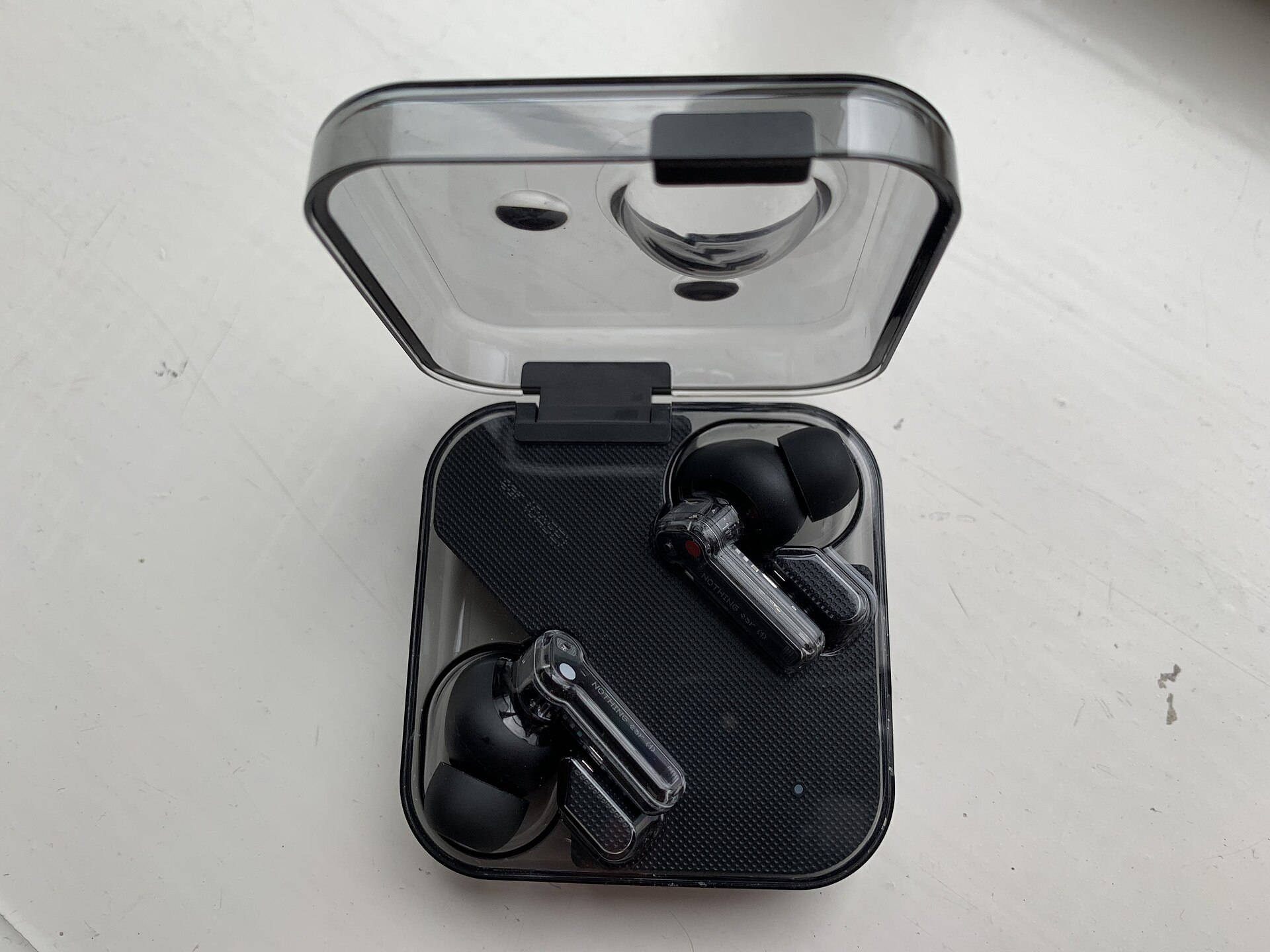
True wireless earbuds have no cable at all: two small buds and a charging case that fits in a pocket. They are the most popular way to listen on the move, but they vary hugely in fit, noise cancellation, water resistance and battery life, and a pair that sounds excellent for one person can sound thin for another simply because it doesn't seal in their ears. This guide explains what to check, starting with the thing that matters most.
Fit comes first
With sealed, in-ear earbuds, the seal between the ear tip and your ear canal decides almost everything:
- Bass depends on it. A poor seal lets low frequencies leak out, and the sound becomes thin and tinny.
- Noise cancellation depends on it. Without a seal, outside sound leaks in and active cancellation cannot keep up.
- Security depends on it. Buds that fit well stay put when you walk, run or turn your head.
Most earbuds come with silicone tips in three or more sizes. It is common to need a different size from the one fitted at the factory, and even a different size for each ear. Some companion apps include a fit test that plays a sound and checks the seal with the internal microphone.
Memory foam tips expand to fill the ear canal and often seal better and more comfortably than silicone, though they wear out sooner and can make the buds harder to fit back in the case. Check that replacement tips are available in the size and shape your buds need.
Shapes and styles
- Stem designs place the microphone closer to your mouth and are easy to grab.
- Compact buds sit mostly inside the ear and suit people who wear hats or sleep on their side, though no earbud is ideal for sleeping.
- Wing tips and ear hooks hold buds in place for running and gym use.
- Open (non-sealing) earbuds rest in the outer ear. They are comfortable and keep you aware of your surroundings, but they have less bass and little or no noise isolation.
- Open-ear designs, such as hooks that sit over the ear or bone-conduction headsets, leave the ear canal completely open, which some runners and cyclists prefer.
Noise cancellation in a small package
Many earbuds now include active noise cancellation (ANC), which is most effective against low, steady noise such as engines and air conditioning. With a good seal, earbud ANC can be very effective, though large over-ear headphones usually still perform better on long flights. A transparency mode that passes outside sound through is equally useful. Our noise-cancelling headphones guide explains how both work.
Codecs and latency
Earbuds use the same Bluetooth codecs as headphones:
- AAC is what Apple devices use.
- aptX Adaptive and LDAC can carry more data from many Android phones.
- LC3, part of Bluetooth LE Audio, is newer and more efficient, and supports Auracast broadcast audio. Support on phones and earbuds is growing.
The source device must support the same codec, and higher-bit-rate settings use more battery and need a stronger connection. With earbuds, fit and tuning make a much bigger difference than the codec.
Latency is the delay between the sound being sent and reaching your ears. Video apps compensate for it, so lip-sync is usually fine. In games, a delay can be noticeable; some earbuds have a low-latency or gaming mode, and some come with a USB-C dongle for a faster connection.
IP ratings: what the numbers mean
Water and dust resistance are described by IP ratings from the international standard IEC 60529. The first digit is dust protection (0–6) and the second is water protection (0–9). An X means that property was not rated.
| Rating | What it means in practice |
|---|---|
| IPX4 | Splashes from any direction: rain and sweat |
| IPX5 | Low-pressure water jets; can be rinsed |
| IP54 / IP55 | As IPX4 / IPX5, plus protection against dust |
| IPX7 / IP57 | Immersion to 1 m for up to 30 minutes |
Some points to keep in mind:
- The charging case is usually not rated at all. Dry the buds before putting them back.
- Ratings are tested with fresh water. Salt water, chlorinated pool water and soapy water are not covered.
- Standard Bluetooth doesn't work well underwater, so ordinary earbuds are not for swimming, even if they survive immersion.
- Water resistance can decline as seals age, and water damage is often excluded from warranties.
Rule of thumb: IPX4 is enough for gym sessions and rain; choose IPX5 or higher if you sweat heavily or want to rinse them.
Battery: buds and case
Earbud battery life is quoted in two numbers.
- Buds alone: commonly around 5–8 hours per charge with ANC on, sometimes more, and longer with it off.
- With the case: the case holds enough energy to recharge the buds several times, typically giving 20–30 hours or more in total.
Most cases charge over USB-C, and many also support Qi wireless charging. A quick-charge feature can add an hour or so of listening from a few minutes in the case.
The batteries are tiny and almost never replaceable, so capacity gradually falls over a few years of daily use. Features that help: charging limits or optimised charging in the app, and the ability to use one bud at a time while the other charges.
Multipoint and switching devices
Multipoint means the earbuds stay connected to two devices at once, such as a phone and a laptop. Music on the laptop plays through the earbuds, and when a call comes in on the phone they switch to it automatically.
- It is not the same as remembering several paired devices, which almost all earbuds do.
- Implementation varies. On some models, choosing a high-bit-rate codec or certain features disables multipoint.
- Some ecosystems offer automatic switching between their own devices through a shared account, which works differently from Bluetooth multipoint.
Calls, controls and other details
- Microphones. Several microphones per bud help pick out your voice; wind reduction matters outdoors.
- Controls. Touch controls are easy to trigger by accident; pressure-sensitive stems or buttons avoid this. Check whether controls can be customised.
- In-ear detection pauses music when you remove a bud.
- Finding lost buds. Some work with phone location networks or can play a sound.
- Case size. Check that it really fits the pocket you plan to use.
The short version
- Fit decides sound, noise cancellation and comfort; try all the tip sizes.
- Match codecs to your phone, but don't pay extra for them if you use an iPhone.
- IPX4 covers rain and sweat; none of this makes ordinary buds suitable for swimming.
- Look at buds-only battery life with ANC on, not just the total with the case.
- Choose multipoint if you switch between a phone and a computer.
- For sharing music out loud, see our Bluetooth speakers guide.
Bloiq is reader-supported. Some links may earn us a commission; it never affects what we write. How we make money.
Cover photo: Premeditated, CC BY-SA 4.0, via Wikimedia Commons
_open_wireless_charging_case_(black).jpg)