Garden sheds: metal, wood or resin, plus foundations and permits
How wooden, metal and resin sheds compare for upkeep, strength and security, which base suits each, and the permit and setback questions to check before you build.
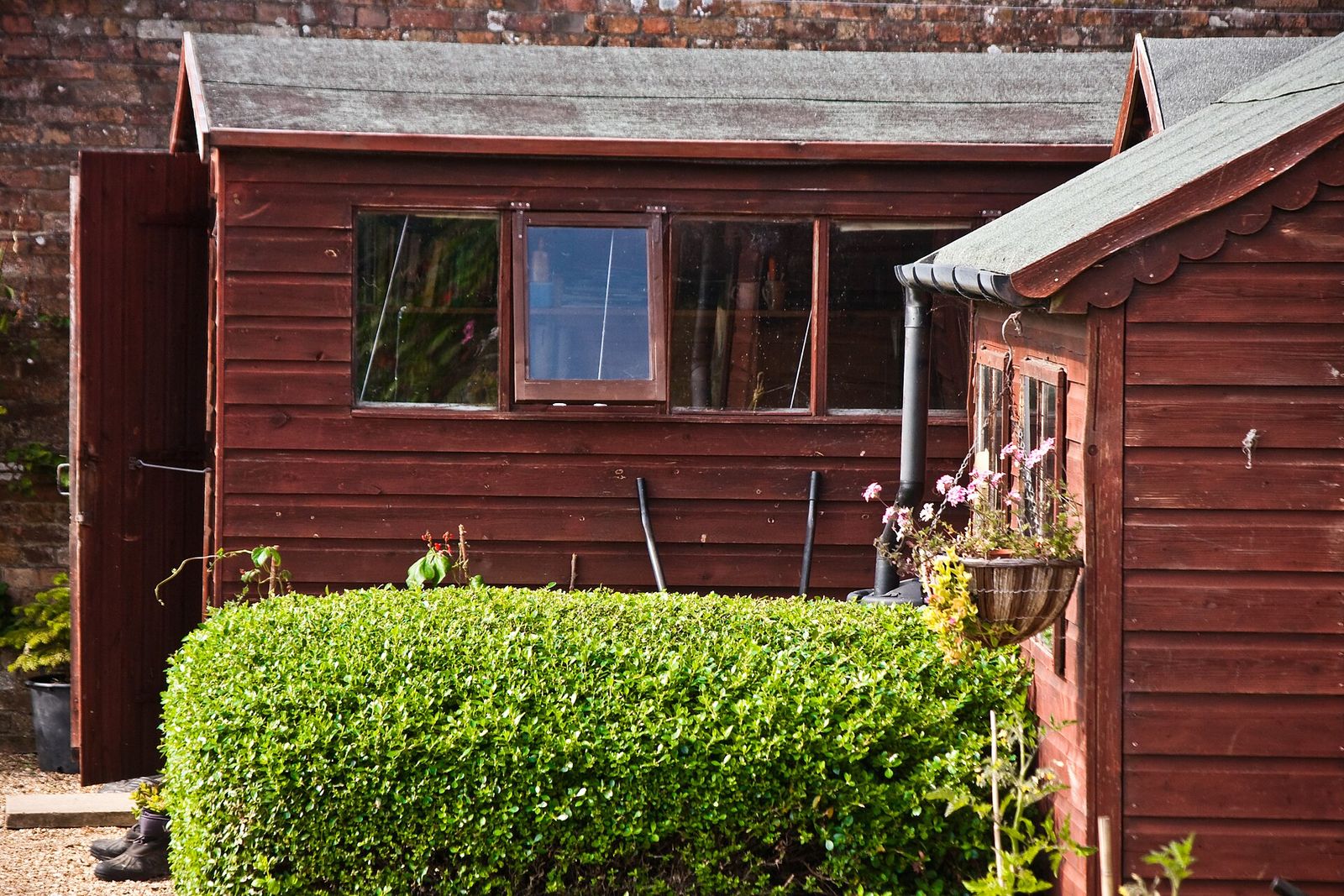
A shed gets the mower, bikes and tools out of the garage or the house, but the wrong one can rot, rust, leak or shift in the first big storm. The main decision is between wood, metal and resin (plastic), and each needs the right base underneath it. This guide compares the three materials, explains how to size a shed and what to build it on, and covers the permit questions to check before you start.
Wood, metal and resin at a glance
| Wood | Metal | Resin (plastic) | |
|---|---|---|---|
| Upkeep | Preservative or paint every few years | Touch up scratches before rust starts | Little beyond washing |
| Main enemy | Rot and insects | Rust and condensation | Sun, heat and heavy snow |
| Fitting shelves and hooks | Easy: screw almost anywhere | Hard without brackets | Usually needs matching accessories |
| Weight and wind | Heavy and stable | Light; must be anchored | Light; must be anchored |
| Customising (windows, power, insulation) | Easy | Difficult | Difficult |
Wooden sheds: adaptable and easy to fit out
Most wooden sheds are softwood such as pine, spruce or fir; cedar and other naturally durable species cost more but resist rot better. How the timber is treated matters as much as the species. Pressure-treated timber has preservative forced deep into it and lasts much longer than dip-treated timber, which is only coated on the surface and needs a preservative or paint soon after assembly and regularly after that.
The cladding also varies. Overlap (feather-edge) boards are the cheapest and let in the most draughts and water. Shiplap and tongue-and-groove boards interlock and shed rain better. Thicker cladding and a heavier frame resist warping, splitting and forced entry, and treated timber bearers keep the floor off the ground.
Best for: workshops, potting sheds and anything you want to insulate, wire or fit with a bench; see our guide to workbenches and vises. Watch out for: maintenance, and for soil, leaves or plants piled against the walls. Leave enough space around the shed to reach every side when it needs re-treating.
Metal sheds: secure and fire-resistant
Metal sheds are usually galvanised steel panels with a painted or powder-coated finish. Aluminium versions don't rust but dent more easily. They don't rot, insects can't eat them and they don't burn.
Their big weakness is condensation. On a cool night after a warm day, moisture forms on the underside of a metal roof and drips onto whatever is stored below. Vents, an anti-condensation lining on the roof and a damp-proof membrane under a concrete base all help. Panels have sharp edges, so wear gloves, and assemble on a calm day: a half-built metal shed catches the wind like a sail. Many come without a floor, so plan for a base or a floor kit, and always anchor them down.
Best for: secure storage of tools, bikes and garden machinery, and sites near the house where a non-combustible building is an advantage. Watch out for: thin panels that dent, and scratches that let rust start.
Resin sheds: low maintenance
Resin sheds are made from moulded plastic panels, usually high-density polyethylene or polypropylene, with UV stabilisers to slow fading and brittleness. Larger models often have a steel-reinforced frame or roof. They never need painting, don't rot or rust, wipe clean, and many include a moulded floor. Interlocking panels make assembly fairly quick.
Best for: low-upkeep storage of garden tools, furniture cushions and bins. Watch out for:
- A level base. Resin sheds are less forgiving than wood: if the base is out of level, the panels twist and the doors stop lining up.
- Snow and sun. Check the roof's snow-load rating if you get heavy snow, and expect cheaper panels to fade or turn brittle after years of strong sun.
- Heat. Plastic softens and can melt, so keep it well away from barbecues and fire pits.
- Fitting out. Shelving usually has to be the manufacturer's own system or freestanding.
Getting the size and layout right
Rule of thumb: lay everything you plan to store on the lawn, measure the area it covers, then add a walkway at least 60 cm (2 ft) wide to reach the back. If you're torn between two sizes, the bigger one is usually the better buy, because sheds fill up.
- Door width matters as much as floor area. A ride-on mower, wheelbarrow or bike with panniers may need double doors; check the clear opening, not the shed size. See our guide to lawn mower types for typical sizes.
- Roof shape sets the headroom. An apex roof (two slopes meeting at a ridge) gives standing room in the middle. A pent roof (a single slope) suits a spot against a fence or wall but is low at one side.
- Nominal sizes such as "8 × 6" are approximate and may include the roof overhang. Check the external and internal dimensions, especially if you're close to a boundary or a permit threshold.
Roofs, ventilation and security
- Roof covering. Basic roofing felt is common on wooden sheds but wears out sooner than heavier felt, shingles, rubber membrane or metal sheets. A generous overhang and a gutter keep water off the walls.
- Ventilation. A low vent and a high vent let damp air out and cut condensation in every type of shed.
- Windows bring in light but show what's inside; frosted film or a blind hides the contents.
- Security. Look for sturdy hinges fixed with bolts or security screws, a hasp you can't unscrew from outside and a strong padlock. Anchor the shed to its base.
- Fuel. Store petrol only in approved containers, away from heaters and sparks, and keep the shed ventilated.
Foundations: what goes under the shed
Every shed needs a base that is level, firm and well drained. The common options:
- Concrete slab: the most durable and the best way to bolt down a metal shed; typically about 10 cm (4 in) of concrete on a compacted sub-base. It's permanent and the most work.
- Paving slabs: laid on a compacted sub-base with sand or mortar; a good DIY choice for small and medium sheds.
- Gravel pad: compacted crushed stone (not rounded pea gravel) inside a treated-timber frame. It drains well and is common under wooden sheds on timber skids.
- Timber frame on blocks or piers: useful on sloping ground and keeps air moving under the floor.
- Plastic grid bases: interlocking grids filled with gravel; light, permeable and quick to lay on level ground.
- Ground screws: steel screws driven into the ground to carry a timber frame, with little digging. Check that your soil suits them.
Keep a solid base close to the shed's footprint: a slab that sticks out well beyond the walls catches rain and channels it underneath them. Check that the base is square by measuring its diagonals, slope the surrounding ground away from it, and keep wooden walls and floors clear of the soil. Before you dig, contact your local utility-locating service to mark buried cables and pipes.
Permits, setbacks and other rules
Shed rules are local and change, so treat these as questions to ask:
- Size and height thresholds. Many places let you put up a small, single-storey shed without a building permit, but require one above a certain floor area or height. The limits vary widely.
- Position and setbacks. Zoning or planning rules often set minimum distances from boundaries and other buildings, limit height near a boundary and restrict sheds in front gardens. In the UK, many garden buildings fall under "permitted development", within limits on height, position and how much of the garden they cover, with tighter rules for listed buildings and protected areas.
- Associations and covenants. Homeowners' associations, deed covenants and leases may control size, colour and materials.
- Use. Turning a shed into an office, studio or sleeping space can bring in different building rules. Wiring should be done by a qualified electrician, with a permit or inspection where required.
- Fire and easements. Some areas set distances from the house, especially where wildfire is a risk, and easements may be off limits.
Check the current rules with your local building or planning department before you buy, and keep any written answer. Our guide to gazebos and pergolas covers similar questions for shade structures.
The short version
- Wood to fit out as a workshop, if you'll maintain it; prefer pressure-treated timber and interlocking cladding.
- Metal for secure, fire-resistant storage; ventilate, line the roof and anchor it.
- Resin for low upkeep, on a perfectly level base.
- Size up, and check the door opening and headroom.
- Build a level, firm, well-drained base.
- Check permits, setbacks and association rules before you order.
Bloiq is reader-supported. Some links may earn us a commission; it never affects what we write. How we make money.
Cover photo: Garry Knight, CC BY 2.0, via Wikimedia Commons


.jpg)