Hardtop gazebo, soft-top gazebo or pergola? How to choose
Roof materials, snow and wind ratings, anchoring, permits and sizing: what separates a shade structure that lasts for years from one that folds in the first storm.
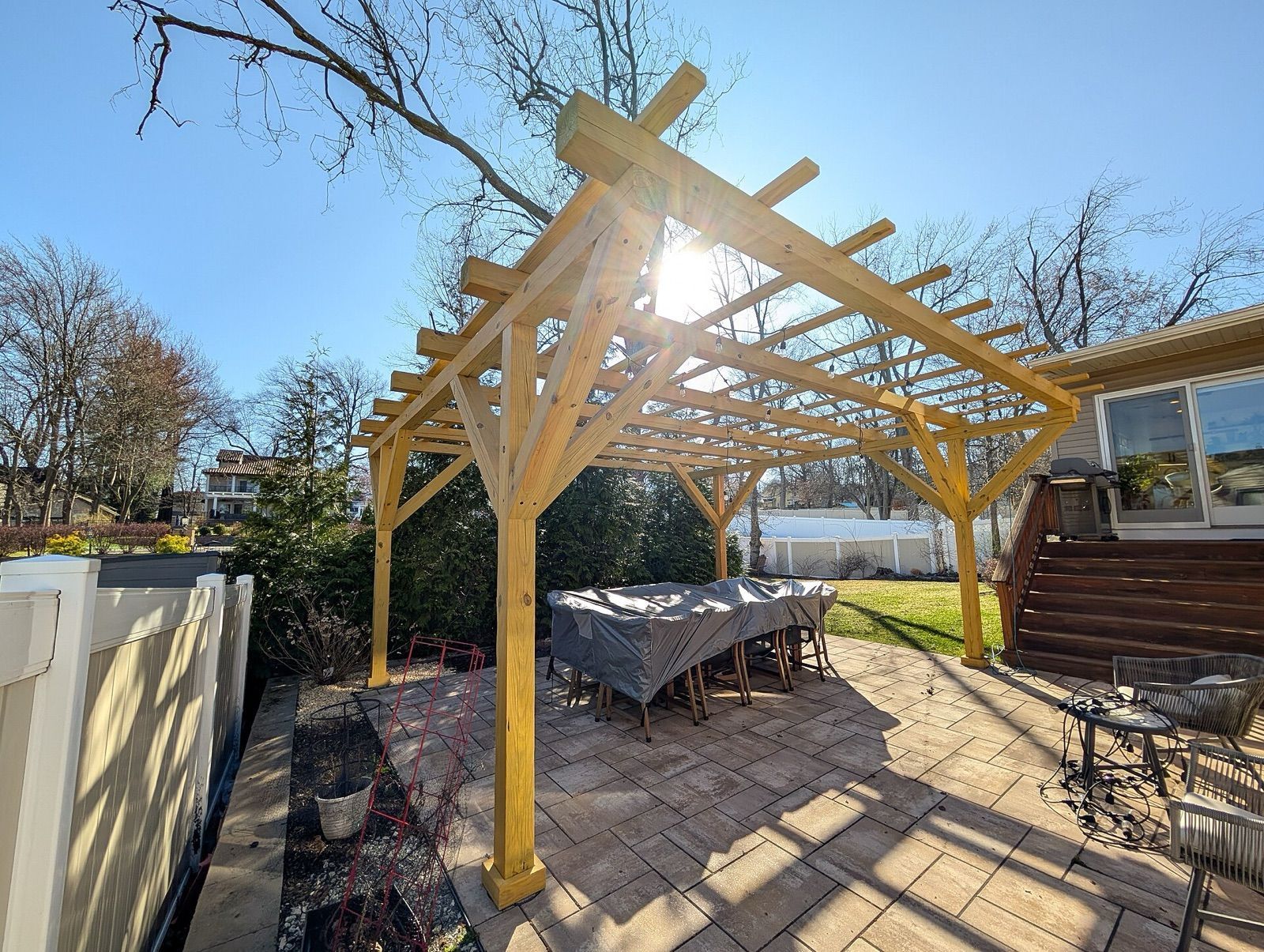
A covered spot in the garden turns a patio into an outdoor room, but the three common options behave very differently once the weather turns. A soft-top gazebo is cheap and light, a hardtop gazebo is a small permanent building, and a pergola sits somewhere in between depending on its roof. This guide explains the materials, the ratings worth reading and the practical questions (anchoring, permits and size) that decide which one suits your space and climate.
The three types at a glance
- Soft-top gazebo: a metal frame with a fabric canopy, usually polyester with a water-resistant coating, often with a vented double tier and zip-on mosquito netting. Designed as a seasonal structure.
- Hardtop gazebo: a metal frame with a rigid roof of galvanised steel or polycarbonate panels. Intended to stay up all year and bolted down like a small building.
- Pergola: posts and beams with an open or partly open roof. The top can be timber or aluminium slats, a retractable fabric canopy, or adjustable aluminium louvres that close to shed rain.
| Soft-top gazebo | Hardtop gazebo | Pergola | |
|---|---|---|---|
| Rain protection | Good while the fabric lasts | Very good | None to very good (louvred) |
| Snow | Take the canopy down | Only up to its rated load | Open roofs shed snow; louvres vary |
| Wind | Weakest; remove in storms | Strong once anchored | Strong once anchored |
| Year-round use | Rarely | Yes | Yes |
| Typical lifespan limit | Canopy fabric (UV) | Fasteners, finish | Finish, canopy if fitted |
| Anchoring | Stakes or weights | Bolts into concrete or deck framing | Bolts or footings |
Frame materials: aluminium, steel and wood
Aluminium doesn't rust, is light enough for two people to assemble, and is the usual choice for louvred pergolas and many hardtops. It is less stiff than steel, so good aluminium frames use thicker or larger-section posts and beams. Powder coating protects the finish and gives it colour.
Steel is stronger for its size and cheaper, which is why many hardtop gazebos use powder-coated steel frames. The weakness is corrosion: wherever the coating is chipped during assembly or later, bare steel will rust. Keep a touch-up pen handy and check cut ends and screw holes each spring.
Wood (cedar, pressure-treated pine or hardwood) is common for pergolas and traditional gazebos. It looks natural but needs staining or sealing every few years.
Look at the hardware too: stainless-steel or coated fasteners resist corrosion far better than plain zinc-plated screws.
Roof materials: galvanised steel, polycarbonate and fabric
- Galvanised steel roof panels are zinc-coated and usually painted or powder coated on top. They are the strongest option against hail and falling branches, block all sun and are the usual basis for higher snow-load ratings. The trade-offs are heat under the roof on still summer days (a vented double roof helps) and noise in heavy rain.
- Polycarbonate panels let light through while blocking most UV, so the space underneath feels bright but less harsh. Better panels have a UV-protective layer on the outside to stop yellowing. They are lighter than steel and more flexible, which can mean lower snow ratings.
- Aluminium roofs and louvres don't rust and can be adjusted on louvred pergolas for sun, shade and airflow. Closed louvres channel rain into gutters built into the beams; check where that water drains.
- Fabric canopies are light and inexpensive, but sunlight breaks down the fibres and coating over time. Expect to replace a canopy after a few seasons in strong sun, and check that replacement canopies are available for the model you buy.
Snow and wind loads: read the ratings
Hardtop gazebos and some pergolas quote a snow load rating, normally in kilograms per square metre or pounds per square foot (1 psf is about 4.9 kg/m²). It is the weight the roof is designed to carry spread evenly across its surface. Ratings vary widely between models, and lower-cost hardtops are often rated for far less snow than a Canadian or mountain winter can deliver. Wet, heavy snow and drifts against a nearby wall weigh much more than fresh powder.
Rule of thumb: compare the stated snow load with the design snow load for your area, available from your local building department, and plan to clear the roof with a soft roof rake whenever snow builds up, rather than relying on the rating alone.
A wind rating is usually given as a speed. It only applies if the structure is anchored exactly as the instructions describe. Soft-top gazebos are the most vulnerable: the canopy acts like a sail, so take it down or remove it before strong winds, and don't leave it up over winter. Open or remove side curtains in a blow; they add a lot of wind area.
Anchoring: the most important part of the install
An unanchored gazebo can lift, twist or slide in a gust, which is how most frames get bent. Match the anchoring to the surface:
- Concrete slab or pad: expansion (wedge) anchors or concrete screws through the post base plates. The slab must be thick and sound enough; old or thin concrete can crack at the anchors.
- Wooden deck: screw or bolt the base plates through the decking into the joists or added blocking underneath, not just into the deck boards. Check that the deck itself is solidly built and can carry the extra weight and uplift.
- Lawn or soil: concrete footings below the frost line are the most secure option for a permanent structure. Ground spikes and screw anchors suit only light soft-top gazebos.
- Weights: for a soft-top on hard ground where drilling isn't allowed, use purpose-made weights on every leg, following the maker's recommendation, and still take the canopy down in storms.
Before digging footings, contact your local utility-locating service so that buried gas, power and water lines are marked.
Permits, setbacks and HOA rules
Rules differ between municipalities, but some general patterns are worth knowing:
- Size and height thresholds. Many places allow small freestanding accessory structures without a permit but require one above a certain floor area or height. Hardtops and pergolas can cross those thresholds.
- Attached structures. A pergola or gazebo fixed to the house wall is more likely to need a permit than a freestanding one, because it affects the house structure and drainage.
- Setbacks. Local zoning usually sets a minimum distance from property lines, and sometimes from the house or pool.
- Homeowners' associations and condo rules may restrict height, colour, roof material or location, and may require approval before installation.
- Electrics. Adding lighting, fans or heaters normally requires work done to local electrical code, often by a licensed electrician.
Check with your local building department and, where relevant, your association before you buy, not after the parts arrive.
Sizing: plan for furniture and clearance
Common sizes run from about 3 × 3 m (10 × 10 ft) to 3.6 × 6 m (12 × 20 ft). To choose:
- Measure the furniture you'll put underneath, then add walking space. Allow roughly 0.9 m (3 ft) behind dining chairs so people can sit down and get up.
- Check how the size is measured. Many listings quote the roof or eave dimensions; the posts sit inside that, so the usable floor area is smaller.
- Check head height at the lowest point of the roof edge, especially if you're tall or planning to hang a light or fan.
- Leave space around the outside for gutters, drainage and access for cleaning and maintenance.
As a rough guide, a small bistro set fits under 3 × 3 m, a dining table for six is more comfortable under about 3 × 3.6 m (10 × 12 ft) or larger, and a sofa set with a coffee table often needs 3.6 × 4.2 m (12 × 14 ft) or more. For a hot tub, follow the tub maker's clearance and ventilation advice as well as the gazebo's.
Grills, heaters and fire
Never use a grill, fire pit or open flame under a fabric canopy. Some hardtop "grill gazebos" are designed for cooking, but follow both the grill's and the structure's clearance instructions, and only use heaters that are rated for use under a covered outdoor space.
The short version
- Seasonal shade on a budget: a soft-top gazebo, taken down for winter and in storms.
- Year-round shelter, including snow: a hardtop with a galvanised steel roof and a snow load rating that suits your area, bolted down properly.
- Light and airflow with adjustable cover: a louvred aluminium pergola.
- Before buying: confirm permits and association rules, measure your furniture plus clearance, and plan the anchoring for your surface.
Bloiq is reader-supported. Some links may earn us a commission; it never affects what we write. How we make money.
Cover photo: FeldBum, CC BY-SA 4.0, via Wikimedia Commons