Slow cookers: sizes, programmable models and food safety explained
How to choose a slow cooker: the right capacity and shape, manual versus programmable controls, searing inserts, and the food-safety rules that matter.
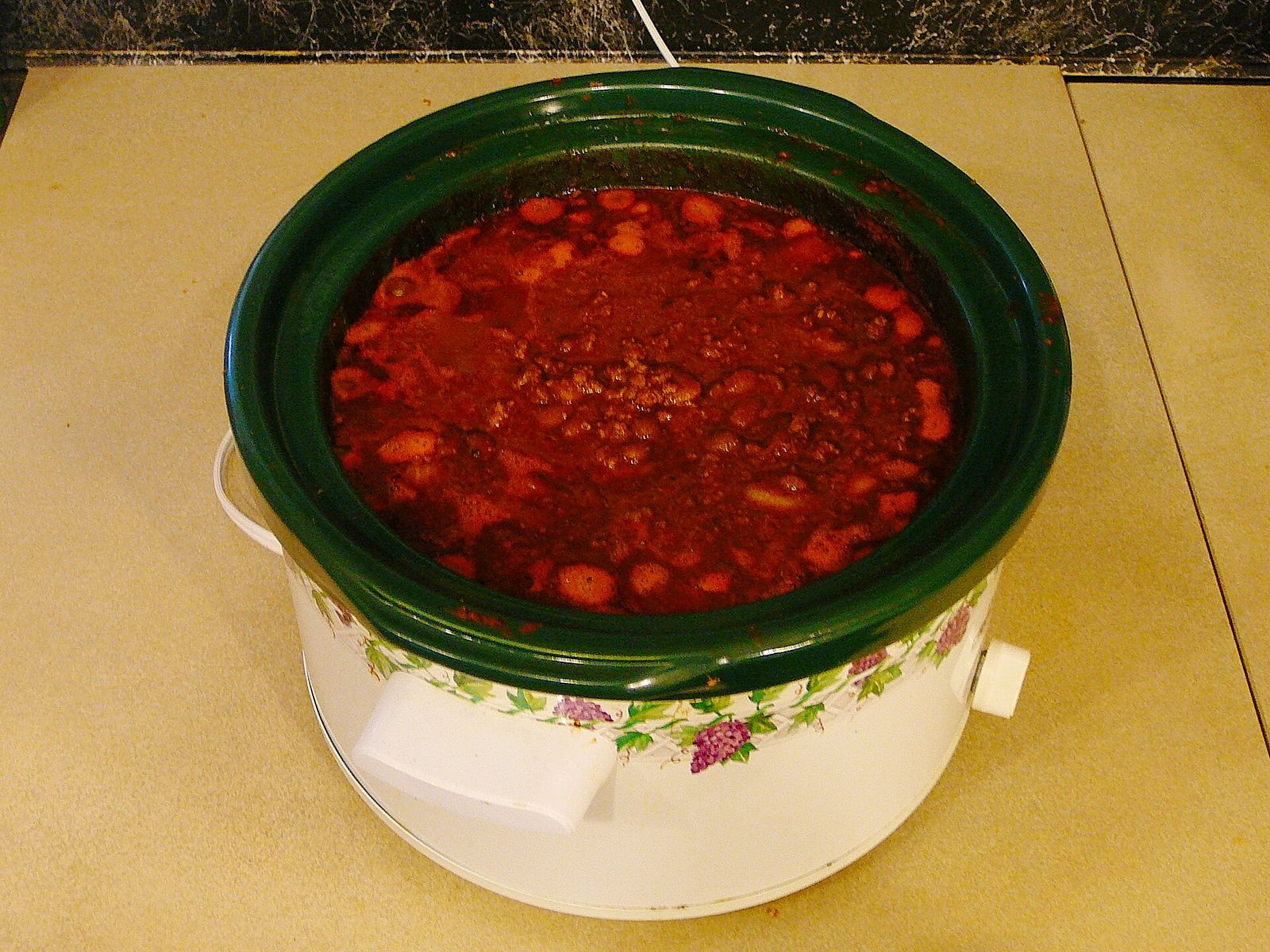
A slow cooker is one of the simplest appliances in the kitchen: a heated base, a heavy pot and a lid. It turns inexpensive cuts, pulses and root vegetables into tender meals with a few minutes of preparation, and it can be left alone while you're at work. The models differ mainly in size, controls and what the pot is made of. This guide explains those choices and the food-safety basics that go with cooking at low temperatures.
How a slow cooker works
A low-powered heating element in the base and sides warms a removable pot, and a loose-fitting lid traps steam so the food cooks in its own moisture. Slow cookers typically draw a few hundred watts at most, far less than an oven or a hob.
Most have two cooking settings and a keep-warm setting:
- Low and High usually finish at a similar temperature, a gentle simmer just below boiling. The difference is how fast they get there. As a rough guide, one hour on High does the work of about two on Low.
- Keep warm holds cooked food at a safe serving temperature. It isn't hot enough to cook raw food or to reheat leftovers.
Because so little steam escapes, liquid doesn't reduce as it does in an open pan. When you adapt a hob or oven recipe, use less liquid than it asks for.
What size to buy
Capacity is given in litres or US quarts (a quart is a little under a litre). The figure on the box is often the volume to the brim, so the usable capacity is smaller.
| Capacity | Suits | Typical uses |
|---|---|---|
| 1.5–2.5 L (about 1.5–2.5 qt) | One or two people | Dips, porridge, small stews |
| 3.5–4.5 L (about 4–5 qt) | Two to four people | Everyday stews, curries, soups |
| 5.5–6.5 L (about 6–7 qt) | Four to six people | A whole chicken, a roast, batch cooking |
| 7.5 L and up (8 qt and up) | Large families, entertaining | Big batches, large joints |
Rule of thumb: a slow cooker works best when it's between half and two-thirds full. Too empty and food can overcook or dry out; too full and it heats slowly and may not cook evenly.
That rule matters more than it sounds. A very large cooker is a poor choice if you usually cook for two, because small portions will sit in a thin layer and cook too fast. If you batch-cook and freeze portions, size up; a vacuum sealer helps frozen portions keep well.
Round, oval or rectangular
- Round pots suit soups, stews and beans, and take up less counter space.
- Oval pots fit a whole chicken, a rack of ribs or a long roast, and are the most versatile shape in larger sizes.
- Rectangular "casserole" models are shallow and wide, good for lasagne-style dishes and for carrying food to gatherings.
Measure your storage space before you choose. A large oval slow cooker is a bulky thing to keep in a cupboard.
Manual or programmable controls
Manual models have a dial with Off, Low, High and usually Warm. They're inexpensive and there's little to go wrong, but they keep cooking until you turn them off.
Programmable models have a digital timer. You set a cooking time, and when it ends the cooker switches to keep-warm on its own. If you're out for nine or ten hours and the recipe needs eight, this stops dinner from overcooking.
Some go further:
- Temperature probes go into a joint of meat and switch the cooker to keep-warm when the centre reaches the temperature you've set.
- App-connected models let you check or change settings from a phone.
- Delayed start is uncommon, for a good reason: raw ingredients shouldn't sit at room temperature for hours before cooking begins.
One point to check on digital models is what happens after a power cut. Many don't resume cooking when the power returns. If the power fails while you're out and you can't tell how long the food sat without heat, the standard advice is to throw it away.
Stoneware pots and searing inserts
The traditional pot is glazed stoneware or ceramic. It's heavy, holds heat well and usually goes in the dishwasher, but it can crack from sudden temperature changes. Don't put a hot pot in cold water or a pot straight from the fridge into a preheated base, and don't use it on a hob unless the manual says you can.
Browning meat and onions first adds a lot of flavour, and with a stoneware pot that means a separate frying pan. Two designs avoid the extra washing-up:
- Hob-safe metal inserts, usually cast aluminium with a non-stick coating. You sear on the hob, then lift the insert into the base. They're lighter than stoneware, but the coating needs gentle utensils and wears over time. If you have an induction hob, check that the insert is compatible; our induction guide explains why not all pans work.
- Built-in sear or sauté settings, where the base itself gets hot enough to brown food. These overlap with electric multicookers, which add pressure cooking and other functions.
For more on how pot materials behave, see our cookware materials guide.
Lids and other features
- Glass lids let you check progress without lifting. Each time the lid comes off, heat escapes and the cooking time grows.
- Locking lids with a gasket prevent spills in the car. On many models the clips are for transport only and shouldn't be fastened during cooking; follow the manual.
- Hinged lids save you finding somewhere to put a hot, dripping lid.
- Cool-touch handles and a base that stays reasonably cool are worth having in a busy kitchen.
- Removable, dishwasher-safe pot and lid. Never immerse the base in water.
- A recognised safety mark for your country.
Food safety with a slow cooker
Slow cooking is safe when the cooker heats food through the "danger zone" quickly enough. Bacteria multiply fastest between roughly 4 °C and 60 °C (40 °F and 140 °F). The standard advice from food-safety agencies is:
- Thaw meat and poultry first. Frozen food takes too long to warm up.
- Keep ingredients in the fridge until you start. If you prepare the night before, refrigerate the ingredients in separate containers.
- Boil dried red kidney beans before slow cooking. They contain a natural toxin that a slow cooker may not get hot enough to destroy. Soak them, then boil them vigorously in fresh water for at least 10 minutes before adding them. Canned beans are already cooked.
- Keep the lid on, and don't overfill the pot.
- Check with a food thermometer. Poultry should reach 74 °C (165 °F) in the thickest part; check your national food-safety guidance for other meats.
- Don't reheat leftovers in the slow cooker. Reheat them on the hob or in a microwave until steaming hot. You can then keep them warm in the slow cooker.
- Cool leftovers promptly. Move them into shallow containers and refrigerate within two hours rather than leaving them to cool in the pot.
Slow cookers are designed to run for hours unattended. Put the cooker on a flat, heat-resistant surface, away from the counter edge and from anything that could cover its sides, and check the cord for damage.
If you inherit an old cooker, you can test it. A commonly recommended check is to fill it half to two-thirds with water, run it on Low for eight hours with the lid on, and measure the water straight away with a thermometer. It should be about 85 °C (185 °F). Much cooler than that, and the cooker may not heat food safely.
The short version
- Buy for the amount you usually cook: about 3.5–4.5 L for two to four people and 5.5–6.5 L for a family or batch cooking.
- Choose oval if you'll cook whole chickens or roasts; round for soups and stews.
- Pick a programmable model if you're out for longer than your recipes take.
- Want to brown in the same pot? Look for a hob-safe insert or a sear setting.
- Fill it half to two-thirds full and keep the lid on.
- Thaw first, boil dried kidney beans, and use a thermometer.
Bloiq is reader-supported. Some links may earn us a commission; it never affects what we write. How we make money.
Cover photo: Cary Bass, CC BY-SA 3.0, via Wikimedia Commons