Kitchen scales and food thermometers: accuracy, tare and probe types
How to choose a digital kitchen scale and a food thermometer: capacity and resolution, tare, instant-read vs leave-in probes, checking accuracy and cooking safely.
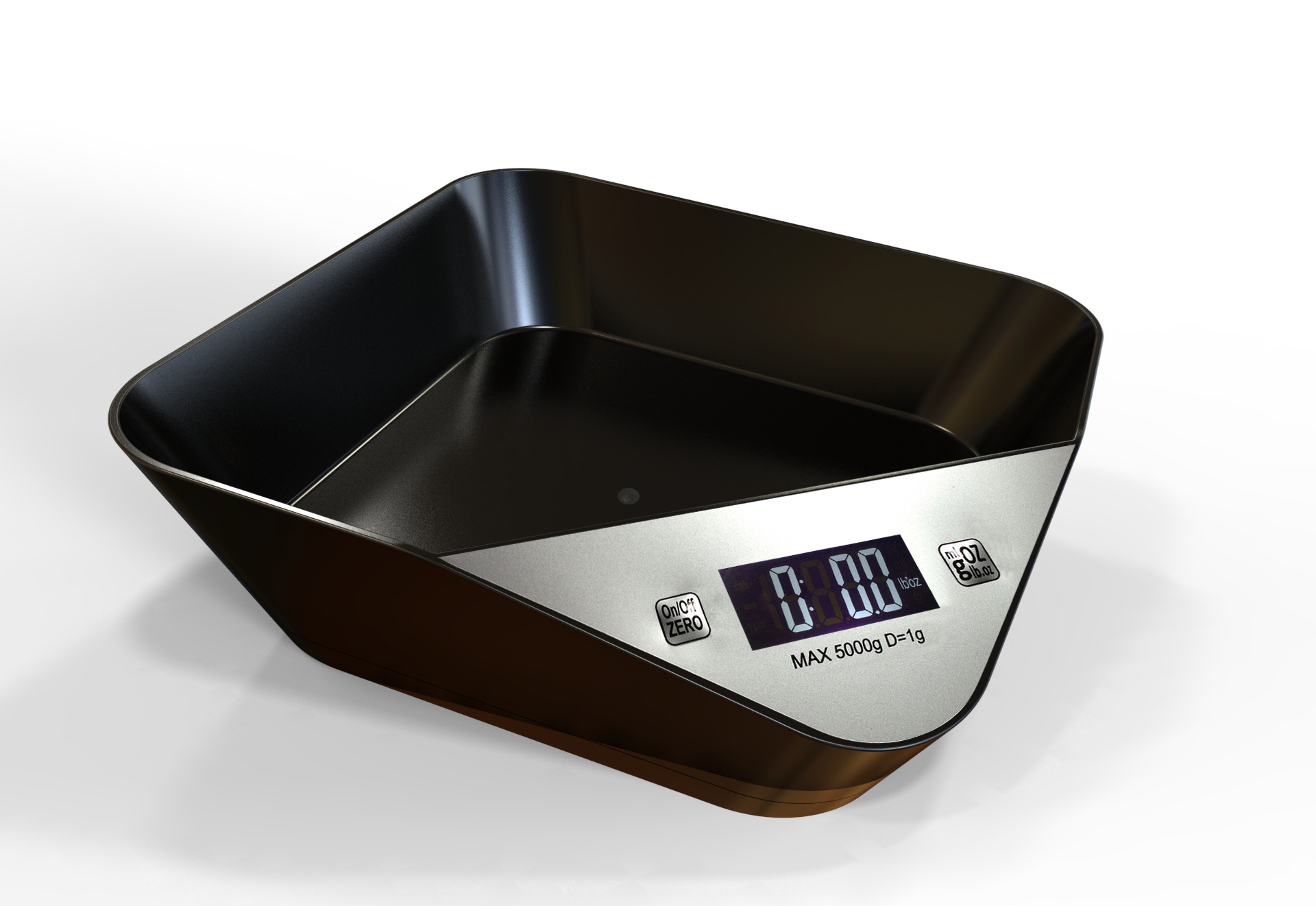
A kitchen scale and a food thermometer are two of the simplest ways to cook more consistently. Weighing ingredients makes baking repeatable in a way that cups and spoons can't, and a thermometer tells you when meat is cooked instead of leaving you to guess. This guide explains the specifications that matter, the different thermometer types, how to check that yours is accurate and how to use one safely.
Why weigh instead of measuring by volume
A cup of flour can weigh noticeably more or less depending on whether it's sifted, spooned or scooped and packed. In bread and pastry, that difference changes the texture. Weighing removes it, and it's faster: you put the bowl on the scale, press tare and add each ingredient in turn, with fewer spoons and cups to wash.
Scales also help with:
- Coffee and tea, where a few grams change the strength.
- Bread dough hydration, which bakers express as a ratio of water to flour by weight; our bread makers guide explains why it matters.
- Portioning dough, burgers or meals into equal amounts.
- Following recipes from other countries, by switching units.
Capacity and resolution: the two key numbers
- Capacity is the maximum weight. Most kitchen scales handle 3 to 5 kg, enough for a mixing bowl full of dough; some go to 10 kg or more for preserving and large batches.
- Resolution (sometimes called graduation or division) is the smallest step the display shows, usually 1 g on a kitchen scale. That's fine for baking, but not for small amounts of yeast, salt or spices.
Resolution isn't the same as accuracy. A scale that displays 1 g steps may still be off by a gram or two, and accuracy is often worse near the top of the range. If you need precision for small quantities, a pocket or precision scale reading 0.1 g (or finer) with a capacity of a few hundred grams is a useful second scale. Coffee scales typically read 0.1 g and add a built-in timer for brewing.
Features that make a scale pleasant to use
- Tare (zero): resets the display to zero with a bowl on it, so you can add ingredients one after another. Every digital scale has it; check that the button is easy to press without nudging the platform.
- Units: grams, kilograms, ounces and pounds are standard. A millilitre mode for water and milk assumes a density close to water's, so it's only accurate for water-like liquids.
- Platform size: a large platform keeps a wide bowl from covering the display.
- Display: a backlit screen that's clearly visible with a bowl in place.
- Auto-off: saves batteries, but a timer that's too short can switch off mid-recipe. Some scales let you change or disable it.
- Easy cleaning: a flat glass or stainless top with sealed buttons wipes clean; avoid crevices where flour collects.
- Power: button cells, AAA batteries or USB charging. A low-battery warning helps, as weak batteries can cause odd readings.
Mechanical scales with a dial need no batteries, but they're harder to read precisely and to tare with a bowl on top.
Thermometer types: instant-read, probe and the rest
| Type | How it's used | Best for |
|---|---|---|
| Instant-read (digital) | Inserted briefly to take a reading | Steaks, chicken pieces, burgers, bread, checking anything quickly |
| Leave-in probe | Probe stays in the food with a cable or wireless link to a display | Roasts, whole birds, smoking and slow cooking |
| Oven and fridge thermometers | Sit inside the appliance | Checking that the thermostat is right |
| Candy and deep-fry thermometers | Clip to the side of the pan | Sugar work, jam and frying oil |
| Infrared | Measure surface temperature from a distance | Pans, pizza stones and griddles, not the inside of food |
Instant-read thermometers vary mostly in speed. Thermocouple models typically give a stable reading in a few seconds; basic thermistor models can take longer. Speed matters, because you're holding the oven door open while you wait. A thin probe tip leaves a smaller hole and reaches the centre of thin cuts.
Leave-in probes let you watch the temperature without opening the oven. Wired probes connect to a display outside the oven through the door; wireless probes send readings to a base or phone app. Look for alarms that sound at your target temperature, a heat-resistant cable and, for smoking, more than one probe so you can monitor the cooker and the meat together. Our guides to pellet grills and smokers explain why that matters on long cooks.
Infrared thermometers are handy for knowing when a pan or pizza oven stone is hot enough, but they can't tell you whether chicken is cooked inside.
How to check accuracy
You can check both tools at home:
- Scale: weigh something whose mass you know well, such as coins with a published mass or a calibration weight. One litre of water in a container you've tared weighs about 1 kg. Check at more than one point.
- Thermometer: make an ice bath with plenty of crushed ice and a little cold water, stir, and insert the probe without touching the sides. It should read close to 0 °C. Boiling water reads about 100 °C at sea level, but less at altitude, so it's a less reliable reference.
Many thermometers can be recalibrated with a button or a nut under the dial; follow the instructions.
Rule of thumb: measure in the thickest part of the food, away from bone, fat and the pan, and check more than one spot on large or irregular pieces.
Safe cooking temperatures in general terms
Food safety agencies publish minimum internal temperatures, and the figures differ slightly by country and change over time, so check your national guidance. In general terms:
- Poultry and minced (ground) meat need higher temperatures than whole cuts of beef or lamb, because bacteria can be spread throughout the meat rather than just on the surface. For poultry, commonly cited guidance is around 74 °C (165 °F).
- Whole cuts of beef and lamb can usually be served at lower internal temperatures, according to preference, in line with local guidance.
- Leftovers should be reheated until steaming hot all the way through.
- Keep hot food hot and cold food cold: many agencies advise keeping cold food at about 4 to 5 °C or below and hot food above about 60 °C.
Food keeps cooking for a few minutes after you take it off the heat ("carryover"), so large roasts often come out a little before their target and rest. Wash or wipe the probe between raw and cooked food to avoid cross-contamination. Pregnant people, young children, older adults and anyone with a weakened immune system should follow official advice closely. If you cook sous vide, see our sous vide guide, where time matters as well as temperature.
The short version
- A 5 kg scale reading 1 g suits most kitchens; add a 0.1 g precision scale for coffee, yeast and spices.
- Look for an easy tare button, a large platform, a readable display and a sensible auto-off.
- Get a fast instant-read thermometer for everyday cooking and a leave-in probe for roasts and smoking.
- Use infrared thermometers only for surfaces.
- Check accuracy with a known weight and an ice bath.
- Follow your country's food safety guidance for internal temperatures.
Bloiq is reader-supported. Some links may earn us a commission; it never affects what we write. How we make money.
Cover photo: Lifedics, CC BY-SA 3.0, via Wikimedia Commons