Pellet grills explained: controllers, hoppers, smoke and upkeep
How a pellet grill turns wood pellets into steady heat, what PID controllers and hopper sizes mean, how much smoke flavour to expect, and how to keep one running.
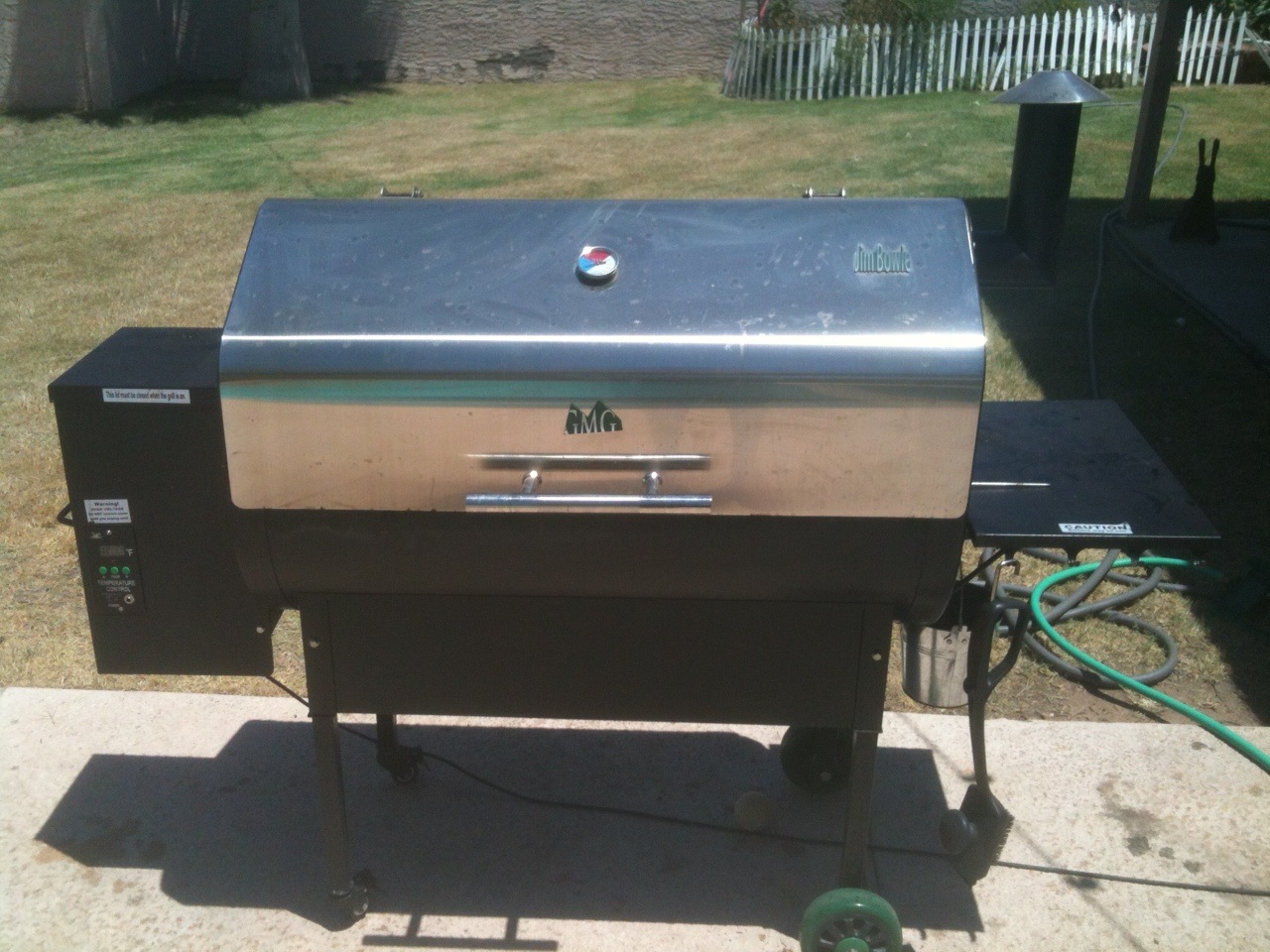
A pellet grill is part barbecue, part oven. You fill a hopper with wood pellets, set a temperature on a dial or phone app, and the grill feeds itself to hold that heat for hours. That makes low-and-slow smoking far easier than with charcoal, but pellet grills also have motors, fans and electronics that other grills don't, and a few habits to learn. This guide explains how they work, what the specifications mean and how to look after one.
How a pellet grill works
The main parts work together as a simple feedback loop:
- Hopper: a box on the side that holds the pellets.
- Auger: an electric screw that carries pellets from the hopper into the fire pot.
- Fire pot (burn pot): a small steel cup where the pellets burn.
- Igniter: a hot rod that lights the pellets at start-up, then switches off.
- Fan: blows air into the fire pot to keep combustion going and circulates heat and smoke through the cooking chamber.
- Heat baffle and drip tray: metal plates over the fire pot that spread heat evenly and channel grease away.
- Controller and temperature probe: measures the chamber temperature and adjusts how fast the auger feeds pellets.
Because the fan circulates hot air, a pellet grill cooks more like a convection oven than a traditional grill. It also means the grill needs electricity to run. Away from mains power, a suitable portable power station can run one, but check the grill's power draw, which is highest at start-up while the igniter is on.
Controllers: why they matter
The controller is the brain of the grill and a big part of what you pay for.
- Basic (timed-cycle) controllers feed pellets in fixed on-off cycles for each setting. They're simple but allow wider temperature swings, particularly in wind or cold.
- PID controllers (proportional-integral-derivative) continuously adjust the feed rate and fan based on how far and how fast the temperature is moving. They typically hold much closer to the set temperature.
- Smoke or low settings deliberately let the fire smoulder at low temperature to produce more smoke early in a cook.
- Wi-Fi or Bluetooth control lets you monitor and adjust temperature from a phone, and meat probes plugged into the controller show internal temperature and can alert you when food is done.
A precise controller is less important if you mostly roast and grill, and more important for long overnight smokes.
Temperature range and searing
Most pellet grills cover roughly 80–260 °C (about 175–500 °F), and some reach higher. The low end is ideal for smoking; the middle for roasting and baking.
Searing has traditionally been the weak point, because heat is spread by the baffle rather than coming from an open flame. Some models address this with a direct-flame zone (a sliding plate that exposes the fire pot), a separate sear burner, or cast-iron grates that hold heat. If crusty steaks matter to you, check what the grill offers.
Hopper size and pellet use
Hopper capacity is usually quoted in kilograms or pounds, commonly somewhere around 7–14 kg (15–30 lb) on full-size grills and less on portable ones.
Pellet consumption varies with temperature, weather and insulation. As a very rough guide, many grills use something in the region of 0.5–1 kg (1–2 lb) per hour at smoking temperatures and considerably more at high heat. Cold, wind and frequent lid opening all increase use.
Rule of thumb: for an overnight cook, estimate hours × expected hourly use, then add a generous margin, especially in cold weather. Running out of pellets mid-cook can cause the fire to go out, and some grills struggle to relight automatically.
Useful hopper features include a clean-out door for swapping pellet flavours or emptying the hopper before storage, a level sensor that warns when pellets run low, and a lid that seals against rain.
Pellets and smoke flavour
Use food-grade barbecue pellets only. Heating pellets for stoves may contain softwoods, bark or additives that aren't meant for cooking.
- Hardwood types include oak, hickory, maple, cherry, apple, mesquite and alder. Flavour differences are real but fairly subtle.
- Blends: many flavoured pellets use a base wood (often oak or alder) with a proportion of the named wood. Check the label if you want a single species.
- Storage: keep pellets dry in a sealed container. Damp pellets swell and crumble into sawdust, which can jam the auger and cause poor burning.
Pellet grills produce a cleaner, milder smoke than charcoal or wood-fired smokers, because the pellets burn efficiently. That suits many people, but those used to strong smoke may find it gentle. Smoke output is generally highest at low temperatures, which is why many cooks start low and raise the heat later. A smoke tube filled with pellets and placed on the grate is a common way to add more.
Build quality to check
- Steel thickness and seals: thicker steel and a well-fitting lid hold temperature better and use fewer pellets.
- Insulation: double-walled chambers, or an insulating blanket, help greatly in cold climates.
- Grease management: an easily reached drip bucket and a tray that directs grease away from the fire pot.
- Stability and wheels, especially on large models.
- Cover and weather protection for the electronics.
Maintenance and safety
Pellet grills are low effort day to day, but a few routines prevent most problems:
- Clean out ash from the fire pot and cooking chamber regularly (every few cooks, or as the manual advises). Ash build-up can smother the fire or stop ignition.
- Clean the drip tray and grease chute often, and replace any liners. Built-up grease is the main cause of grease fires in pellet grills.
- Always use the shutdown cycle. Turning off at the switch lets the fan burn off remaining pellets safely. Pulling the plug mid-cook can leave pellets smouldering and, in some cases, let fire creep back up the auger tube towards the hopper (called burn-back).
- Keep water out of the hopper and electronics; cover the grill when not in use.
- Use it outdoors only, away from walls and overhangs, and plug it into an outdoor, RCD (GFCI) protected outlet. If you need an extension lead, use an outdoor-rated one of adequate gauge.
The short version
- Pellet grills are automatic wood-fired convection ovens; they need power and pellets.
- A PID controller gives steadier temperatures; Wi-Fi and probes add convenience.
- Check searing options if you want steaks with a crust.
- Size the hopper for your longest cooks, with a margin in cold weather.
- Use dry, food-grade pellets and expect milder smoke than charcoal.
- Clean ash and grease regularly and always use the shutdown cycle.
- Still deciding between types? See our grill comparison.
Bloiq is reader-supported. Some links may earn us a commission; it never affects what we write. How we make money.
Cover photo: Davidrubin12, CC BY-SA 3.0, via Wikimedia Commons