Smokers compared: offset, vertical, kamado and electric
How offset, vertical, kamado and electric smokers differ in fuel, temperature control, smoke flavour, capacity and effort, and which type suits the way you cook.
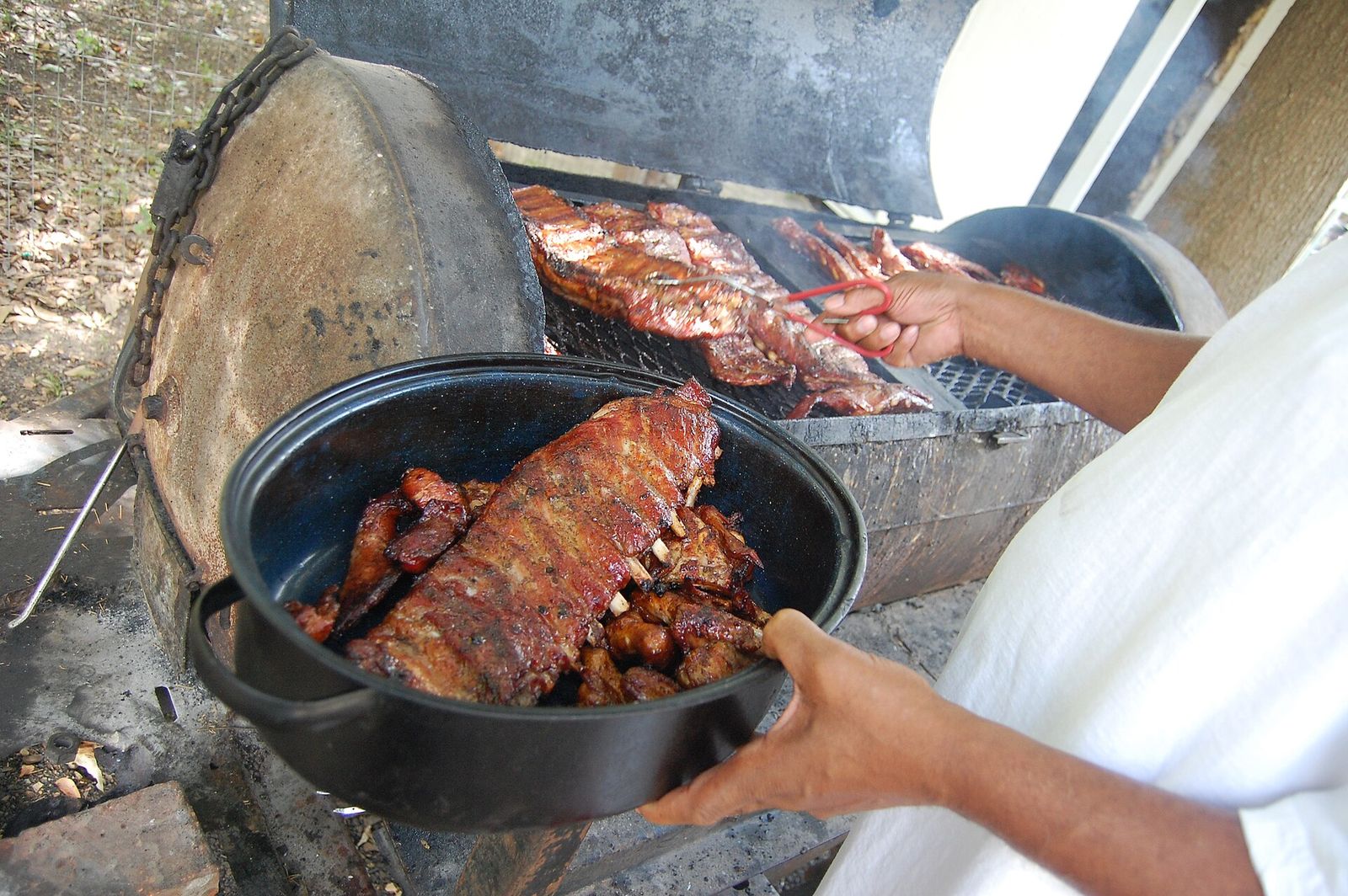
Smoking turns tough cuts such as brisket, pork shoulder and ribs into something tender and deeply flavoured, but only if the smoker holds a low, steady heat for hours. The four main types do that in very different ways, from a wood fire you tend all day to a thermostat you set and forget. This guide compares how each works, how much effort it takes and what kind of barbecue it produces.
What every smoker has to do
Smoking is slow, indirect cooking: the food sits away from the fire, surrounded by warm air and wood smoke.
Rule of thumb: "low and slow" means roughly 105–135 °C (225–275 °F) at the grate. Aim for thin, pale blue, almost invisible smoke. Thick white smoke means the wood is smouldering badly and will make food bitter.
Whatever the type, a smoker needs a heat source, a way to burn or smoulder wood, vents to control airflow and a chamber that holds heat. The differences lie in how much of that you manage by hand.
The types at a glance
| Type | Fuel | Temperature control | Smoke flavour | Effort | Best for |
|---|---|---|---|---|---|
| Offset | Wood splits, or charcoal plus wood | Manual: fire size and vents | Strongest | High | Big cooks, traditional barbecue |
| Vertical | Charcoal, propane or electricity, with wood | Moderate to easy | Medium to strong | Moderate | Small spaces, lots of rack space |
| Kamado | Lump charcoal plus wood chunks | Vents; very stable once set | Medium | Moderate | Smoking plus searing and pizza |
| Electric | Electricity plus wood chips | Thermostat | Mildest | Low | Set-and-forget cooking |
Pellet grills, which feed wood pellets automatically, are a fifth option; see pellet grills explained.
Offset smokers: the traditional choice
An offset smoker has a horizontal cooking chamber with a smaller firebox attached lower down at one end. Heat and smoke flow from the fire across the food and out of a chimney at the far end. It's the classic design of American barbecue, and the one most often associated with brisket.
Reverse-flow offsets add a steel plate under the grates that carries heat to the far end first, then back over the food to a chimney on the firebox side. They usually cook more evenly but take longer to heat up. Standard offsets are hotter near the firebox, which you can use to cook different foods at different temperatures.
Strengths: the strongest, most authentic wood-smoke flavour; large capacity; you can burn whole logs.
Drawbacks: fire management is a skill. You'll add a split of dry, seasoned hardwood every so often and adjust the vents, and the fire needs regular attention through a long cook. Wind, rain and cold make it harder.
What to check: steel thickness and fit. Thin, lightweight offsets leak heat and smoke around the doors and lose heat quickly, making steady temperatures much harder to hold. Heavier steel, tight doors and a well-sealed firebox are what make an offset easy to run. Check the overall size and weight too: large offsets are hard to move.
Vertical smokers: compact and efficient
Vertical smokers stack food on racks above the heat source, which saves space and uses heat efficiently because heat rises. There are several kinds:
- Water smokers (often called bullet smokers): a charcoal bowl at the bottom, a water pan above it and two grates on top. The water pan steadies the temperature. They're compact and a common first smoker.
- Gas cabinet smokers: a propane burner heats a tray of wood chips. They're easy to control, but the smoke flavour is milder and you'll top up the chips during long cooks.
- Charcoal cabinet and gravity-fed smokers: insulated cabinets hold heat well. Gravity-fed models load charcoal into a tall chute that feeds the fire as it burns, often with a fan and a digital controller, for very long, steady cooks.
- Vertical offsets: a side firebox at the bottom of a tall cooking cabinet, combining offset-style fire with vertical rack space.
Strengths: small footprint, lots of rack space for ribs, sausages, fish and jerky, and good fuel efficiency.
Drawbacks: racks nearer the heat cook faster, opening the door lets heat escape, and tall, light models can be unstable in wind. Capacity for large, flat cuts such as whole briskets can be limited.
Kamado grills: one cooker for everything
A kamado is a thick-walled, egg-shaped cooker, traditionally made of ceramic; the name comes from the Japanese word for a cooking stove. Lump charcoal burns in a firebox at the bottom, and vents at the top and bottom control the temperature. For smoking, a heat deflector plate sits between the fire and the food.
Strengths: excellent insulation means a single load of charcoal can hold low temperatures for many hours, even in cold weather, and the same cooker can reach searing and pizza-oven temperatures. See our guide to outdoor pizza ovens if pizza is a priority. It's one of the most versatile outdoor cookers you can own.
Drawbacks: temperature is easy to overshoot and slow to bring down, so approach your target gradually and adjust the vents in small steps. The cooking area is smaller than on a large offset, though extra racks help. Ceramic kamados are very heavy and can crack if dropped or shocked by water when hot. Lift the lid slowly when cooking hot: a sudden rush of air can cause a flare-up (called flashback).
What to check: the cooking diameter, the stand and wheels, the hinge (spring-assisted hinges make heavy lids easier to lift), the gasket, and what's included, such as the deflector and side shelves. Insulated steel kamados are lighter and less fragile alternatives.
Electric smokers: the easiest start
An electric smoker uses a heating element controlled by a thermostat, with a tray of wood chips above it producing smoke. Many have digital controls, built-in meat probes and app monitoring, and a side chip-loader so you can add wood without opening the door.
Strengths: set the temperature and walk away. They're the easiest way to learn timing and seasoning, and they suit people who can't tend a fire. They also suit cold smoking cheese or fish with an accessory, where the heat must stay very low.
Drawbacks: the smoke flavour is the mildest of all types, and the pink "smoke ring" under the surface of the meat is usually faint, because it forms mainly from gases given off by burning charcoal or wood, and an electric element burns nothing. Many models have a limited maximum temperature, so poultry skin stays soft unless you finish it on a grill or in an oven. They need a suitable outdoor outlet.
Thermometers and controllers
The dial thermometer in a smoker's lid can be well off, and it measures the air above the food rather than at the grate. A digital probe thermometer with one probe at grate level and one in the meat gives you the information that matters.
Fan controllers clip onto many kamados and charcoal smokers. They read the temperature and blow air into the fire as needed, giving a charcoal cooker some of the convenience of an electric or pellet smoker.
Expect "the stall" on large cuts: the meat's internal temperature can plateau for hours as moisture evaporates from the surface. It's normal. Many cooks wrap the meat in foil or butcher paper to push through it. Always cook to safe internal temperatures; poultry, for example, should reach at least 74 °C (165 °F).
Safety
- Use smokers outdoors only, on a level, non-combustible surface, well away from walls, fences, overhangs and anything flammable. Never use one in a garage, tent or other enclosed space: burning and smouldering fuel produces carbon monoxide.
- Keep the smoker stable, and children and pets away from hot surfaces.
- Dispose of ash safely. Let it cool completely in a lidded metal container, as embers can stay hot for many hours.
- Clean out grease regularly to prevent grease fires.
- Electric smokers should plug into an RCD (GFCI) protected outdoor outlet; if you must use an extension lead, choose a short, outdoor-rated one of adequate gauge.
- Check local fire rules during dry spells, when solid-fuel cooking may be restricted.
The short version
- Want the most authentic wood-fired flavour and enjoy tending a fire? An offset, with thick steel and tight doors.
- Short on space, or want plenty of rack space? A vertical smoker: water, cabinet or gravity-fed.
- Want one cooker for smoking, searing and pizza? A kamado.
- Want convenience above all? An electric smoker, or a pellet grill.
- Use a digital probe thermometer and aim for thin blue smoke.
- Still weighing smokers against other grills? See our grill comparison.
Bloiq is reader-supported. Some links may earn us a commission; it never affects what we write. How we make money.
Cover photo: Southern Foodways Alliance, CC BY 2.0, via Wikimedia Commons