Rain barrels and water butts: capacity, diverters and winter care
How big a rain barrel or water butt you need, how downpipe diverters and overflows work, how to keep mosquitoes out, and how to protect it through winter.
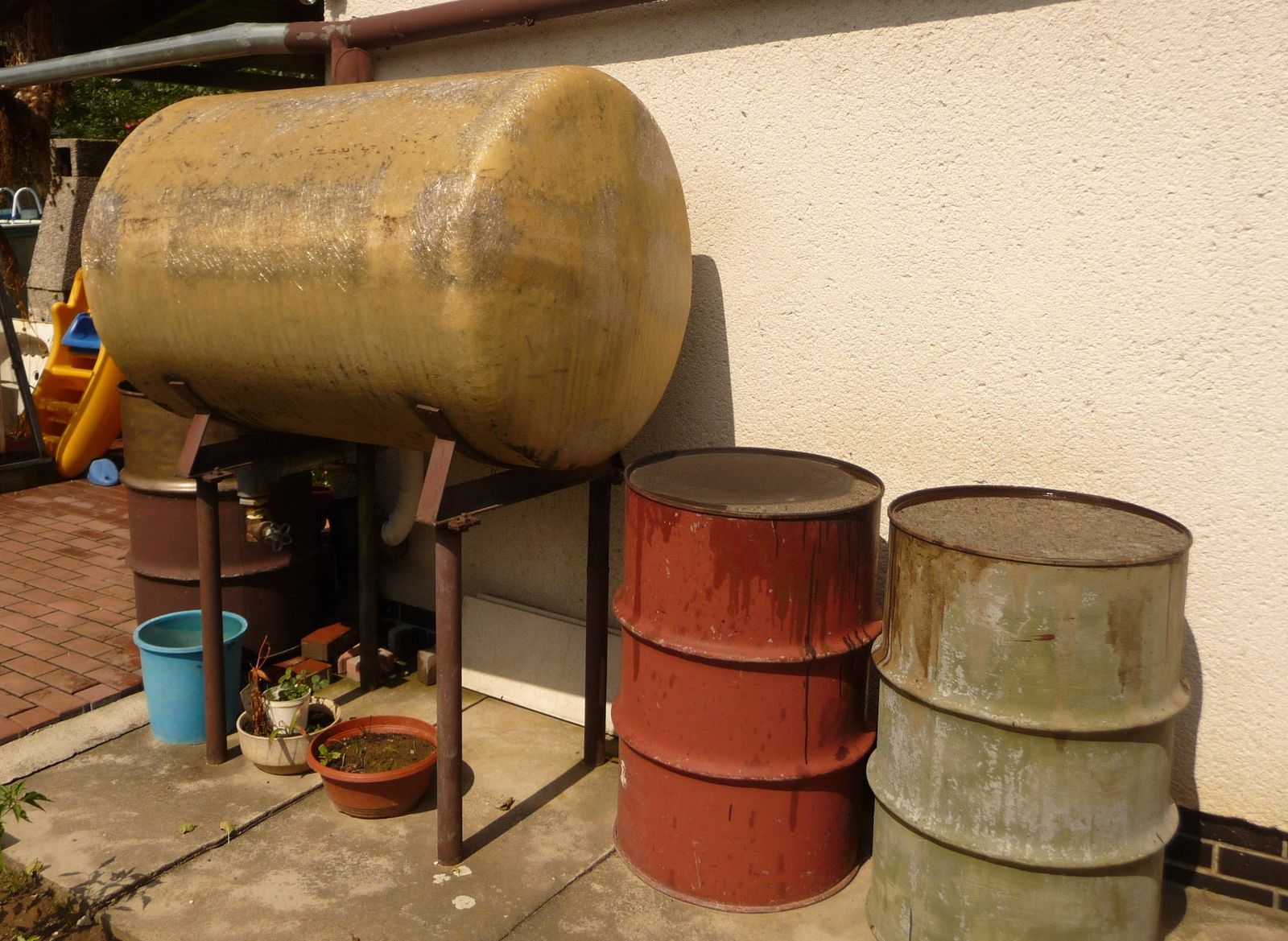
A roof sheds a remarkable amount of water in even a modest shower, and a rain barrel (a water butt in British English) catches some of it for the garden. Rainwater is soft, at outdoor temperature and free of the chlorine in mains water, and plants generally like it. Getting the most from a barrel comes down to a few decisions: how big it should be, how it connects to the downpipe, where the overflow goes, and how to keep it free of mosquitoes and safe through the winter.
How much water your roof collects
The amount you can catch depends on the roof area draining into the downpipe and on how much it rains.
Rule of thumb: 1 mm of rain on 1 m² of roof gives about 1 litre of water. In imperial terms, 1 inch of rain on 1,000 sq ft of roof gives roughly 600 US gallons.
So a 25 m² section of roof in a 10 mm shower can, in theory, deliver around 250 litres, which is more than a typical barrel holds. In practice some water is lost to splashing, evaporation and the diverter's design, but even a small shed roof fills a barrel quickly. The usual limit isn't how much water arrives; it's how much you can store.
Choosing a capacity
- 100–150 litres (25–40 US gal): small, slim or wall-mounted butts for sheds, balconies and narrow side passages.
- 190–250 litres (50–65 US gal): the most common size, a good match for a house downpipe and a small to medium garden.
- 300–500 litres and up: larger butts and tanks for vegetable gardens or long dry spells.
- Linked barrels: two or more barrels joined with a connector kit add capacity without one large, conspicuous tank.
Water is heavy: a litre weighs about a kilogram, so a full 200-litre barrel weighs over 200 kg. It needs a firm, level base such as paving slabs or a purpose-made stand, never soft soil that can settle and tip it.
Diverters and how a barrel connects
The tidiest way to fill a barrel is a downpipe diverter (also called a rain diverter or rainwater filler). You cut a short section out of the downpipe and fit the diverter in its place; a hose runs from the diverter into the side of the barrel near the top.
- While the barrel has room, rain runs from the diverter into the barrel.
- When the barrel is full, the water level reaches the connecting hose and backs up, so the rest of the rain carries on down the pipe to the drain as normal.
For this to work, the barrel's connection must sit at the right height relative to the diverter: generally level with it or slightly below, as the instructions specify. Many diverters include a filter or grille that keeps leaves out, and many have a winter or closed position.
The simpler alternative is to cut the downpipe so it ends over a hole in the barrel's lid. That fills the barrel quickly, but when it's full it overflows at the top, so it needs a proper overflow outlet.
Check that the diverter fits your downpipe's size and shape (round and square pipes come in several sizes) before buying.
Overflow and siting
Every barrel needs somewhere for excess water to go.
- With a diverter, the overflow largely takes care of itself.
- With an open-top fill, fit an overflow outlet near the top and run a hose back to the drain, to a second barrel, or to a soakaway or planted area well away from the house.
- Never let overflow pool against the house: water against foundations and walls can cause damp problems.
Place the barrel close to the downpipe and, ideally, close to where you'll use the water. Raising it on a stand makes room for a watering can under the tap and adds a little pressure.
Taps, pressure and using the water
Gravity is all that pushes water out of a barrel, and the pressure is low: roughly 0.1 bar (about 1.4 PSI) for each metre of height. That's plenty for filling watering cans and for low-pressure drip lines designed for rain barrels, but not enough for most sprinklers or ordinary hose nozzles. For those you'd need a small pump designed for water butts.
- A tap near the bottom lets you use almost all the water; a brass tap is more durable than plastic.
- Some barrels have a second outlet near the base for linking or a hose.
- For hands-off watering from a barrel, see our guide to drip irrigation, soaker hoses and sprinklers, and pair it with a decent garden hose.
Rainwater from a roof isn't drinking water. It can carry dust, bird droppings and residues from roofing materials, so use it for the garden and outdoor cleaning only. For food crops, many growers water the soil rather than the leaves and wash produce well; avoid collecting from roofs treated with chemicals.
Keeping mosquitoes and algae out
Still, open water is ideal breeding ground for mosquitoes; in warm weather they can go from egg to adult in around a week.
- Use a barrel with a tight-fitting lid and keep it closed.
- Cover every opening, including the inlet and overflow, with fine insect mesh.
- Use the water regularly so it doesn't sit for long periods.
- Some gardeners use larvicide products based on Bacillus thuringiensis israelensis (Bti), which are widely used for this purpose; follow the label and check what's permitted where you live. Don't add oil or household chemicals to water you'll put on plants.
An opaque, dark barrel limits the light that algae need. A gutter guard or diverter filter keeps out the leaves that otherwise rot in the bottom.
Child safety
Even a part-filled barrel is a drowning risk for small children. Choose a lid that locks, screws down or is child-resistant, keep it secured, and don't leave anything nearby that a child could climb on to reach the top.
Winter care
Water expands as it freezes, which can split barrels, crack taps and damage fittings.
- Where hard frosts are common: before the first freeze, drain the barrel, leave the tap open, and store it under cover or turn it upside down. Set the diverter to its winter position or refit the downpipe section so rain flows straight to the drain.
- In milder climates: many people leave the barrel in use but keep it partly empty to give ice room to expand, and drain the tap and any hoses.
- Once a year: rinse out the sediment that collects at the bottom, and check the lid, mesh and seals.
Rules and incentives
Rules on collecting rainwater vary. Most places encourage it, and some local authorities or water utilities offer discounted barrels or rebates, while a few regions limit how much can be stored. Check the current rules for your area before installing a large system.
The short version
- Size: about 200 litres (50–55 US gal) suits most houses; add linked barrels for more.
- Connection: a diverter that fits your downpipe, fitted at the right height so it stops filling when full.
- Overflow: always routed away from the house.
- Base: firm, level and strong enough for the full weight.
- Safety and mosquitoes: a lockable, tight lid and fine mesh on every opening.
- Winter: drain and store or switch the diverter off where it freezes.
Bloiq is reader-supported. Some links may earn us a commission; it never affects what we write. How we make money.
Cover photo: Sevela.p, CC BY-SA 3.0, via Wikimedia Commons