Garden shredders and chippers: impact vs quiet roller and petrol
Impact, quiet roller or petrol chipper? How shredder types differ, what branch capacity really means, electric versus petrol, and how to shred garden waste safely.
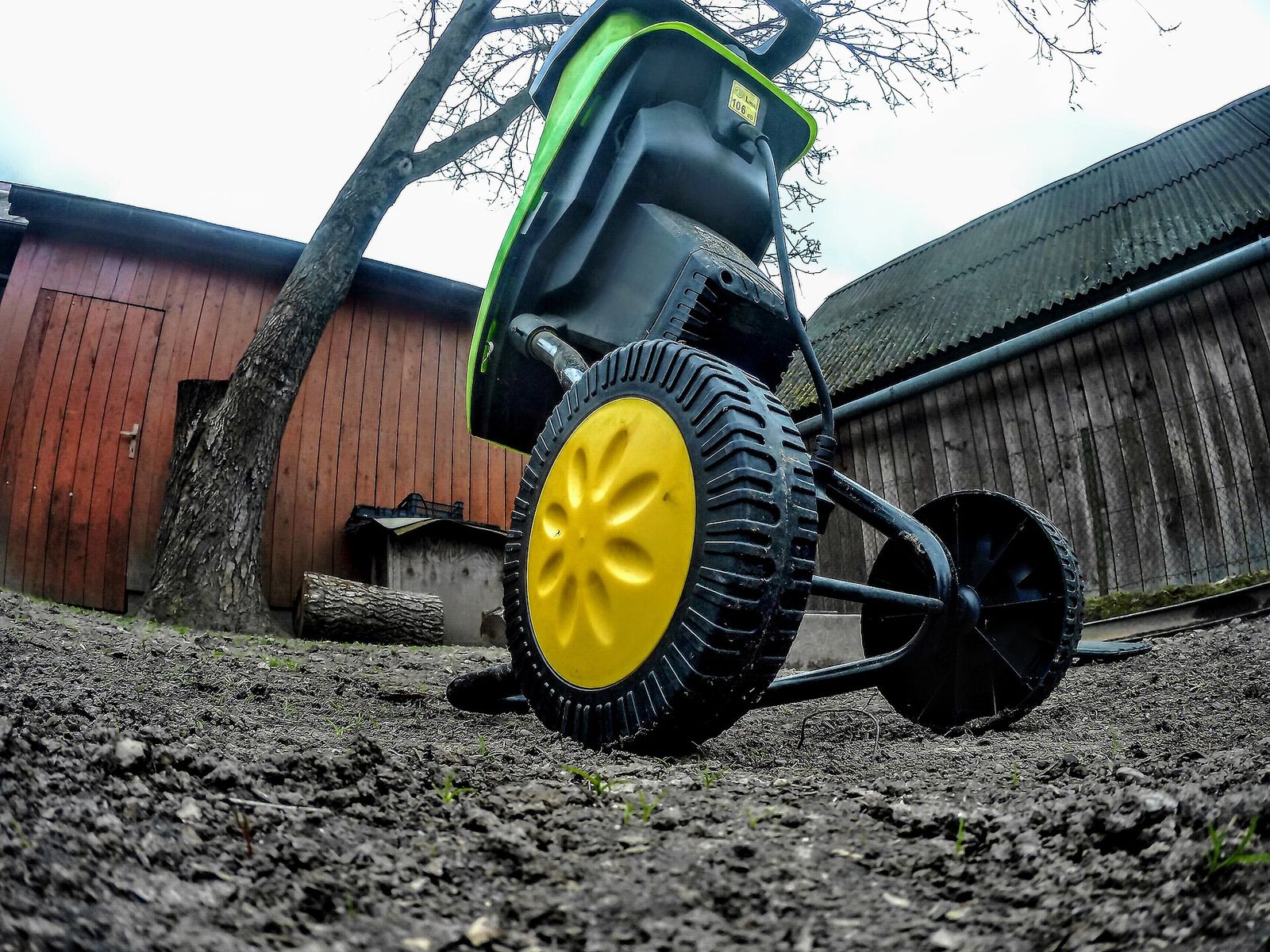
Pruning a hedge or a few trees produces a surprising volume of branches, and a garden shredder turns that pile into a few bags of mulch or compost material. Shredders work in quite different ways, though, and the wrong type will either clog on leafy prunings or stall on woody branches. This guide explains impact, quiet roller and petrol chipper-shredders, what the branch capacity figure really tells you, and how to use one safely.
The three main types
| Impact (blade) shredder | Quiet / roller shredder | Petrol chipper-shredder | |
|---|---|---|---|
| How it cuts | Fast-spinning blades | Slow-turning drum crushes and cuts against a plate | Chipper blades plus a shredding chamber |
| Best material | Soft, leafy, green prunings | Woody branches and stems | Mixed waste, thicker branches |
| Noise | Very loud | Much quieter | Loud |
| Output | Fine, chopped pieces | Coarse, crushed, splintered pieces | Chips and shreds |
| Feeding | Push material in | Mostly self-feeding | Separate chute and hopper on many |
| Power source | Mains electric | Mains electric | Petrol engine |
Some machines combine ideas, such as "turbine" cutters that aim to handle both leafy and woody material. Check what the maker says each design is best at.
Impact shredders: fast and light, but noisy
Impact shredders spin a disc with one or two blades at high speed, chopping material as it falls in. They are usually the lightest and least expensive electric option.
- Good for: hedge trimmings, soft prunings, small twigs, and leafy material.
- Less good for: thicker, hard branches, which bounce and need pushing, and very wet green material, which can clog the chamber.
- Downsides: they are very loud, and the blades dull and need turning or replacing over time.
The output is fine and mixes easily into compost.
Quiet roller shredders: steady and good with wood
Quiet shredders, also called roller, drum or low-speed shredders, turn a toothed cutting drum slowly against a pressure plate. They draw branches in by themselves and crush and cut them.
- Good for: woody prunings, fruit-tree and shrub branches, rose stems.
- Less good for: soft, leafy or stringy material such as grass, ivy or long perennial stems, which can wrap around the drum.
- Advantages: far less noise than an impact machine, less pushing, and a reverse switch on most to free jams.
The crushed, splintered pieces have lots of surface area, which helps them break down on the compost heap. Many have an adjustable pressure plate to set how fine the output is.
Petrol chipper-shredders: for larger gardens
Petrol machines are much more powerful and don't need a socket, so they suit large gardens, orchards and rural plots. Many have two inlets: a side chipper chute for branches, which a spinning flywheel with blades turns into chips, and a top shredder hopper for leaves and smaller material.
The trade-offs are weight, noise, fumes, fuel and engine maintenance, and more care when starting and using them. For an occasional big clear-out, hiring a machine is often more sensible than owning one. Very large tow-behind chippers belong to professionals and hire firms.
What branch capacity really means
Every shredder quotes a maximum branch diameter, often around 35–45 mm for domestic electric models and more for petrol chippers. Treat it as an upper limit, not a working size.
- The figure usually assumes fresh, green wood. Dry, seasoned or hardwood branches are much tougher.
- Running near the limit all the time slows the machine, heats the motor and dulls the blades faster.
- Side shoots, forks and twisted branches are harder to feed than a straight stick of the same diameter.
Rule of thumb: expect a machine to cope comfortably with branches about two-thirds of its quoted maximum. Cut anything thicker into logs or firewood with a saw; see our chainsaw guide.
Electric or petrol
Electric shredders are lighter, quieter to start, need almost no maintenance and produce no fumes. Power ratings of around 2,000–2,800 W are common in regions with 230 V mains; in North America, a standard 120 V household circuit limits how powerful a plug-in machine can be.
- Use a cable rated for outdoor use and the machine's power draw, fully unwound if it's on a reel, and plug in through an RCD (GFCI) protected socket.
- Keep the cable behind you and away from the outlet chute.
Petrol wins for remote corners of a large plot and for thick branches. Battery shredders exist but are limited in power and runtime; they suit small amounts of light material.
Features worth checking
- Collection box or bag: a rigid box is easy to empty; check its capacity, as small ones fill quickly.
- Hopper design: a wide funnel helps with bushy prunings, while a narrow inlet helps with branches.
- Reverse switch: valuable on roller shredders for clearing jams.
- Restart protection and interlocks: the machine shouldn't restart by itself after a power cut, and it should stop if the hopper or box is removed.
- Wheels and weight: you'll be moving it round the garden.
- Noise rating: quoted in decibels; useful when comparing models if you have close neighbours.
- Blade access: check how easy it is to turn, sharpen or replace blades.
Using a shredder safely
Shredders are among the more dangerous garden machines. Standard precautions:
- Read the manual before first use.
- Wear eye protection, ear protection and sturdy gloves. Avoid loose clothing, scarves, ties and jewellery, and tie back long hair.
- Never put hands into the hopper or chute. Use the push stick provided, or feed longer pieces.
- Stand to the side of the hopper: chips and debris can be thrown back out.
- Keep children, pets and onlookers well away.
- Don't feed soil, stones, metal, wire, glass or plastic, and remove nails or ties from branches first.
- Switch off, unplug or disconnect the spark plug and wait for the blades to stop completely before clearing a jam, emptying the box or doing maintenance.
- Work on firm, level ground, and only in daylight or good light.
- Be considerate about noise; local rules may limit when you can run machinery.
Using what you shred
- Compost: shredded material breaks down far faster than whole branches; mix woody shreds with green waste for balance. See our guide to composters, tumblers and worm bins.
- Mulch: a layer of chips on borders and paths suppresses weeds and holds moisture. Let fresh chips age before using them around young plants, and avoid diseased material.
- Paths: coarse chips make a soft, natural path in woodland or vegetable gardens.
Shred prunings soon after cutting, while they're still fresh; that's easier on the machine. For keeping hedges in shape before shredding, see our hedge trimmer guide.
The short version
- Mostly soft, leafy prunings and hedge trimmings: an electric impact shredder.
- Mostly woody branches, or close neighbours: a quiet roller shredder with a reverse switch.
- Large plot, thick branches, no power nearby: a petrol chipper-shredder, or hire one for occasional jobs.
- Capacity: buy for your typical branch, with the quoted maximum comfortably above it.
- Always: eye and ear protection, gloves, the push stick, and power off before clearing jams.
Bloiq is reader-supported. Some links may earn us a commission; it never affects what we write. How we make money.
Cover photo: Kristián Ivančo, CC BY-SA 4.0, via Wikimedia Commons