Composters compared: tumblers, bins and worm composting
How compost bins, tumblers, hot composters, worm bins and bokashi differ, what to put in them and what to leave out, and how to fix a smelly or stalled heap.
Kitchen scraps and garden waste make up a large share of what many households throw away, and almost all of it can become compost for beds and borders. The right composter depends on how much material you produce, how much space you have, and how much effort you want to put in. This guide compares the main types, explains what goes in and what stays out, and covers the common problems that put people off composting.
How composting works
Compost is made by microbes, fungi and small creatures breaking down organic matter. They need four things:
- Greens: nitrogen-rich, moist material such as fruit and vegetable scraps, coffee grounds, fresh grass clippings and green plant trimmings.
- Browns: carbon-rich, dry material such as dead leaves, straw, shredded cardboard and paper, and woody prunings.
- Moisture: the heap should feel like a wrung-out sponge.
- Air: oxygen keeps decomposition fast and odour-free; turning or mixing the heap supplies it.
Rule of thumb: aim for roughly two to three parts browns to one part greens by volume. If it smells, add browns; if nothing happens, add greens and water.
Hot versus cold composting. A large, well-balanced heap, commonly cited as around 1 m³ (about 1 cubic yard) or more, can heat up to well over 50°C (120°F) in its core. Sustained heat speeds things up and kills many weed seeds and plant pathogens. Most home bins are smaller and run "cold": slower, often taking six months to a year or more, but with far less effort.
Types of composter
| Static bin | Tumbler | Worm bin | Bokashi | |
|---|---|---|---|---|
| Space | Garden corner | Patio or garden | Indoors, balcony, garage | Kitchen |
| Effort | Low | Regular turning | Regular feeding | Low |
| Speed | Slow | Faster | Moderate | Weeks (then must be buried or composted) |
| Takes garden waste | Yes | Limited volume | Little | No |
| Takes cooked food, meat | No | No | No | Yes |
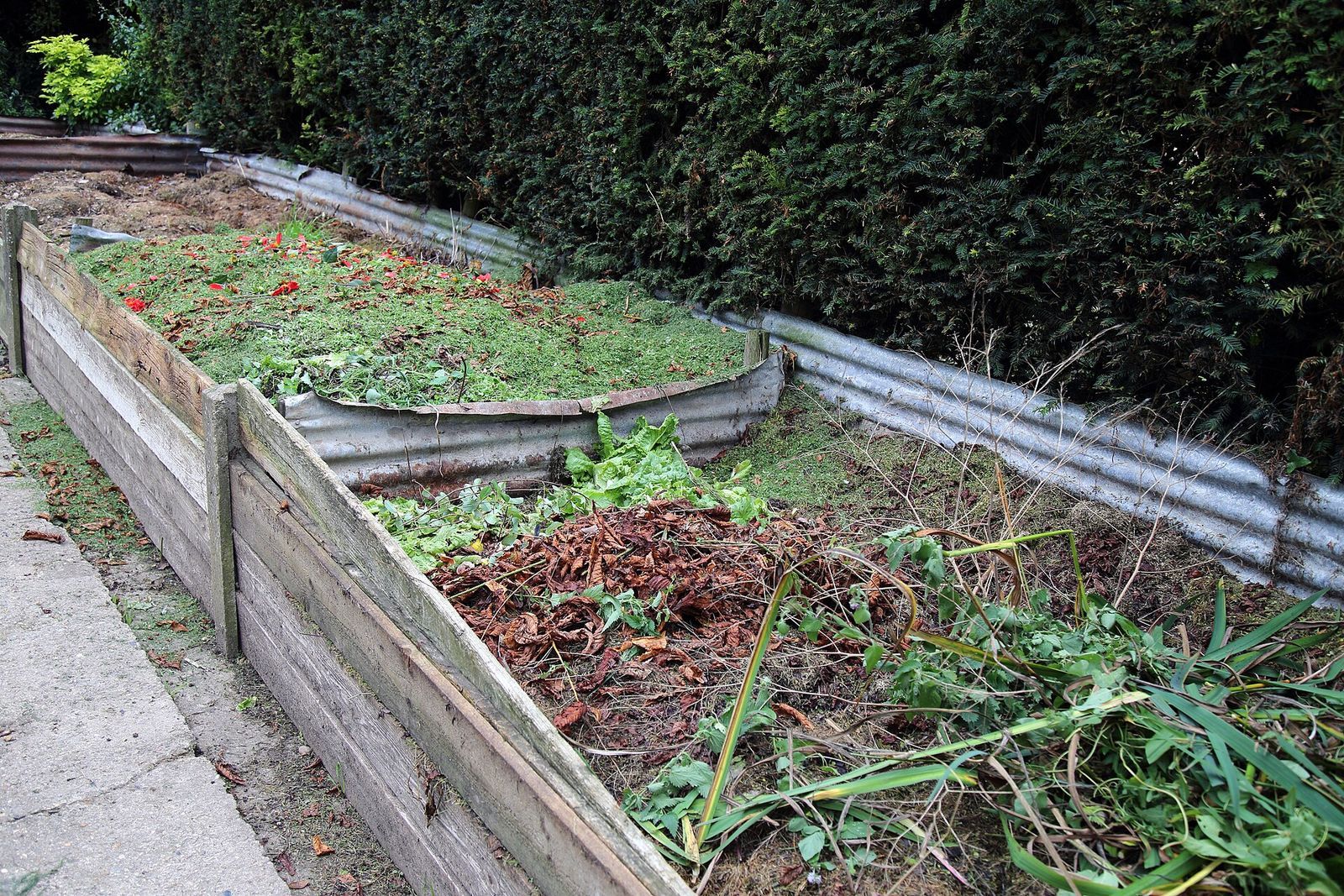
Static bins. Open-bottomed plastic bins, often called "dalek" bins in the UK, sit directly on soil so worms and other organisms can move in. You add material at the top and take finished compost from a hatch at the bottom. Wooden slatted bays, often built in twos or threes, let you fill one while another matures, and hold more garden waste. Simple wire mesh enclosures are good for collecting autumn leaves to make leaf mould.
Tumblers. A drum on a frame that you turn by hand. Turning mixes and aerates the contents easily, the raised drum deters rodents, and batches can finish faster than in a static bin when kept balanced and turned. Things to know:
- A full drum of wet material is heavy, so turning can become hard; check the capacity and how easily it turns.
- Adding scraps continuously means you're always mixing fresh material into partly finished compost. Dual-chamber tumblers let one batch mature while you fill the other.
- Because the drum is off the ground, the contents can become too wet; add plenty of browns.
- Smaller tumblers may not hold enough to heat up much.
Insulated hot composters. Enclosed, insulated bins designed to retain heat. Some makers say they can take cooked food; follow the instructions carefully if you try this.
Worm composting (vermicomposting). Composting worms, usually red wigglers (Eisenia fetida and close relatives), eat food scraps in a bin of damp bedding such as shredded newspaper or cardboard. Ordinary garden earthworms don't thrive in bins. Worm bins suit flats and small households, produce fine, rich castings, and can be kept indoors. Keep them out of direct sun and protect them from freezing and from high heat. Feed a little at a time, bury scraps under the bedding, and avoid large amounts of citrus, onions and anything oily. Stacking-tray designs make it easier to harvest castings. Liquid that drains from the bin is best diluted before use on plants.
Bokashi. A sealed bucket in which food scraps are layered with a bran inoculated with microbes. It ferments the waste rather than composting it, can take cooked food, meat and dairy, and doesn't smell badly when sealed. The fermented result must then be buried in soil or added to a compost heap to finish breaking down, so it works best alongside a garden or another composter.
What to add
- Fruit and vegetable scraps
- Coffee grounds and paper filters, loose tea leaves (many tea bags contain plastic, so check before adding them)
- Crushed eggshells
- Grass clippings in thin layers, mixed with browns so they don't turn slimy
- Dead leaves, straw and hay
- Shredded plain cardboard, egg boxes and uncoated paper
- Plant trimmings and spent annuals
- Small woody prunings, chopped or shredded
What to avoid in a home composter
- Meat, fish, bones, dairy and cooked food with oils or fats: they smell and attract rats, foxes and other animals (bokashi is the exception).
- Dog and cat faeces and used cat litter: they can carry parasites and pathogens.
- Diseased plants and weeds with seeds or persistent roots (such as bindweed and couch grass), unless you're sure the heap gets hot enough.
- Glossy, coated or printed-plastic packaging, and wood ash or sawdust from treated or painted wood.
- "Compostable" plastics unless labelled as suitable for home composting. Many are certified only for industrial composting (for example to EN 13432 or ASTM D6400) and may persist for a long time in a garden bin.
- Grass or manure that may contain persistent herbicides. Some weedkillers used on lawns, hay and pasture can survive composting and damage sensitive crops such as tomatoes and beans. If you or a supplier uses lawn herbicides, check the label before composting the clippings.
Troubleshooting common problems
- Bad smell (ammonia or rotten eggs): too wet or too many greens. Mix in dry browns and turn it.
- Nothing happening: too dry, too many browns, or too small. Add greens and water, and mix.
- Fruit flies: bury fresh scraps under a layer of browns or finished compost, and keep a lid on.
- Rats and mice: stop adding cooked food, fix wire mesh under open-bottomed bins, and consider an enclosed tumbler.
- Slimy clumps: usually thick layers of grass clippings. Spread them thinly and mix with browns.
Placing and using your compost
Put a static bin on level, well-drained soil, in a spot that's easy to reach in all weather. Partial shade helps stop it drying out in summer. Some municipalities give out or subsidise compost bins, collect food waste separately, or have rules about pest-resistant composters; check before buying.
Compost is ready when it's dark and crumbly, smells earthy, and you can no longer recognise most of what went in. Use it as a mulch, dig it into beds, or top up raised beds each year.
The short version
- Garden with plenty of leaves and prunings: a static bin or a pair of wooden bays.
- Mainly kitchen scraps, and faster results with regular turning: a dual-chamber tumbler.
- Flat or balcony: a worm bin, with bokashi as an option for cooked food.
- For any composter: balance greens and browns, keep it moist but not wet, and leave out meat, dairy, pet waste and treated materials.
Bloiq is reader-supported. Some links may earn us a commission; it never affects what we write. How we make money.
Cover photo: Acabashi, CC BY-SA 4.0, via Wikimedia Commons