Raised garden beds: wood, metal or composite, depth and soil mix
How cedar, treated timber, galvanised steel and composite raised beds compare, how deep a bed needs to be, and how to work out and mix the soil to fill it.
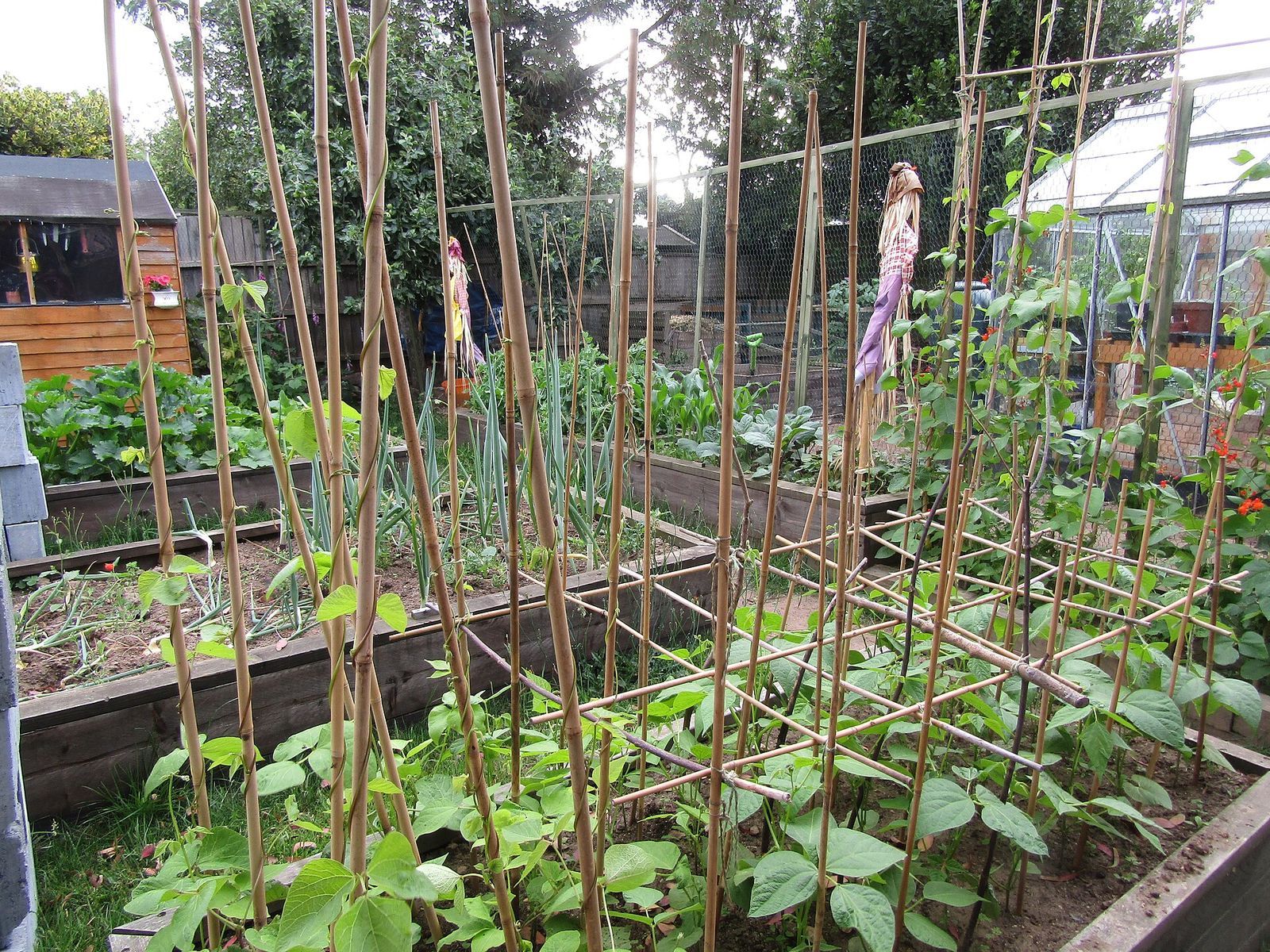
Raised beds solve several gardening problems at once: heavy clay or stony ground, poor drainage, bending down to weed, and soil that warms slowly in spring. They also make a vegetable plot tidier and easier to plan. The choices that matter are the material the bed is made from, how deep and wide it is, and what you fill it with. This guide walks through each, including how to calculate how much soil you'll need.
Why grow in a raised bed
- Better drainage where the native soil is heavy or waterlogged.
- Soil you control: you fill the bed with a good mix rather than working with what's there.
- Warmer soil earlier in spring, which can mean earlier sowing.
- Less bending, particularly with taller beds, and no walking on (and compacting) the growing area.
- Easier to protect with netting, hoops and covers.
The trade-off is that raised beds dry out faster than open ground, so plan how you'll water them.
Choosing a material
| Untreated softwood | Cedar, larch or similar | Pressure-treated timber | Galvanised or coated steel | Composite or recycled plastic | |
|---|---|---|---|---|---|
| Typical lifespan | Short (a few years) | Long | Long | Long | Long |
| Rot resistance | Low | Naturally good | High | Doesn't rot | Doesn't rot |
| Weight to move | Light | Light to medium | Medium | Light panels | Medium to heavy |
| Main watch-outs | Rot at soil line | Cost | Check the treatment type | Sharp edges; bowing on tall sides | Sagging on long spans |
Wood. Cedar, redwood, larch and Douglas fir contain natural compounds that slow rot; the heartwood lasts longest. Untreated pine and spruce are cheap but may rot within a few seasons where they touch damp soil. Thicker boards last longer and bow less; around 5 cm (2 in) thick is a common choice for durable beds.
Pressure-treated timber. Modern residential treatments, based largely on copper compounds, are widely used for raised beds, and many extension services consider them acceptable for food gardens. Some gardeners line the inside walls with heavy plastic sheeting as an extra precaution, leaving the bottom open for drainage. Avoid old timber treated with chromated copper arsenate (CCA), which was phased out for most residential uses in North America in the early 2000s, and avoid creosote-treated railway sleepers.
Metal. Galvanised steel and zinc-aluminium coated steel beds are light, don't rot and are often sold as modular panels in rectangles, ovals and rounds. Look for rolled or capped top edges, since cut steel is sharp. Metal beds warm up in sun; the effect on the soil is usually modest, but shallow beds in very hot climates can dry out quickly. Tall, long beds need internal cross-braces, because the weight of wet soil pushes the sides outwards.
Composite and recycled plastic. Wood-plastic composite boards and recycled plastic lumber don't rot or need staining. They are heavier than wood and can sag on long spans without extra posts or supports.
Other options. Stone, brick and block beds are permanent and last for decades. Fabric grow beds are inexpensive and easy to move, though they wear out after several seasons in the sun.
How deep and how wide
Depth. For beds sitting directly on soil, roots can grow down into the ground beneath, so the bed itself can be fairly shallow:
- 15–20 cm (6–8 in): enough for salad leaves, herbs and many flowers where the soil below is workable.
- 30 cm (12 in): a good all-round depth for most vegetables.
- 45 cm (18 in) or more: useful for long roots such as carrots and parsnips over poor ground, and for comfort when kneeling or sitting on the edge.
- 60–90 cm (24–36 in): waist-height beds for gardeners who can't bend easily. These need a lot of fill; see below.
Elevated planters on legs have a closed bottom and a trough that is often only 20–30 cm deep. They suit herbs and salads, not large crops, and dry out quickly.
Width. Keep beds narrow enough to reach the middle without stepping in: up to about 1.2 m (4 ft) when you can reach from both sides, or 60–90 cm (2–3 ft) against a wall or fence. Length is up to you.
Paths. Allow at least 45–60 cm (18–24 in) between beds, and closer to 90 cm (3 ft) where you want to get a wheelbarrow or wheelchair through.
Working out how much soil you need
Rule of thumb: volume = length × width × depth. A bed 2.4 m × 1.2 m × 0.3 m holds about 0.86 m³, or roughly 860 litres. In imperial units, an 8 × 4 ft bed 1 ft deep holds 32 cubic feet. Order a little extra, because new beds settle noticeably over the first season.
Bagged soil is convenient for one or two small beds; for several beds or deep ones, bulk delivery is usually more practical.
Filling tall beds. A waist-high bed needs a lot of material. Some gardeners fill the bottom third with coarse organic material such as logs, branches and woody prunings (sometimes called hügelkultur), then top it with soil. This reduces the amount of soil you buy but settles more as it breaks down. Don't fill the bottom with gravel "for drainage"; it tends to hold water in the soil above rather than help it drain.
What to fill it with
A raised bed needs something between garden soil and potting compost: rich enough to feed plants, with enough structure not to slump.
- A widely used starting point is roughly two parts good topsoil to one part well-rotted compost, blended evenly.
- Some gardeners use soilless mixes of compost with an aeration material such as perlite or vermiculite and a moisture-holding material such as coir. These are light and free-draining but can be expensive at volume and shrink as the organic matter breaks down.
- Commercial raised-bed mixes are a convenient option; check what's in them and whether they're screened.
- Avoid filling large beds entirely with bagged potting compost, which is expensive and settles a lot, or with subsoil or clay.
- Peat has environmental drawbacks and some countries are phasing it out of retail compost; coir and composted bark are common alternatives.
Top the bed up with a few centimetres of compost each year, ideally from your own heap; see our guide to home composting.
Placement, bases and pests
- Sun: most fruiting vegetables, such as tomatoes, peppers and squash, want at least six to eight hours of direct sun. Leafy greens tolerate more shade.
- Level ground: level the frame so water doesn't run to one end.
- On grass: cut the turf short and lay cardboard inside the frame to smother it; it will break down over time.
- Burrowing pests: where voles, moles or gophers are a problem, fix galvanised wire mesh (hardware cloth) across the bottom before filling.
- On paving or a patio: the bed must drain freely at the base, and it needs enough depth for the plants on its own, since roots can't reach the ground below.
- Water access: a nearby tap makes it far easier to add a timer and drip line later; see garden irrigation.
The short version
- Long-lasting and natural-looking: cedar, larch or similar naturally durable wood, or modern treated timber if you're comfortable with it.
- Modular and rot-proof: coated steel with rolled edges and cross-braces on tall beds.
- Depth: about 30 cm suits most vegetables over workable ground; go deeper over poor soil or for comfort.
- Width: no more than about 1.2 m if you can reach from both sides.
- Fill: calculate the volume, blend topsoil with compost, and top up every year.
Bloiq is reader-supported. Some links may earn us a commission; it never affects what we write. How we make money.
Cover photo: Kolforn, CC BY-SA 4.0, via Wikimedia Commons