Chainsaws for homeowners: bar length, power, chains and safety gear
How to choose a bar length, battery versus gas versus corded power, what chain pitch, gauge and cutter types mean, and the protective gear every user needs.
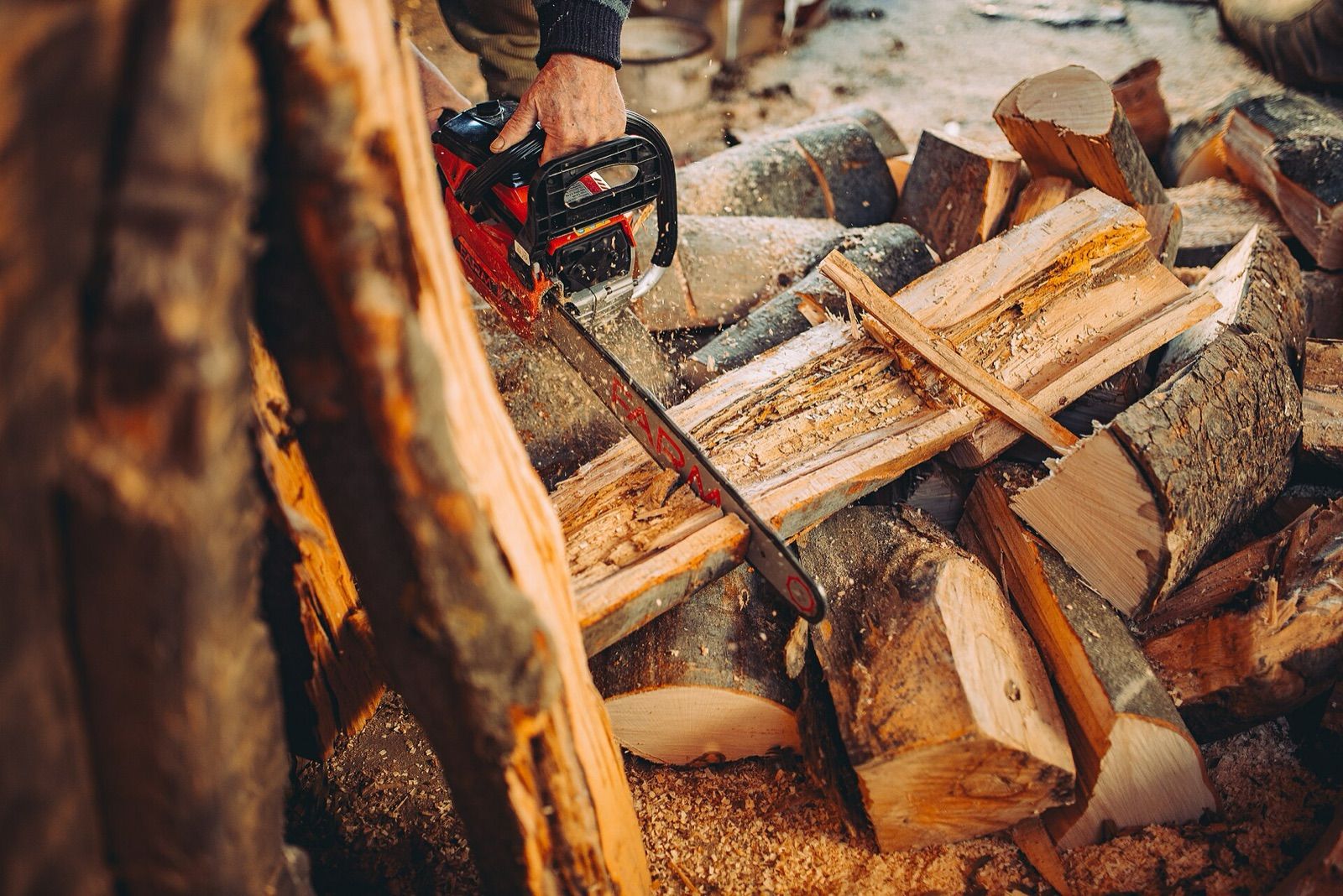
A chainsaw turns hours of work with a handsaw into minutes, whether you're pruning branches, cutting firewood or clearing up after a storm. It's also one of the most dangerous tools a homeowner can own. Choosing the right saw, meaning one that's big enough for your jobs but no bigger, is part of using it safely. This guide explains bar length, power sources and chain types, and the protective gear that should come with any chainsaw purchase.
Start with the jobs you'll do
- Pruning and small branches (up to roughly 10–15 cm thick): a small, light saw is easier to control and less tiring.
- Firewood and small trees: a mid-size saw handles most homeowner work.
- Storm clean-up and larger trees: needs more power and a longer bar, and often more skill. Large trees, leaning trees, trees near buildings or power lines, and storm-damaged trees under tension are jobs for a professional arborist.
Buying more saw than you need makes every job heavier and riskier. Most homeowners are best served by something modest.
Bar length
The guide bar is the steel blade the chain runs around. Typical lengths:
| Bar length | Typical use |
|---|---|
| 25–30 cm (10–12 in) | Pruning, limbing, small branches |
| 35–40 cm (14–16 in) | General homeowner use, firewood, small trees |
| 45–50 cm (18–20 in) | Larger logs and trees; more experienced users |
Rule of thumb: choose a bar a few centimetres longer than the thickness of the wood you'll usually cut. Wood thicker than the bar can be cut from both sides, but that takes practice.
A longer bar adds weight, puts the tip further from you and needs more power to pull the chain through the cut. Match the bar to the saw: manufacturers list the bar lengths each saw is designed to run.
Battery, gas or corded
Battery chainsaws have become the default for many homeowners. They're quiet, start instantly, need no fuel mixing and stop when you release the trigger. Higher-voltage models handle firewood and small trees well. Runtime depends on battery capacity (watt-hours, or volts × amp-hours) and how hard you work the saw. Occasional pruning and firewood suit them well; hours of heavy cutting may need several batteries.
Gas chainsaws offer the most power and unlimited runtime with fuel, which is why they remain standard for heavy use and remote properties. Homeowner models usually have engines of roughly 35–50 cc. They're louder, heavier and vibrate more, run on a two-stroke fuel and oil mix, and need seasonal maintenance. Stale fuel is a common cause of hard starting, so use fresh or stabilised fuel.
Corded electric chainsaws are light and inexpensive, with no batteries or fuel. The cable limits where you can work and must be kept well away from the chain. Use an outdoor-rated extension lead of adequate gauge and RCD (GFCI) protection.
Pole saws put a small chainsaw on an extending pole for branches overhead, letting you keep your feet on the ground instead of using a ladder.
Top-handle chainsaws are designed for trained arborists working in trees and are not suitable for homeowners.
Chains: pitch, gauge and drive links
Replacement chains must match your bar and drive sprocket on three measurements, usually stamped on the bar or listed in the manual:
- Pitch: the spacing between links. Common sizes include 1/4 in, 3/8 in low profile, 0.325 in and 3/8 in.
- Gauge: the thickness of the drive links that sit in the bar groove, commonly 0.043, 0.050 or 0.058 in (about 1.1, 1.3 or 1.5 mm).
- Drive link count: the number of links, which sets the chain's length.
Get any of these wrong and the chain won't fit or will run badly. Keep a note of all three.
Chain cutter types
- Low-kickback chains have extra guard links or bumper links that reduce the chain's tendency to grab. They're standard on most homeowner saws and are the sensible choice.
- Semi-chisel cutters have rounded corners. They cut slightly slower but stay sharp longer in dirty or frozen wood and are easier to sharpen.
- Full-chisel cutters have square corners and cut fastest in clean wood, but dull faster and are more aggressive. They're mostly for experienced users.
- Carbide-tipped chains resist dulling in dirty wood, but cost more and are harder to sharpen.
A sharp chain produces chips; a dull one produces fine dust and needs pushing. Keep a file guide of the right size, or have chains sharpened professionally.
Safety features to look for
- Chain brake: stops the chain in a fraction of a second, triggered by the front hand guard or by inertia if the saw kicks back.
- Throttle lockout: prevents the throttle being pressed accidentally.
- Chain catcher: a small hook under the saw that catches a broken or derailed chain.
- Anti-vibration mounts: reduce fatigue and the long-term risk of vibration injury.
- Automatic chain oiler with a visible oil level, and easy chain tensioning.
Kickback: the main hazard
Kickback happens when the upper tip of the bar (the "kickback zone") touches wood or the chain gets pinched. The saw can be thrown up and back towards the operator faster than anyone can react. To reduce the risk:
- Keep the bar tip clear of logs, branches and the ground.
- Hold the saw firmly with both hands, thumbs wrapped around the handles.
- Never cut above shoulder height or from a ladder.
- Stand to one side of the cutting line, not directly behind the saw.
- Cut at full throttle, and watch for wood that could pinch the bar.
Protective gear
Protective clothing is not optional. Look for items certified to a recognised chainsaw standard, such as EN ISO 11393 in Europe, or ASTM F1897 for leg protection in North America.
- Helmet with a mesh visor or face shield and built-in hearing protection, or separate eye and ear protection.
- Chainsaw trousers or chaps: layers of long fibres that pull out and jam the chain on contact.
- Chainsaw boots with toe protection and cut-resistant material.
- Gloves with a good grip; some include cut protection on the back of the left hand.
A chainsaw course, often available through colleges, forestry organisations and some equipment dealers, is worthwhile for anyone new to the tool. Never work alone, and make sure someone knows where you are.
The short version
- Buy for your typical jobs; most homeowners need a mid-size saw at most.
- Choose a bar a little longer than the wood you usually cut.
- Battery for occasional use; gas for heavy, frequent cutting; corded for light work near a socket.
- Match replacement chains on pitch, gauge and drive links, and prefer low-kickback chains.
- Check for a chain brake, throttle lockout and chain catcher.
- Budget for protective gear and training, and leave big or risky trees to professionals.
- Season your firewood before burning it; our fire pit guide explains why dry wood matters. For hedges and shrubs, a hedge trimmer is the safer tool.
Bloiq is reader-supported. Some links may earn us a commission; it never affects what we write. How we make money.
Cover photo: Nenad Stojkovic, CC BY 2.0, via Wikimedia Commons