Induction hobs and portable induction cooktops: how they work
How induction cooking heats the pan directly, which cookware works, what power levels mean for built-in and portable hobs, and the safety features worth having.
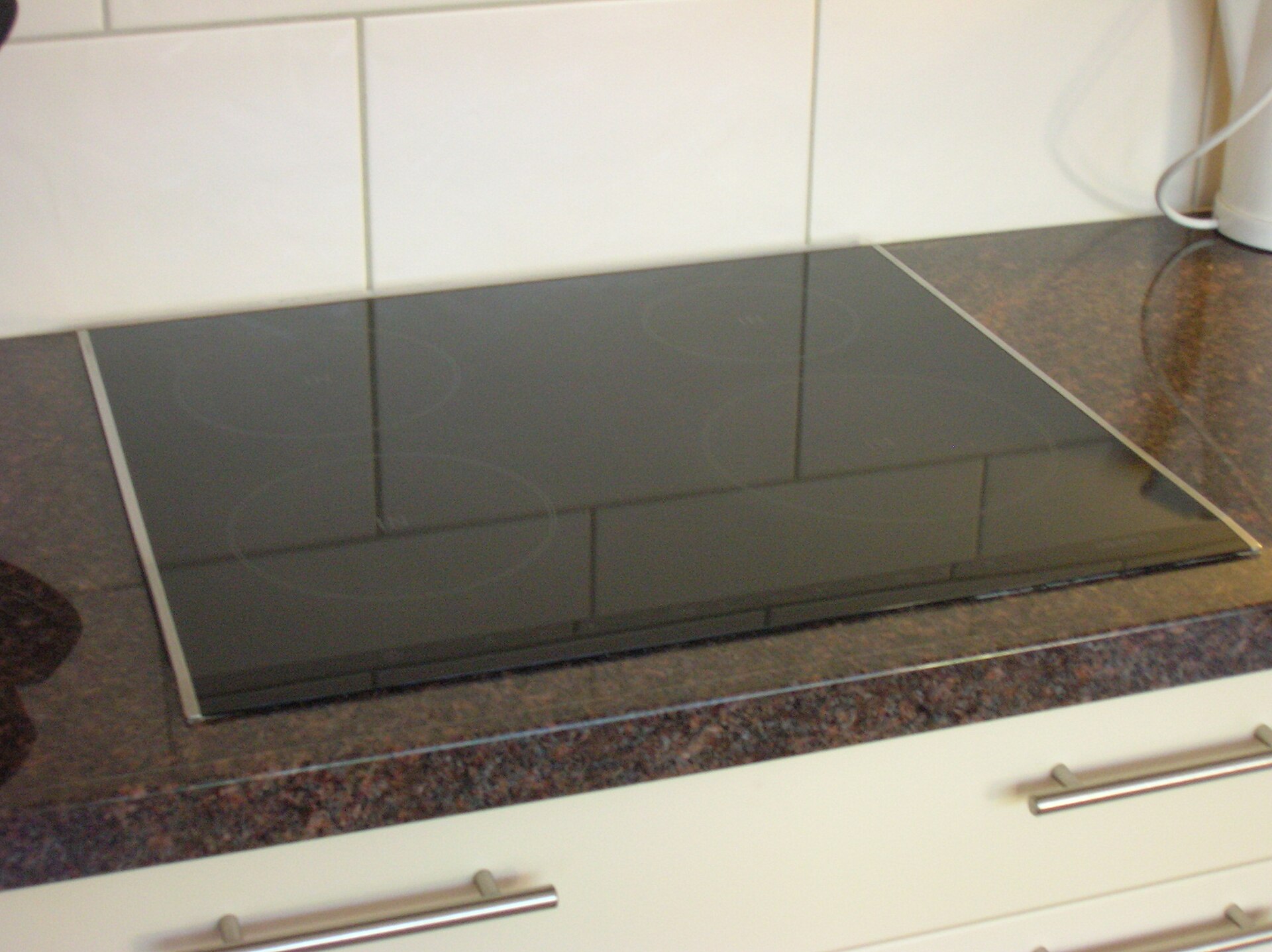
Induction cooking heats a pan faster than most gas or radiant electric hobs, responds almost instantly when you change the setting, and leaves the glass surface cooler and easier to clean. It is increasingly common in new kitchens, and a portable single-zone induction hob is an inexpensive way to try it. This guide explains how induction works, which pans you need, what the power figures mean and which safety features to look for.
How induction works
Under the glass-ceramic surface of each cooking zone sits a flat copper coil. Electronics feed it a high-frequency alternating current, which produces a rapidly changing magnetic field above the surface.
When you place a pan with a magnetic (ferromagnetic) base on the zone, that field induces electrical currents in the metal of the pan itself. The pan's resistance to those currents, together with magnetic effects in the iron, turns the energy into heat inside the pan. The glass doesn't heat directly; it warms only from contact with the hot pan.
This has practical consequences:
- Speed: water can boil noticeably faster than on radiant electric hobs and many gas burners.
- Responsiveness: turning the power down takes effect almost immediately, much like gas.
- Efficiency: because the heat is produced in the pan, more of the energy goes into the food and less into the kitchen.
- Easier cleaning: spills don't bake on as badly, because the surface around the pan stays cooler.
Cookware: what works and what doesn't
The pan's base must be magnetic. The quickest check is a fridge magnet: if it sticks firmly to the underside, the pan will work. Many pans are also marked with an induction symbol, a coil shape.
| Works well | Doesn't work (without a magnetic base) |
|---|---|
| Cast iron and enamelled cast iron | Aluminium |
| Carbon steel | Copper |
| Most magnetic stainless steel, including clad pans with a magnetic outer layer | Glass and ceramic |
| Enamelled steel | Some non-magnetic stainless steel |
A few other points:
- Flat bases work best; warped pans heat unevenly and may not be detected.
- Pan size matters. Each zone has a minimum diameter below which it won't recognise the pan, and a pan much smaller than the zone heats less efficiently.
- Interface discs, magnetic plates placed between the hob and a non-magnetic pan, let you use copper or aluminium, but they are slower, less efficient and get very hot.
For more on how different materials behave, see our cookware materials guide.
Power levels: built-in hobs
Built-in induction hobs usually have zones rated somewhere between about 1.2 and 3.7 kW, and many have a boost function that temporarily sends extra power to one zone for rapid boiling.
The hob's total power is often around 7 kW or more, which is more than a normal socket can supply. In most homes, a built-in hob needs a dedicated circuit installed by a qualified electrician. Many hobs use power management, sharing the available power between zones, so boosting one zone can reduce another. Check the manual for how zones are paired.
Flexible zones combine two areas into one larger zone for oval casseroles or griddles, and some hobs detect the pan anywhere on the surface.
Power levels: portable induction hobs
Portable single- or double-zone hobs plug into an ordinary socket, which limits their power:
- In North America, portable units on a standard 120 V household socket typically top out around 1,800 W.
- In the UK and much of Europe, where household sockets run at 220–240 V, portable hobs of around 2,000 W are common, and some go higher.
Two-zone portable hobs share that same limited power between both zones, so neither zone gets full power when both are in use.
Portable hobs are useful as an extra zone, in small flats and student rooms, for cooking at the table, or while a kitchen is being renovated. They also make it easy to find out whether you like induction before committing to a built-in hob.
Low-heat control and settings
One weakness of cheaper induction hobs, especially portable ones, is low-power cycling. At low settings, some units can't run the coil continuously at low power, so they switch on and off in bursts. That can cause simmering sauces to bubble and stop, and chocolate or delicate sauces to scorch. Better hobs deliver genuinely continuous low power.
Many portable units let you choose a power level or a temperature. Temperature settings are estimated from a sensor under the glass, so treat them as a guide rather than an exact pan temperature.
Noise
Induction hobs make some sounds that surprise new users:
- a cooling fan, which may keep running for a short time after cooking;
- a hum or buzz at high power, which is often more noticeable with certain pans, particularly lighter pans or those built from several layers of metal;
- clicking as power cycles on some settings.
These are normal, although heavier, flat-based pans are often quieter.
Safety features and precautions
Induction is often considered safer than gas or radiant hobs, because there is no open flame and the surface doesn't get as hot. Useful features include:
- Pan detection: the zone stops heating if no suitable pan is present.
- Residual heat indicators: the glass still gets hot from the pan, and an "H" or similar light warns you.
- Child lock: prevents accidental changes to the controls.
- Automatic shut-off: switches off after a set time or if the hob overheats.
- Boil-dry protection on some models.
Precautions:
- Don't leave metal utensils, foil or tins on the surface; they can heat up if a zone is switched on.
- Don't use the glass as a worktop. Dropping heavy objects can crack it, and sliding cast iron can scratch it.
- Give portable hobs space so the cooling fan can draw in air.
- People with pacemakers or other implanted medical devices should check with their doctor and follow the hob manufacturer's guidance before using induction.
The short version
- Induction heats the pan directly, making it fast, responsive and efficient.
- Your pans need a magnetic, flat base: use the fridge-magnet test.
- Built-in hobs usually need a dedicated circuit; check for power sharing between zones.
- Portable hobs are limited by the socket, around 1,800 W in North America.
- Look for smooth, continuous low-power control if you simmer and melt a lot.
- Choose models with pan detection, residual heat indicators and a child lock.
Bloiq is reader-supported. Some links may earn us a commission; it never affects what we write. How we make money.
Cover photo: Erik1980 at Dutch Wikipedia, CC BY-SA 3.0, via Wikimedia Commons