Carpet cleaners and steam mops: which floors, tank sizes, drying times
How carpet cleaners and steam mops work, which floors each suits and which to keep them off, what tank sizes mean in practice and how to keep drying times short.
A vacuum lifts loose dirt, but it can't shift the grime that builds up in carpet pile or the sticky film on a kitchen floor. That's where carpet cleaners and steam mops come in. They solve different problems, though, and using either on the wrong floor can cause damage that a warranty won't cover. This guide explains how each works, which surfaces they suit, what tank sizes mean in practice and how to keep drying times short.
Two different machines
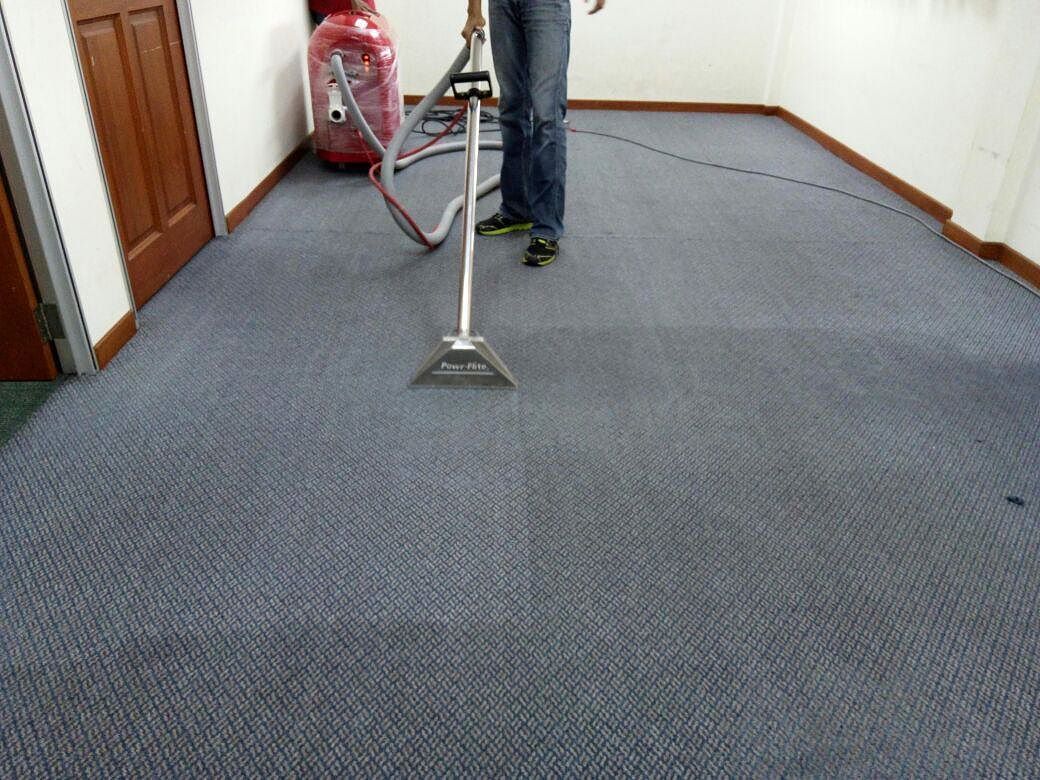
- A carpet cleaner (also called a carpet washer, shampooer or extractor) sprays water mixed with a cleaning solution into the carpet, scrubs it with brushes and immediately sucks the dirty water back out into a separate tank. This is called wet extraction.
- A steam mop heats a small amount of water into steam and releases it through a microfibre pad that you push across a hard floor. It loosens grime with heat and moisture, and the pad wipes it up.
There is some overlap: many steam mops come with a carpet glider, and some carpet cleaners have hard-floor tools. But each machine works best on the surfaces it was designed for.
Types of carpet cleaner
| Type | Best for | Typical tanks |
|---|---|---|
| Full-size upright | Whole rooms, stairs with a hose tool | Clean tank of roughly 3–4 L (about 1 gallon) |
| Compact upright | Smaller homes, easier storage | Clean tank of roughly 1.5–3 L |
| Portable spot cleaner | Spills, pet accidents, stairs, upholstery, car seats | Clean tank of roughly 0.5–1.5 L |
Full-size uprights have wide cleaning paths, motorised brushes and enough capacity for a room or two per fill. Spot cleaners are small canisters with a hose and hand tool. They're popular with pet owners, because they're quick to grab for one stain, but slow for whole rooms.
Features worth comparing:
- Brushes: rotating or oscillating brush rolls scrub the pile more thoroughly than fixed bristles.
- Heating: most home machines don't boil water. Some have a heater that keeps hot tap water warm during cleaning; follow the manual on how hot your fill water may be.
- Separate solution tank: lets you control how much detergent goes down, or rinse with water alone.
- Hose and tools: essential for stairs, upholstery and car interiors.
- Self-cleaning cycles: flush the brush and pipes after use, which helps prevent odours.
Carpets: what to check first
- Check the carpet manufacturer's care guidance. Some carpets and warranties specify a cleaning method, and some call for periodic professional hot-water extraction.
- Wool, natural fibres and rugs need care. Wool tolerates gentle extraction with suitable, wool-safe solutions, but too much water or heat can shrink or distort it. Sisal, jute, seagrass and viscose (rayon) rugs often shouldn't be wet-cleaned at home at all.
- Test for colourfastness in a hidden corner before you clean a whole carpet.
- Vacuum thoroughly first. Wet extraction is for embedded grime, not loose grit or hair, which clogs the machine and turns to mud.
Drying times and how to shorten them
Carpets cleaned at home typically take several hours to dry, often somewhere in the range of 4–12 hours, and sometimes overnight or longer in thick pile, cold weather or humid conditions. Wet carpet that stays damp for too long can smell, encourage mould growth in the underlay or let the backing separate.
Rule of thumb: do several slow suction-only "dry passes" for every wet pass. The water you pull back out is water that doesn't have to evaporate.
To speed up drying:
- Don't over-wet. Make one wet pass and two or more dry passes, and don't keep spraying on stubborn spots.
- Use the right amount of solution. Too much detergent leaves a sticky residue that attracts dirt; a final rinse pass with clean water helps.
- Move the air. Open windows if it's dry outside, run fans, or use a dehumidifier or the heating in cold, damp weather.
- Keep off the carpet until it's dry, or wear clean socks, and put foil or plastic under furniture legs if you move furniture back early, to avoid stains from wood or rust.
Steam mops: which floors they suit
Steam is effective on sealed, water-resistant hard floors. The table below gives typical guidance; the flooring manufacturer's care instructions always take priority.
| Floor | Steam mop? |
|---|---|
| Glazed ceramic and porcelain tile | Generally yes, including the grout lines |
| Sealed natural stone | Often yes, but check; heat and moisture can affect some stones and sealers |
| Vinyl sheet and luxury vinyl tile or plank (LVT, LVP) | Depends on the product; many makers advise against steam, as heat can loosen adhesives and joints |
| Laminate | Usually not recommended; moisture forced into the joints can make the core swell |
| Sealed hardwood and engineered wood | Usually not recommended by flooring makers |
| Unsealed, oiled or waxed wood, cork, unsealed stone or terracotta | No |
If you're unsure whether a floor is sealed, put a few drops of water on it. If they soak in or darken the surface, keep the steam mop away.
Steam mop specifications
- Water tank: typically around 0.3–0.5 L. That's enough for a kitchen and bathroom, but larger homes may need refills. Check whether the tank detaches for filling.
- Heat-up time: often well under a minute.
- Steam control: low settings for floors that need a light touch, high for sticky or greasy spots. An even, controlled output matters more than maximum steam.
- Pads: washable microfibre pads are standard. A couple of spares let you swap a dirty pad mid-clean.
- Handheld mode: some models convert into a handheld steamer for grout, hobs, extractor filters and taps.
- Water: in hard-water areas, limescale can build up in the boiler. Use the water the manual recommends; some say distilled or filtered water, some say tap water is fine, and some have anti-scale cartridges.
About hygiene claims: steam can reduce bacteria on hard surfaces, but only with enough heat and contact time. A steam mop moving quickly across a floor is mainly a very good cleaner, so read "sanitising" claims carefully.
Safety basics
- Steam burns. Never point the steam at people or pets, keep children away and let the head cool on its rest before touching the pad.
- Don't leave a steam mop standing in one place on a floor; the heat and moisture can mark it.
- Unplug before refilling and follow the manual's guidance on letting a hot unit cool.
- Carpet cleaners and electricity: don't run the cord through standing water, and empty the dirty tank promptly to prevent odours.
Alternatives worth knowing about
- Wet-dry hard-floor washers scrub with a wet roller and vacuum up the dirty water. They work on more floor types than steam mops, with less heat and less moisture left behind.
- Robot mops handle light, regular cleaning. See our robot vacuum and mop guide.
- Hiring a machine or a professional makes sense for a once-a-year deep clean of a large carpeted area.
- Cordless stick vacuums keep carpets cleaner between deep cleans; see our cordless stick vacuum guide.
The short version
- Carpet cleaners wash and extract carpets and upholstery; steam mops clean sealed hard floors.
- Pick a full-size upright for whole rooms and a spot cleaner for stains, stairs and upholstery.
- Vacuum first, test for colourfastness, and check the carpet maker's care instructions.
- Expect carpets to take several hours to dry; make extra dry passes and keep air moving.
- Use steam only on sealed tile and stone or floors whose makers allow it. Laminate, most wood and many vinyl floors aren't suitable.
- Look at tank size, steam control and spare pads, and follow the manual's advice on water in hard-water areas.
Bloiq is reader-supported. Some links may earn us a commission; it never affects what we write. How we make money.
Cover photo: Bolajitunji, CC BY-SA 4.0, via Wikimedia Commons