Cordless stick vacuums: suction ratings, battery life and filtration
Air watts versus pascals, realistic run times, sealed HEPA filtration and self-emptying docks explained, so you can choose a cordless stick vacuum that fits your home.
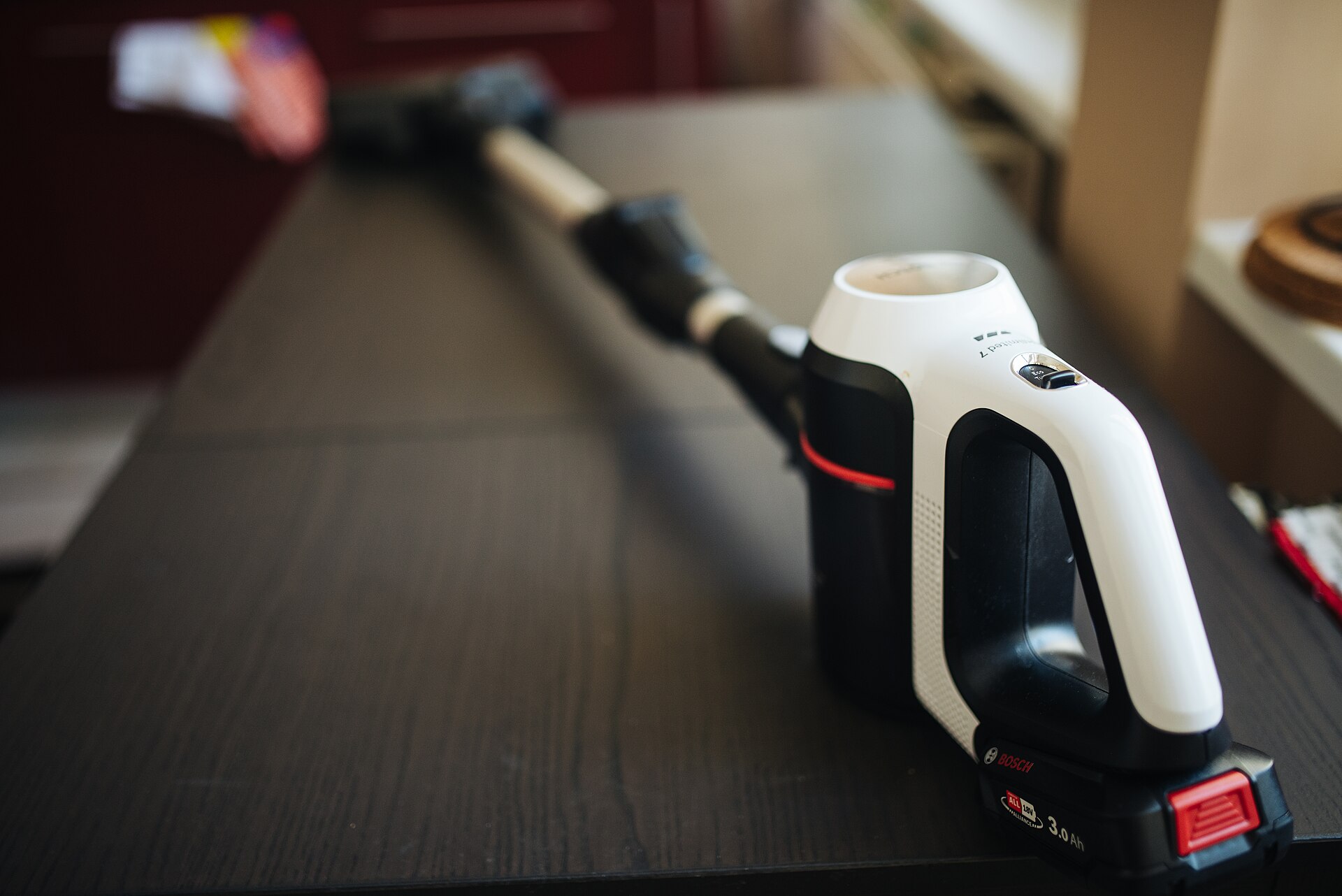
Cordless stick vacuums have become the main vacuum in many homes: light, always charged and ready, and easy to convert into a handheld for stairs and car seats. Choosing one is harder than it looks, because manufacturers describe suction in different units, quote run times under the most flattering conditions and use "HEPA" loosely. This guide explains what the numbers mean and what to check before you buy.
Suction: three units that don't compare
Stick vacuum specifications use at least three different measures, and they cannot be converted into one another:
- Air watts (AW) combine airflow and suction into a single figure describing the cleaning power at the end of the wand or cleaner head. It is the most useful of the three when two brands both quote it.
- Pascals (Pa) measure suction pressure, how strongly the vacuum pulls when the inlet is blocked. A high pascal figure alone doesn't mean strong airflow, and airflow is what carries debris into the bin.
- Motor watts (W) describe the electrical power the motor draws. That's a measure of energy use, not cleaning performance.
Two further cautions. Headline suction figures are almost always measured in the highest power mode, which may run for only a few minutes. And real cleaning performance depends as much on the cleaner head, brush bar and sealing as on raw suction. Compare suction only between models that quote the same unit, and treat it as one factor among several.
Battery life: reading the run-time claim
Advertised run times are usually measured on the lowest power setting, often with a non-motorised tool. In practice:
- Eco or low mode with a non-motorised tool gives the longest time and suits hard floors with light dust.
- Medium mode with a motorised floor head is what most people use for whole-house cleaning, and run time is noticeably shorter.
- Boost or maximum mode may last only a handful of minutes, and is meant for short bursts on rugs or stubborn spots.
Look for the manufacturer's run time with the motorised floor head in normal mode, or at least a breakdown by mode. Other battery details worth checking:
- Removable batteries let you swap in a spare for larger homes, and let you replace a worn-out battery without replacing the vacuum.
- Charge time is often several hours for a full charge.
- Lithium-ion batteries lose capacity over the years. Check whether replacement batteries are sold for the model and what they cost.
- Battery indicators that show the remaining time or percentage are more useful than a simple light.
Charge batteries only with the manufacturer's charger and follow the manual's storage advice.
Cleaner heads and brush bars
The floor head does much of the real work. Common types:
- Motorised brush bar with stiff bristles for carpets and rugs, agitating the pile to lift embedded dirt.
- Soft roller heads with fabric or felt-like material for hard floors, which pick up fine dust and larger debris without scattering it.
- Anti-tangle designs, such as combs or cone-shaped rollers, reduce hair wrapping around the bar, which is useful with long hair or pets.
- Headlights on the floor head help show dust on hard floors.
Many models include both a carpet head and a hard-floor head. Also useful: a crevice tool, a combination brush, and a mini motorised tool for upholstery, pet beds and stairs.
Filtration: why "sealed" matters
Filtration matters most for people with allergies. The key points:
- HEPA in North America usually means a filter that captures 99.97% of particles 0.3 microns in size. In Europe, the EN 1822 standard grades filters, with H13 capturing at least 99.95% of particles at their most penetrating size.
- A HEPA filter only helps if the whole machine is sealed, so that air can't bypass the filter through gaps in the body. Some manufacturers state that the complete machine has been tested for filtration; others only describe the filter itself.
- Cyclonic separation spins most dust out of the airflow before it reaches the filter, keeping suction steady as the bin fills.
Many filters are washable. Let them dry completely, often for 24 hours or more, before refitting, because a damp filter can grow mould and damage the motor. Check how often the manufacturer recommends replacing them.
Bin size and emptying
Stick vacuum bins are small, usually well under a litre. That's fine for regular quick cleans but means frequent emptying in a large home or with shedding pets. Look for a bin that empties with one hand, directly over a bin liner, without having to pull debris out by hand. Some designs push out hair and dust with a built-in scraper.
Docks and stands
How the vacuum is stored and charged affects how often you use it:
- Wall-mounted docks hold the vacuum and charge it, but need screwing to a wall near a socket.
- Freestanding stands charge the vacuum and hold tools without drilling.
- Self-emptying docks suck the bin's contents into a larger bag or container in the base, the same idea as on many robot vacuums. They reduce contact with dust, which some allergy sufferers value, but add cost, size and, usually, replacement bags.
If you're weighing a stick vacuum against a robot, our guide to robot vacuum and mop combos explains how the two compare; many households use one for daily upkeep and the other for spot cleaning.
Weight, balance and handling
Stick vacuums typically weigh about 2 to 3.5 kilograms. The weight distribution matters as much as the total:
- Top-heavy designs, with the motor and bin near the handle, convert easily to a handheld but can tire the wrist when cleaning high up or under furniture.
- Bottom-heavy designs, with the weight near the floor, feel lighter while vacuuming floors but are clumsier as a handheld.
Also check whether the wand bends or lies flat to reach under beds and sofas, whether the power button is a trigger you must hold or a switch, and how loud it is on the setting you'd use most.
The short version
- Compare suction only in the same unit, preferably air watts, and don't rely on motor watts.
- Look for the run time with the motorised floor head in normal mode, not just the maximum.
- Prefer a removable, replaceable battery and check spare battery availability.
- Match the floor heads to your floors: brush bar for carpets, soft roller for hard floors, anti-tangle if you have pets.
- For allergies, look for a sealed system with HEPA filtration, not just a HEPA filter.
- Decide whether a self-emptying dock is worth the extra cost and space for you.
Bloiq is reader-supported. Some links may earn us a commission; it never affects what we write. How we make money.
Cover photo: Shixart1985, CC BY 2.0, via Wikimedia Commons