Vacuum sealers explained: external vs chamber, bags and food storage
How external and chamber vacuum sealers differ, which bags to use, how sealing helps with sous vide, and what vacuum packing can and can't do for storage times.
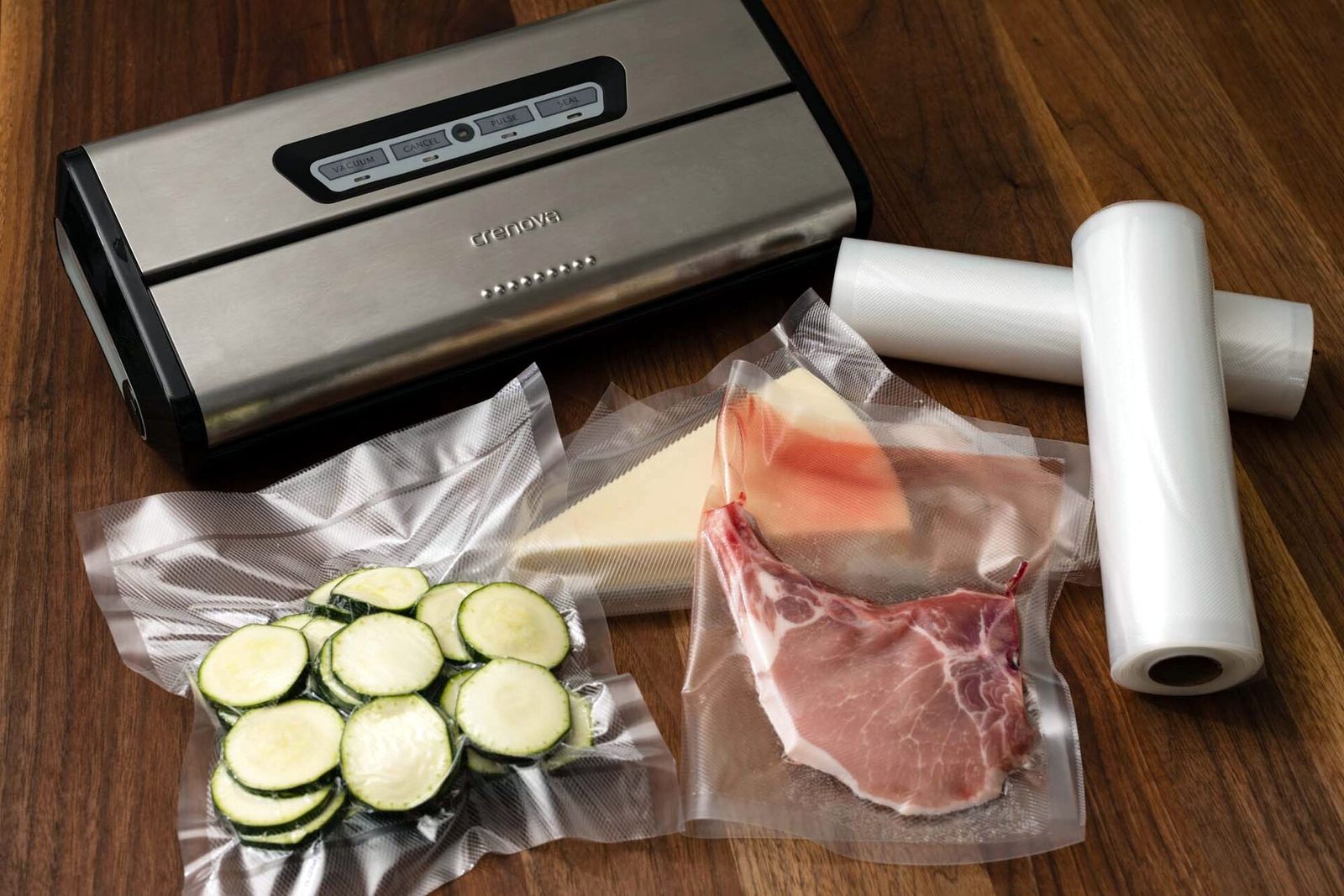
A vacuum sealer removes most of the air from a bag and seals it shut. That simple step helps prevent freezer burn, keeps bulk-bought meat and batch-cooked meals in better condition, and makes sous vide cooking easier. But the two main types of sealer handle liquids very differently, and vacuum packing is often oversold as a way to make food last far longer. This guide explains the types, the bags and what sealing really does for storage.
What vacuum sealing does, and doesn't do
Removing air helps in several ways:
- It reduces oxidation, which causes rancid fats and dull colours.
- It prevents freezer burn, the dry, discoloured patches that form when food loses moisture to cold air in the freezer.
- It stops food absorbing odours and makes packs flat and easy to stack.
What it doesn't do is sterilise food or make perishable food shelf-stable. Vacuum-packed meat, fish, dairy and cooked food still need to be kept in the fridge or freezer. Some harmful bacteria, including the one that causes botulism, can grow without oxygen, so a vacuum pack is not a substitute for proper chilling.
External (edge) vacuum sealers
The most common home type. You place the open end of a bag in a slot or trough, close the lid, and a pump draws the air out through the opening before a heated bar melts the bag shut.
- Pros: compact, affordable, can seal bags of almost any length from a roll.
- Cons: they need textured (embossed) bags, which have channels that let air escape. They struggle with liquids and very moist foods, which can be drawn towards the seal or into the machine and spoil the seal.
Tips for moist foods:
- Pre-freeze soups, stews, marinades and soft foods on a tray or in the bag until firm, then seal.
- Use the pulse or manual mode to stop the vacuum before liquid reaches the seal.
- Use a moist setting if your sealer has one; it seals for longer to cope with a damp bag.
- Leave several centimetres of empty bag above the food.
Many external sealers can also be fitted with a hose for vacuum canisters and jar lids, which suit delicate items such as crackers or salad leaves that would be crushed in a bag.
Handheld pumps and valve bags are a lighter-duty option: convenient for small jobs, but they generally achieve a weaker vacuum.
Chamber vacuum sealers
With a chamber sealer, the whole bag goes inside a sealed chamber. The machine removes the air from the entire chamber, so the pressure inside and outside the bag stays equal, and liquids stay in the bag rather than being sucked out.
- Pros: can seal liquids, soups and marinades easily; achieve a stronger, more consistent vacuum; use smooth bags, which are usually cheaper per bag than embossed ones; handle continuous use better.
- Cons: much larger, heavier and more expensive. The chamber size limits the bag size. Some use oil-filled pumps that need occasional oil changes.
Chamber sealers make sense if you seal often, buy meat in bulk, cook sous vide regularly or want to seal liquids without pre-freezing.
External vs chamber at a glance
| External sealer | Chamber sealer | |
|---|---|---|
| Price | Lower | Much higher |
| Size | Compact | Large and heavy |
| Liquids | Difficult without pre-freezing | Easy |
| Bags | Embossed or textured (dearer) | Smooth (cheaper) |
| Bag length | Any length from a roll | Limited by chamber size |
| Best for | Occasional freezer storage | Frequent use, liquids, sous vide |
Choosing bags
- Embossed rolls or pre-cut bags for external sealers; smooth bags for chamber sealers (embossed bags also work in chamber models).
- Thickness: often described in mil or microns. Thicker bags resist punctures from bones and sharp edges better; you can also wrap bone ends in a little baking paper.
- Food-safe and temperature-rated: for sous vide or reheating in water, make sure the bags are rated for simmering or cooking temperatures.
- Freezer-rated bags stay flexible and resist cracking in the cold.
- Reuse: bags that held dry or cooked foods can sometimes be washed and reused, though each reseal makes them a little shorter. Bags that held raw meat or fish are best discarded.
Rolls let you make bags to size, which reduces waste; pre-cut bags are quicker.
Features that matter in a sealer
- Seal bar length: often around 30 cm (12 in); longer bars handle wider bags.
- Double seal or wide seal: a more reliable seal, especially for freezing.
- Dry and moist modes, plus pulse and seal-only buttons.
- Built-in roll storage and cutter: convenient if you use rolls.
- Accessory port for canisters and jars.
- Duty cycle: cheaper sealers may need a short rest between seals to cool down. If you do big batches, look for continuous-use claims or a fan-cooled model.
- Removable drip tray: easier to clean if liquid gets drawn in.
Sealing for sous vide
Sous vide cooking means cooking food in a sealed bag in a precisely heated water bath. Vacuum sealing helps because it:
- removes air that would insulate the food and slow heat transfer;
- keeps bags from floating;
- keeps marinades in close contact with the food.
Zip-top bags using the water-displacement method work for many dishes, but a sealer is more reliable for long cooks and for freezing portions to cook later. Follow reliable time-and-temperature guidance for food safety, especially with poultry, pork and fish.
Storage times in general terms
How much longer food lasts depends on the food, how fresh it was when sealed and how cold it is kept. In general:
- In the freezer: food kept continuously frozen at −18 °C (0 °F) or below stays safe indefinitely; the limit is quality. Vacuum sealing slows freezer burn, so food keeps its texture and flavour for much longer, often many months or more, than it would in loosely wrapped packaging.
- In the fridge: vacuum packing can extend the quality of some foods, such as hard cheese and cured meats, but it does not change the safe "use by" time for fresh meat, fish and leftovers much, if at all. Follow the usual guidance and use-by dates.
- Dry goods: coffee, nuts, flour and dried foods keep their flavour better when sealed away from air and moisture.
A few foods need care. Soft cheeses and fresh mushrooms can deteriorate faster under vacuum. Many vegetables should be blanched before freezing. Garlic, herbs or other low-acid foods in oil should never be vacuum sealed and stored at room temperature.
The short version
- External sealers are affordable and fine for most households; chamber sealers are for liquids and heavy use.
- Use embossed bags in an external sealer; chamber sealers take cheaper smooth bags.
- Pre-freeze wet foods before sealing with an external model.
- Look for a double seal, pulse control and a moist setting.
- Vacuum sealing protects quality, especially in the freezer, but doesn't replace refrigeration.
Bloiq is reader-supported. Some links may earn us a commission; it never affects what we write. How we make money.
Cover photo: Your Best Digs, CC BY 2.0, via Wikimedia Commons