Home / Travel / Japan · Where to stay
Where to stay in Osaka: Namba, Umeda, Shinsaibashi, Tennoji and more
Osaka has two centres and excellent trains. How Namba, Shinsaibashi, Umeda, Tennoji, Shin-Osaka, Nakanoshima and the castle and bay areas compare, and who each suits.
This guide contains affiliate links, marked as such. If you book through them, Bloiq may earn a commission at no extra cost to you.
Osaka is Japan's great food city, louder and more casual than Kyoto, and a superb base for the whole Kansai region. It has two centres: Kita ("north"), built around Osaka and Umeda stations, and Minami ("south"), around Namba and Shinsaibashi. The Midosuji subway line links them in about ten minutes, so almost anywhere along it works well. The real choice is between neon-lit evenings, easy day trips and quiet nights. Here's how the main areas compare.
The quick answer
- First visit, food and nightlife on the doorstep: Namba.
- Shopping and a slightly calmer Minami base: Shinsaibashi.
- Day trips to Kyoto, Kobe and beyond: Umeda, around Osaka Station.
- Value, Nara day trips and easy airport trains: Tennoji.
- Early bullet trains: Shin-Osaka.
- Quiet, central and close to museums: Nakanoshima and Yodoyabashi.
- Morning walks and calm evenings: around Osaka Castle.
- A theme-park-focused trip: the Bay Area.
Namba: the heart of Minami
Namba is the Osaka of travel photos: the canal-side neon of Dotonbori, giant restaurant signs, and streets packed with stalls selling takoyaki (octopus dumplings) and okonomiyaki (savoury pancakes). Kuromon Market, the lantern-lit lanes of Hozenji Yokocho and the electronics and anime shops of Den Den Town are all within walking distance. Namba is also a major rail hub: Nankai trains run to Kansai International Airport, Kintetsu trains to Nara, and three subway lines meet here.
Good for: first-time visitors, food lovers and anyone who wants to walk back from dinner. Consider: it's crowded day and night, and rooms near Dotonbori can be small and noisy. The stations are large and confusing, so check which exit is nearest your hotel.
Shinsaibashi: shopping and style
Just north of Dotonbori, Shinsaibashi is Osaka's shopping district. The covered Shinsaibashi-suji arcade runs parallel to Midosuji, a broad avenue lined with flagship and luxury stores. To the west, Amerikamura has youth fashion, vintage shops and small bars, and Horie has cafés and independent boutiques.
Good for: shoppers, couples and travellers who want Minami's food and nightlife without sleeping right on top of it. Consider: it's still busy, especially at weekends, and Amerikamura is lively late into the night.
Umeda: Kita's transport hub
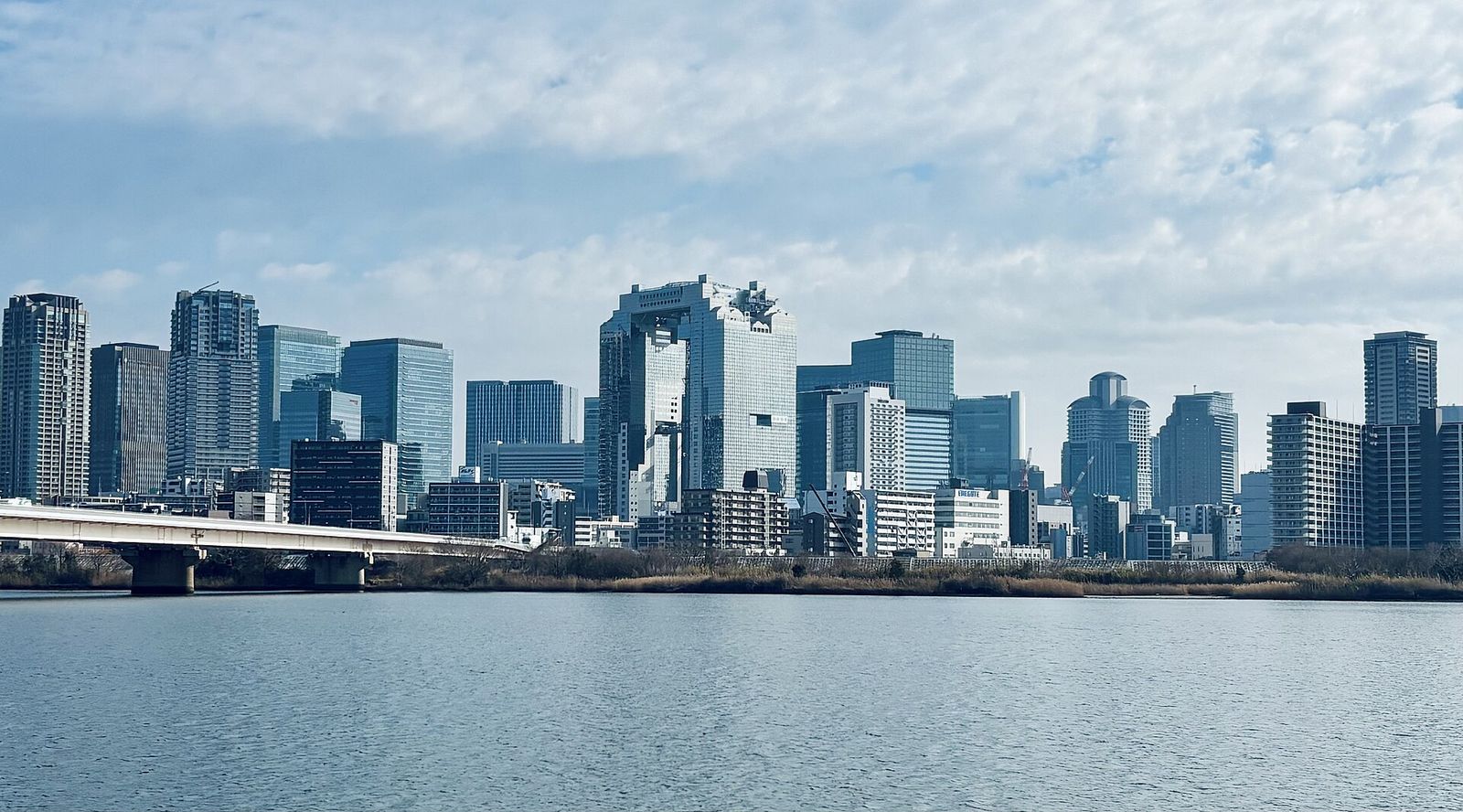
Umeda, the area around JR Osaka Station, is a district of department stores, office towers and underground shopping streets. The Umeda Sky Building, with its open-air observation deck between two towers, is the best-known landmark, and the Grand Green Osaka park has opened up green space next to the station. JR, Hankyu and Hanshin trains leave from here for Kyoto and Kobe, three subway lines meet, and the Haruka airport express stops at Osaka Station.
Good for: travellers planning day trips, business travellers and anyone who values connections over atmosphere. Consider: the stations and underground passages form a maze that confuses even locals. Evenings are busy but less colourful than in Namba.
Tennoji: value and easy connections
Tennoji, in the south of the city, is a mix of old and new. Abeno Harukas, one of Japan's tallest skyscrapers, has an observation deck, a department store and a museum. Close by are Tennoji Park and its zoo, and Shitennoji, according to tradition founded by Prince Shotoku in the late sixth century and one of Japan's oldest Buddhist temples. Shinsekai, a retro district around the Tsutenkaku tower known for kushikatsu (deep-fried skewers), is a short walk west.
Good for: budget-conscious travellers, families and anyone heading to Nara or the airport. The Haruka stops here, and JR and Kintetsu trains run towards Nara. Consider: it's a subway ride from Namba and Umeda, and the cheapest lodgings around Shin-Imamiya, just south of Shinsekai, are very basic, so check the exact location and recent reviews before booking.
Shin-Osaka: for the bullet train
Shin-Osaka is the city's Shinkansen station, with direct bullet trains to Tokyo, Hiroshima and Fukuoka. The area is mostly business hotels and offices, and it's one stop on the Midosuji line from Umeda.
Good for: one-night stopovers, early departures and rail-pass itineraries. Consider: there's little to see, and evenings are quiet. For a longer stay, Umeda or Namba is more rewarding.
Nakanoshima and Yodoyabashi: calm and central
Nakanoshima is a narrow island between two rivers in the middle of the city, with the red-brick Central Public Hall, the city hall, a rose garden and several museums, including the National Museum of Art and the Nakanoshima Museum of Art. Just south, the office districts of Yodoyabashi, Kitahama and Hommachi sit on the Midosuji line between Kita and Minami, and riverside cafés have appeared along the embankments.
Good for: museum-goers, repeat visitors and light sleepers who still want to be central. Consider: it's quiet at night and at weekends, when offices are closed, so you'll travel to Namba or Umeda for dinner and nightlife.
Around Osaka Castle
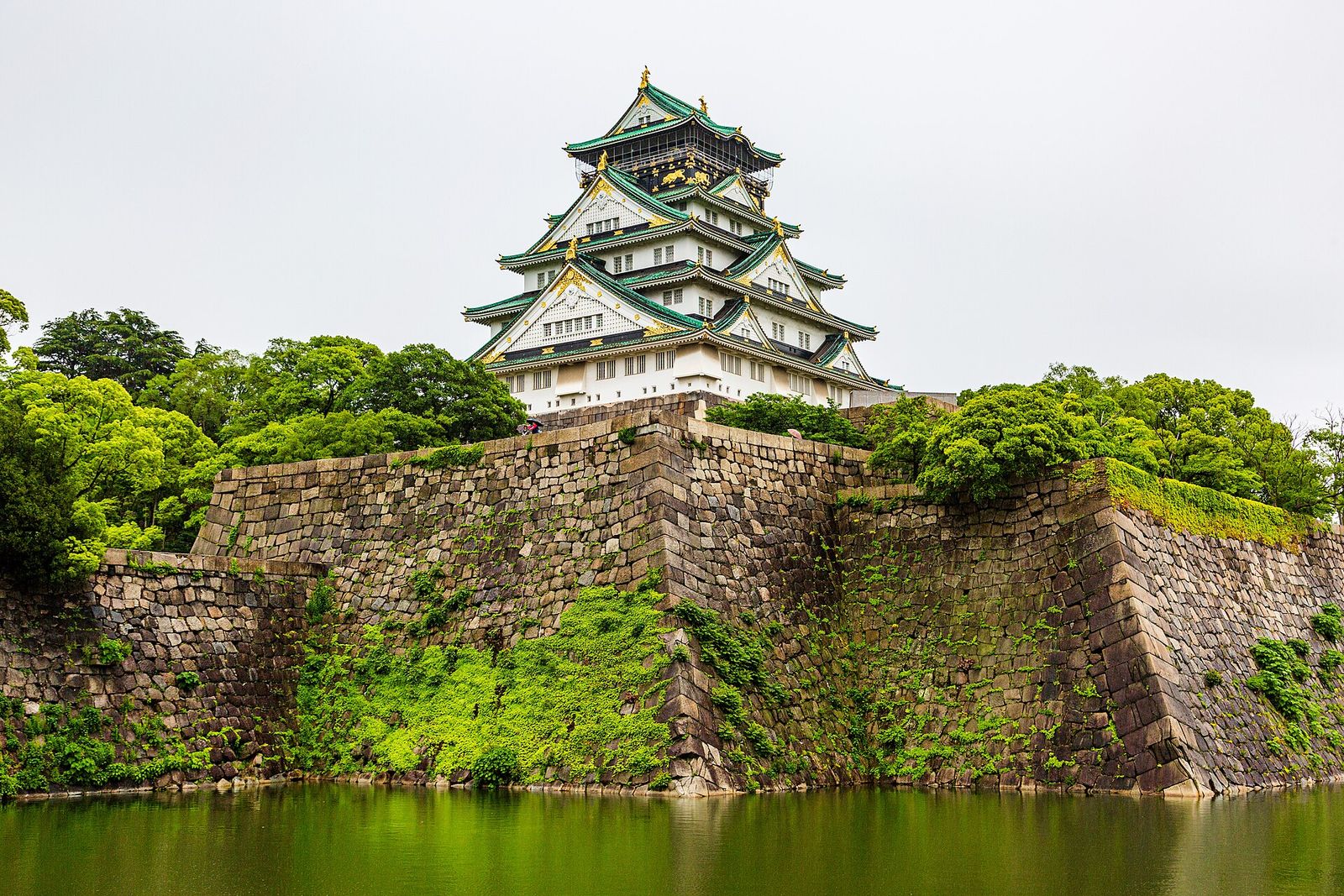
Osaka Castle stands in a large park with stone walls, moats and plum and cherry groves. Its modern reconstructed keep houses a museum and a viewing platform. Hotels cluster around Kyobashi, a busy station on the JR Osaka Loop Line with Keihan trains to Kyoto, and around Tanimachi.
Good for: runners, families and travellers who like a green, open setting. Consider: evenings are quieter, and Namba and Dotonbori are a train ride away.
The Bay Area
Osaka Bay is home to Universal Studios Japan, with several large hotels beside the park entrance, and to the Kaiyukan aquarium and the Tempozan Ferris wheel near Osakako.
Good for: families whose trip centres on the theme park. Consider: it's well away from the food and nightlife districts, so most visitors are better off staying centrally and travelling out for the day.
How the areas compare
| Area | Atmosphere at night | To Namba | Best for |
|---|---|---|---|
| Namba | Very lively | 0 min | Food, nightlife |
| Shinsaibashi | Lively | 5–10 min walk | Shopping |
| Umeda | Busy | About 10 min by subway | Day trips, connections |
| Tennoji | Medium | About 5–10 min by subway | Value, Nara, airport |
| Shin-Osaka | Quiet | About 15 min by subway | Bullet trains |
| Nakanoshima / Yodoyabashi | Quiet | About 5–10 min by subway | Museums, calm |
| Osaka Castle area | Quiet | About 15–25 min by train | Green space |
| Bay Area | Quiet away from the park | About 30 min by train | Theme park |
Getting around
- From Kansai International Airport: Nankai trains run to Namba, including the limited-express Rapi:t in roughly 35–40 minutes. The JR Haruka stops at Tennoji, Osaka and Shin-Osaka on its way to Kyoto, and limousine buses serve the main hotel areas.
- From Itami Airport: mainly domestic flights; buses run to Umeda, Namba and Shin-Osaka.
- Subway: the Midosuji line is the city's spine, linking Shin-Osaka, Umeda, Yodoyabashi, Hommachi, Shinsaibashi, Namba and Tennoji. The JR Osaka Loop Line circles the centre.
- IC cards: ICOCA, the local rechargeable transport card, works on trains, subways and buses, and the major cards from other Japanese cities are accepted too.
- Day trips: Kyoto is roughly 15 minutes by Shinkansen or about half an hour by JR special rapid train, with private railways from Umeda and central Osaka taking longer; Nara and Kobe are under an hour. See where to stay in Kyoto and our guide to day trips from Kyoto if you're splitting your time.
- Onward travel: the fastest bullet trains reach Tokyo in about two and a half hours; our guide to where to stay in Tokyo compares its areas.
Practical tips before you book
- Room sizes: hotels list floor area in square metres, and budget rooms can be very compact. Check the bed width too: a "semi-double" is narrower than a standard double.
- Ask for non-smoking. Smoking is much more restricted than it once was, but some hotels still have smoking rooms or floors.
- Accommodation tax: Osaka Prefecture charges a per-person, per-night tax on most stays, usually added at the hotel. Check the current rate.
- Holiday rentals must be licensed, and Osaka has tightened its rules. Make sure any listing shows its licence or registration number.
- Busy seasons: cherry-blossom time (late March to early April), Golden Week (late April to early May), the mid-August holidays and New Year book up early, as do big events such as the Tenjin Matsuri festival in late July.
- Weather: the rainy season usually runs from June to mid-July, and summers are hot and humid. Typhoons are possible from late summer into autumn.
- Luggage forwarding services can send suitcases between hotels and to the airport, which makes train travel much easier.
Pick Namba or Shinsaibashi for food and fun, Umeda for day trips, Tennoji for value, and Nakanoshima for calm, and the whole of Kansai is within easy reach.
Bloiq is reader-supported. Some links may earn us a commission; it never affects what we write. How we make money.
Cover photo: Sakai Yayoi, CC0, via Wikimedia Commons