Home / Travel / Hungary · Itineraries
Budapest in 3 days: Castle Hill, Parliament, the Danube and the baths
A three-day Budapest plan grouped by area: Castle Hill and Gellért Hill in Buda, then Parliament and Andrássy út in Pest, then the market, the baths and the Jewish Quarter.
Budapest is two cities joined by the Danube: hilly, historic Buda on the west bank and flat, busy Pest on the east. The river views are among the finest of any European capital, and the city sits on thermal springs that feed its famous baths. Three days is enough for the highlights if you give Buda one day, Pest one day and keep the third for the market, a long soak and the Jewish Quarter.
The plan suits first-time visitors at a moderate pace. Castle Hill means some climbing, but trams, buses and the metro make the rest easy, and the bridges are a pleasure to cross on foot.
Day 1: Castle Hill, the Chain Bridge and Gellért Hill
Morning. Start on the Pest side and walk across the Széchenyi Chain Bridge, opened in 1849 as the first permanent bridge across the Danube in the city. At Clark Ádám tér on the Buda side, ride the Castle Hill Funicular (Sikló), in service since 1870, or walk up the paths and steps to the top.
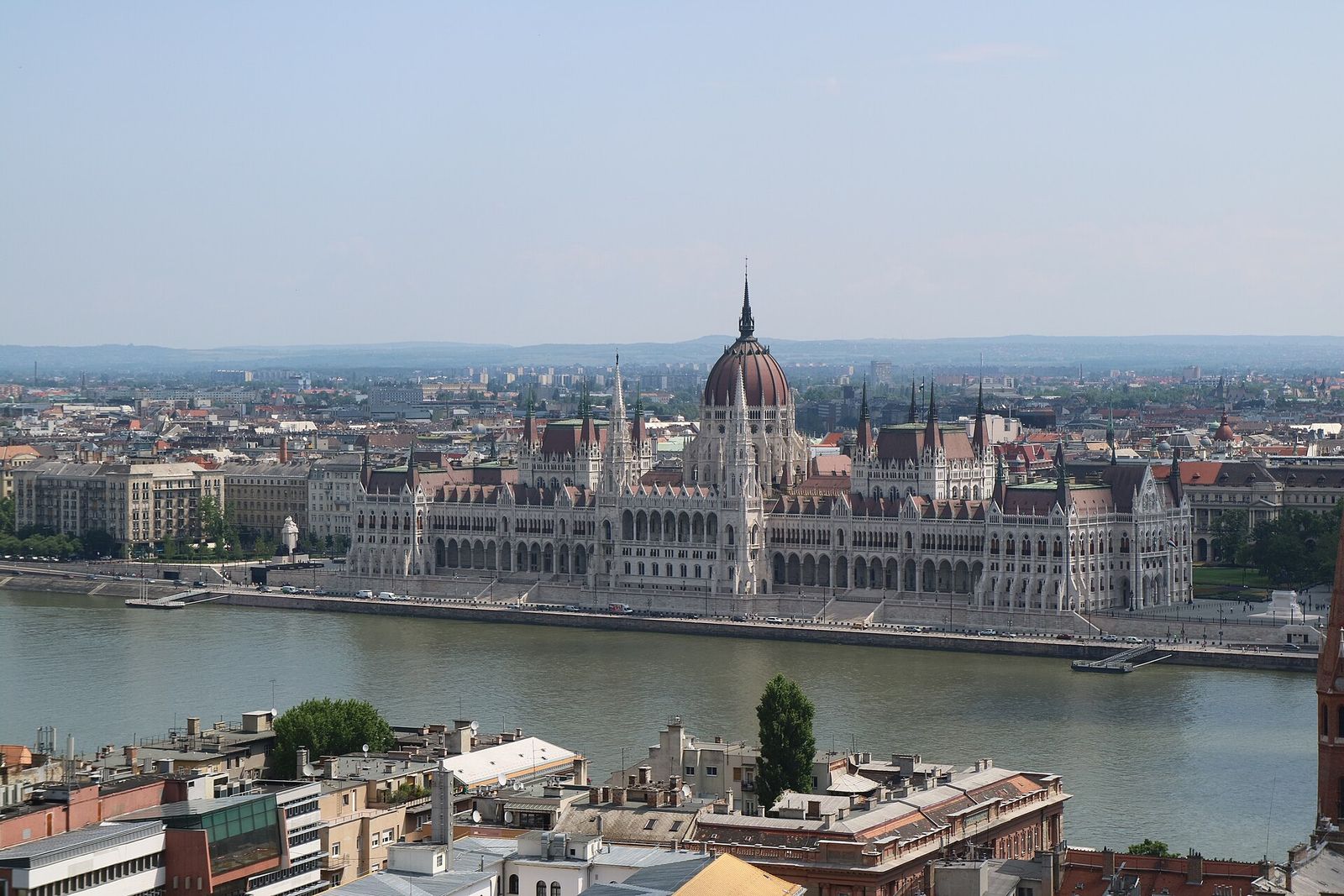
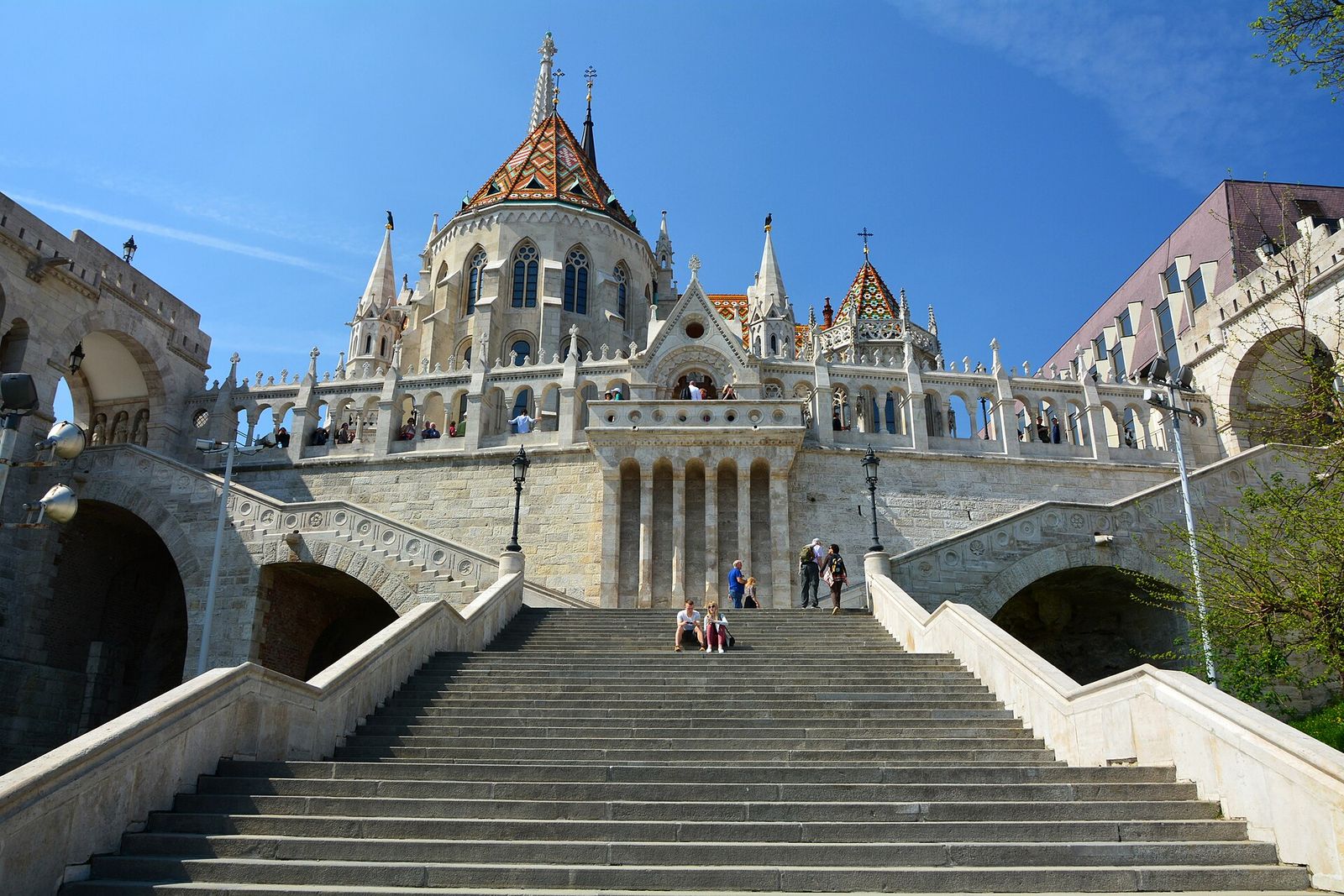
At the top, the Buda Castle palace complex holds the Hungarian National Gallery and the Budapest History Museum; choose one if you're short of time. Walk north through the Castle District, a quiet grid of medieval and Baroque streets, to Matthias Church, with its patterned roof tiles and richly painted interior. Beside it stands the Fisherman's Bastion, a fairy-tale lookout of turrets and arcades built around 1900, with one of the best views of Parliament across the river. The lower terraces are free to walk; the upper towers may need a ticket.
Afternoon. Have lunch in the Castle District or come down to Víziváros, the riverside neighbourhood below the hill. Then take a bus or walk south along the river to Gellért Hill. The climb takes roughly 30 minutes and is steep in places. At the top, the Liberty Statue overlooks the city, and the Citadella, a 19th-century fortress, reopened in 2026 after a long renovation, with an exhibition and a park; check current opening times.
Evening. Walk down to the river and cross back to Pest at sunset, when the bridges and Parliament are lit. A Danube evening cruise from the Pest embankment is a popular alternative; tram 2, which runs along the Pest bank, gives you much of the same view on a normal ticket.
Day 2: Parliament, the Basilica and Andrássy út
Morning. Start at the Hungarian Parliament Building, completed in the early 20th century and one of the largest parliament buildings in the world. Guided tours take in the grand staircase and the dome hall, where the Holy Crown of Hungary is on display. Tours run in several languages and can sell out, so book ahead.
On the riverbank just south of Parliament is the Shoes on the Danube Bank, a memorial of iron shoes to the Jews shot into the river by Arrow Cross militiamen in 1944–45. It's a place for quiet reflection.
Afternoon. Walk to St Stephen's Basilica, the city's largest church, where according to tradition the right hand of Hungary's first king is kept as a relic. You can climb or take a lift to the panoramic terrace around the dome. Then walk along Andrássy út, the grand boulevard that is part of a UNESCO World Heritage Site, to the Hungarian State Opera, a neo-Renaissance opera house that offers guided tours. Beneath the boulevard runs the Millennium Underground (line M1), opened in 1896 and among the oldest underground railways in the world. Ride it to Heroes' Square, with its column and statues of Hungarian leaders.
Evening. Behind Heroes' Square, City Park (Városliget) has a boating lake that becomes an ice rink in winter, and the romantic Vajdahunyad Castle. Here you'll find the Széchenyi Thermal Bath, built in 1913, with yellow Neo-Baroque buildings around large outdoor pools that stay warm all year. An evening soak here is a classic. If you'd rather keep your bath for Day 3, have dinner in Terézváros, around the Opera.
Day 3: The market, a thermal bath and the Jewish Quarter
Morning. Start at the Great Market Hall (Central Market Hall) at the Pest end of the Liberty Bridge: produce, paprika, salami and pickles on the ground floor, and food stalls upstairs. It's closed on Sundays.
Afternoon. Spend the afternoon at a bath. The famous Gellért Thermal Bath closed in 2025 for a long renovation, so check whether it has reopened before you go. Good alternatives:
| Bath | Character | Good for |
|---|---|---|
| Széchenyi | Large outdoor pools in City Park, many indoor pools | First-timers, lively atmosphere |
| Rudas | 16th-century Ottoman pool under a dome, rooftop pool with river views | History, views |
| Lukács | Quieter, older-fashioned, popular with locals | A calmer soak |
Bring a swimsuit, flip-flops and a towel, or rent them at the bath. Rules for the historic sections, such as single-sex days and age limits, change, so check the bath's own site.
Evening. Head to Erzsébetváros (District VII), the historic Jewish Quarter. The Dohány Street Synagogue, the largest synagogue in Europe, is usually open to visitors except on Saturdays and Jewish holidays, with a memorial garden behind it; check the visiting times and dress expectations. As the evening goes on, the district is known for its ruin bars, set up in courtyards of old buildings, and for its dense mix of restaurants. Gozsdu Courtyard, a passage of linked courtyards, is a good place to start.
What to book ahead
- Parliament tours: book online, as tours in English can sell out days ahead in high season.
- Baths: tickets bought online can save time on busy days, especially at Széchenyi.
- Opera: performances and guided tours both sell out; check the programme early.
- Danube cruises: sunset departures fill first.
- Accommodation: book early for the Christmas market season and summer weekends.
Many museums close on Mondays, so check before you plan each day. A city card that bundles transport with sights can be useful; compare it with what you'll actually use.
Adapting the plan
- Rain or cold: spend longer in a bath (they are best in winter) and add the Hungarian National Museum or the House of Music Hungary in City Park. Summers can be hot; winters are cold.
- With children: the funicular, City Park, the river boats and the zoo in City Park usually work well. Margaret Island, the car-free island in the Danube, has a musical fountain, gardens and paths for bikes.
- Slower pace: skip Gellért Hill and the Opera, and give Castle Hill and the baths more time.
- December: the Christmas markets on Vörösmarty tér and in front of St Stephen's Basilica are among the city's most popular events.
Practical booking tips
- Where to stay: Pest's District V is the easiest base for a first visit, while the Castle District and Víziváros in Buda are quieter with better views. Our guide to where to stay in Budapest compares the districts.
- Getting around: one ticket system covers the metro, trams, buses and some ferries. Validate paper tickets before you travel; inspections are common. Travelcards for 24 or 72 hours are convenient.
- Airport: Budapest Airport is linked to the city centre by a dedicated airport bus; allow roughly 45 minutes to an hour.
- Money: Hungary uses the forint, not the euro. Cards are widely accepted; when a card machine offers to charge you in your home currency, paying in forints is usually the better deal.
- Entry rules: Hungary is part of the Schengen area, and entry requirements for some nationalities are changing, so check the current rules on official sites before you travel.
- Continuing on: direct trains link Budapest with Vienna in under three hours. See our Vienna in 3 days itinerary and our guide to where to stay in Prague.
Bloiq is reader-supported. Some links may earn us a commission; it never affects what we write. How we make money.
Cover photo: Veronika.szappanos, CC BY-SA 4.0, via Wikimedia Commons