Home / Travel / Czechia · Where to stay
Where to stay in Prague: the neighbourhoods compared
Old Town, Malá Strana, New Town, Hradčany, Vinohrady, Žižkov and Holešovice: how Prague's main areas differ, who each suits and how to get around.
This guide contains affiliate links, marked as such. If you book through them, Bloiq may earn a commission at no extra cost to you.
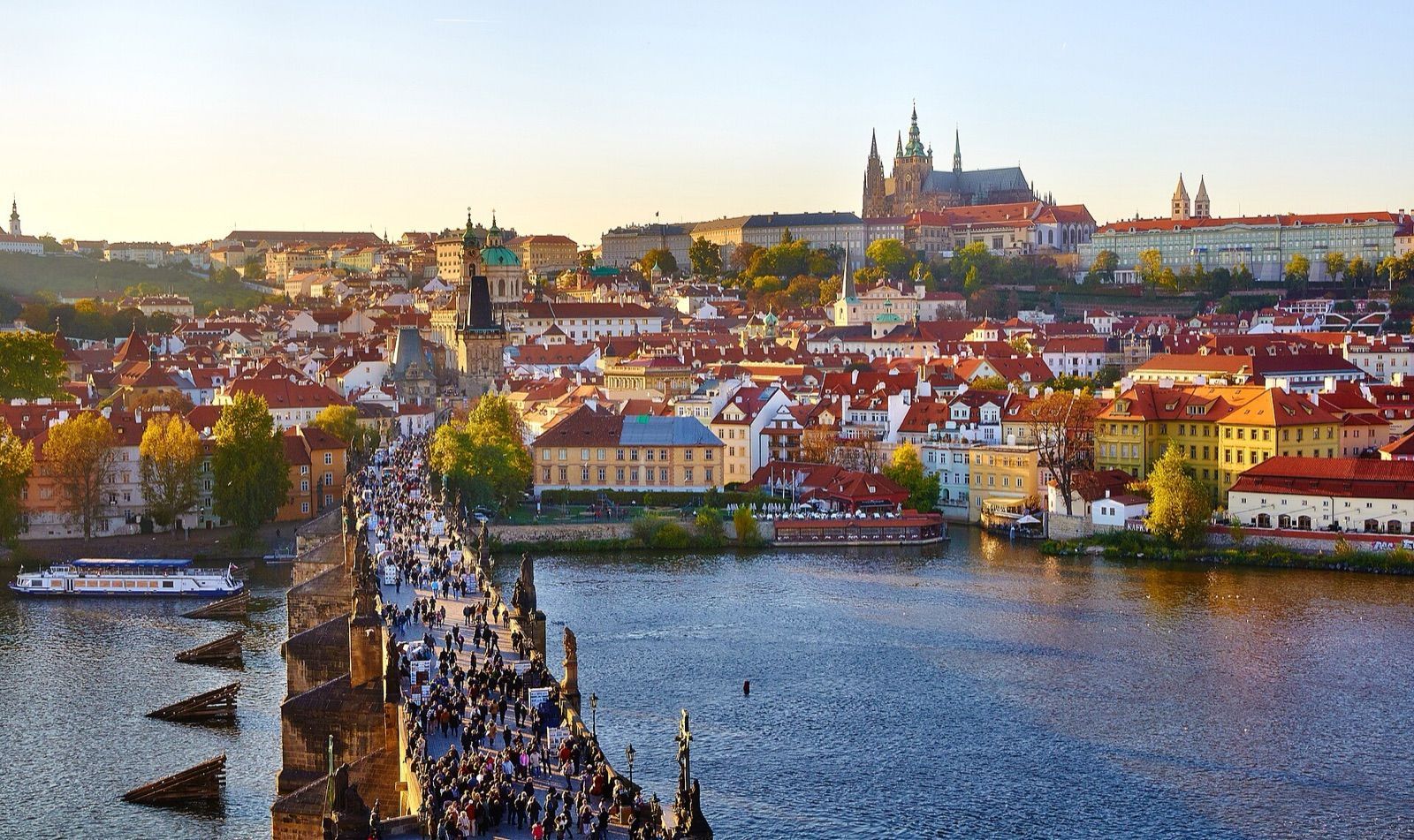
Prague's historic centre is small enough to cross on foot in half an hour, which makes it tempting to stay right in the middle of it. But the most famous streets are also the most crowded, and in places the loudest at night. A short tram ride out, residential districts offer more space, quieter evenings and a more local feel. Here's how the main areas compare, and who each one suits.
The quick answer
- First visit, want to walk everywhere: Old Town (Staré Město).
- Romance and baroque streets: Lesser Town (Malá Strana).
- Central, practical and well connected: New Town (Nové Město).
- Castle views and quiet nights: Hradčany.
- Local cafés and wine bars: Vinohrady.
- Pubs and a lively, unpolished feel: Žižkov.
- Contemporary art and parks: Holešovice.
Old Town (Staré Město): the medieval core
The Old Town is the Prague of postcards: the Old Town Square with its astronomical clock and the twin spires of the Týn Church, a maze of lanes leading to Charles Bridge, and the former Jewish Quarter (Josefov), with its synagogues and old cemetery. Nearly everything a first-time visitor wants to see is within a 15-minute walk.
Good for: first-time visitors and short stays. Consider: the main routes are packed with visitors from morning to late evening, some streets attract noisy groups at night, and restaurants on the main squares tend to be overpriced. Quieter lanes on the edges of the district are worth seeking out.
Lesser Town (Malá Strana): baroque and beautiful
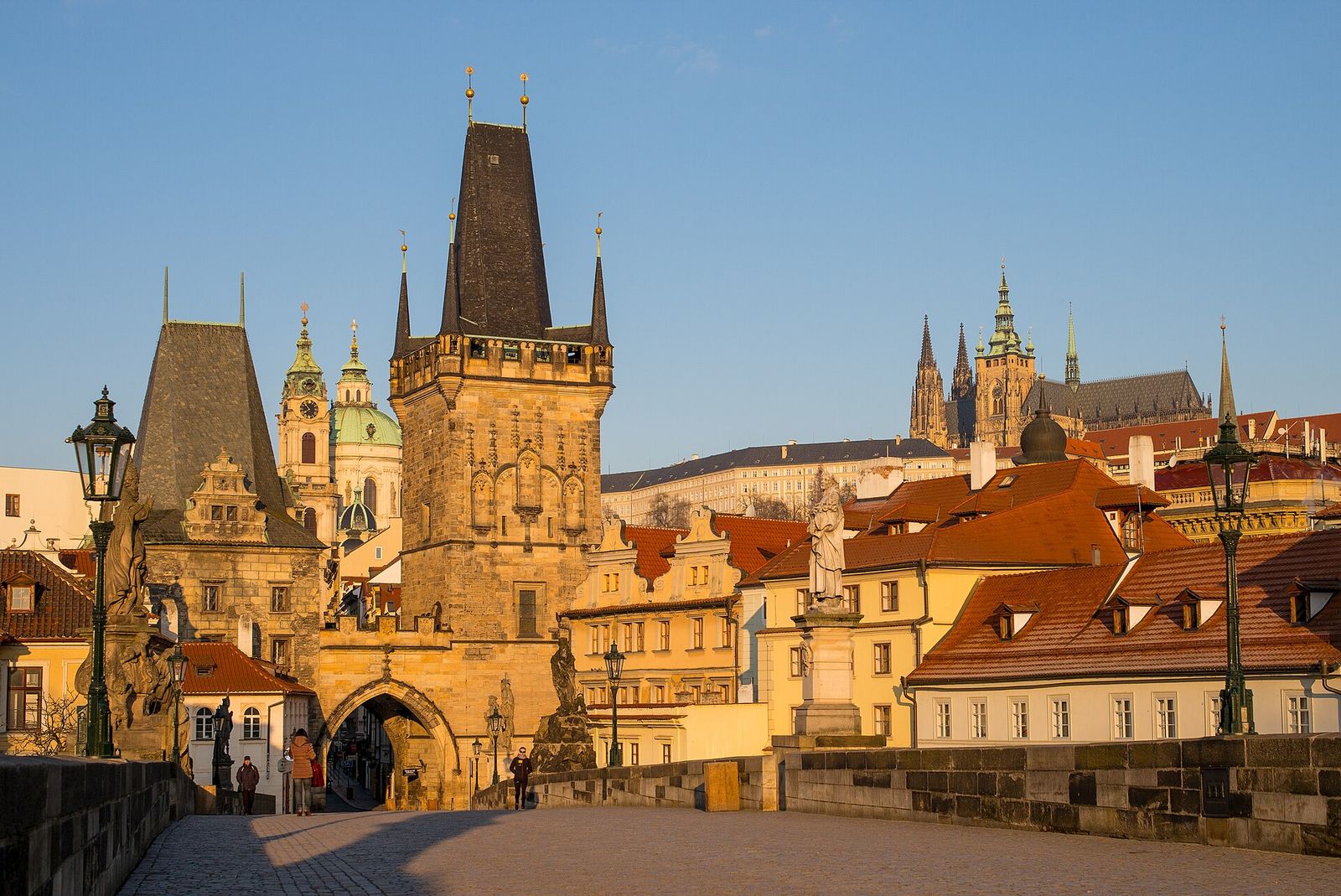
Across Charles Bridge on the west bank, Malá Strana climbs towards the castle through baroque palaces, churches, gardens and cobbled streets. The dome of St Nicholas Church dominates its main square, and Kampa Island, beside the river, is one of the city's loveliest spots. After the day crowds leave, it becomes surprisingly peaceful.
Good for: couples and anyone after atmosphere and quiet evenings. Consider: the streets are steep and cobbled, and luggage is hard work. Charles Bridge and the main street up to the castle are crowded during the day.
Hradčany: the castle district
Above Malá Strana, Hradčany surrounds Prague Castle, St Vitus Cathedral and the Strahov Monastery. The views over the red rooftops are superb, and once the castle closes the district empties and goes very quiet.
Good for: travellers who want calm, views and an early start at the castle before the crowds. Consider: there are few restaurants and shops, and everything else in the city is a walk downhill and back up again, or a tram ride. It can feel isolated at night.
New Town (Nové Město): practical and central
Despite the name, the New Town was founded in the 14th century by Emperor Charles IV. It wraps around the Old Town and includes Wenceslas Square, the National Museum, the National Theatre and the riverside Dancing House. The main railway station and several metro interchanges are here, and it has a wide range of accommodation.
Good for: travellers who want a central, well-connected base, often at better value than the Old Town. Consider: it's busier with traffic and feels more commercial. The lower end of Wenceslas Square and some nearby side streets can be seedy late at night.
Vinohrady: elegant and residential
South-east of the centre, Vinohrady ("vineyards") is a district of grand 19th- and early 20th-century apartment buildings, tree-lined streets and squares. Around Náměstí Míru and Jiřího z Poděbrad you'll find cafés, wine bars, restaurants and weekly farmers' markets, and the Riegrovy sady park has city views and a large beer garden. It's also known for its welcoming LGBTQ+ scene.
Good for: couples, longer stays and repeat visitors. Consider: you'll use the metro or tram to reach the Old Town, though it's only a few stops away, and some streets are hilly.
Žižkov: pubs and personality
Next to Vinohrady, Žižkov is a historically working-class district known for its high density of traditional pubs, its television tower with sculptures of giant crawling babies, and the Vítkov hill with its national memorial and one of the largest equestrian statues in the world. It's lively, a little scruffy and good value.
Good for: budget travellers, beer lovers and anyone who prefers local character to polish. Consider: it's hilly, rougher around the edges, and some streets are noisy at night. The western part, nearest Vinohrady and the main station, is the most convenient.
Holešovice: art, parks and a creative scene
North of the river bend, Holešovice is a former industrial district now home to galleries, converted warehouses and cafés. It includes the National Gallery's modern art collection in the Trade Fair Palace, the DOX contemporary art centre, and the Prague Market in the old slaughterhouse. Letná Park, with its views and beer garden, and the large Stromovka park are on either side.
Good for: art lovers, longer stays and travellers who like green space. Consider: it's a tram or metro ride from the historic centre, and parts of it still feel industrial.
How the areas compare
| Area | Feel | Night noise | Best for |
|---|---|---|---|
| Old Town | Medieval, crowded | Medium to high | First visits |
| Malá Strana | Baroque, romantic | Low | Couples |
| Hradčany | Grand, very quiet | Low | Views, calm |
| New Town | Busy, practical | Medium to high | Transport links |
| Vinohrady | Elegant, local | Low to medium | Longer stays |
| Žižkov | Pubs, unpolished | Medium | Budget, beer |
| Holešovice | Creative, spacious | Low | Art, parks |
Getting around
- From the airport: Václav Havel Airport has no rail link, but city buses run to metro line A, and an airport express bus serves the main railway station. Taxis and ride-hailing are widely used; agree on a price or use a metered, official service.
- Trams: the tram network is excellent and reaches almost every area in this guide, including night lines. Tram routes through Malá Strana are a scenic way to cross the river.
- Metro: three lines (A, B and C) cover the centre and the residential districts. Stations are deep, with long escalators.
- Tickets: paper tickets must be validated when you first board or enter the metro, and inspectors do check. Tickets are also sold through the official transport app. Check the current options.
- Walking: the centre is compact, but cobblestones and hills make comfortable shoes essential.
Practical tips before you book
- Currency: the Czech Republic uses the koruna, not the euro. Use bank ATMs, avoid street exchange booths, and when a card machine or ATM offers to charge you in your home currency, choosing koruna is usually cheaper.
- Check the exact street in the Old Town and New Town, where weekend party groups can make some streets loud.
- City fee: Prague charges a local fee per person, per night, usually added to the bill. Check the current rate when you book.
- Look for a lift in older buildings, particularly in Malá Strana and Hradčany, where stairs and hills add up.
- Visit early or late: staying centrally lets you see Charles Bridge and the Old Town Square early in the morning, before the crowds arrive.
Choose the Old Town or New Town for convenience, Malá Strana for atmosphere, and Vinohrady or Holešovice for a quieter, more local stay, and the whole city will be a short walk or tram ride away.
Bloiq is reader-supported. Some links may earn us a commission; it never affects what we write. How we make money.
Cover photo: Moyan Brenn from Italy, CC BY 2.0, via Wikimedia Commons
.jpg)