Home / Travel / Universities / Japan
Osaka University campus tour: Toyonaka, Suita, Minoh and Tekijuku
A guide to the University of Osaka's three campuses: the 1920s hall and museum at Toyonaka, Suita beside the Expo park, new Minoh, plus transport and where to stay.
This guide contains affiliate links, marked as such. If you book through them, Bloiq may earn a commission at no extra cost to you.
Osaka University is not in the middle of Osaka. Its three campuses sit in the hilly, leafy suburbs north of the city, in Toyonaka, Suita and Minoh, linked by a monorail and by university shuttle buses. That makes a visit less obvious than at a single-site university, so it helps to know which campus does what before you set out. This guide explains the three, picks out what to see at each and covers transport and places to stay.
A note on the name
Founded in 1931 as Osaka Imperial University, the university was known in English for decades as Osaka University, and most people still call it that; in Japanese it is Osaka Daigaku, or Handai for short. Its official English name is now the University of Osaka. You will see both on signs and maps.
Which campus is which
| Campus | What is there | Nearest stations |
|---|---|---|
| Toyonaka | First-year general courses; letters, law, economics, science, engineering science; the museum | Ishibashi handai-mae (Hankyu), Shibahara-handai-mae (monorail) |
| Suita | Administration, medicine, dentistry, pharmaceutical sciences, engineering, human sciences; the hospital and research institutes | Handai-byoin-mae (monorail), Kita-Senri (Hankyu) |
| Minoh | School of Foreign Studies | Minoh-Semba Handai-mae |
If you have time for only one, choose the campus where your intended faculty is based, or Toyonaka for the most traditional campus atmosphere.
Toyonaka: the hall on the hill
Most undergraduates begin at Toyonaka, where first-year general courses are taught, so this is the campus that feels most like a student town. It covers a wooded hill called Machikaneyama, and the walk up from Ishibashi handai-mae station follows a slope that students know well.
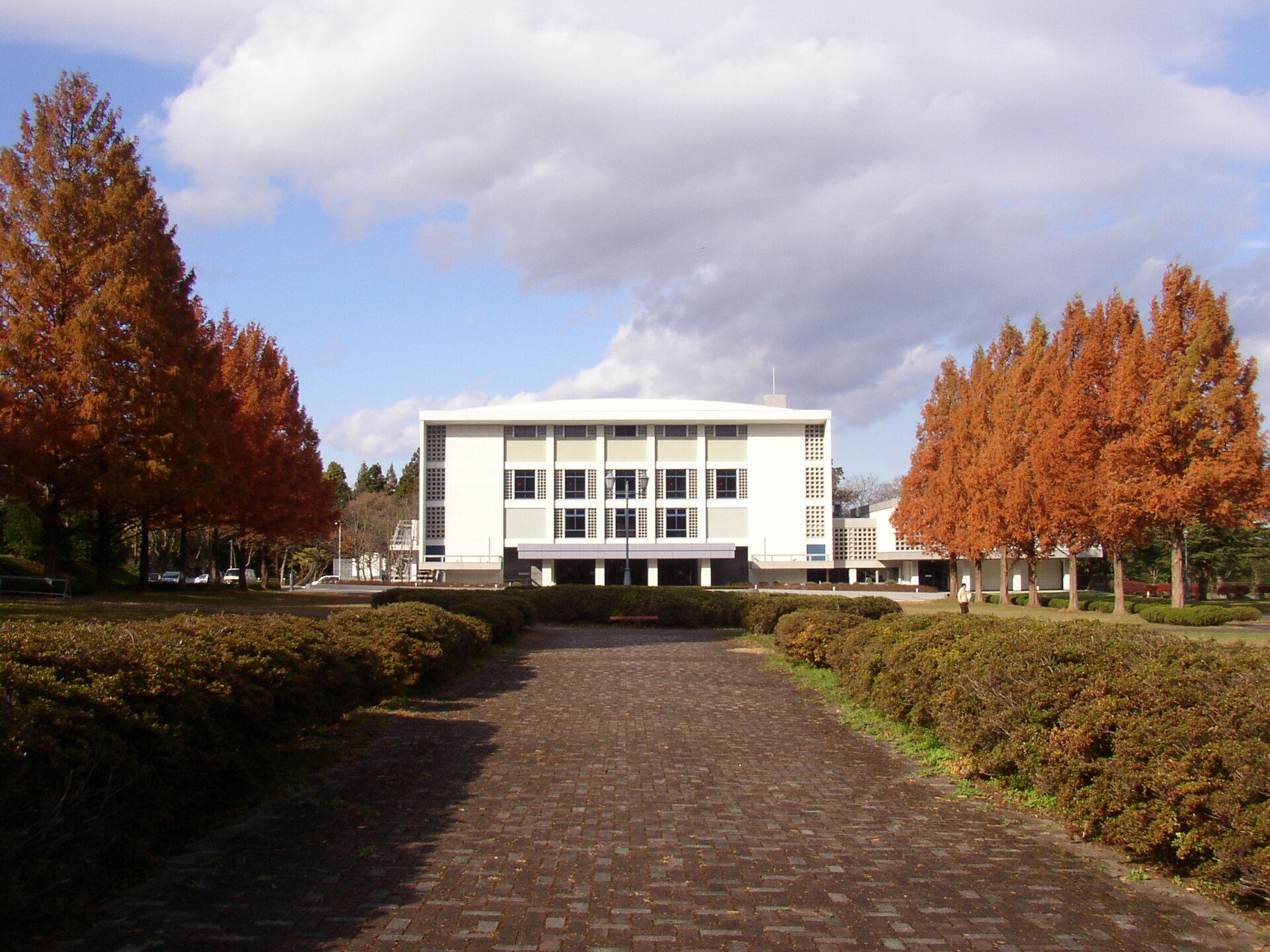
The landmark is Osaka University Hall, a pale, symmetrical building from the 1920s. It was built as the main building of a pre-war high school that stood here before the university took over the site, and it is now used for concerts, lectures and ceremonies. From the lawn in front you look out over Nakayama Pond and the campus trees.
The museum and its crocodile
Near the foot of the Toyonaka campus, the Museum of Osaka University occupies another pre-war building. Its best-known exhibit is the skeleton of a giant prehistoric crocodile, known as the Machikane crocodile, whose fossil was discovered on this campus in 1964 during construction work. The find is the reason a crocodile serves as the university's mascot today.
The museum is generally open to the public; check opening days on its website.
Suita: research, medicine and the Expo park
Suita is the largest campus and the administrative centre. Medicine, dentistry, pharmaceutical sciences, engineering and human sciences are here, along with the university hospital and several large research institutes. The buildings are mostly modern and spread out, and in spring the cherry trees around its ponds are a sight in themselves.
Suita borders the Expo '70 Commemorative Park, laid out on the site of the 1970 World Expo. It is a wide green space with lawns, woods, a Japanese garden and the National Museum of Ethnology, and Taro Okamoto's Tower of the Sun still stands near the entrance.
Minoh: languages in a new building
The Minoh campus is home to the School of Foreign Studies, which came into the university when it merged with Osaka University of Foreign Studies in 2007. Every student there majors in a language, alongside the study of the region where it is spoken. The campus moved to a new, compact site in 2021, next to Minoh-Semba Handai-mae station.
Tekijuku, in the middle of the city
The university traces its spirit to two Edo-period schools in the merchant city of Osaka: Kaitokudo, founded in 1724, and Tekijuku, a school of Western learning opened in 1838 by the physician Ogata Koan. Tekijuku's students went on to shape modern Japan; among them was Fukuzawa Yukichi, who later founded Keio University.
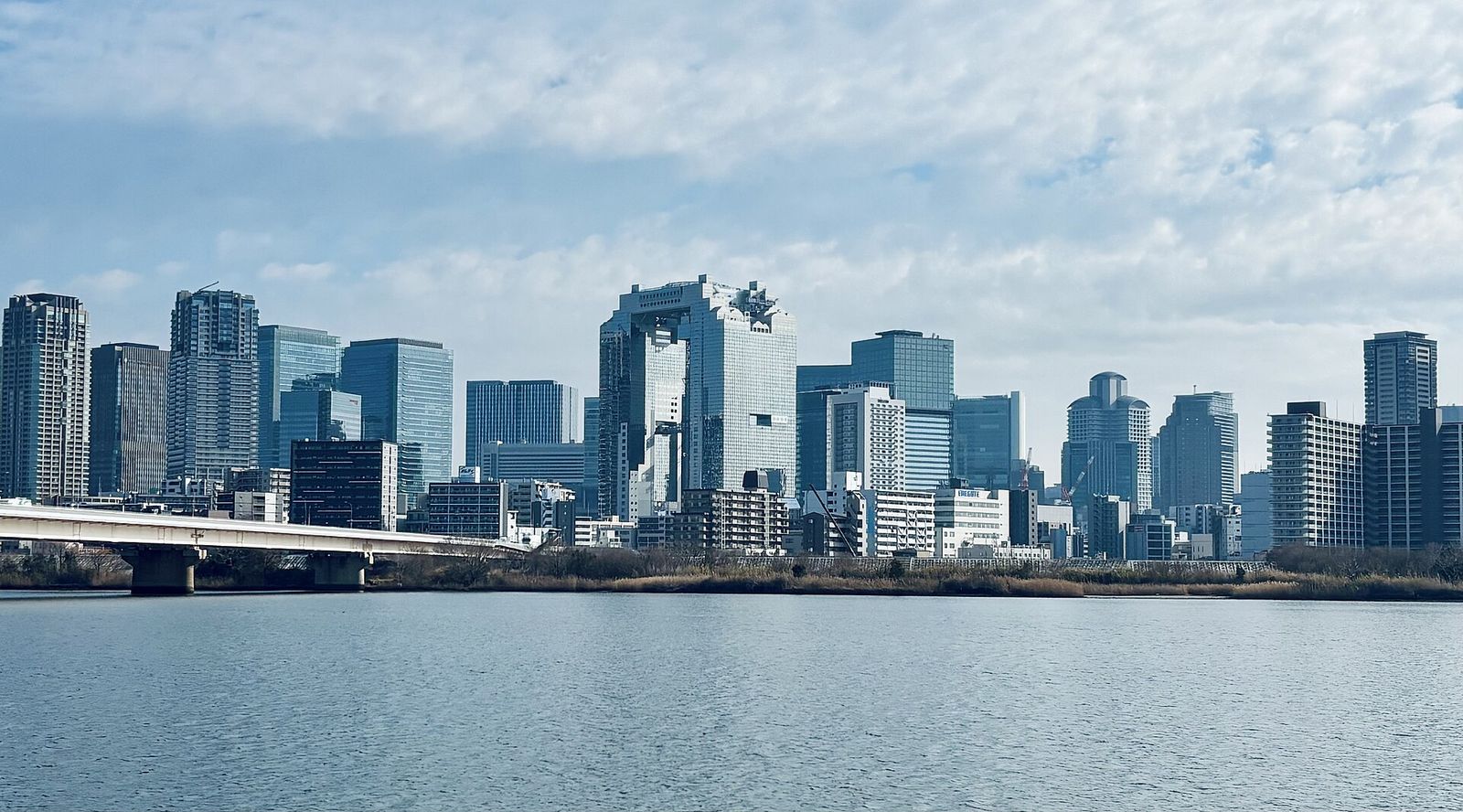
Remarkably, the wooden schoolhouse survives, in the Kitahama business district a short walk from Yodoyabashi station, surrounded by office towers. It belongs to the university and is usually open to visitors as a small museum. It is easy to combine with a day in the city centre.
Visiting the campuses
The grounds of all three campuses can generally be walked through freely, while teaching and research buildings are for students and staff. Like most Japanese universities, Osaka holds open-campus events for prospective students, typically in summer, and its admissions pages carry separate information for international applicants. Most undergraduate teaching is in Japanese, with a limited number of degree programmes, mainly at graduate level, taught in English. Dates, booking and languages change, so check the university's official website before you go.
Getting there and around
- To Toyonaka: the Hankyu Takarazuka Line from Osaka-Umeda to Ishibashi handai-mae, then a walk uphill of about fifteen minutes; or the Osaka Monorail to Shibahara-handai-mae.
- To Suita: the Osaka Monorail's Saito Line to Handai-byoin-mae, beside the hospital; or the Hankyu Senri Line to Kita-Senri and a longer walk.
- To Minoh: the northern extension of the Midosuji subway line to Minoh-Semba Handai-mae.
- From the airports: Osaka's domestic airport, Itami, is on the monorail a couple of stops from Toyonaka. From Kansai International Airport, travel into the city first.
- Between campuses: the monorail links Toyonaka and Suita via Senri-Chuo; allow at least 45 minutes door to door.
Where families usually stay
- Umeda (Kita): the main hub of northern Osaka, with direct trains to Toyonaka and subway connections north. The widest choice of hotels.
- Shin-Osaka: convenient if you arrive by Shinkansen, on the Midosuji line towards Senri-Chuo and Minoh.
- Senri-Chuo: a suburban centre between the campuses, practical if you are visiting more than one.
- Namba: best for food and nightlife, with a longer ride north.
Kyoto is about half an hour away by train, and many families combine the two cities: see our Kyoto University campus tour and our guide to where to stay in Kyoto. For Tokyo, see the University of Tokyo campus tour.
Practical tips
- Decide on your campus before you travel; they are too far apart to cover all three comfortably in a day.
- Late March to early April brings cherry blossom, and November brings autumn colour and the campus festival at Toyonaka.
- An IC card such as ICOCA works on the trains, subway and monorail.
- Confirm museum and Tekijuku opening days on the official sites shortly before your visit.
Bloiq is reader-supported. Some links may earn us a commission; it never affects what we write. How we make money.
Cover photo: 大阪大学, CC BY-SA 3.0, via Wikimedia Commons