Home / Travel / Japan · Day trips
Day trips from Kyoto: Nara, Osaka, Himeji, Uji and more compared
Kyoto sits at the heart of the Kansai rail network. How to reach Nara, Osaka, Himeji Castle, Uji, Kobe and Lake Biwa for a day, what to see and how long to allow.
This guide contains affiliate links, marked as such. If you book through them, Bloiq may earn a commission at no extra cost to you.
Kyoto is a superb base for exploring the Kansai region. Fast, frequent trains link it to an ancient capital, Japan's finest original castle, a giant food-loving city and a tea town, all within about an hour. The challenge is choosing: each of these places could fill a day on its own. Here's how the main options compare, and how to fit them in without spending the whole day in transit.
The quick comparison
| Trip | Typical travel time | Best for |
|---|---|---|
| Uji | 20–30 minutes | Tea, a famous temple, a gentle half day |
| Osaka | 15–45 minutes | Street food, nightlife, a castle |
| Nara | 35–50 minutes | Great Buddha, temples, the deer |
| Kobe | 30–60 minutes | Harbour views, a relaxed city |
| Hikone and Lake Biwa | 20–60 minutes | An original castle and lakeside scenery |
| Himeji | About 45 minutes by shinkansen | Japan's most celebrated castle |
| Koyasan | 2.5–3 hours | Temple lodgings (better overnight) |
Nara: temples, deer and the Great Buddha
Nara was Japan's capital in the 8th century, and its historic monuments form a UNESCO World Heritage Site. Most of the major sights lie in and around Nara Park, a short walk from the station.
How to get there: the Kintetsu line from Kyoto Station arrives at Kintetsu-Nara, closest to the park. JR trains run to JR Nara station, a little farther out. Limited express trains are faster; local and express trains need no reservation.
What to see: Todai-ji, whose Great Buddha Hall is one of the largest wooden buildings in the world and houses a colossal bronze Buddha; Kasuga Taisha, a shrine famous for its thousands of stone and bronze lanterns; Kofuku-ji and its pagodas (the five-storey pagoda has been under long-term restoration, so expect scaffolding); and Naramachi, the old merchant quarter with preserved townhouses.
The deer: over a thousand deer roam the park and are considered sacred messengers. Many bow for the special crackers sold there, but they are wild animals and can nip, butt or chase people holding food, so keep children close and don't tease them.
How long to allow: a full day. You can stop at Fushimi Inari Taisha, on the JR line towards Nara, on the way out or back.
Osaka: food, neon and a castle
Japan's third-largest city is more brash and relaxed than Kyoto, and it's known as the country's kitchen.
How to get there: the shinkansen reaches Shin-Osaka in about 15 minutes; JR special rapid trains run to Osaka Station in around half an hour; and the Hankyu and Keihan lines leave from central Kyoto.
What to see: Osaka Castle, whose modern reconstructed keep holds a museum and stands in a large park with stone walls and moats; the canal-side neon of Dotonbori and the shopping arcades around Namba; Kuromon Market for seafood and snacks; and Shinsekai, a retro district around the Tsutenkaku tower. Try the local specialities, takoyaki (octopus dumplings) and okonomiyaki (savoury pancakes).
How long to allow: a full day that runs into the evening, when Dotonbori is at its liveliest.
Himeji: the white castle
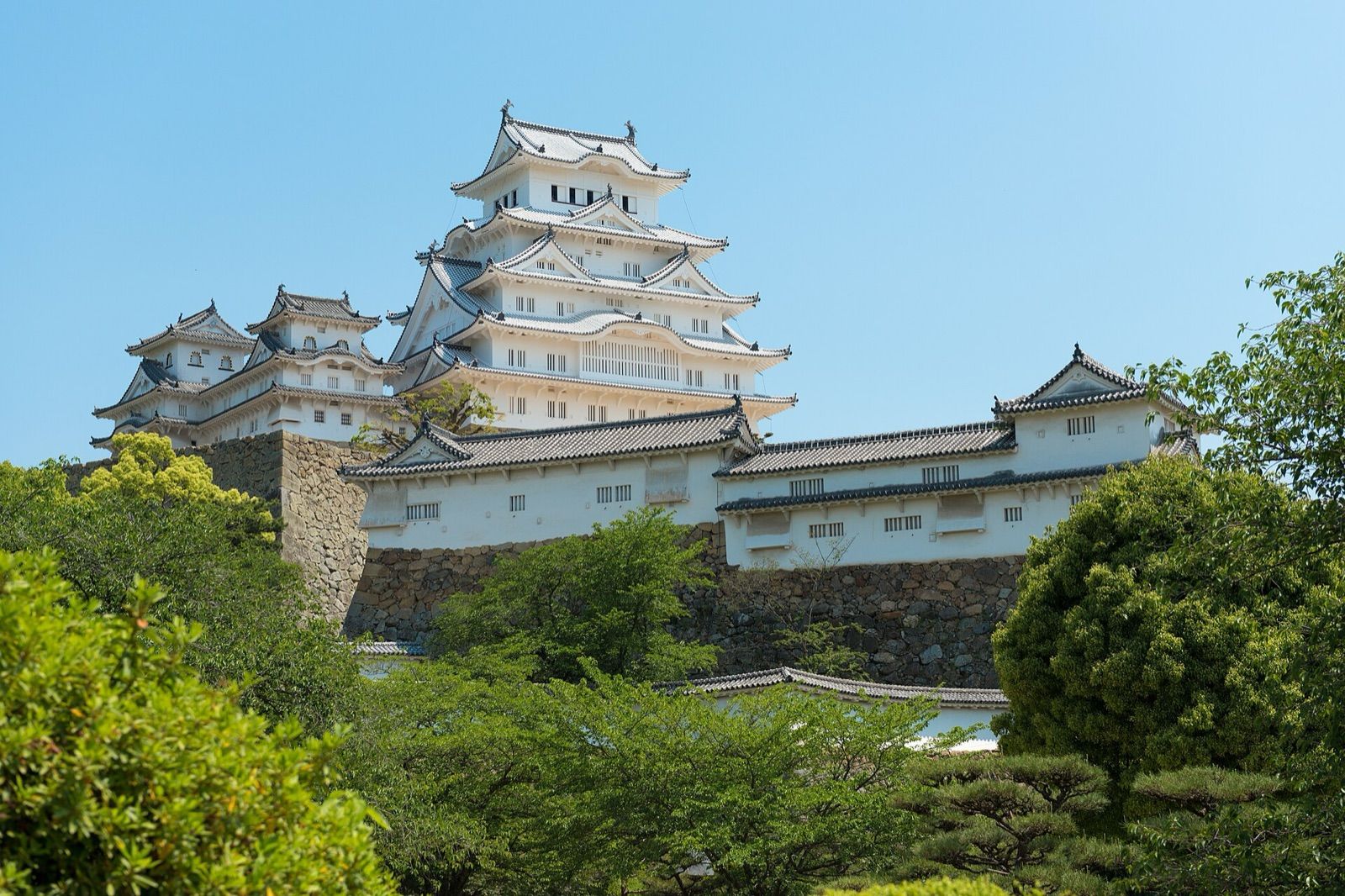
Himeji Castle is widely regarded as the finest surviving castle in Japan. Its main keep is original, not a modern reconstruction, and its white plaster walls have earned it the nickname "White Heron Castle". It was one of Japan's first UNESCO World Heritage Sites.
How to get there: the shinkansen takes about 45 minutes, sometimes with a change at Shin-Osaka; JR special rapid trains are slower but need no seat reservation. The castle is a walk of about 15–20 minutes straight up the main avenue from Himeji Station.
What to see: climb the keep's steep wooden stairs (shoes off, carried in a bag), explore the maze of gates and walls designed to confuse attackers, and visit Koko-en, a set of traditional gardens beside the castle.
What to know: Himeji has recently changed its admission charges for visitors, so check the official site. Queues to enter the keep can be long on weekends and in cherry-blossom season; arrive near opening.
How long to allow: half a day for the castle and gardens. Combine it with Kobe on the way back.
Uji: tea and the Phoenix Hall
Uji is a small riverside town between Kyoto and Nara, long famous for its green tea.
How to get there: the JR Nara line or the Keihan line, about 20–30 minutes.
What to see: Byodo-in, a temple whose Phoenix Hall, reflected in its pond, appears on the 10-yen coin; Ujigami Shrine, among the oldest surviving shrine buildings in Japan; and the Tale of Genji Museum, since the final chapters of the classic novel are set here. The street leading to Byodo-in is lined with tea shops, and matcha sweets are everywhere.
How long to allow: half a day. Uji and Fushimi Inari combine well, since both are on the JR Nara and Keihan lines.
Kobe, Hikone and Lake Biwa
Kobe is a relaxed port city between the mountains and the sea. Walk the harbourfront, explore the historic Western-style houses of the Kitano district, ride a ropeway up the hillside behind the city for the view, and try Kobe beef if your budget allows. It pairs well with Himeji.
Hikone has one of the few original castle keeps in Japan, designated a National Treasure, overlooking Lake Biwa, Japan's largest lake. It's easily reached by JR, either on a local train or by shinkansen to nearby Maibara. The castle and its garden make a quieter alternative to Himeji.
Koyasan: a pilgrimage best done overnight
Mount Koya is the mountain-top centre of Shingon Buddhism, with more than a hundred temples and the vast, atmospheric Okunoin cemetery among towering cedars. The journey takes around two and a half to three hours, involving trains and a cable car, so it's tiring as a day trip. Many visitors stay a night in a temple lodging (shukubo) instead, which usually includes vegetarian Buddhist cuisine and the chance to attend morning prayers.
Practical tips for day trips
- Use an IC card such as ICOCA or Suica for most local and rapid trains. Shinkansen and limited express trains need a separate ticket.
- Compare passes with single tickets: regional rail passes can be worth it for several long trips, but prices have risen in recent years and they don't cover every line. Check the current terms before you buy.
- Start early. The big sights in Nara, Himeji and Fushimi Inari are much calmer in the first hour after opening, especially in cherry-blossom and autumn-leaf seasons.
- Carry cash for smaller temples, shrines and food stalls, although cards are increasingly accepted.
- Wear shoes that slip on and off easily for castles and temples, and socks without holes.
- Stay near the right station: if you plan several trips, a base near Kyoto Station puts JR, the shinkansen and Kintetsu at your door. Our guide to where to stay in Kyoto compares the options.
- Summer heat is intense from July to early September. Carry water and plan indoor breaks.
Choose Nara for history, Osaka for food, Himeji for the castle and Uji for a gentle half day, and you'll see why Kyoto makes such a good base for the region.
Bloiq is reader-supported. Some links may earn us a commission; it never affects what we write. How we make money.
Cover photo: Nikos Kitsakis, CC BY-SA 4.0, via Wikimedia Commons