Home / Travel / Japan · Itineraries
Kyoto in 3 days: a practical itinerary grouped by neighbourhood
A three-day Kyoto plan: Higashiyama and Gion, then Arashiyama and the Golden Pavilion, then Fushimi Inari and the Philosopher's Path, with booking and timing tips.
This guide contains affiliate links, marked as such. If you book through them, Bloiq may earn a commission at no extra cost to you.
Three days is the point at which Kyoto stops being a checklist and starts being a city. You still see the famous sights, but you also have time for a quiet temple garden, a long lunch in the market and an unhurried walk along the canals. This plan gives each part of the city its own day to keep transit short: the old lanes of southern Higashiyama and Gion, then Arashiyama and the northwest, then Fushimi Inari and the temples of northern Higashiyama.
It suits first-time visitors at a moderate pace, with a lot of walking, some stairs and a few short train and subway rides. Early starts pay off everywhere: Kyoto's best-known places are calm soon after opening and crowded by mid-morning, especially in spring and autumn. If you only have two days, see our shorter Kyoto in 2 days plan.
Day 1: Kiyomizu-dera, the old lanes and Gion
Morning. Start at Kiyomizu-dera, which opens early. Its great wooden stage, built out over the hillside on a lattice of pillars, looks across the city, and the temple is part of the Historic Monuments of Ancient Kyoto World Heritage Site. Arriving near opening time means you'll see it before the tour groups and school trips.
Walk down the stone-paved slopes of Sannenzaka and Ninenzaka, lined with wooden townhouses that now hold tea rooms, pottery and sweet shops. Detour to the five-storey Yasaka Pagoda (Hōkan-ji), which is best seen from the lanes below it.
Afternoon. Continue north to Kōdai-ji, a temple founded by the widow of Toyotomi Hideyoshi, with gardens and a small bamboo grove. The quiet stone lane of Ishibe-kōji nearby is one of the prettiest in the city. Then walk through Maruyama Park to Yasaka Shrine, and on to Chion-in, whose huge wooden main gate is one of the largest in Japan. If you'd rather sit than walk, Kennin-ji, Kyoto's oldest Zen temple, has calm raked gravel gardens and a large ceiling painting of twin dragons.
Evening. Stay in Gion as the lanterns come on. Walk the willow-lined Shirakawa canal and the teahouses of Hanami-kōji. If you see a geiko or maiko, give her room and don't photograph her; some private lanes in Gion ban photography altogether, so follow the signs. Book dinner, as many restaurants here are small.
Day 2: Arashiyama and the Golden Pavilion
Morning. Take the JR Sagano line from Kyoto Station to Saga-Arashiyama, or the Hankyu or Randen (Keifuku) lines from downtown. Walk the bamboo grove as early as you can, then visit Tenryū-ji, a World Heritage Zen temple whose pond garden uses the hills behind it as a backdrop. At the far end of the bamboo path, the garden of Ōkōchi Sansō, a former actor's villa, has views towards the city on a clear day.
Finish at the Togetsukyō Bridge. From here you can climb to the Iwatayama monkey park, take a rowing boat on the river, or, if you've booked, ride the scenic Sagano train or the Hozugawa river boat through the gorge.
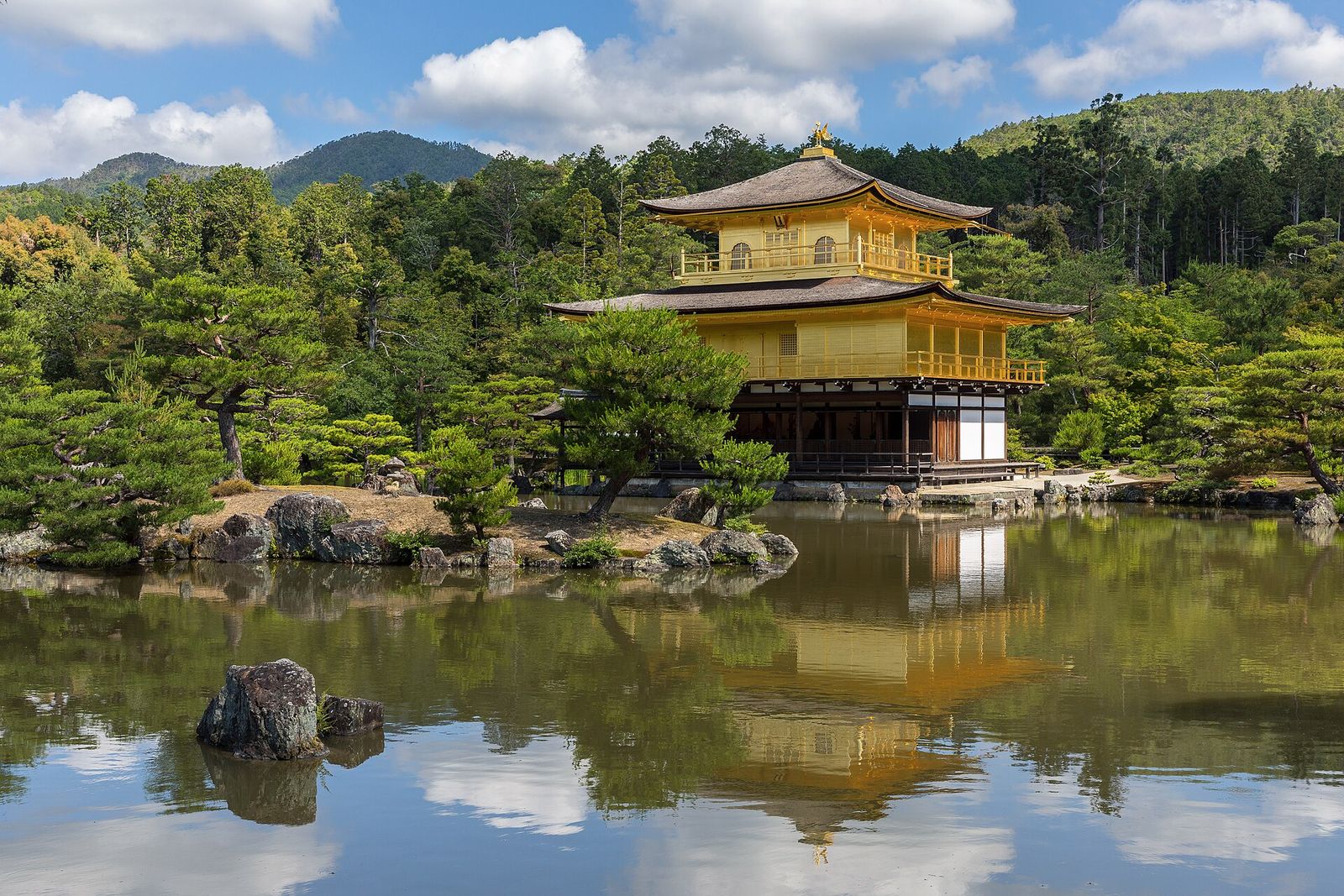
Afternoon. Head to the northwest temples by taxi, bus or the Randen tram. At Ryōan-ji, sit on the veranda facing the famous rock garden of fifteen stones set in raked gravel. Then walk (about 20 minutes) or take a short taxi ride to Kinkaku-ji, the Golden Pavilion, its upper floors covered in gold leaf and reflected in the pond. The current building is a reconstruction; the original was destroyed by fire in 1950.
Evening. Return downtown for dinner in Pontochō, the narrow lantern-lit alley beside the Kamo River. In the warmer months many restaurants build wooden platforms over the riverbank. Afterwards, walk along the river path, where locals gather on summer evenings.
Day 3: Fushimi Inari, Nishiki Market and the Philosopher's Path
Morning. Be at Fushimi Inari Taisha at dawn. The shrine is open around the clock and free, and its tunnels of vermilion torii gates are almost empty early in the day. Climb at least to the Yotsutsuji crossroads, about halfway up Mount Inari, for the view; the full loop to the summit takes two to three hours. It's a few minutes by JR from Kyoto Station, or on the Keihan line.
On the way back, you could stop at Tōfuku-ji, one stop towards central Kyoto on the JR line and also served by the Keihan line, known for its wooden Tsūten-kyō bridge over a maple-filled valley. In autumn it's one of the busiest spots in the city.
Midday. Take the Keihan line to Gion-Shijō and walk to Nishiki Market, a long covered street of food stalls known as Kyoto's kitchen. Pickles, tofu, fish, sweets and knives are all on sale. Signs ask visitors not to eat while walking, so eat at the stall or where seating is provided.
Afternoon. Take the subway to Keage for Nanzen-ji, a major Zen temple with a massive gate you can climb and a red-brick aqueduct built in the late 19th century to carry water from Lake Biwa. Eikan-dō, a short walk north, is famous for autumn colour.
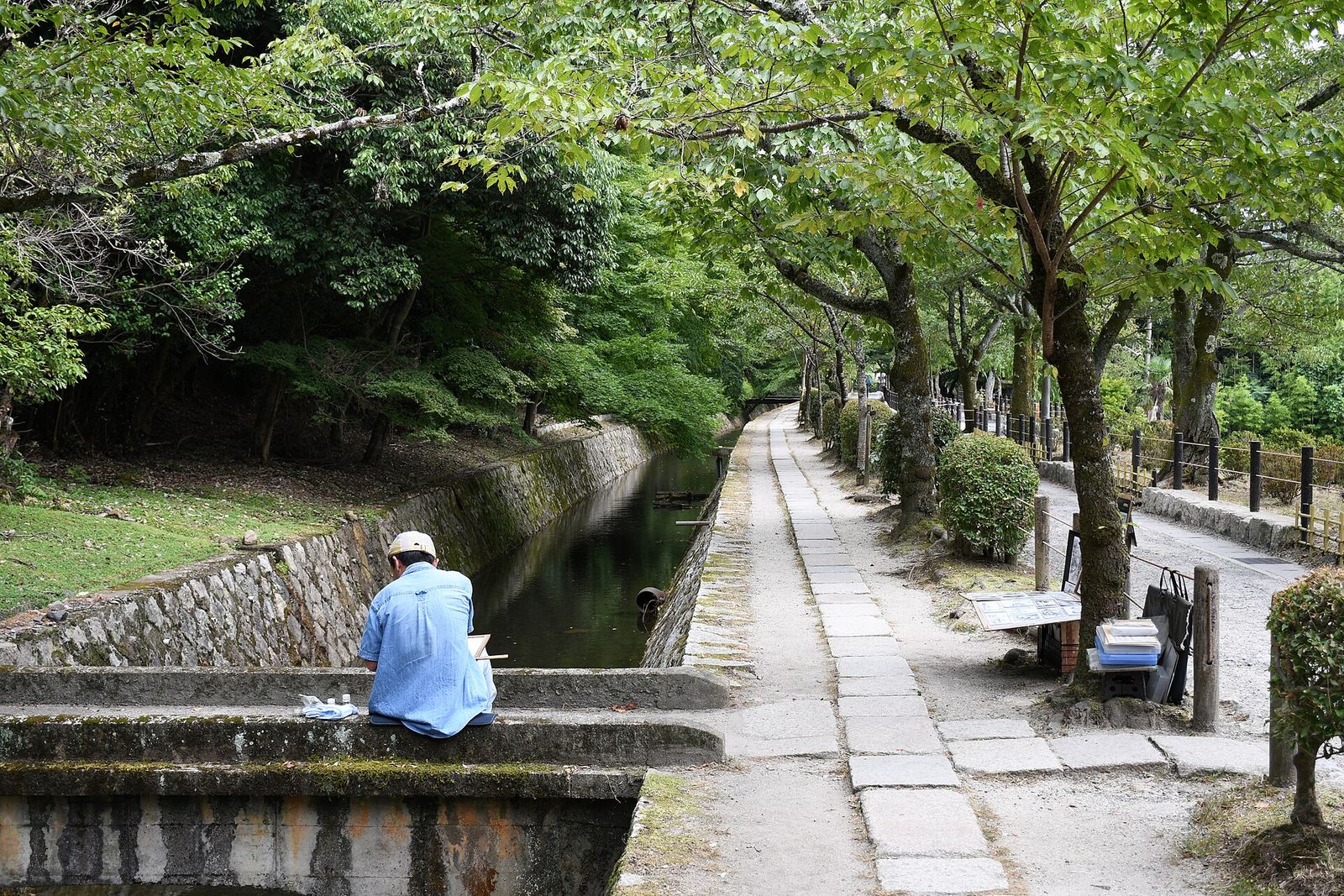
Then follow the Philosopher's Path north. This stone path runs for about two kilometres beside a cherry-lined canal and is named after the philosopher Nishida Kitarō, who is said to have walked it daily. It ends near Ginkaku-ji, the Silver Pavilion, which was never covered in silver but has a sculpted sand garden and a moss garden on the hillside. Check its closing time, which is relatively early.
Evening. Take a bus or taxi back downtown. For a last night, try a kaiseki or tofu dinner, or go up to the rooftop areas of the Kyoto Station building for a view over the city.
What to book ahead
- Accommodation: book early for cherry blossom season (late March to early April) and the autumn leaves (mainly November).
- Dinner in Gion and Pontochō: popular places take reservations and fill up.
- Scenic Sagano train and Hozugawa river boat: the train has reserved seats that sell out in busy seasons, and the boat can often be booked ahead. Both run seasonally, so check the current schedules.
- Gardens by reservation: a few, such as the moss garden at Saihō-ji and the Katsura Imperial Villa, need advance booking. Check the official sites.
- Tea ceremonies, cooking classes and kimono rental: book in advance.
Most temples sell tickets at the gate. Hours and seasonal openings vary, so check the official sites before you go.
Adapting the plan
- Rain: Fushimi Inari, Arashiyama and the Philosopher's Path are beautiful and quieter in light rain. In heavy rain, swap an outdoor afternoon for Nijō Castle, whose palace has "nightingale floors" that squeak underfoot, or the Kyoto National Museum.
- With children: the torii gates, the Arashiyama monkeys, a rowing boat on the river and the Kyoto Railway Museum near the station tend to be favourites.
- Slower pace: drop Tōfuku-ji and Kennin-ji, and give Nanzen-ji and the Philosopher's Path a whole afternoon.
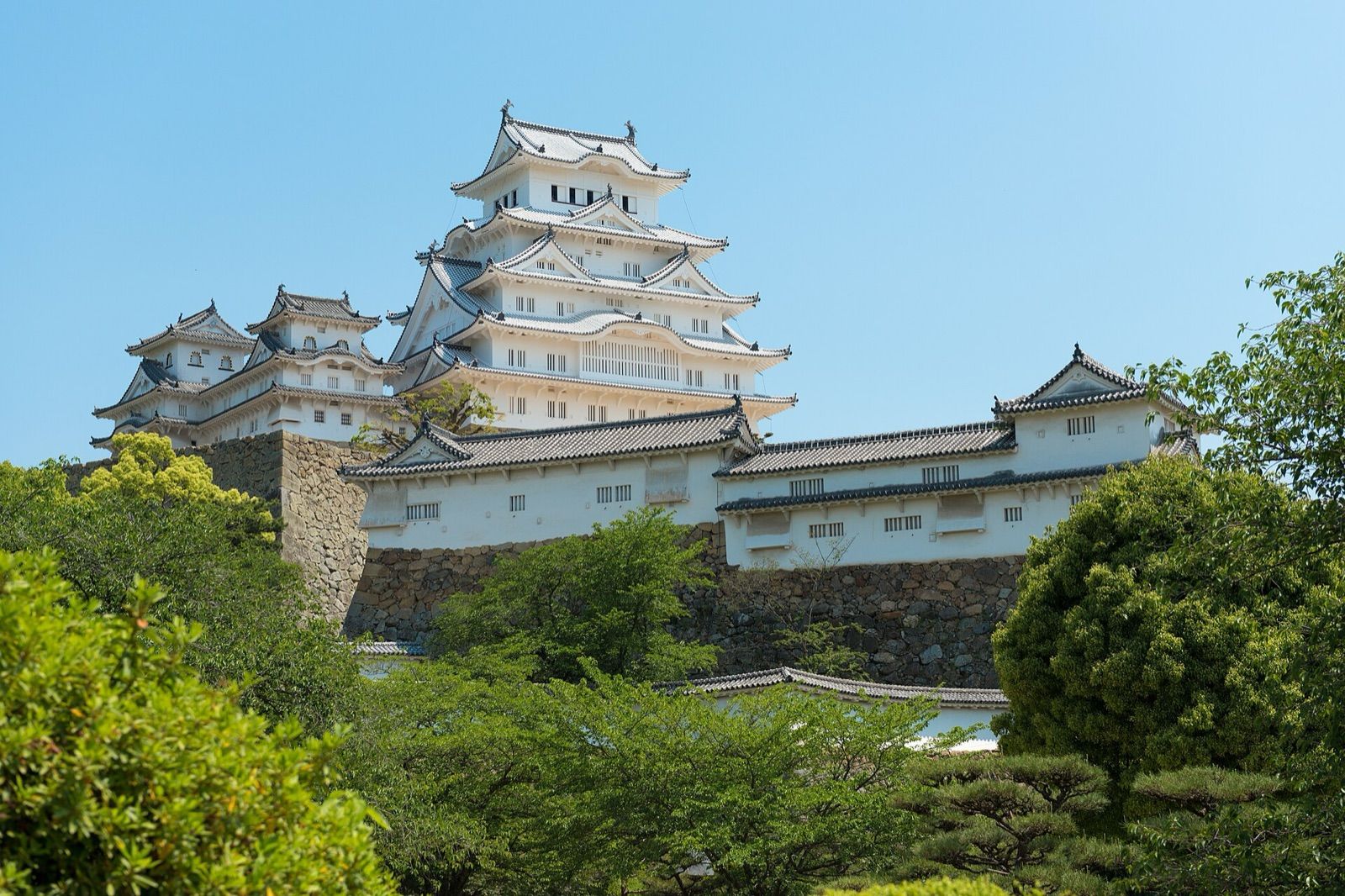
- A fourth day: take a day trip. Our guide to day trips from Kyoto compares Nara, Osaka, Himeji, Uji and more.
Practical booking tips
- Getting around: city buses are slow and often full near the big sights, so use trains and the subway wherever you can, and taxis for short hops between them. Rechargeable IC transit cards work on trains, subways and buses.
- Where to stay: Kyoto Station suits early trains to Fushimi Inari and Arashiyama; downtown near Shijō and Kawaramachi suits evenings in Gion and Pontochō. Our guide to where to stay in Kyoto compares the areas.
- Accommodation tax: Kyoto charges a per-person, per-night tax that rises with the room rate. Check the current rate when you book.
- Luggage: large suitcases are awkward on buses and in narrow lanes. Hotels, stations and luggage-forwarding services can help.
- Etiquette: don't touch or photograph geiko and maiko, respect "no photography" signs in temples, and keep to the paths in gardens.
- Continuing on: if you're heading to Tokyo next, see our Tokyo in 4 days itinerary.
Bloiq is reader-supported. Some links may earn us a commission; it never affects what we write. How we make money.