Torque wrenches explained: click, beam and digital, units and calibration
How click, beam and digital torque wrenches work, choosing the drive size and range, converting N·m and ft-lb, using one correctly and keeping it calibrated.
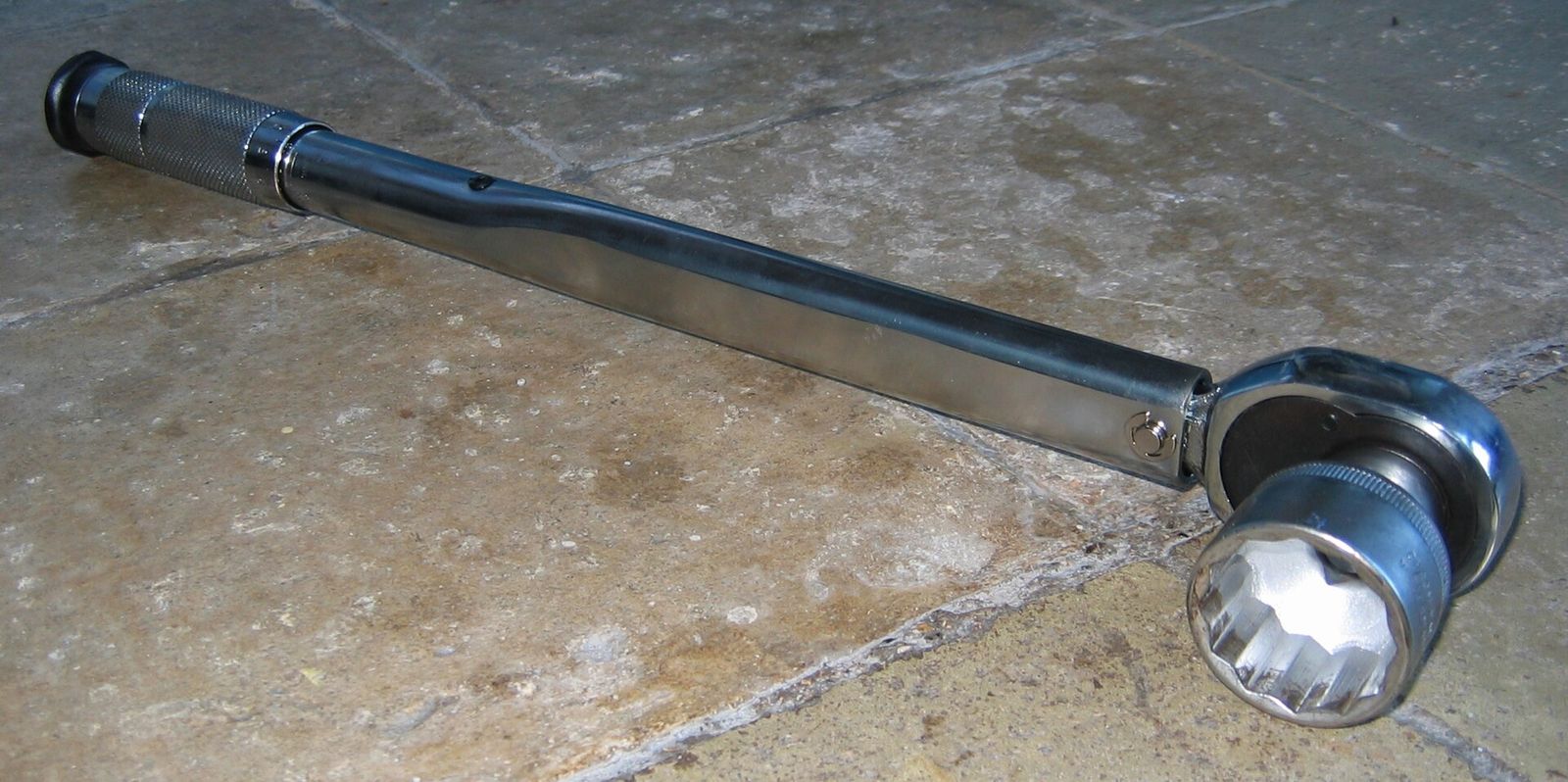
Wheel nuts, spark plugs, engine covers, bicycle stems and brake calipers all have a specified tightening torque. Too loose and parts can work free; too tight and you can stretch bolts, strip threads, warp components or crack carbon fibre. A torque wrench takes the guesswork out. This guide explains the main types, how to choose the right size and range, how the units convert, and how to use and look after one so it stays accurate.
Why torque matters
When you tighten a bolt, you stretch it very slightly, and that stretch is what clamps the parts together. Manufacturers specify a torque that produces the right clamping force for the fastener and the parts. Common jobs where it matters:
- Wheel nuts and bolts, where uneven or incorrect torque can distort brake discs or let a wheel loosen.
- Engine and gearbox parts, including aluminium components that strip easily.
- Spark plugs and oil drain plugs.
- Bicycles, especially carbon frames, bars and seatposts with low torque limits.
- Suspension and brake components.
Always use the figure from the vehicle or component manufacturer, and note whether it assumes clean, dry threads or lubricated ones. Lubricating threads when the specification is for dry threads can over-tighten the fastener at the same torque reading.
Types of torque wrench
| Type | How it signals torque | Strengths | Limitations |
|---|---|---|---|
| Click (micrometer) | Clicks and briefly releases at the set value | Easy to use, common, good value | Needs storing at its lowest setting; periodic calibration |
| Split-beam click | Clicks at the set value | Doesn't need winding down for storage | Usually costs more |
| Beam | Pointer moves over a scale | Simple, durable, reads both directions | You must watch the scale head-on while pulling |
| Dial | Needle on a gauge, sometimes with a memory pointer | Precise readings | Bulkier; costlier |
| Digital (electronic) | Display, beep, light or vibration | Unit switching, often angle measurement and higher accuracy | Batteries; electronics dislike rough treatment |
Torque screwdrivers and small preset torque keys cover the very low settings used on bicycles and electronics.
Drive size and range
Torque wrenches are most accurate in the middle of their range and are typically specified from about 20% to 100% of full scale. Avoid working at the very bottom of the scale.
As a rough guide:
- 1/4 in drive wrenches cover low torques, often measured in inch-pounds or small N·m values, for bikes, trim and small engine parts.
- 3/8 in drive wrenches suit spark plugs, many engine fasteners and general car work.
- 1/2 in drive wrenches cover higher values such as most car wheel nuts and suspension bolts.
- 3/4 in and larger drives are for trucks and heavy equipment.
Look up the torques you'll actually use and choose a wrench whose range places them comfortably mid-scale. Many people end up with two wrenches: a small one and a 1/2 in drive for wheels.
Units and conversions
Torque is force multiplied by distance. You'll see it in newton-metres (N·m), foot-pounds (ft-lb, strictly lbf·ft), inch-pounds (in-lb) and occasionally kilogram-force metres (kgf·m) on older specifications.
Conversions: 1 ft-lb ≈ 1.356 N·m; 1 N·m ≈ 0.738 ft-lb; 1 ft-lb = 12 in-lb; 1 kgf·m ≈ 9.81 N·m.
Mixing up ft-lb and in-lb is a classic, costly mistake: a value meant in inch-pounds applied in foot-pounds is twelve times too tight. Many wrenches have dual scales; check which one you're reading. Digital wrenches let you switch units, which reduces errors.
Accuracy and calibration
Manufacturers state accuracy as a percentage, commonly around ±3–4% for click wrenches and often tighter, such as ±2%, for digital models, usually for tightening in the clockwise direction. International standard ISO 6789 sets requirements for hand torque tools, and North American standards cover similar ground. A calibration certificate from the maker or a lab shows the wrench met its tolerance when tested.
Accuracy drifts with use, so recalibration is part of owning one:
- A common guideline, from ISO 6789, is to recalibrate every 12 months or 5,000 cycles, whichever comes first.
- Recalibrate after a drop or any misuse.
- Calibration labs and some manufacturers offer the service; check the current cost against the wrench's value.
A rough home check is possible by hanging a known weight at a measured distance from the drive centre (torque = force × distance), but it's no substitute for proper calibration.
Using a torque wrench correctly
- Clean threads and follow the specification's dry or lubricated condition.
- Snug fasteners first with an ordinary wrench, then make the final pull with the torque wrench.
- Hold the handle at its marked grip point and pull smoothly and steadily, at right angles to the wrench.
- Stop at the click. Don't keep pulling, and don't "double click" to be sure; a second click adds torque.
- Tighten multi-bolt patterns such as wheels in a star or criss-cross sequence, often in two stages.
- Straight extensions in line with the drive don't meaningfully change the reading, but adapters that lengthen the wrench, such as crowfoot spanners, do. Mount crowfoots at right angles to the handle or use the manufacturer's correction.
- Torque-to-yield bolts, common on cylinder heads, need a torque step then an angle step. Use an angle gauge or a digital wrench with angle measurement, and replace these bolts if the manual says they're single-use.
- Don't use a click wrench to loosen fasteners unless the manual says it's designed to, and never as a breaker bar.
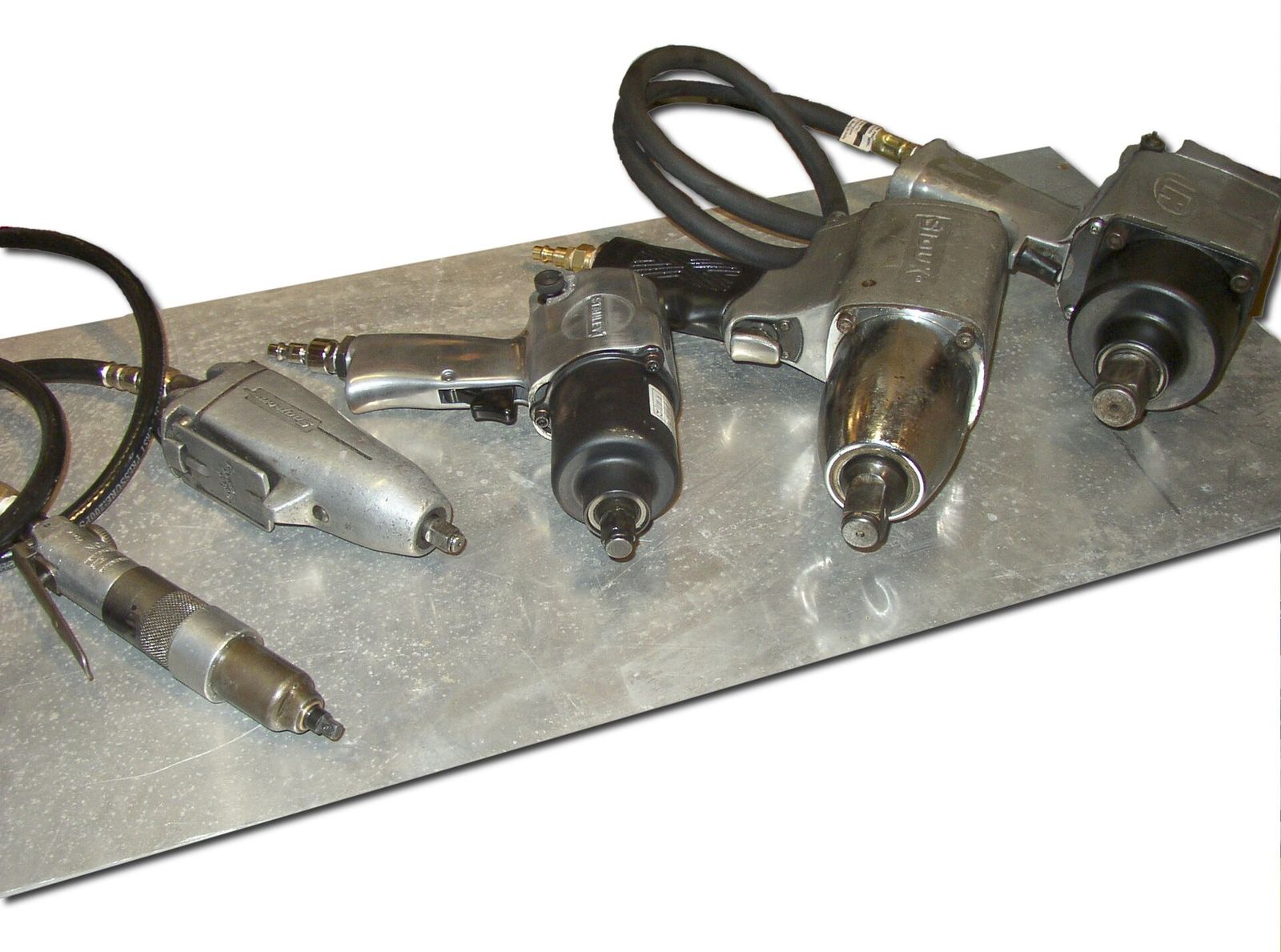
For wheel nuts, many vehicle manufacturers advise re-checking torque after a short distance; follow your vehicle handbook. An impact wrench or driver is great for removing nuts, but final tightening should be done by hand with a torque wrench. Our guide to drills and impact drivers explains why impact tools don't give controlled torque.
Storage and care
- Wind click wrenches down to their lowest setting (not below zero) before storage, so the spring isn't left compressed. Split-beam designs don't need this.
- Keep the wrench in its case, away from damp and knocks.
- Don't drop it, and don't use it as a hammer or pry bar.
- Remove batteries from digital wrenches if you won't use them for months.
If you do your own car maintenance, see also our guides to OBD2 scanners and car battery chargers.
The short version
- Choose a drive size and range that puts your usual torques mid-scale.
- Click wrenches suit most people; digital adds unit switching and angle measurement.
- Know your units: 1 ft-lb ≈ 1.356 N·m, and 12 in-lb = 1 ft-lb.
- Follow the dry or lubricated condition in the specification.
- Pull smoothly and stop at the click; tighten in a star pattern.
- Recalibrate yearly or after a drop.
- Store click wrenches at the lowest setting.
Bloiq is reader-supported. Some links may earn us a commission; it never affects what we write. How we make money.
Cover photo: Heron2, CC BY-SA 3.0, via Wikimedia Commons