Car battery chargers and maintainers: amps, modes and safe charging
Charge current and time, maintainers versus chargers, AGM, gel and lithium modes, desulphation claims, 6 V to 24 V support and safe connection, explained.
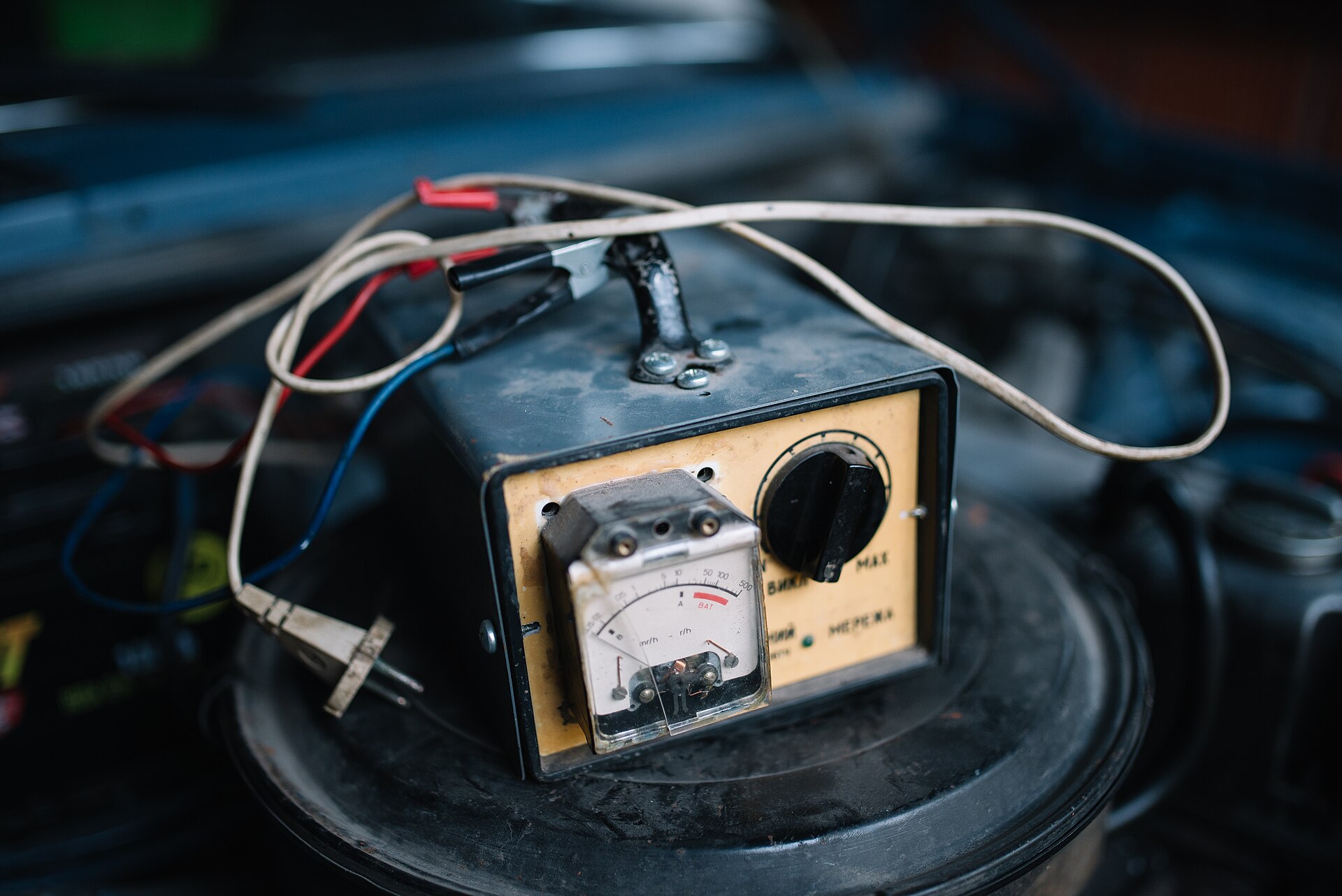
A battery charger is one of the most useful things to keep in a garage, whether you're reviving a battery after a cold snap or keeping a classic car or motorcycle ready through winter storage. Modern "smart" chargers are much safer and easier to use than old ones, but their specifications and mode buttons still cause confusion. This guide explains what the numbers mean, which modes your battery needs and how to connect a charger safely.
Charger or maintainer?
The two terms overlap, but they describe different jobs:
- A maintainer delivers a low current, typically around 1–2 A, and is designed to stay connected for weeks or months. It keeps a healthy battery topped up against self-discharge and the small, constant drain from a vehicle's electronics.
- A charger delivers more current, commonly 4–10 A for car batteries and more for larger ones, to recharge a flat or low battery in hours rather than days.
Most modern smart chargers do both: they charge at their full rate, then switch automatically to a maintenance mode. Old-style "trickle chargers" without automatic control are different; left connected, they can overcharge a battery and damage it.
Amps and charge time
Charge current, in amps, determines how quickly a charger can refill a battery. Battery capacity is quoted in amp-hours (Ah); a typical car battery is somewhere around 40–100 Ah.
Rough charge time: hours ≈ (amp-hours to replace ÷ charger amps) × 1.2. The extra allows for losses and for the slower final stage of charging.
For example, a 60 Ah battery that's half flat needs about 30 Ah. A 5 A charger takes roughly 30 ÷ 5 × 1.2 ≈ 7 hours; a 10 A charger about half that. A 1 A maintainer would take more than a day.
Choosing current:
- Motorcycles, garden tractors and small batteries: a low-current charger, often 1–4 A, or a dedicated small-battery mode.
- Cars: 4–10 A covers most needs.
- Large vans, 4×4s, leisure and marine batteries: higher current, often 10–25 A, to keep charge times reasonable.
A charger that's too powerful for a small battery can overheat it, so follow the battery maker's guidance on maximum charging current.
How a smart charger works
Smart chargers run through several stages automatically, though the names differ by brand:
- Analysis: checks the battery voltage and whether it can accept charge.
- Bulk: constant current until the battery is mostly charged.
- Absorption: constant voltage while the current tapers off, completing the charge.
- Float or maintenance: a lower voltage or occasional pulses that keep the battery full without overcharging.
The exact voltages in each stage depend on the battery type, which is why the mode buttons matter.
Battery types and charging modes
Using the right mode protects the battery and helps it reach full charge.
| Battery type | Where you'll find it | What to check |
|---|---|---|
| Flooded (standard wet) | Many older and basic vehicles | Standard mode; check electrolyte levels if the battery has removable caps |
| EFB (enhanced flooded) | Many entry-level start-stop cars | Supported by most modern chargers; check the manual |
| AGM | Many start-stop and premium vehicles, motorcycles, leisure use | Needs an AGM mode; sensitive to overcharging |
| Gel | Some leisure, mobility and marine batteries | Needs a gel mode or lower voltage; the wrong mode can damage it |
| Lithium (usually LiFePO4) | Some motorcycles, leisure and performance use | Needs a dedicated lithium mode |
Lithium batteries need particular care. Only charge them with a charger that explicitly supports lithium; lead-acid modes can use voltages or pulses that are inappropriate for them, and a desulphation mode must never be used on lithium. Some lithium batteries also have a battery management system that disconnects when deeply discharged, and not every charger can wake it.
Some chargers also offer a cold weather mode that raises the charging voltage slightly in low temperatures, and a temperature sensor that adjusts automatically. Never charge a battery that is frozen.
Desulphation and "recondition" modes
When a lead-acid battery sits discharged, lead sulphate crystals build up on its plates and reduce its capacity. Many chargers offer a desulphation, repair or recondition mode that uses pulses or a controlled higher voltage to try to break these crystals down.
Such modes may help a battery that is mildly sulphated from a period of neglect, and they're a reasonable thing to try. But they can't restore a battery with a shorted cell, shed plate material or years of deep sulphation, and results vary. A battery that won't hold charge after a proper full charge generally needs replacing. The most effective protection against sulphation is simply to keep the battery charged, which is exactly what a maintainer does.
6 V, 12 V and 24 V
- 12 V covers almost all modern cars, motorcycles and light vans.
- 6 V batteries are found in some classic cars, older motorcycles, vintage tractors and some ride-on toys.
- 24 V systems, common in lorries, buses and some plant and marine equipment, are usually two 12 V batteries in series.
Check that a charger supports each voltage you need. A 24 V system can be charged as a whole with a charger that has a 24 V mode, or each battery can be charged separately at 12 V. Never charge a battery at the wrong voltage setting.
Connecting a charger safely
Lead-acid batteries give off hydrogen gas while charging, which is explosive. Battery acid is corrosive. Always follow the charger's and vehicle's instructions, and use the basic precautions below:
- Charge in a well-ventilated area, away from flames, sparks and smoking.
- Wear eye protection and gloves.
- Check the vehicle handbook. Many modern cars specify where to connect a charger, which may be dedicated terminals under the bonnet rather than the battery itself. This matters on cars with a battery sensor on the negative terminal.
- Connect before you plug in. With the charger unplugged, attach the red clamp to the positive (+) terminal, then the black clamp to the negative terminal or, with the battery in a vehicle, to the recommended earth point on the body or engine away from the battery.
- Unplug before you disconnect. Switch off and unplug the charger at the wall, then remove the black clamp, then the red.
- Don't charge a battery that is swollen, cracked, leaking or frozen.
- Don't place the charger directly above the battery, and don't cover it while it's working.
For long-term maintenance, many chargers include ring-terminal leads that stay bolted to the battery, so you can plug in without handling clamps each time. This is especially convenient for motorcycles.
Features worth checking
- Protections: reverse-polarity, short-circuit and overheating protection, and spark-free clamps.
- Recognised safety certification for your country.
- Water and dust resistance (an IP rating) if it will live in a damp garage.
- Cable length long enough to reach the vehicle comfortably.
- A clear display of voltage, charge progress and mode.
- Supply mode, on some chargers, which holds voltage steady while a battery is changed or the vehicle is being diagnosed.
The short version
- For storage, a maintainer or smart charger left connected is ideal.
- For flat car batteries, choose around 4–10 A.
- Make sure it has modes for your battery type: AGM, gel or lithium as needed.
- Check it supports 6 V or 24 V if you have those systems.
- Treat desulphation as an occasional help, not a cure.
- Ventilate, follow the connection order, and check the handbook for charging points.
Bloiq is reader-supported. Some links may earn us a commission; it never affects what we write. How we make money.
Cover photo: Shixart1985, CC BY 2.0, via Wikimedia Commons