Oscillating multi-tools vs rotary tools: what each does and needs
An oscillating multi-tool and a rotary tool look like cousins but do very different jobs. Here's how each works, which accessories matter and which one you need.
Both tools promise to do "a bit of everything", both rely on a huge range of accessories, and both are often bought as a first step beyond a drill. Yet they work in completely different ways. An oscillating multi-tool is a renovation problem-solver for cutting in awkward places; a rotary tool is a small, very fast spinning tool for detail work, crafts and small repairs. This guide explains what each does well, which accessories matter and which to buy first.
How an oscillating multi-tool works
An oscillating multi-tool moves its accessory rapidly side to side through a very small arc, typically only a few degrees in total, many thousands of times a minute. Speeds are quoted in oscillations per minute (OPM), often up to around 20,000.
Because the blade vibrates rather than spins, it can do things no other handheld power tool manages:
- Plunge cuts straight into the middle of a board or panel, with no pilot hole.
- Flush cuts right up against a floor, wall or another surface.
- Controlled cuts in confined spaces, with little tendency to grab or kick.
The small movement also means less risk of the tool running away from you than with a saw that spins.
What a multi-tool is good at
- Undercutting door casings and architraves so new flooring slides underneath.
- Cutting openings in drywall, plasterboard and wood panelling for outlets, vents and pipes.
- Trimming protruding dowels, shims, skirting boards and pipes flush with a surface.
- Cutting nails, screws and bolts in tight places, with a bimetal blade.
- Removing grout between tiles with a carbide or diamond-grit blade.
- Scraping old caulk, adhesive, vinyl flooring and paint with a rigid scraper blade.
- Detail sanding in corners with a triangular sanding pad.
It isn't fast. For long straight cuts use a circular saw, for curves a jigsaw, and for large sanding jobs a random orbital sander.
Multi-tool blades and accessories
| Accessory | Use |
|---|---|
| High-carbon steel (HCS) plunge blade | Wood, plastic, drywall |
| Bimetal plunge blade | Wood with nails, soft metals, general use |
| Carbide-tooth blade | Hardwood, fibre cement, abrasive materials, nails |
| Semicircular (segment) blade | Longer, straighter cuts, flooring |
| Carbide or diamond grit blade | Grout, tile edges, masonry |
| Rigid or flexible scraper | Caulk, adhesive, flooring, paint |
| Triangular sanding pad | Corners and detail sanding |
Blade fit matters. Accessories attach through a mounting interface:
- Older "universal" fit blades with an open-ended slot fit many tools, though not always securely.
- Starlock, an interface developed by Bosch, is now used by several brands. It comes in three sizes (Starlock, StarlockPlus and StarlockMax), matched to tool power. Smaller Starlock blades generally fit larger Starlock tools, but not the other way round.
- Some brands use their own quick-change systems.
Check which accessories fit your tool before buying, and look for tool-free blade changes, which save a lot of time.
Other features worth checking: variable speed (slow for plastics and starting cuts, fast for wood), low-vibration designs, and an LED light for dark cabinets and crawl spaces.
How a rotary tool works
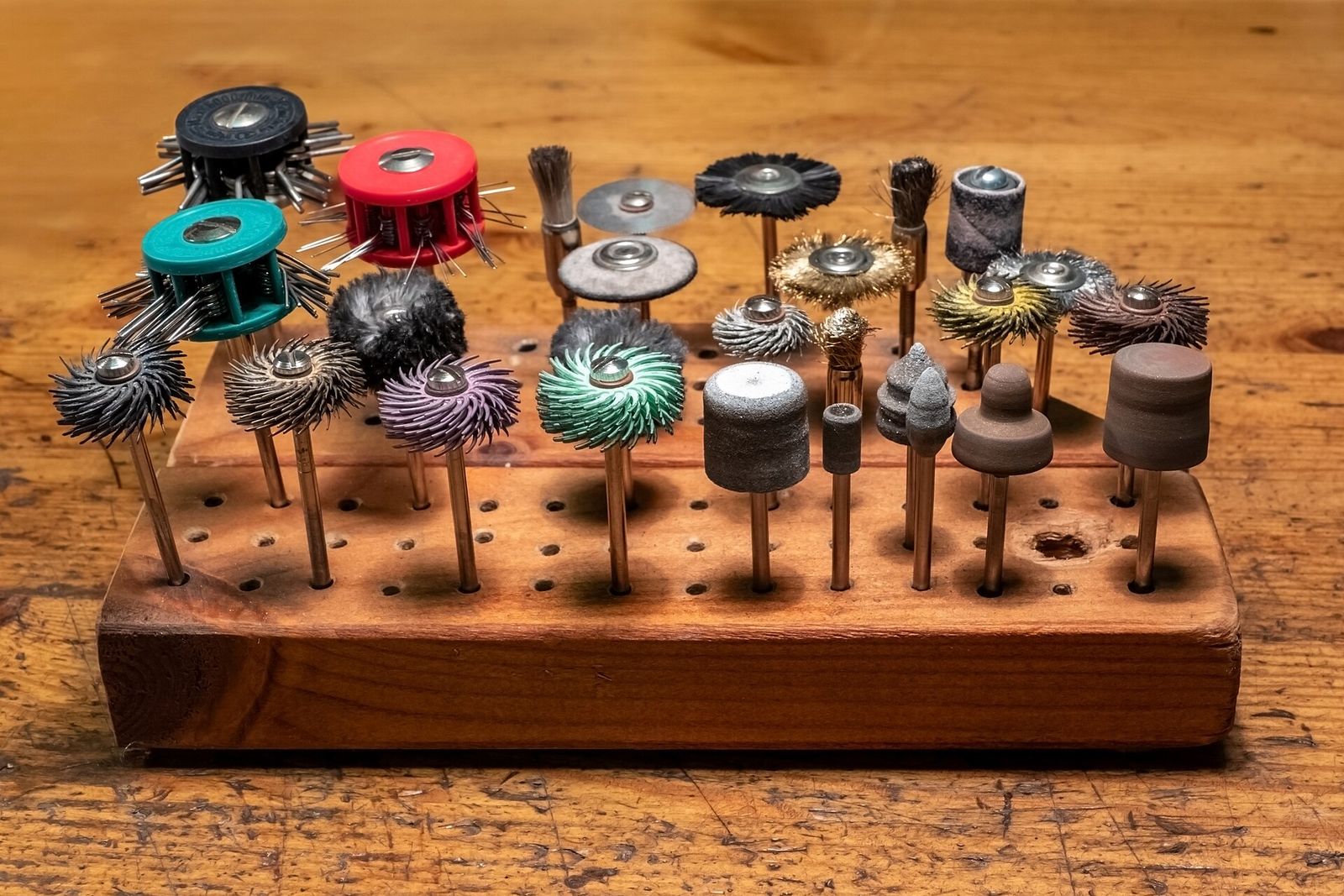
A rotary tool is a small, pencil-grip motor that spins a tiny accessory at high speed, commonly somewhere between about 5,000 and 35,000 rpm. Accessories fit into a collet, most often 1/8 in (3.2 mm).
Think of it as a miniature, precise version of several larger tools: a grinder, a polisher, a router and a drill rolled into one, for small work.
What a rotary tool is good at
- Crafts and model-making: carving, engraving and shaping wood, plastic, glass and soft metals.
- Sharpening small blades, mower blades (lightly), chisels and garden tools.
- Cutting small bolts, screws, thin sheet metal and plastic with cut-off wheels.
- Polishing jewellery, metal and plastic with felt wheels and compound.
- Cleaning rust, corrosion and old paint with small wire brushes.
- Small repairs: enlarging holes, deburring pipe ends, removing stripped screws.
It's not a substitute for an angle grinder on real metalwork or a sander on a real surface: small accessories mean slow progress on anything large. For heavier grinding and cutting, see our guide to angle grinders.
Rotary tool accessories
| Accessory | Use |
|---|---|
| Fibreglass-reinforced cut-off wheel | Cutting metal, bolts and plastic |
| Thin abrasive cut-off wheel | Fine cuts; fragile and easy to snap |
| Grinding stones | Sharpening, deburring, shaping metal |
| Sanding drums and bands | Shaping wood and smoothing curves |
| Wire brushes | Rust and paint removal |
| Felt wheels and polishing compound | Polishing metal and plastic |
| High-speed steel and carbide cutters | Carving and routing wood and plastic |
| Diamond burrs | Glass, ceramic, stone and engraving |
Useful attachments include a flexible shaft for fine hand control, a router or plunge base, and a cutting guide. A keyless chuck accepts a range of shank sizes. Corded models usually offer more sustained power; cordless models are lighter and handier for quick jobs.
Which one do you need?
| If you mainly... | Choose |
|---|---|
| Renovate, fit flooring or remodel bathrooms and kitchens | Oscillating multi-tool |
| Cut openings in walls or trim things flush | Oscillating multi-tool |
| Remove grout or scrape old flooring | Oscillating multi-tool |
| Make crafts, models or jewellery | Rotary tool |
| Sharpen, polish and clean small items | Rotary tool |
| Engrave or carve detail | Rotary tool |
Plenty of workshops have both; they complement each other rather than overlap.
Safety
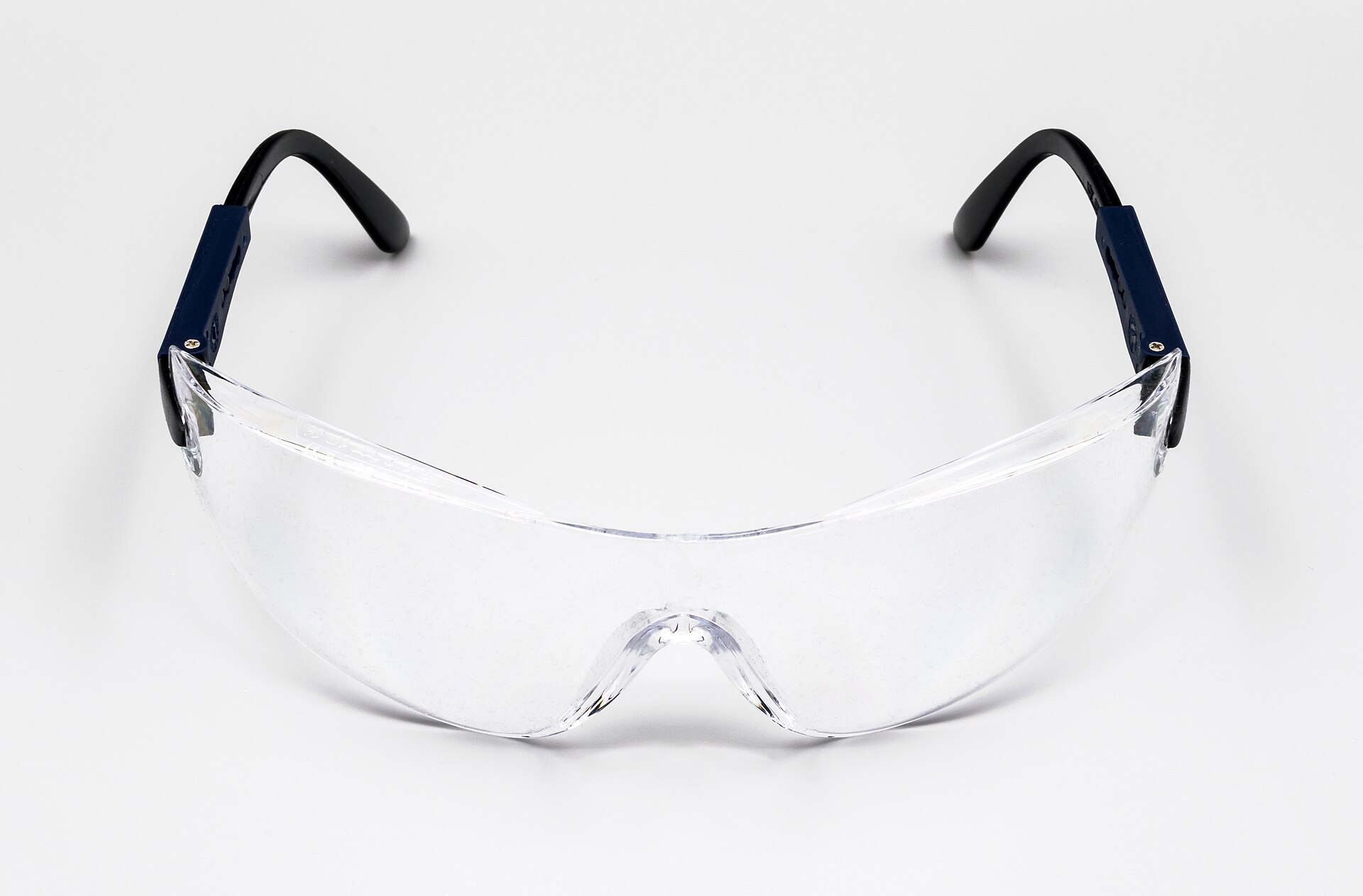
- Wear eye protection with both tools. Rotary cut-off wheels in particular can shatter; a face shield is sensible for cutting metal.
- Check accessory speed ratings against the tool's maximum speed.
- Clamp small workpieces instead of holding them in your fingers.
- Wear a dust mask for sanding, grout removal and cutting fibre cement or plasterboard, and hearing protection for long sessions.
- Disconnect power before changing accessories, and let blades cool: they get hot.
- Check for pipes and cables before plunge-cutting into walls or floors.
The short version
- Oscillating multi-tool for renovation: plunge cuts, flush cuts, grout, scraping and detail sanding.
- Rotary tool for small, precise work: crafts, engraving, polishing, sharpening and small cuts.
- Check the blade interface on a multi-tool, and the collet size on a rotary tool, before buying accessories.
- Match the accessory to the material: bimetal or carbide for nails and metal, diamond or carbide grit for grout and tile.
- Eye protection always, and a mask for dusty jobs.
Bloiq is reader-supported. Some links may earn us a commission; it never affects what we write. How we make money.
Cover photo: W.carter, CC BY-SA 4.0, via Wikimedia Commons