Digital multimeters explained: CAT ratings, true RMS and auto-ranging
What a digital multimeter measures, what counts, accuracy, true RMS and auto-ranging mean, and how CAT safety ratings tell you where a meter is safe to use.
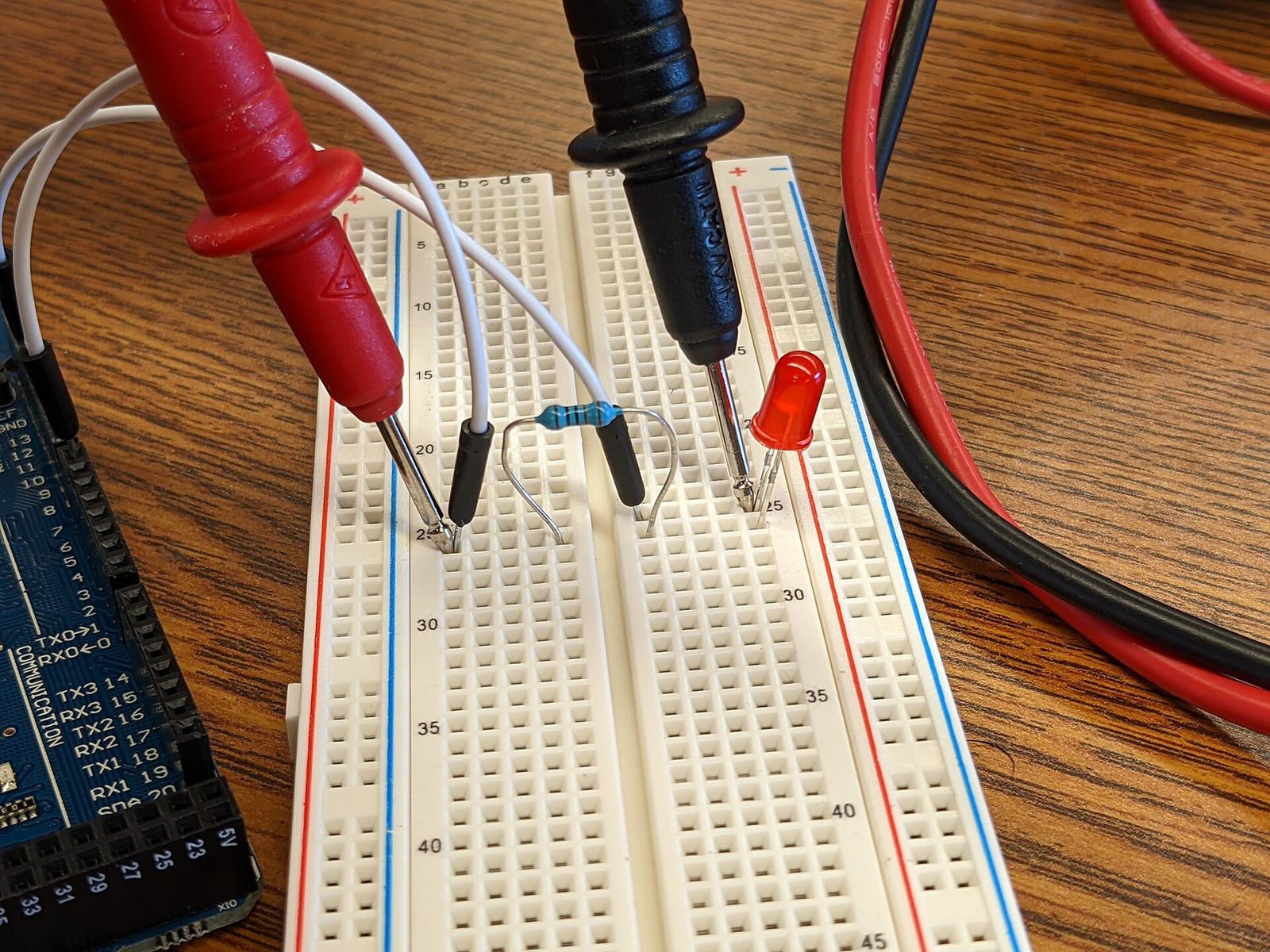
A digital multimeter is the most useful diagnostic tool most households and workshops will ever own. It tells you whether a battery is flat, a fuse is blown, a socket is live or a wire is broken. But multimeter specifications are dense, and a basic meter and a professional one can look almost identical on the bench. This guide explains what the functions and numbers mean, and why the safety rating matters more than any of them if you ever measure mains electricity.
What a multimeter measures
Almost every digital multimeter covers the basics:
- DC voltage: batteries, car electrical systems, power adapters, electronics.
- AC voltage: household outlets and circuits.
- Resistance (ohms): heating elements, sensors, windings and resistors.
- Continuity: a beep when two points are connected, for tracing wires and checking fuses and switches.
- Diode test: checks diodes and LEDs and shows their forward voltage.
- Current (amps): measured in series, by breaking the circuit and routing the current through the meter. Most meters have a milliamp/microamp input and a separate high-current input, typically rated around 10 A.
Many meters add capacitance, frequency, duty cycle and temperature (with a thermocouple probe). A non-contact voltage (NCV) sensor gives a quick warning that a cable is live, but it's a screening aid, not a proof that a circuit is dead.
If you need to measure larger currents in household or HVAC wiring, a clamp meter measures current through the jaws without breaking the circuit. Basic clamps measure AC only; clamps that also read DC current use a Hall-effect sensor.
Counts, resolution and accuracy
A meter's display is described in counts: the highest number it can show before switching to the next range. A 2,000-count meter shows up to 1,999; a 6,000-count meter up to 5,999.
More counts means finer resolution at common values. Measuring a 5 V supply, a 2,000-count meter has to use its 20 V range and shows 5.00 V, while a 6,000-count meter stays on its 6 V range and shows 5.000 V. For general household and automotive work, 4,000–6,000 counts is plenty. Electronics work benefits from 20,000 counts or more.
Accuracy is quoted as ± (percentage of reading + digits), for example ±(0.5% + 3) on DC volts. The "digits" part is counts of the last displayed digit, so it matters most at low readings. Accuracy is usually specified for each function separately, and AC and current are typically less accurate than DC voltage. Check the full specification table rather than the single headline figure on the box.
Auto-ranging or manual ranging
On a manual-ranging meter you turn the dial to a range (2 V, 20 V, 200 V and so on) and change it if the reading is off the scale. On an auto-ranging meter you pick the function and the meter selects the range itself.
Auto-ranging is easier and prevents most "OL" (overload) confusion, so it's the better choice for most people. Its drawback is speed: the meter takes a moment to settle, which can be annoying when you're probing many points. Good auto-ranging meters have a RANGE button to lock the current range when you need quick, repeated readings.
True RMS: when it matters
AC readings are normally expressed as RMS (root mean square) values, the equivalent heating effect of the waveform. Cheaper meters are average-responding: they measure the average and scale it on the assumption that the waveform is a clean sine wave.
That assumption works on a plain resistive load such as a kettle or incandescent lamp. It fails on distorted waveforms, which are increasingly common: variable-speed motor drives, dimmers, LED drivers, computer power supplies and some inverters. On these, an average-responding meter can read well off, sometimes by tens of percent. A true RMS meter computes the real RMS value and stays accurate on non-sinusoidal waveforms, within its stated bandwidth and crest factor.
If you only check batteries and car electrics, true RMS isn't essential. For household AC work, HVAC, motors, solar and anything electronic, it's worth having.
CAT safety ratings: the part that protects you
Mains circuits carry brief high-voltage spikes (transients) from lightning, switching and motors. A spike can arc across the inside of an under-built meter and cause an explosion and burns, even while you're measuring an ordinary voltage. Measurement categories, defined in the IEC 61010 safety standards, describe how severe those transients can be at different points in an electrical system.
| Category | Where it applies | Examples |
|---|---|---|
| CAT II | Circuits plugged into outlets | Appliances, portable tools, the outlet itself |
| CAT III | Fixed building wiring and distribution | Breaker panels, hard-wired motors, lighting circuits, feeders |
| CAT IV | The origin of the supply | Service entrance, utility meter, outdoor overhead and underground lines |
Circuits that aren't connected to the mains, such as battery-powered electronics, don't need a category rating.
The rating always comes with a voltage, for example CAT III 600 V or CAT IV 300 V. Both parts matter. The higher the category, the larger the transient the meter must survive, so a CAT III meter is safer at a breaker panel than a CAT II meter with a higher voltage figure. Many meters carry two ratings, such as CAT III 1000 V and CAT IV 600 V.
Rule of thumb: for household mains work, choose at least CAT III 600 V. Electricians working on service equipment need CAT IV.
A printed rating is only a claim. Look for the mark of an independent testing laboratory (such as UL, CSA, TÜV or Intertek/ETL) on the meter itself. The CE mark is a manufacturer's self-declaration and doesn't prove independent testing.
Fuses, inputs and test leads
The most common way to wreck a meter, or hurt yourself, is to leave the red lead in a current input and then touch it across a voltage. In the amps setting the meter is nearly a short circuit. A well-built meter protects its current inputs with high-rupture-capacity (HRC) fuses designed to break a high-energy fault safely. Check the fuse specifications in the manual, and replace a blown fuse only with the exact type it lists, never an ordinary glass fuse of the same amperage. Some meters also warn you when the leads are in the wrong jacks.
Test leads need a rating at least as high as the meter's. Look for shrouded plugs, finger guards and probe tips with short exposed metal or removable tip covers, which the standards expect for CAT III and CAT IV use. Replace leads with cracked insulation immediately.
Other useful features:
- Low-impedance (LoZ) mode: removes "ghost voltages" that a high-impedance meter picks up from unconnected wires running next to live ones.
- Low-pass filter: stabilises readings on motor drive outputs.
- Min/max, hold and relative (REL) modes for catching fluctuating readings and zeroing lead resistance.
- Backlight, auto power-off and a sturdy tilt stand or magnetic hanger.
Matching a meter to the job
- Batteries, car electrics and hobby projects: an auto-ranging meter with continuity, diode test and a 10 A input covers nearly everything. For tracking a car's parasitic battery drain, the high-current and milliamp ranges are both useful.
- Household electrical checks: true RMS, CAT III 600 V from an independent lab, HRC fuses, good leads and ideally LoZ mode.
- HVAC and appliance repair: add capacitance (for run capacitors), temperature and a microamp range; a clamp meter is a common companion.
- Electronics: more counts, better DC accuracy, frequency and duty cycle, and fine-tipped probes.
Safe habits
Only work on mains circuits if you're competent and permitted to do so under local rules. Before relying on a meter to show that a circuit is dead, test it on a known live source, measure, then test the known source again. Keep one hand away from the circuit where you can, set the function before connecting the probes, and never exceed the meter's rated voltage or category. When in doubt, call an electrician.
For related tools, see our guides to stud finders and laser levels, heat guns and soldering irons and car battery chargers and maintainers.
The short version
- Choose auto-ranging with a range-lock button unless you prefer manual control.
- 4,000–6,000 counts suits most users; more for electronics.
- Get true RMS for household AC, motors and anything with electronics.
- For mains work, insist on CAT III 600 V or higher, verified by an independent lab mark.
- Check for HRC fuses and properly rated, shrouded test leads.
Bloiq is reader-supported. Some links may earn us a commission; it never affects what we write. How we make money.