Mirrorless cameras for beginners: sensors, lenses and stabilisation
A beginner's guide to mirrorless cameras: what sensor size and crop factor mean, how to choose a lens system, how stabilisation works and what matters for video.
Phones take very good pictures, so a first "real" camera has to earn its place: better low-light results, background blur, a proper zoom, faster autofocus for moving subjects. Mirrorless cameras do all of that in a smaller body than the old DSLRs, but buying one means choosing a sensor size and a lens system you may stay with for years. This guide explains the terms on the spec sheet and what matters for a beginner.
What "mirrorless" means
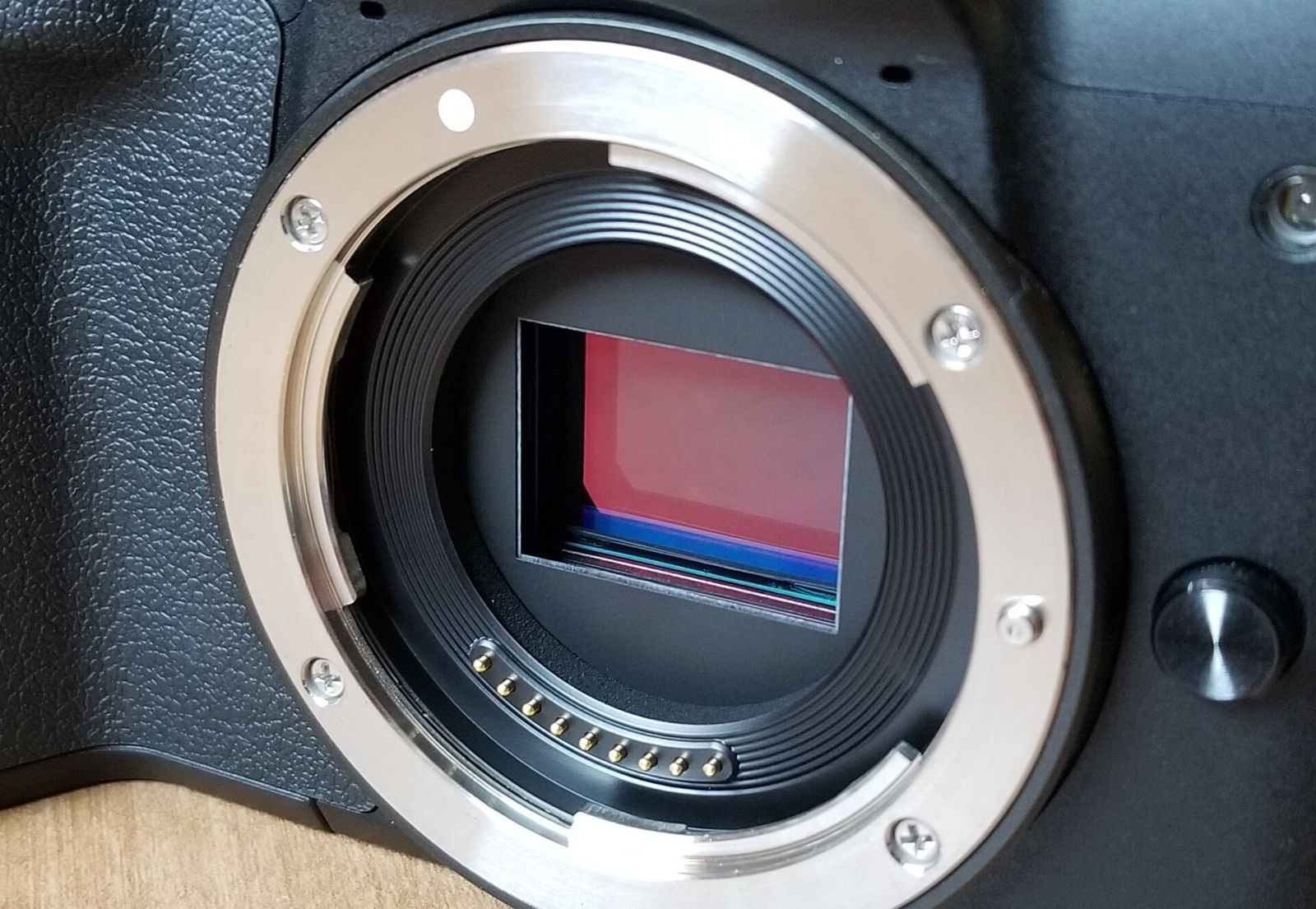
A DSLR bounces light from the lens up into an optical viewfinder with a mirror, which flips out of the way when you take the picture. A mirrorless camera has no mirror: light goes straight to the sensor, and you compose on the rear screen or an electronic viewfinder (EVF), a tiny high-resolution display inside the eyepiece.
That brings real advantages. The viewfinder shows the exposure, white balance and depth of field before you press the shutter. Autofocus works on the sensor itself, so it can recognise and follow eyes, faces, animals and vehicles across most of the frame. Bodies can be smaller and quieter, and many offer a silent electronic shutter. The main makers now concentrate their new cameras and lenses on mirrorless systems.
The costs: an EVF and constantly active sensor use more power, so batteries last for fewer shots than in a DSLR. Plan on a spare battery.
Sensor sizes and crop factor
The sensor is the camera's film. A larger sensor gathers more light in total, which generally means cleaner images in dim light, more dynamic range and an easier route to blurred backgrounds. It also means larger, heavier and more expensive lenses.
| Sensor | Approximate size | Crop factor | Typical use |
|---|---|---|---|
| 1-inch type | 13.2 × 8.8 mm | 2.7× | Premium compacts (usually fixed lens) |
| Micro Four Thirds | 17.3 × 13 mm | 2× | Small, light systems; video; travel |
| APS-C | about 23.5 × 15.6 mm (Canon slightly smaller) | 1.5× (Canon 1.6×) | The most common entry point |
| Full frame | 36 × 24 mm | 1× | Low light, shallow focus, professional work |
| Medium format | about 44 × 33 mm | about 0.8× | Studio, landscape, high detail |
The crop factor compares a sensor with full frame (the size of a 35 mm film frame). It tells you how a lens's field of view translates between systems.
Rule of thumb: equivalent focal length = focal length × crop factor. A 35 mm lens on APS-C frames a scene much like a 50–55 mm lens on full frame; a 25 mm lens on Micro Four Thirds frames it like a 50 mm.
Megapixels matter less than they seem. Around 20 to 26 megapixels is plenty for screens and large prints. Higher resolutions let you crop more, but files are larger, and a sensor of the same size with more pixels doesn't automatically perform better in low light.
For most beginners, APS-C is the sweet spot of image quality, size and lens choice. Micro Four Thirds suits people who value small, light kit. Full frame makes sense if you shoot a lot in dim light, want the shallowest focus or plan to grow into professional work.
Lenses: choosing a system, not just a camera
Each maker has its own lens mount: for example Sony E, Canon RF, Nikon Z and Fujifilm X, while Micro Four Thirds is a shared standard used by more than one maker, and the L-Mount is shared by an alliance of brands. Lenses usually outlast camera bodies, so before buying, look at the range of lenses for the mount, including third-party lenses, and what they're likely to cost.
Two numbers describe a lens:
- Focal length (mm): short is wide, long is telephoto. Zooms cover a range, such as 18–55 mm.
- Maximum aperture (f-number): a lower number, such as f/1.8, lets in more light and gives more background blur than f/4 or f/5.6. Many zooms have a variable maximum aperture that narrows as you zoom in.
A typical path for a beginner:
- The kit zoom sold with the camera: small, versatile and good in daylight.
- A fast prime with a fixed focal length, roughly equivalent to 35–50 mm on full frame, at f/1.8 or brighter. It's often the cheapest big improvement in low-light shots and portraits.
- A telephoto zoom for sport, wildlife and children's events, or a wide-angle zoom for landscapes and interiors.
Adapters let many mirrorless cameras use older lenses from other systems, sometimes with manual focus only. In systems that share one mount across sensor sizes, full-frame lenses work on the maker's APS-C bodies, while APS-C lenses on a full-frame body usually switch it to a cropped mode; check the compatibility for your mount.
Image stabilisation: in-lens, in-body and digital
Stabilisation counters the small movements of your hands, letting you use slower shutter speeds without blur.
- Optical (in-lens) stabilisation moves an element inside the lens. Common on telephoto and kit zooms.
- In-body image stabilisation (IBIS) moves the sensor itself, so it works with every lens, including fast primes and adapted lenses. Not all beginner bodies have it.
- Combined systems: many cameras coordinate both for a larger effect.
- Electronic stabilisation for video crops the frame slightly and shifts the image digitally.
Makers quote the benefit in stops, measured under a CIPA standard; each stop roughly doubles the usable exposure time. Real results vary with your technique and focal length. Stabilisation doesn't freeze moving subjects: a running child still needs a fast shutter speed.
Video: what to look for
Most current mirrorless cameras shoot 4K video, but the details vary:
- Crop: some cameras crop the frame in 4K or at high frame rates, so your wide-angle lens becomes less wide.
- Frame rates: 24, 25 or 30 frames per second for normal footage; 50, 60 or higher for slow motion.
- Bit depth and profiles: 10-bit recording and flat "log" profiles keep more information for colour grading. For straight-out-of-camera clips, 8-bit is fine.
- Rolling shutter: fast pans and moving subjects can look skewed on slower-reading sensors.
- Recording limits and heat: check how long the camera can record continuously and whether it overheats in long takes.
- Practical details: a fully articulating screen for filming yourself, a microphone input, a headphone socket and the ability to run from USB power.
If your goal is mainly vlogging or action footage, our guides to action cameras and webcams and USB microphones cover the alternatives.
Handling, batteries and memory cards
- Hold it before you buy if you can. Grip size, button layout and menus matter more day to day than small differences in specifications.
- Viewfinder or not: a viewfinder helps in bright sun and for steady shooting with longer lenses. Some compact bodies skip it to save size.
- Battery life: compare the CIPA shots-per-charge figure between models; real-world numbers are often higher for photos but lower for video. USB-C charging is convenient for travel.
- Memory cards: most entry-level bodies take SD cards. For 4K video, look for a card with at least the speed class the manual specifies, often V30 or higher. Back up your photos to a computer or external drive.
- Weather sealing: helpful outdoors, but it's resistance, not waterproofing, and it depends on the lens too.
Buying a previous-generation model or a used body can stretch a budget a long way, since the core image quality of recent sensors changes slowly.
The short version
- Choose the system first: check the lens range for the mount, not just the camera.
- APS-C suits most beginners; Micro Four Thirds is smaller and lighter; full frame excels in low light.
- Multiply by the crop factor to compare focal lengths between systems.
- Add a fast prime after the kit zoom for portraits and dim light.
- Look for IBIS if you'll use primes or shoot handheld in low light.
- For video, check crop, frame rates, recording limits and audio inputs.
- Budget for a spare battery and a fast enough memory card.
Bloiq is reader-supported. Some links may earn us a commission; it never affects what we write. How we make money.
Cover photo: Nulcheck, CC BY-SA 4.0, via Wikimedia Commons