String trimmers and edgers: line, blades, shafts and power explained
Trimmer line sizes and heads, when a blade makes sense, straight versus curved shafts, battery versus gas, and how edging differs from trimming.
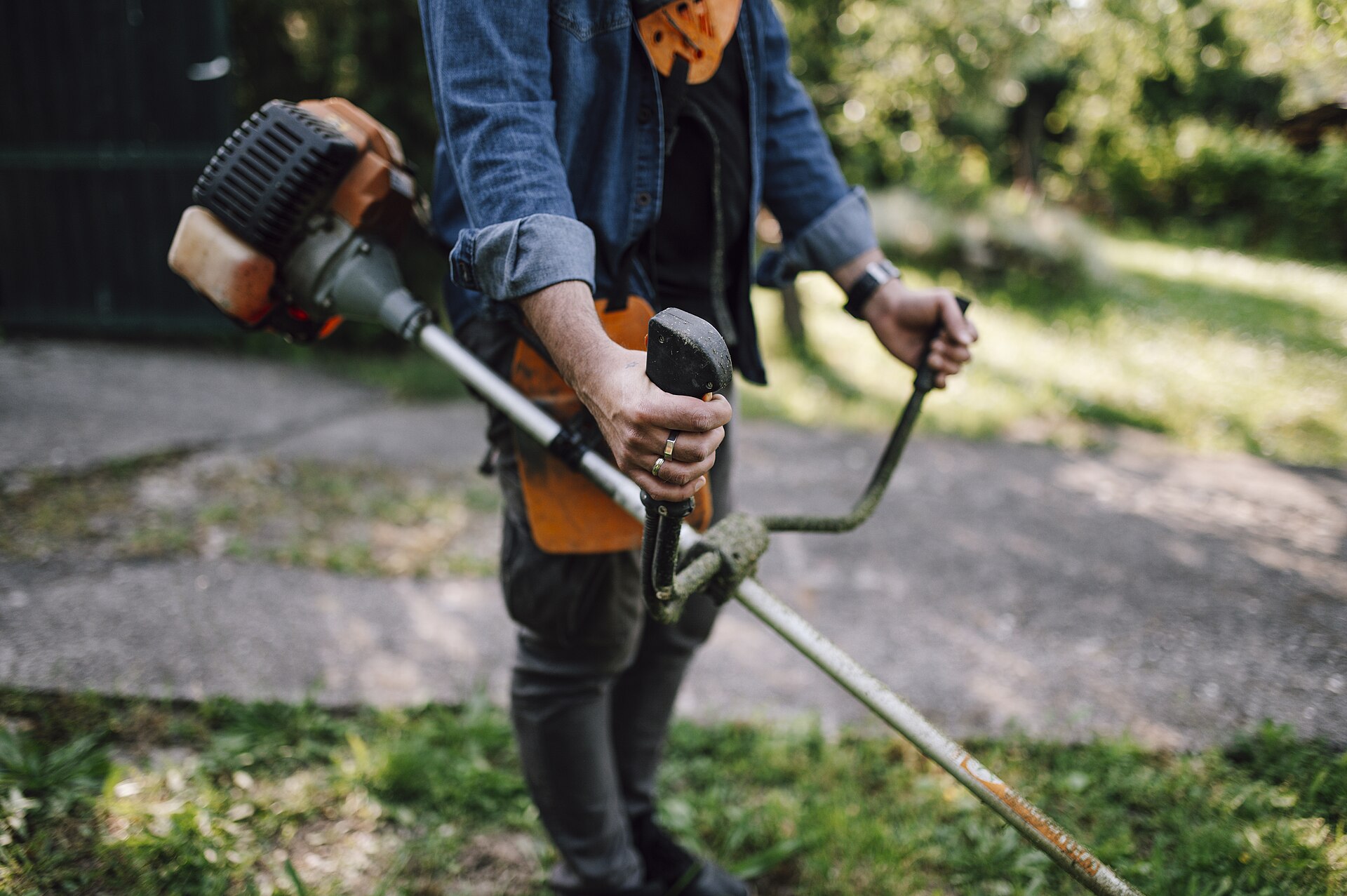
A mower handles the open lawn, but the grass along fences, walls, beds and paths needs something else. A string trimmer (also called a line trimmer, strimmer or weed eater) cuts where a mower can't reach, and an edger cuts a crisp vertical line where lawn meets pavement. The range runs from light cordless tools for tidy suburban gardens to heavy brushcutters for overgrown fields. This guide explains the choices that matter: cutting line and heads, blades, shaft shape and power source.
Trimmers, brushcutters and edgers
- String trimmers spin one or two lengths of nylon line fast enough to cut grass and soft weeds. The line flexes if it hits something hard, which makes trimmers forgiving around fences and walls.
- Brushcutters are heavier machines, usually with a straight shaft, a bike-style or loop handle and a harness, that can take metal blades for thick weeds, brambles and saplings.
- Edgers use a vertical metal blade to cut a clean line along drives, paths and bed edges. Many trimmers can also edge by rotating the head.
Most homeowners need a trimmer; a brushcutter only makes sense for rough, overgrown ground.
Trimmer line: diameter and shape
Line diameter should match what the tool is designed for, and the manual will list the acceptable range. Common sizes:
| Diameter | Typical use |
|---|---|
| 1.3–1.6 mm (0.050–0.065 in) | Light corded and small battery trimmers; lawn edges |
| 2.0 mm (0.080 in) | General-purpose; many mid-size battery and gas trimmers |
| 2.4 mm (0.095 in) | Heavier gas and high-power battery trimmers; tougher weeds |
| 2.7 mm (0.105 in) and up | Brushcutters and heavy-duty use |
Thicker line lasts longer and cuts tougher growth, but it needs more power, so fitting line that's too thick to a small trimmer slows the head and drains the battery. Shape matters too: round line is durable and inexpensive, twisted line is often quieter, and square or star-shaped line has edges that cut more cleanly but wear faster. Store spare line somewhere cool and not too dry; old nylon can become brittle.
Trimmer heads
- Bump feed: tap the head on the ground and it releases more line. The most common type.
- Automatic feed: releases line on its own, usually on lighter electric tools.
- Fixed-line heads: take pre-cut lengths of line. Simple and quick to reload, common on heavier tools.
- Easy-load heads: let you wind new line through the head without taking it apart. Worth having if refilling spools frustrates you.
Cutting swath (the diameter the line sweeps) typically ranges from about 25 cm to 45 cm. Wider cuts faster but needs more power.
When a blade makes sense
Some trimmers accept plastic blades for thicker weeds, and brushcutters take metal blades for brush and small saplings. Only fit a blade to a tool its manufacturer approves for that blade, with the correct guard and handle fitted. A metal blade on a trimmer not designed for it is dangerous: blades can kick sideways violently when they strike something solid (known as blade thrust), and the guard and handles on a trimmer aren't designed to control that.
Straight or curved shaft
| Straight shaft | Curved shaft | |
|---|---|---|
| Reach | Longer; gets under shrubs and benches | Shorter |
| Balance | Better for taller users | Suits shorter users |
| Drive | Usually a solid driveshaft (on gas models) | Usually a flexible cable |
| Weight | Slightly heavier | Lighter, easier to manoeuvre |
| Attachments | Common | Rare |
Many battery trimmers put the motor down at the cutting head, so there's no driveshaft at all. That keeps things simple but can make the tool feel head-heavy. Adjustable shaft length and a movable front handle help tall and short users alike.
Attachment or split-shaft systems let one power unit drive a trimmer, edger, pole saw, hedge trimmer or blower. They save storage space and money if you'll use several tools, though switching attachments takes a moment.
Battery, corded or gas
- Corded electric: light, inexpensive, no charging. Best for small gardens near a socket. Keep the cable behind you and plug in through RCD (GFCI) protection.
- Battery: quiet, instant start, low maintenance, and now powerful enough for most gardens. Compare watt-hours (volts × amp-hours) for runtime, and consider sharing batteries with other tools such as a leaf blower or hedge trimmer.
- Gas: the most power and unlimited runtime with a spare can of fuel. Most use two-stroke engines that run on a fuel and oil mix at the ratio the manufacturer specifies; some use four-stroke engines with separate oil. They are louder, heavier and need seasonal maintenance and fresh fuel.
For typical suburban lawns, a battery trimmer is usually enough. Large properties, rough ground and brush clearing still favour gas.
Edging: trimmer or dedicated edger
Many trimmers can edge by rotating the shaft or head so the line spins vertically, sometimes with a small guide wheel. This works well for maintaining edges that are already defined.
A dedicated edger uses a steel blade and a wheeled frame to cut a straight, deep line along concrete and paving. It gives a crisper, more consistent result, especially on long driveways and paths, and is easier to keep straight. It's a second machine to buy and store, though, so it's usually worth it only if you care about sharp edges on a lot of hard surfaces.
Safety essentials
- Wear eye protection every time: line throws stones and debris at high speed. A face shield over safety glasses gives more protection.
- Wear hearing protection with gas trimmers, plus long trousers and sturdy boots.
- Keep bystanders and pets well away; many manuals specify around 15 m (50 ft).
- Watch for cars, windows and glass doors that thrown stones can damage.
- Protect tree trunks. Repeatedly hitting bark with line can damage or kill young trees. A ring of mulch around the base removes the need to trim there at all.
- Stop the motor and remove the battery or unplug before clearing tangles or changing line.
The short version
- Choose a trimmer for normal gardens, a brushcutter only for rough, overgrown ground.
- Use the line diameter the manual specifies; thicker isn't always better.
- Only fit blades to tools designed for them.
- Pick a straight shaft for reach and tall users, curved for light, nimble work.
- Battery suits most gardens; gas for large or rough areas.
- Add a dedicated edger only if crisp edges along lots of paving matter to you.
- Pair it with the right lawn mower, and always wear eye protection.
Bloiq is reader-supported. Some links may earn us a commission; it never affects what we write. How we make money.
Cover photo: Shixart1985, CC BY 2.0, via Wikimedia Commons