Lawn aerators and dethatchers: core vs spike, scarifiers and timing
How to tell thatch from compaction, why core aeration beats spiking, how rakers, scarifiers and verticutters differ, and when to aerate or dethatch your type of grass.
A lawn that stays thin, puddles after rain or feels spongy underfoot often has a problem below the grass rather than in it. Two jobs fix most of these problems: aeration, which relieves compacted soil, and dethatching (scarifying in British usage), which removes the mat of dead stems and moss that builds up at the base of the grass. They need different machines and they're easy to overdo, so this guide explains how to diagnose your lawn, which tools do what and when to use them.
Thatch or compaction? Check first
Thatch is the layer of living and dead stems, runners and roots between the green blades and the soil. A thin layer is healthy: it cushions the lawn and holds moisture. Once it's thicker than about 1.5 cm (1/2 in), it starts to block water, air and fertiliser, and roots grow into the thatch instead of the soil.
- To measure it, cut out a small wedge of turf with a spade or knife and look at the spongy brown layer above the soil.
- Clippings aren't the cause. They break down quickly. Thatch builds up faster with vigorous spreading grasses, heavy feeding, frequent shallow watering and acidic or compacted soil, which slows decomposition.
Compaction happens when soil particles are pressed together by foot traffic, play, parked vehicles or construction, especially on clay. Signs include water pooling or running off, hard bare patches along paths, thin grass and moss.
- To test it, push a screwdriver into moist soil. If it's a struggle to get it in more than a few centimetres, the soil is probably compacted.
If you have thatch, dethatch. If you have compaction, aerate. Many lawns benefit from both, with aeration the more frequent of the two.
Core vs spike aeration
| Core (hollow-tine) aeration | Spike (solid-tine) aeration | |
|---|---|---|
| How it works | Pulls out plugs of soil and leaves holes | Pushes solid spikes into the soil |
| Effect on compaction | Relieves it | Little; can press soil tighter around each hole on clay |
| Effect on thatch | Helps break it down | None |
| Mess | Cores left on the surface | None |
| Best for | Compacted, heavy or well-used lawns | Light soils and quick drainage before autumn rain |
Core aeration removes plugs, typically 1–2 cm across and 5–8 cm (2–3 in) long, spaced roughly 5–10 cm apart. The holes let air, water and fertiliser reach the roots, and the soil from the cores, left to crumble on the surface, mixes with the thatch and helps it break down. Most turf specialists recommend it over spiking for compacted lawns.
Spike aeration with a garden fork or rolling spiker is quick and leaves no mess, and it can help surface drainage on light soils. On compacted clay, though, solid tines push soil sideways and can make the problem worse. Spiked sandals and shoes make shallow holes and do little.
Types of aerator
- Garden fork or manual hollow-tine aerator: a foot-pressed tool that pulls two to four cores at a time. Free or inexpensive, and fine for small lawns and problem patches, but slow and tiring.
- Rolling spike aerators: push-along drums with spikes. Easy to use, with the limitations of spiking.
- Tow-behind aerators: spike or plug drums pulled by a ride-on mower or garden tractor, usually weighted for penetration. Useful on large lawns.
- Powered core aerators: walk-behind machines with an engine that drives hollow tines into the ground. They're the most effective, but heavy and expensive for a once-a-year job, so most homeowners hire one or use a lawn-care service. You'll need two people and a suitable vehicle or trailer to move one.
Dethatchers, scarifiers and verticutters
- Thatching (scarifying) rake: a hand rake with sharp, curved blades. Good for small lawns and patches; hard work on anything larger.
- Spring-tine dethatchers (lawn rakers): powered drums of springy wire tines that comb out moss and loose thatch. Gentle enough for a light annual going-over.
- Blade scarifiers: fixed steel blades that slice vertically into the thatch and the top of the soil. More aggressive, for heavy thatch and moss. Many electric and battery models come with both a blade drum and a spring-tine drum.
- Verticutters and power rakes: heavier petrol machines with vertical blades or flails, used for thick thatch, renovation and preparing a lawn for overseeding. Usually hired.
Things to compare on a powered dethatcher:
- Working width: about 30–40 cm on most corded and battery models.
- Depth settings: several positions, so you can start shallow and go deeper.
- Collection box: useful, but it fills surprisingly quickly.
- Power source and weight: corded suits small and medium lawns; battery models may share packs with your other garden tools.
- Replacement drums and blades: check they're available.
When to aerate and dethatch
Do both when the grass is growing strongly and has time to recover, and avoid heat, drought and dormancy.
- Cool-season grasses (bluegrass, fescues, ryegrass and most UK and Canadian lawns): late summer to early autumn is best, with spring a second choice. Weeds compete less in autumn, and the grass recovers before winter.
- Warm-season grasses (Bermuda, zoysia, St Augustine and other southern grasses): late spring to early summer, once the lawn has fully greened up and is actively growing.
- Soil moisture: aerate when the soil is moist but not waterlogged, a day or so after rain or a good watering. Dry soil resists the tines; soggy soil smears.
- Avoid new lawns in their first year, frozen ground, and dethatching during a dry spell.
How often: aerate heavily used or clay lawns every year, others every two or three years. Dethatch only when the thatch is thicker than about 1.5 cm, rather than every year out of habit; a light pass with a spring-tine raker is gentler if you want a yearly tidy.
Before, during and after
- Mark hidden obstacles: sprinkler heads, shallow irrigation lines, cables for lights or a robotic mower, and anything buried near the surface.
- Mow a little lower than usual before dethatching, and clear stones, sticks and toys.
- Moss: if it's widespread, many gardeners treat it first and rake it out once it has died, so live moss isn't spread around. Then look at why it grew: shade, poor drainage, compaction or low fertility.
- Work in passes: go over the lawn once, then a second time at an angle if needed. Start shallow when dethatching; the lawn will look rough for a few weeks.
- Afterwards: leave the cores to crumble or break them up with a rake or the mower. It's an ideal time to overseed bare patches, top-dress with sandy loam or compost, feed as appropriate for the season, and water.
- What to do with the debris: thatch and moss can go in the compost if the lawn hasn't recently been treated with weedkiller; check the product label. See our composting guide.
Safety: wear sturdy shoes and eye protection, unplug or remove the battery before clearing blades, don't use electric machines on wet grass, and take care turning heavy core aerators, which can pull hard on slopes.
The short version
- Diagnose first: a spongy layer thicker than about 1.5 cm means thatch; hard soil and puddles mean compaction.
- Core aeration relieves compaction; spiking is a quick fix for drainage on light soils only.
- Spring-tine rakers are gentle; blade scarifiers and verticutters handle heavy thatch and moss.
- Time it to growth: early autumn for cool-season grasses, late spring to early summer for warm-season grasses.
- Overseed, top-dress and water afterwards, then keep the lawn healthy with good mowing and watering. Our guides to lawn mowers and garden irrigation explain how.
Bloiq is reader-supported. Some links may earn us a commission; it never affects what we write. How we make money.
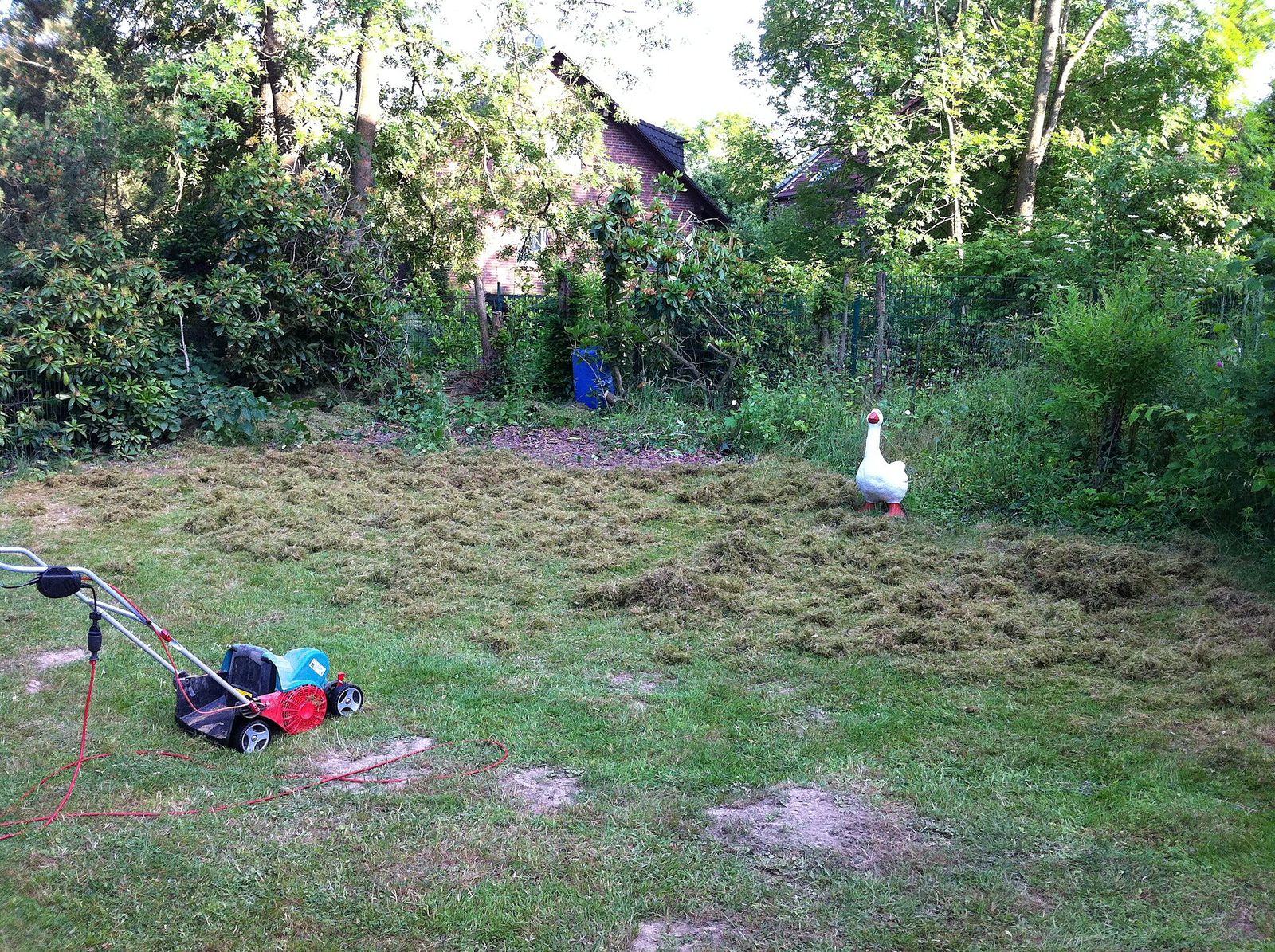
Cover photo: Peter Quade, CC BY-SA 2.0, via Wikimedia Commons