Refrigerator types: top-freezer, bottom-freezer, French-door, side-by-side
How the main fridge-freezer layouts compare, how to size one for your household and kitchen, and what energy labels, defrost systems and dispensers mean.
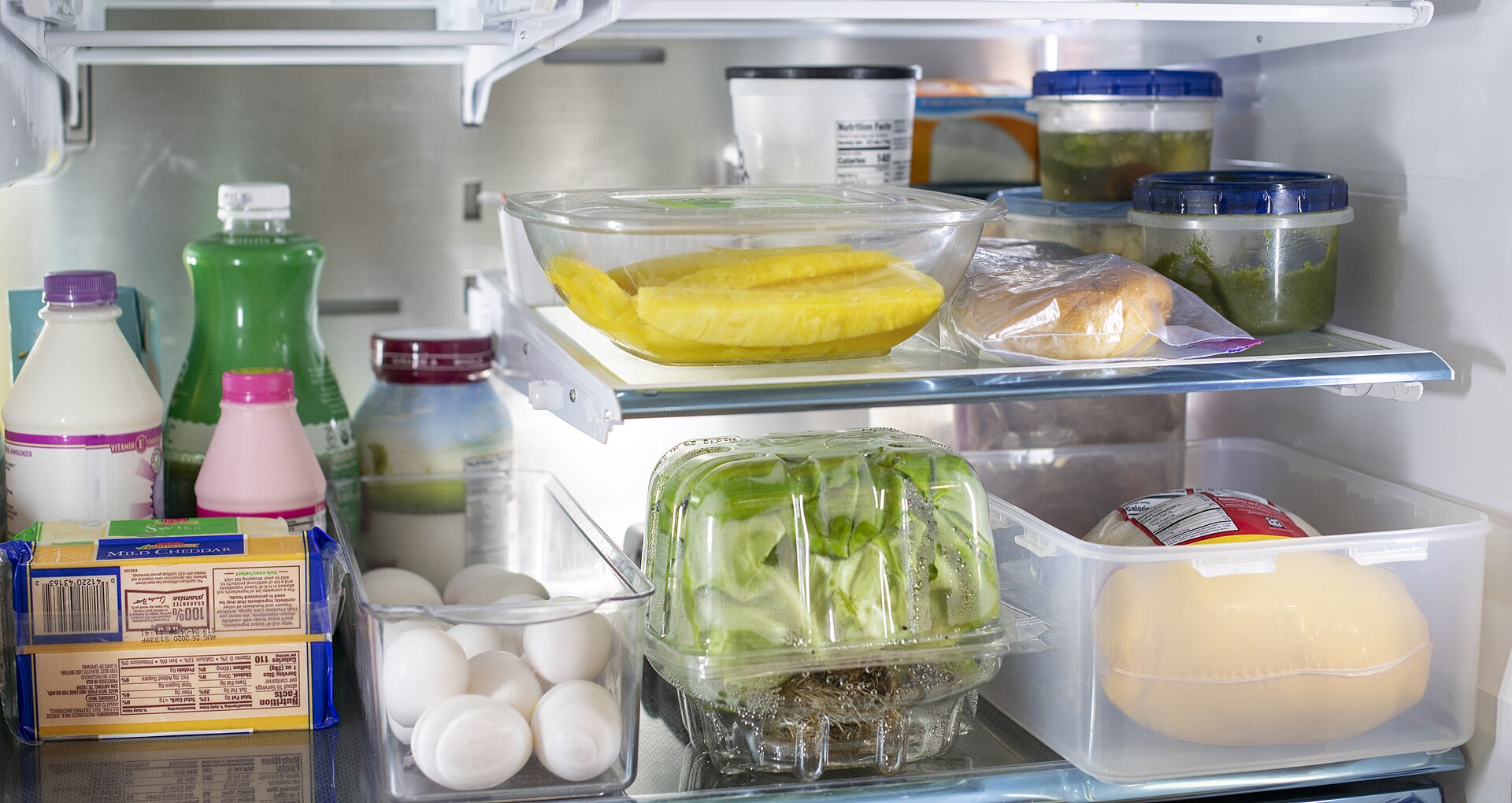
A refrigerator runs around the clock for a decade or more, so the layout you choose shapes how you cook, shop and use your kitchen for a long time. The main types differ in where the freezer sits, how wide the shelves are, how much room the doors need and how much electricity they use. This guide compares the layouts, explains how to size a fridge for your household and your kitchen, and shows what to look for on the energy label.
The main layouts at a glance
| Layout | Typical widths | Strengths | Trade-offs |
|---|---|---|---|
| Top-freezer | About 60–84 cm (24–33 in) | Simple, good value, efficient | Fridge drawers sit low; small freezer |
| Bottom-freezer | About 55–84 cm (22–33 in) | Fresh food at eye level | Bending down for frozen food |
| French-door | About 76–91 cm (30–36 in) | Full-width shelves, narrow door swing | Costs more; more parts |
| Side-by-side | About 84–91 cm (33–36 in) | Narrow doors, frozen food at eye level | Narrow shelves; usually uses more energy |
| Multi-door | About 76–91 cm (30–36 in) | Flexible zones and drawers | Cost and complexity |
| Separate fridge and freezer | Two columns or full-height units | Most space and flexibility | Most wall space and expense |
Top-freezer: simple and efficient
The freezer sits above the fridge, behind its own door. It's the simplest design, usually the best value for the space, and among the most efficient. The doors can often be reversed to open from either side. The drawback is that the fridge, the part you open most, is low down: you bend for the bottom shelves and the crisper drawers, and the freezer is relatively small. Top-freezer models are a staple in North America and come in smaller sizes elsewhere.
Bottom-freezer: the fridge at eye level
Here the fridge is on top, where you can see everything, and the freezer sits below, either as a pull-out drawer or behind a door with baskets inside. In Europe and the UK, the 55–60 cm-wide "fridge freezer" with the freezer at the bottom is the standard layout, and listings often describe the split between fridge and freezer as 70/30, 60/40 or 50/50.
Good for: most households that use more fresh food than frozen. Consider: you bend down for frozen food, and in a deep drawer smaller items tend to sink to the bottom; dividers and baskets help.
French-door: wide shelves, narrow doors
A French-door fridge has two half-width doors over a full-width fridge compartment, with a freezer drawer (sometimes two) below. The full-width shelves take platters, trays and party food, and the narrow doors need less space in front, which helps in kitchens with an island. Many have a middle drawer that can be switched between fridge and freezer temperatures, and some add a small door within a door for drinks.
Consider: they cost more, and in-door ice and water dispensers take up door and shelf space. The gap between the two doors is usually sealed by a hinged flap on one door, which needs to fold correctly when you close it.
Side-by-side: two tall columns
The freezer runs the full height on one side, usually the narrower one, with the fridge on the other. The narrow doors suit galley kitchens, frozen food sits at eye level, and many models have ice and water dispensers. In the UK and Europe, models about 90 cm wide are often sold as "American-style" fridge freezers.
Consider: the shelves on both sides are narrow, so wide platters, pizza boxes and large frozen items may not fit. Side-by-side models also usually use more energy than top- or bottom-freezer models of similar capacity. Check the width of every doorway on the delivery route.
How big a fridge you need
Capacity is quoted in litres or in cubic feet; 1 cubic foot is about 28.3 litres.
Rule of thumb: allow roughly 4–6 cubic feet (about 115–170 litres) of total fridge-freezer capacity per adult, and more if you cook from scratch, buy in bulk or entertain often.
Quoted capacities are measured in different ways in different regions, and shelves, drawers and ice makers take up some of the space, so treat the figures as a guide and look closely at the layout. Think about the balance too: if you batch-cook or freeze a lot, a larger freezer, or a separate one, may matter more than total size. Our guide to vacuum sealers covers keeping frozen food in good condition.
Measuring your kitchen
- Height, width and depth of the space, plus the ventilation gaps the installation manual asks for at the top, sides and back.
- The hinge side: doors often need to open past 90 degrees before crisper drawers and shelves can come out. Next to a wall or a tall cabinet, allow extra space or choose a model designed for tight installations.
- Depth: standard-depth North American models stick out well beyond a 60 cm (24 in) worktop. Counter-depth models are shallower and sit nearly flush with the cabinets, at the cost of some capacity. Measure depth with the doors and handles included.
- Door swing: make sure the doors can open fully without hitting an island, a wall or a dishwasher door.
- The delivery path: doorways, hallways, stairs and tight turns. Some doors and handles can be removed for delivery.
- A water supply if you want a plumbed ice maker or water dispenser.
- Integrated models fit inside a tall cabinet behind a matching door, so the size of the opening and the type of door fixing must match.
Energy labels and efficiency
A fridge never switches off, so small differences in efficiency add up over its life.
- United States: the yellow EnergyGuide label shows estimated yearly electricity use in kWh and an estimated yearly running cost. ENERGY STAR certified models beat the federal minimum efficiency standard.
- Canada: the EnerGuide label shows yearly energy use in kWh.
- EU and UK: the A–G label was rescaled in 2021, so few models reach the top classes. It shows yearly energy use in kWh, the volume of each compartment and the noise level in dB(A). Compare the kWh figures directly.
Energy use rises with size and with through-the-door dispensers, and side-by-side layouts tend to use more than top- or bottom-freezer ones. Inverter or variable-speed compressors run more steadily and are often quieter. Placement matters too: keep the fridge away from the oven and direct sun, leave the ventilation gaps clear, and replace worn door seals.
For a garage or unheated room, check the climate class. In Europe the classes run from SN (for rooms down to about 10 °C) to T (up to about 43 °C). In a cold space, a fridge freezer controlled by a single thermostat may barely run, letting the freezer warm up.
Defrost systems and features worth having
- Frost-free (no-frost): fans circulate cold air and an automatic defrost cycle stops ice building up, so you never defrost by hand. Manual-defrost models are simpler but need defrosting when ice builds up.
- Separate cooling circuits for the fridge and freezer keep humidity and smells apart and help food stay fresh.
- Humidity-controlled crisper drawers let you keep leafy vegetables in moister air and fruit that spoils quickly in drier air.
- Ice and water dispensers are convenient, but they need a water line or a refillable tank, a filter that needs replacing, and they add parts that can fail. A countertop ice maker is an alternative.
- Temperature display and door alarm: food-safety agencies advise keeping the fridge at about 4–5 °C (40 °F) or colder and the freezer at −18 °C (0 °F). A display, or a simple fridge thermometer, lets you check.
- Noise: look for the dB(A) figure if the kitchen is open to a living area. Our dishwasher buying guide explains how decibel figures compare.
Checklist before you buy
- Measure the space, including depth with doors and handles, hinge clearance and ventilation gaps.
- Measure the delivery route.
- Pick a layout by how you cook: bottom-freezer or French-door for fresh food at eye level, side-by-side or French-door for narrow door swing, top-freezer for value and efficiency.
- Size it at roughly 4–6 cubic feet (115–170 litres) per adult, adjusted for how you shop.
- Compare yearly energy use in kWh.
- Decide whether a dispenser is worth its space, filters and running cost.
- For a garage or cold room, check the climate class.
Bloiq is reader-supported. Some links may earn us a commission; it never affects what we write. How we make money.
Cover photo: USDAgov, Public domain, via Wikimedia Commons
.jpg)