Dishwasher buying guide: noise, drying, racks, efficiency and fit
What decibel ratings, drying systems, rack layouts, energy labels and installation types really mean, so you can choose a dishwasher that suits your kitchen.
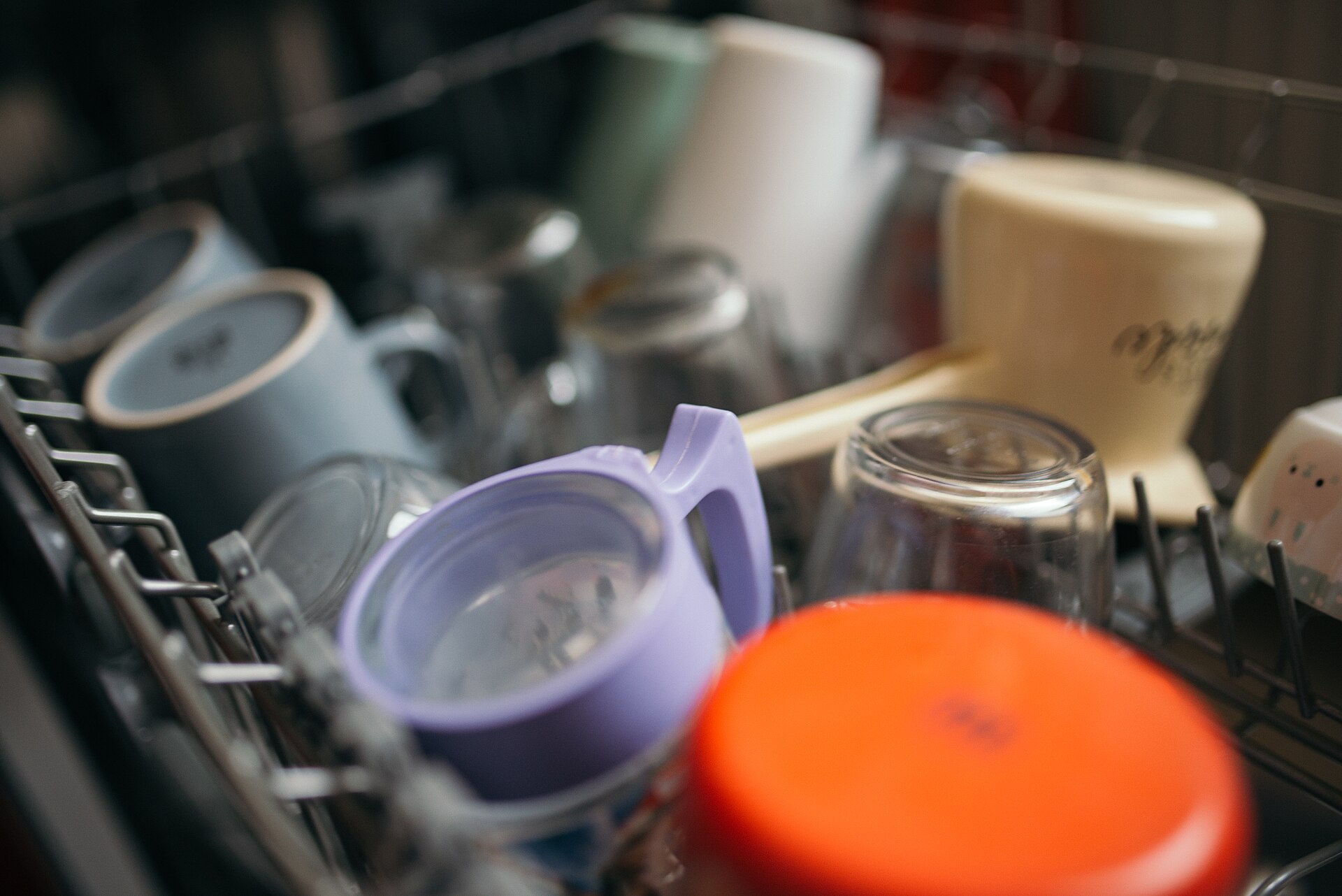
Most dishwashers clean well enough. What separates a good one from a frustrating one is how loud it is in an open-plan room, whether your plastics come out dry, how well the racks fit your dishes and how much water and electricity it uses over a decade. This guide explains the numbers and features on a spec sheet and what to measure before you order.
Installation types and sizes
Start with where it will go, because that narrows the choice quickly.
- Built-in (under-counter): slides into a standard gap under the worktop. The most common type.
- Fully integrated: hidden behind a door panel that matches your cabinets; the controls sit on the top edge of the door.
- Semi-integrated: takes a cabinet panel but leaves the control strip visible.
- Freestanding: has its own finished sides and top, so it can stand at the end of a run or in a rental kitchen.
- Compact and countertop: small units for tiny kitchens, usually fed from the tap or a small connection.
- Drawer dishwashers: one or two independent drawers, handy for small loads or accessible kitchens.
The two standard widths are about 60 cm (24 in) for full-size models and about 45 cm (18 in) for slimline ones. Capacity is quoted in place settings: full-size models typically hold 12 to 16, slimline ones around 8 to 10, and countertop models about 4 to 6.
Measure the height, width and depth of the opening, check that the door can open fully without hitting an island, handle or oven, and confirm where the water supply, drain and power will connect. Tall-tub models need a little more height; integrated models need the right door-panel size and hinge type.
Noise ratings: what the decibels mean
Noise is quoted in dB(A), measured during a standard programme. Most modern dishwashers fall somewhere between the high 30s and low 50s.
- Above about 50 dB: noticeable in an open-plan space; you may need to raise your voice nearby.
- About 44 to 48 dB: a steady hum that most people tune out.
- Below about 44 dB: quiet enough that many people only notice it's running from a status light.
Decibels are logarithmic. A 3 dB difference means double the sound energy, and roughly 10 dB sounds about twice as loud to most people, so the difference between 42 and 48 dB is bigger than it looks. Some models also have a quiet or night programme that lowers the noise at the cost of a longer cycle. Quoted figures are measured under test conditions; the cabinet around the dishwasher and your floor affect what you actually hear.
Drying methods
Drying is where dishwashers differ most in practice, especially with plastics, which hold less heat than glass or ceramics.
- Heated element: a visible or hidden element warms the air. Effective, but uses more energy.
- Condensation drying: a hot final rinse heats the dishes, and moisture condenses on the cooler stainless-steel tub walls. Quiet and efficient, but plastics often stay damp.
- Fan-assisted drying: a fan moves moist air out or around the tub to speed things up.
- Automatic door opening: the door opens slightly at the end of the cycle to let steam escape. Simple and effective.
- Mineral (zeolite) drying: a compartment of zeolite absorbs moisture and releases heat as it does so, improving drying with little extra energy.
Whatever the system, rinse aid makes a large difference, because it helps water sheet off instead of beading. Expect some water on upturned plastic cups with any machine.
Racks and interior layout
A dishwasher's usefulness depends heavily on how it loads. Things to check:
- Third rack: a shallow top tray for cutlery, utensils and small items. It frees space in the lower rack, but it can reduce the height available for tall glasses in the upper rack.
- Cutlery basket vs tray: baskets hold more and suit bulky utensils; trays keep things separated and clean more evenly. Some models offer both.
- Adjustable upper rack: raising or lowering it, even with a load, helps fit tall glasses or large plates.
- Fold-down tines and flexible supports: make room for pots, mixing bowls and baking trays.
- Plate spacing and height: check the maximum plate diameter in the lower rack if you have large dinner plates or chargers.
- Filters: manual filters are quieter but need rinsing every week or two; self-cleaning filters with a grinder need less attention but add a little noise.
If you can, take your largest plate and tallest glass with you when looking at models in a shop.
Energy and water use
Modern dishwashers are efficient. A full-size model typically uses around 10 to 15 litres of water per cycle, and less on eco programmes. Washing a full load by hand under a running tap usually uses more.
Energy labels help you compare:
- North America: the Energy Star label and the yellow EnergyGuide label with an estimated annual energy use and cost.
- EU and UK: an A–G energy label that shows energy per 100 cycles, water per cycle, capacity and noise class. The scale was reset in 2021, so many models that were "A+++" under the old label now sit around "C" or "D". Compare models on the same version of the label.
Eco programmes are the most efficient, but they take longer, often three hours or more. That is by design: they use lower temperatures and longer soaking. Delay-start lets you run them overnight or when your electricity is cheaper.
Wash features worth having
- Soil sensors that adjust water and time to how dirty the load is.
- Half-load or zone options for small loads or heavily soiled pots.
- Extra drying or sanitise options that raise the final rinse temperature.
- Built-in water softener: common in European models. If you live in a hard-water area, it protects the machine and helps glasses come out without a white film. You'll need to top up special dishwasher salt occasionally. Our guide to water softeners and whole-house filters explains hardness in more detail.
- Stainless-steel tub: more durable than plastic and helps condensation drying.
Installation basics
Installation involves a water supply (in North America usually the hot-water line; in much of Europe and the UK often cold), a drain connection with a high loop or air gap to stop dirty water siphoning back, and an electrical connection. Requirements vary with local codes, so check the manual and hire a qualified installer if new plumbing or wiring is needed. Make sure the dishwasher is level and properly secured to the worktop so the door opens and seals correctly.
Checklist before you buy
- Measure the opening and confirm the installation type (built-in, integrated, freestanding, compact).
- Choose a width and place-setting capacity that suits your household.
- Aim for 44 dB or lower if the kitchen is open to your living space.
- Check the drying system, especially if you wash a lot of plastics.
- Look at the racks: third rack, adjustable upper rack and space for your largest plates.
- Compare energy labels and water use per cycle.
- In a hard-water area, consider a model with a built-in softener.
Bloiq is reader-supported. Some links may earn us a commission; it never affects what we write. How we make money.
Cover photo: Shixart1985, CC BY 2.0, via Wikimedia Commons