Water softener or whole-house filter? Hardness, salt and sizing explained
Softeners remove hardness; whole-house filters remove chlorine, sediment and more. How to tell which you need, how salt-free systems differ and how sizing works.
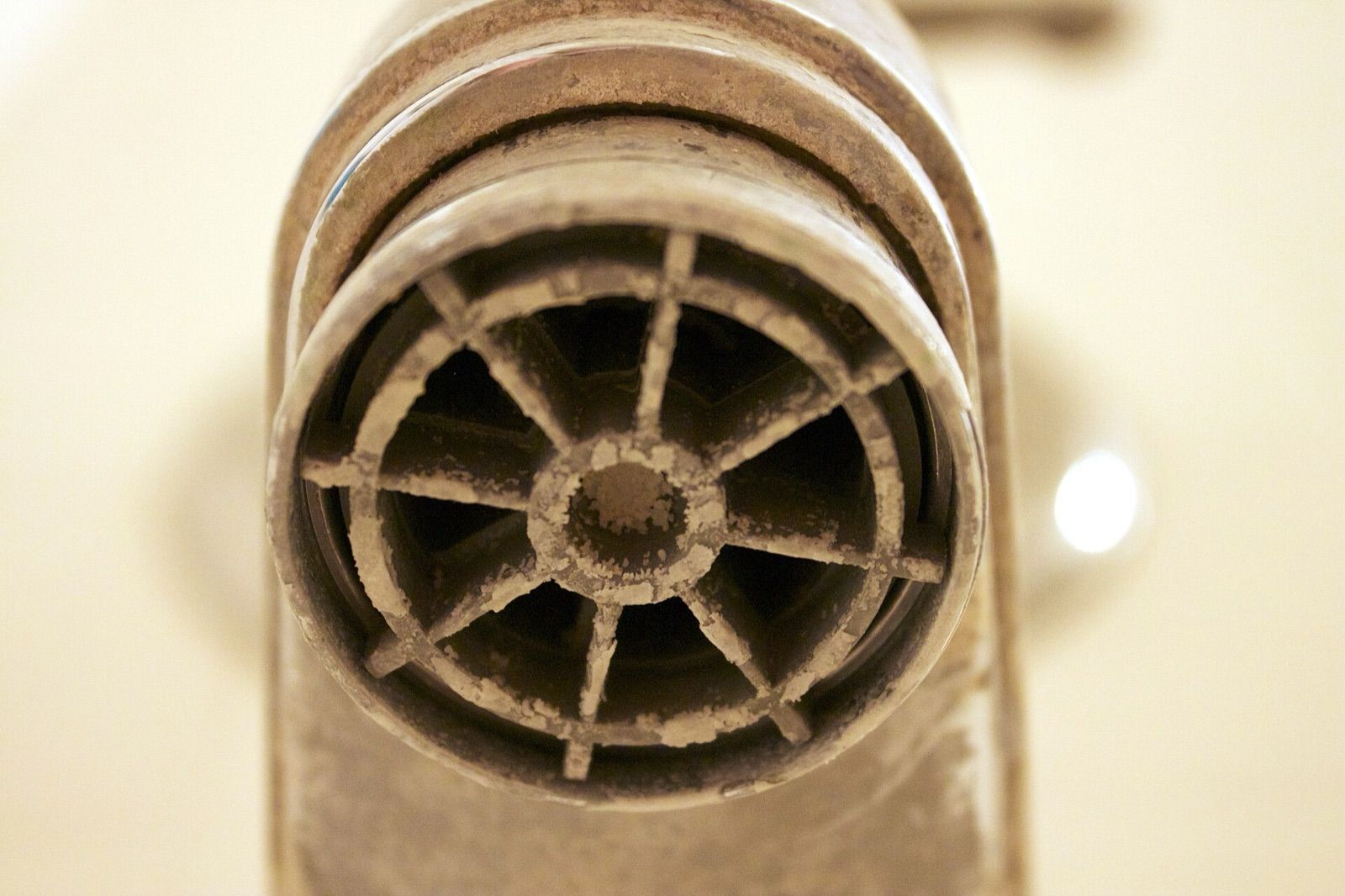
White crust on taps, cloudy glasses and a kettle full of scale point to hard water. A chlorine smell, sediment or an odd taste point to something else. Water softeners and whole-house filters are often sold side by side, but they solve different problems, and buying the wrong one is an expensive mistake. This guide explains what each does, how salt-free systems compare and how systems are sized.
Start with a water test
Before buying anything, find out what is actually in your water.
- On mains water: your water supplier usually publishes hardness and quality data; look for an annual water-quality report or a postcode lookup.
- On a private well: have the water tested by an accredited lab. Wells can carry hardness, iron, manganese, sulphur smells and bacteria, and each needs a different treatment.
Inexpensive hardness test strips are a useful check, but a lab test is better for anything health-related.
Understanding hardness
Hardness is mainly dissolved calcium and magnesium. It isn't a health hazard, but it forms limescale in pipes, water heaters, kettles and appliances, and it makes soap lather less easily.
You will see several units:
| Unit | Equivalent |
|---|---|
| mg/L (ppm) as calcium carbonate | Base unit |
| 1 grain per gallon (gpg) | about 17.1 mg/L |
| 1 German degree (°dH) | about 17.8 mg/L |
| 1 French degree (°f) | 10 mg/L |
A widely used classification (in mg/L as calcium carbonate): 0–60 soft, 61–120 moderately hard, 121–180 hard and over 180 very hard. Softening usually makes the most sense for hard and very hard water.
How a salt-based softener works
A conventional softener uses ion exchange. Water flows through a tank of resin beads that capture calcium and magnesium and release sodium (or potassium, if you use potassium chloride instead of salt).
When the resin is saturated, the softener regenerates: it flushes the beads with brine from a separate salt tank, then rinses the hardness minerals down the drain. Modern demand-initiated (metered) softeners regenerate based on how much water you have used, which saves salt and water compared with older timer-based models.
Benefits: it genuinely removes hardness, so you get no new scale, less detergent use and the "slippery" feel of soft water. It can also remove small amounts of iron.
Things to know:
- You'll need to top up salt periodically, and you need space and a drain for the regeneration water.
- Softened water contains a little extra sodium: roughly 8 mg per litre for every grain per gallon of hardness removed. Many households keep one unsoftened tap for drinking and cooking, which is commonly recommended for preparing baby formula.
- Some areas restrict salt-based softeners because of the brine they discharge. Check local rules first.
Salt-free "softeners" and conditioners
Systems sold as salt-free softeners are usually conditioners. The most common type uses a media, often described as template-assisted crystallisation, that converts some of the hardness into microscopic crystals that are less likely to stick to surfaces as scale.
- They don't remove calcium and magnesium, so the water still tests hard and won't feel slippery or improve lathering much.
- They need no salt, no drain and little maintenance.
- Their effectiveness at reducing scale varies with the product and water conditions, so look for independent test data.
Magnetic and electronic "descalers" that clip onto pipes are cheaper still, but the evidence for them is weaker and more mixed. If you want the benefits of soft water, a salt-based ion-exchange softener is the proven option.
What whole-house filters do
A whole-house (point-of-entry) filter treats all the water coming into the home. Depending on the cartridges or media, it can reduce:
- Sediment: sand, silt and rust, which protects fixtures and appliances.
- Chlorine taste and odour, using activated carbon. If your supplier uses chloramine, you need catalytic carbon designed for it.
- Some organic chemicals, depending on the carbon and its certification.
- Iron, manganese and sulphur smells, using specialised media, mainly on well water.
Standard carbon and sediment filters don't soften water. For microbial concerns on a private well, a separate disinfection system, such as ultraviolet (UV), is usually needed.
Which one do you need?
| Your problem | Likely solution |
|---|---|
| Limescale, spotty glasses, poor lather | Water softener |
| Chlorine taste or smell throughout the house | Whole-house carbon filter |
| Sand, silt or cloudy water | Sediment filter |
| Hardness plus chlorine or sediment | Filter and softener together |
| Specific contaminants in drinking water (lead, nitrates, PFAS) | Point-of-use filter such as reverse osmosis |
When a filter and softener are combined, the sediment and carbon stages usually go first, which protects the softener resin. For drinking water, a kitchen reverse osmosis system is often a better answer than a whole-house system.
Sizing a softener or filter
Softeners are rated in grains of capacity. To size one, estimate how much hardness you remove each day:
Daily grains = number of people × water use per person per day (US gallons) × hardness (gpg). Many sizing guides assume about 60 to 80 US gallons (around 230 to 300 litres) per person per day. Multiply by about seven to get the capacity used between weekly regenerations.
For example, four people using 75 gallons each at 15 gpg need about 4,500 grains per day, or around 31,500 grains a week. Two caveats:
- A softener's headline capacity is often measured at a high salt setting. At more salt-efficient settings, the usable capacity is lower, so it often makes sense to size up.
- If you have iron in your water, installers usually add an allowance for it.
For both softeners and filters, check the service flow rate (in litres per minute or GPM) so pressure doesn't drop when several taps and the shower run together, and match the connection size (commonly ¾ in or 1 in) to your plumbing. For filters, look at cartridge life in litres or gallons, not just months.
Certifications and running costs
Look for independent certification. For softeners, NSF/ANSI 44 covers residential cation-exchange softeners. For filters, NSF/ANSI 42 covers aesthetic effects such as chlorine taste and odour, and NSF/ANSI 53 covers health-related contaminants. Check the certifier's listing, not just the box.
Budget for ongoing costs: salt for a softener, cartridge replacements for filters, and occasional servicing. Installation usually involves cutting into the main water line near where it enters the home, and adding a bypass valve, so a plumber is often a good investment.
The short version
- Test your water, or read your supplier's report.
- Hardness problems need a softener; taste, odour and sediment problems need a filter.
- Salt-free conditioners may reduce scale but don't remove hardness.
- Size a softener from people × water use × hardness, and check the flow rate.
- Keep an unsoftened tap for drinking, and check local rules on brine discharge.
- Look for NSF/ANSI 44, 42 or 53 certification as appropriate.
Bloiq is reader-supported. Some links may earn us a commission; it never affects what we write. How we make money.
Cover photo: Bbypnda, CC BY-SA 3.0, via Wikimedia Commons