Reverse osmosis water filters: how they work and how to choose one
Stages, GPD, waste ratio and certifications decoded, so you can tell a genuinely good under-sink RO system from a well-marketed one.
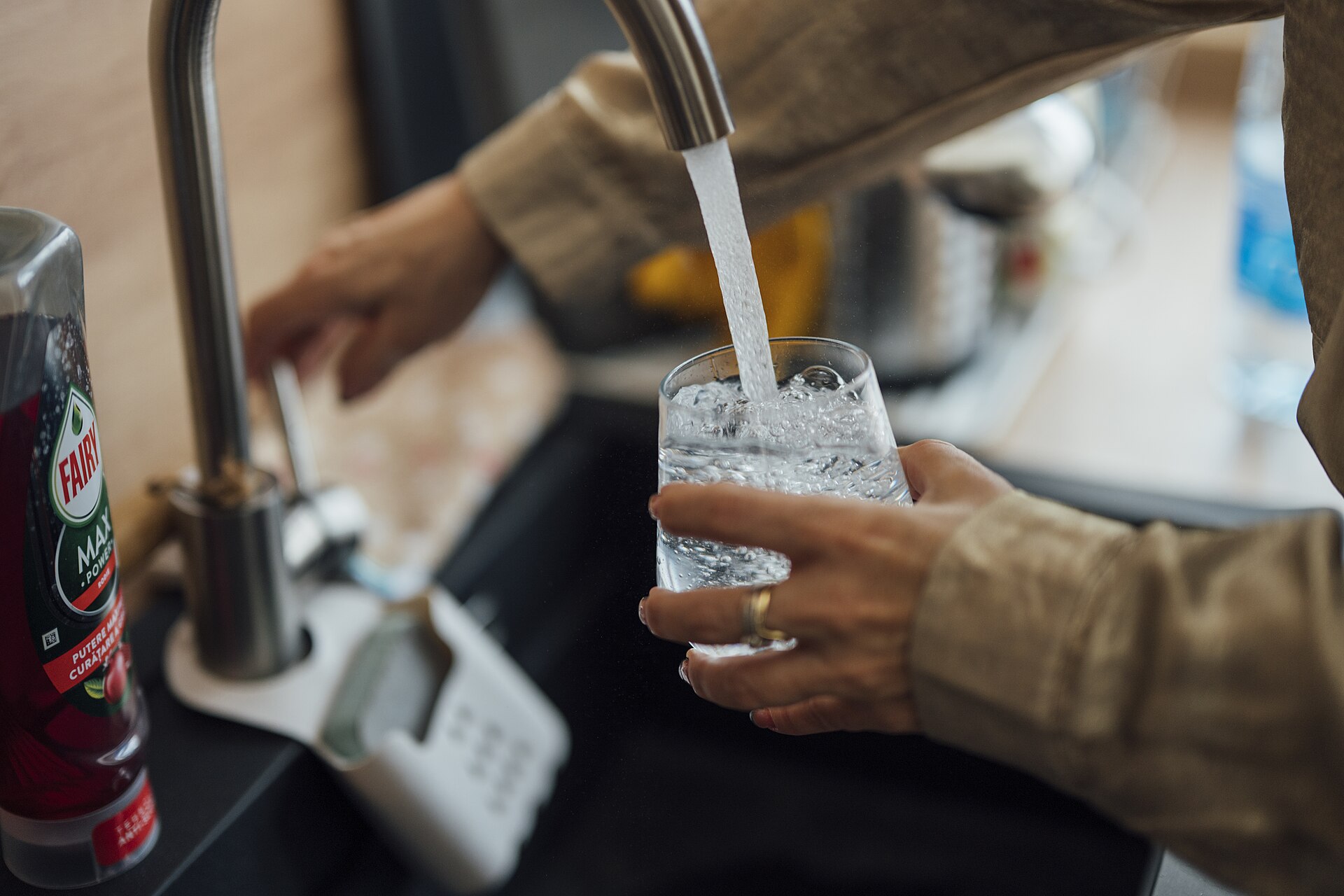
Reverse osmosis (RO) is the most thorough filtration most homes can install under a kitchen sink. It removes far more than a pitcher or fridge filter, from dissolved salts to many metals. It's also a category full of confusing numbers: stages, GPD, TDS, pure-to-drain ratios and a list of certification codes. This guide explains what each one means and which ones should decide your purchase.
How reverse osmosis works
At the heart of every RO system is a semi-permeable membrane: a sheet with pores so fine that water molecules pass through while most dissolved substances don't. Household water pressure pushes water through the membrane. What doesn't pass through is rinsed away down the drain.
Around the membrane sit other filters, usually:
- a sediment pre-filter that catches sand and rust, protecting the membrane;
- one or two carbon pre-filters that remove chlorine (which would damage the membrane) and improve taste and odour;
- the RO membrane itself;
- often a carbon post-filter for final polishing, and sometimes a remineralisation stage.
"Seven stages" usually means the same core idea with extra cartridges. More stages is not automatically better; what matters is what each stage is certified to remove.
What RO removes, and what it doesn't need to
A well-built RO system significantly reduces dissolved solids, lead, arsenic, nitrates and nitrites, fluoride, many PFAS compounds, and a wide range of other dissolved contaminants. It also removes minerals like calcium and magnesium, which is why RO water tastes "flat" to some people.
RO is not a substitute for disinfection if your water is microbiologically unsafe (for example, an untested private well). Test first, and treat that problem with a system designed for it.
Certifications: the most important thing on the box
Independent certification is the best evidence that a filter does what it claims. Look for NSF/ANSI standards (tested by NSF, IAPMO, WQA or another accredited lab):
- NSF/ANSI 58: the standard specifically for reverse osmosis systems, including total dissolved solids (TDS) reduction and structural integrity.
- NSF/ANSI 42: aesthetic effects such as chlorine taste and odour.
- NSF/ANSI 53: health-related contaminants such as lead.
- NSF/ANSI 401: "emerging" contaminants such as certain pharmaceuticals and pesticides.
- NSF/ANSI 372: confirms the materials are low-lead.
Check the certifier's online listing, not just a logo. A system can be certified for one standard and not another, and "tested to" is weaker than "certified to".
GPD: how fast it makes water
GPD (gallons per day) is the rated production of purified water. Traditional tank systems are often 50–100 GPD; modern tankless systems range from about 400 to over 1,000 GPD.
The GPD figure is measured under standard test conditions. Real output depends on your water temperature and pressure: cold winter water can cut production noticeably.
Tank or tankless?
Tank systems fill a small pressurised storage tank slowly, then deliver water quickly from the tank. They're usually cheaper and work at modest water pressure, but take up much of the cabinet and the flow can slow as the tank empties.
Tankless systems use a built-in pump to push water through a high-output membrane on demand. They're compact, deliver fresh water directly and often have smart filter-life indicators, but they need an electrical outlet under the sink and cost more.
Waste ratio: how much water goes down the drain
Every RO system sends some water to the drain to carry away what the membrane rejects. This is quoted as a pure-to-drain ratio:
- older designs were often around 1:3 or 1:4 (four litres wasted for every one produced);
- many modern systems achieve 1:1, 2:1 or better.
A better ratio saves water and, in areas with metered water, money. Note that the ratio also depends on your feed-water pressure and quality.
Water pressure and installation
Most RO systems need roughly 40–80 psi of incoming water pressure. Below that, tank systems fill slowly; a booster pump or a tankless model helps. Installation typically involves a cold-water feed valve, a drain saddle on the sink drainpipe and, for most models, a dedicated faucet, which may mean drilling your countertop or using an existing sprayer hole. It's a manageable DIY job for many people, but read the manual first.
Remineralisation: worth it?
Some people prefer the taste of RO water with a little calcium and magnesium added back, and some systems include a remineralisation cartridge that also raises the pH slightly. It's largely a matter of taste. If you already get those minerals from food, it isn't a health necessity, but many households find it makes the water more pleasant to drink and cook with.
Running costs
Budget for replacement filters. Pre- and post-filters typically need changing every 6 to 12 months and membranes every 2 to 3 years, depending on usage and water quality. Before buying, check the price and availability of genuine replacement cartridges; a cheap system with expensive or hard-to-find filters is a poor deal.
Checklist before you buy
- Test your water, or read your utility's annual water-quality report.
- Look for NSF/ANSI 58 certification, plus 53 or 401 if you're concerned about specific contaminants.
- Choose tank (cheaper, no power needed) or tankless (faster, compact, needs an outlet).
- Compare the pure-to-drain ratio and realistic GPD.
- Check your water pressure and cabinet space.
- Price the replacement filters over three years, not just the system.
Get those right and an RO system is one of the most effective upgrades a kitchen can have.
Bloiq is reader-supported. Some links may earn us a commission; it never affects what we write. How we make money.
Cover photo: Shixart1985, CC BY 2.0, via Wikimedia Commons