Spark plugs explained: copper, platinum, iridium, heat range and gap
How spark plugs work, how copper, platinum and iridium plugs differ, what heat range and gap mean, and how to tell when your plugs are due for replacement.
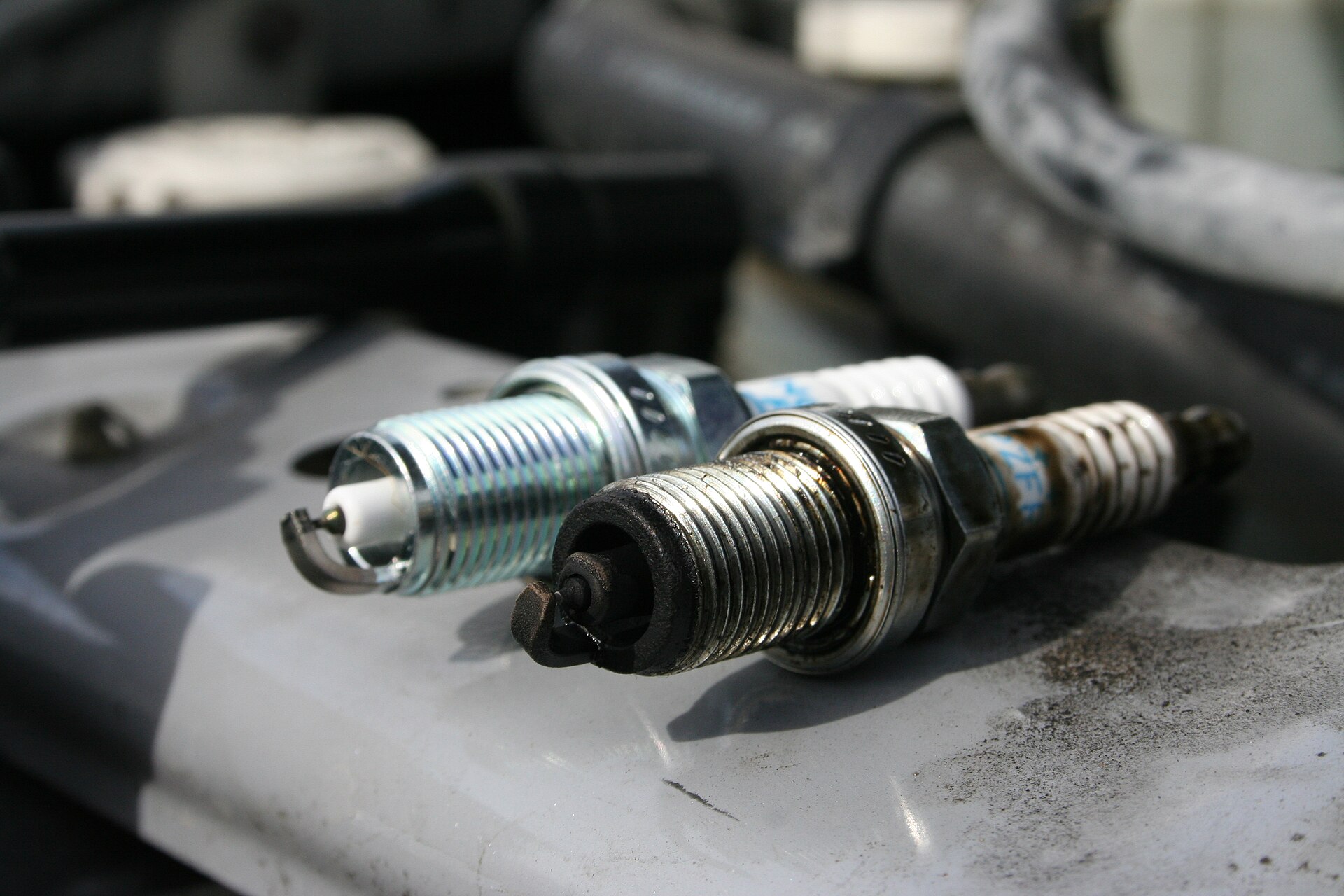
A spark plug is a small, cheap-looking part with a demanding job: it fires thousands of times a minute, in a chamber that swings between cold fuel mist and burning gas. When plugs wear out, engines misfire, start badly and use more fuel. Replacement is routine, but the labels on the box (iridium, heat range 6, pre-gapped to 0.8 mm) can be confusing. This guide explains what they mean and how to choose the right plug for your engine.
What a spark plug does
In a petrol engine, the spark plug ignites the compressed mixture of air and fuel at exactly the right moment. The ignition coil sends a high-voltage pulse down the plug's centre electrode, and the spark jumps the small gap to the ground electrode, which is attached to the plug's metal shell.
The main parts are:
- Terminal: where the coil or plug lead connects.
- Ceramic insulator: the white body, which keeps the high voltage from leaking to the engine and controls how much heat the tip holds.
- Metal shell and threads: screw into the cylinder head and carry heat away into it.
- Centre and ground electrodes: the spark jumps between them. Their material decides how long the plug lasts.
Diesel engines don't use spark plugs. They ignite fuel by compression and use glow plugs to help cold starts, which are a different part entirely.
Copper, platinum and iridium
The material names on the box describe the electrode tips, not the whole plug. Nearly all plugs have a copper core for conducting heat; the difference is what sits at the firing end.
| Type | Centre electrode | Typical life | Notes |
|---|---|---|---|
| Copper core (nickel alloy tip) | Fairly thick nickel alloy | Shortest | Good conductor, cheapest; common in older cars, small engines and some modified engines |
| Single platinum | Platinum disc on the centre electrode | Long | Wears more slowly than nickel |
| Double platinum | Platinum on both electrodes | Long | Often specified for "waste spark" ignition, where plugs fire in both directions |
| Iridium | Very fine iridium tip | Longest | Hard and heat-resistant; a fine tip needs less voltage to fire; standard in many modern engines |
Plugs with ruthenium and other precious-metal tips also exist and sit at the long-life end.
The practical rule is simple: fit the type your engine was designed for, or the upgrade its maker approves. An engine that left the factory with iridium plugs and a long service interval should get iridium again. Fitting copper plugs would mean changing them far more often. Putting iridium plugs in an older engine designed for copper is usually fine, but it won't add power. It mainly stretches the interval.
Heat range: hot and cold plugs
A plug's heat range describes how quickly it moves heat from its tip into the cylinder head.
- A hotter plug has a longer insulator nose, so heat has further to travel and the tip stays hotter.
- A colder plug has a shorter nose and sheds heat faster.
The tip needs to run hot enough to burn off carbon deposits (it self-cleans), but not so hot that it glows and ignites the mixture before the spark (pre-ignition), which can badly damage pistons.
Rule of thumb: use the heat range your manual or the plug maker's catalogue lists for your engine. Colder plugs are for engines that have been tuned, turbocharged or raced; hotter plugs are rarely the right answer on a modern car.
Heat-range numbers aren't universal. In some makers' systems a higher number means a colder plug; in others it means a hotter one. Never compare numbers across brands. Use a cross-reference chart or the catalogue lookup for your vehicle.
The gap
The gap is the distance between the centre and ground electrodes. Car plugs typically fall somewhere around 0.7–1.1 mm (roughly 0.028–0.044 in), but the correct figure is specific to the engine and is in the manual or on an underbonnet label in some cars.
- Too small a gap gives a weak spark that can struggle to light lean mixtures.
- Too large a gap needs more voltage than the coil may deliver, causing misfires, especially under load.
Many plugs come pre-gapped for their intended engine, but a plug that fits several engines may need adjusting, and plugs can get knocked in transit. Check before fitting:
- Use a wire-type or feeler gauge, not a coin-style ramp gauge, on precious-metal plugs.
- Adjust only by gently bending the ground electrode. Never lever against the fine centre tip of an iridium or platinum plug; it breaks easily.
- Some multi-electrode plugs can't be gapped at all and are set at the factory.
Thread, reach and seat
Plugs also differ physically, and a wrong fit can damage the engine:
- Thread diameter, most commonly 14 mm on cars, with 12 mm and 10 mm on many newer engines and motorcycles.
- Reach, the length of the threaded part. Too long and it can hit a valve or piston; too short and deposits build up in the exposed threads.
- Seat type: flat seats with a crush washer, or tapered seats with no washer.
- Hex size, which decides the socket you need.
A parts catalogue lookup by vehicle, or the part number from the old plug, takes care of all of these at once.
When to replace spark plugs
Your owner's manual sets the interval, and it varies enormously. Older engines with copper plugs might call for a change every few tens of thousands of kilometres, while many modern engines with iridium plugs go 100,000 km or more, and some well beyond that. Turbocharged and direct-injection engines can be harder on plugs, so follow any shorter schedule your manual gives for severe use.
Signs that plugs (or the ignition parts that feed them) may need attention:
- Misfires: a stumble or shudder, especially under acceleration, often with a flashing or steady engine warning light. An OBD2 scanner will show misfire codes and usually which cylinder.
- Rough idle or vibration at a standstill.
- Hard starting, particularly in cold weather.
- Higher fuel consumption or noticeably weaker acceleration.
These symptoms can also come from a failing coil, a damaged plug lead or boot, a vacuum leak or a fuel problem, so a misfire isn't proof the plug is at fault. A flashing engine warning light usually means a serious misfire: reduce speed and get the car checked soon, because unburnt fuel can overheat the catalytic converter.
Reading an old plug
The tip of a used plug gives clues about how the engine is running:
- Light tan or grey deposits: normal.
- Dry black soot: running rich, lots of short trips, or a weak spark.
- Wet, oily deposits: oil getting into the cylinder, for example past worn rings or valve seals.
- White, glazed or blistered insulator, or melted electrodes: overheating, possibly the wrong heat range or a fault that needs investigating.
- Worn, rounded electrodes: simply old age.
If one plug looks very different from the others, that cylinder deserves a closer look.
Changing plugs yourself
On many four-cylinder engines this is a straightforward job; on some V6 and transverse engines the rear plugs sit under the intake manifold and it becomes a garage job.
- Work on a cool engine. Plug threads in aluminium cylinder heads are easily damaged when hot.
- Blow or vacuum debris away from the plug wells before removing plugs, so nothing falls into the cylinder.
- Do one cylinder at a time, so coils and leads go back in the right order.
- Start the new plug by hand to avoid cross-threading, then tighten to the specified torque with a torque wrench, or follow the maker's angle method for new gasket-seat plugs.
- Don't add anti-seize unless the plug or vehicle maker recommends it. Many plugs have plated threads, and lubricant changes the effective torque.
- Inspect coil boots and leads for cracks or tracking marks while you're there.
The short version
- Fit the plug type (copper, platinum or iridium) your engine specifies, or an approved upgrade.
- Match the heat range from the catalogue, never by comparing numbers across brands.
- Check the gap with a wire gauge and adjust only the ground electrode.
- Replace at the interval in your manual, sooner if you see misfires or rough running.
- Fit on a cool engine, start threads by hand, and tighten to the specified torque.
For more on keeping an engine healthy, see our guides to motor oil, engine coolant and car batteries.
Bloiq is reader-supported. Some links may earn us a commission; it never affects what we write. How we make money.
Cover photo: Aidan Wojtas, CC BY-SA 2.0, via Wikimedia Commons