Motor oil explained: viscosity grades, synthetics and specifications
What 5W-30 really means, how synthetic and conventional oils differ, how to read API, ILSAC and ACEA ratings and approvals, and why your manual sets the interval.
Choosing engine oil can feel like reading a foreign language: 0W-20, 5W-30, full synthetic, API SP, ACEA C3 and a string of carmaker approval codes. The good news is that your owner's manual already tells you what your engine needs, and the labels on the bottle let you confirm a match. This guide explains what those labels mean, so you can buy the right oil with confidence.
What oil does
Engine oil keeps metal parts from touching, carries heat away, holds dirt and combustion by-products in suspension so the filter can catch them, and protects against corrosion. Modern oils also contain additive packages that clean, resist oxidation and reduce wear. The oil wears out over time and mileage, which is why it needs changing.
Viscosity grades: what 5W-30 means
Viscosity is how easily a fluid flows. Grades follow the SAE J300 standard.
A multigrade oil such as 5W-30 has two numbers:
- The first number, with the W (for winter), describes how the oil behaves when cold: how easily the engine can crank and how quickly oil reaches critical parts at start-up. Lower is better in the cold: 0W flows more readily than 5W, which flows more readily than 10W.
- The second number describes the oil's viscosity at normal operating temperature. A 30 is thicker when hot than a 20.
So 0W-20 and 5W-20 have similar viscosity when hot, but the 0W oil flows better on a frosty morning. Many modern engines are designed for low-viscosity oils such as 0W-20 and 0W-16, which help fuel economy; some newer engines specify even thinner grades.
Monograde oils such as SAE 30 have a single number. They're still used in some small engines, such as lawnmowers, and some classic applications.
Rule of thumb: use the grade your manual specifies. If it lists more than one for different temperatures, choose by the coldest conditions you expect.
Using a thicker oil than specified won't necessarily add protection. Modern engines with tight clearances, variable valve timing and hydraulic components are designed around a particular viscosity.
Synthetic, conventional and blends
- Conventional (mineral) oils are refined from crude oil. They're adequate where the manual allows them, often in older engines with less demanding specifications.
- Full synthetic oils use more highly processed or chemically built base oils. They generally flow better when cold, resist breaking down at high temperatures, evaporate less and last longer. Many modern engines, especially turbocharged ones and those specifying 0W grades, effectively require them.
- Synthetic blends mix the two and sit in between.
What counts as "synthetic" on a label isn't tightly defined; some are made from heavily refined mineral stocks and others from fully synthetic chemistry. That's why the specification on the bottle matters more than the word "synthetic".
You can switch between conventional and synthetic oils in an engine that allows both. The old worry that synthetic oil causes leaks is largely outdated, though an old engine with already-worn seals may reveal a leak that thicker, dirtier oil was masking.
Specifications and approvals
The specifications on a bottle show which industry tests the oil has passed.
| Label | Who sets it | What to know |
|---|---|---|
| API service category (e.g. SN, SP) | American Petroleum Institute | "S" categories are for petrol engines; later letters are newer. "C" categories (e.g. CK-4) are for heavy-duty diesels |
| ILSAC (the "starburst" symbol) | International Lubricant Standardization and Approval Committee | Adds fuel-economy requirements for common petrol-engine grades |
| ACEA sequences (e.g. A3/B4, C3) | European carmakers' association | "C" oils are lower in certain additives to protect exhaust after-treatment such as particulate filters |
| Carmaker approvals (e.g. VW 504 00, MB 229.51, BMW Longlife-04, GM dexos) | Individual manufacturers | Required by many European and some North American engines; the approval should be printed on the bottle |
Newer categories address problems such as low-speed pre-ignition in small turbocharged petrol engines, and protection of timing chains. If your manual names a specific carmaker approval, choose an oil that lists it; a generic claim of "suitable for" is weaker than a listed approval. Keeping receipts that show the correct oil was used can matter if you ever make a warranty claim.
Some engines have their own needs:
- Diesels with particulate filters usually need a low-ash ("low SAPS") oil, often an ACEA C category.
- Motorcycles with wet clutches generally need oils rated to JASO MA or MA2; some energy-conserving car oils can cause clutch slip.
- High-performance and older classic engines may have specific requirements; follow the maker's or a specialist's advice.
Change intervals: follow your manual
The old "every 5,000 km" or "every 3,000 miles" rule doesn't apply to most modern cars. Intervals vary widely, commonly somewhere around 8,000–16,000 km (5,000–10,000 miles) and longer for some European long-life schedules. Your owner's manual or the car's oil-life monitor is the authority.
Two points often overlooked:
- Time limits. Most manuals also give a maximum time between changes, often a year, even if you drive little. Oil degrades with age, moisture and short trips.
- Severe service. Many manuals set shorter intervals for frequent short trips, extreme cold or heat, stop-and-go traffic, towing, dusty roads or lots of idling. Many ordinary drivers fall into these categories without realising.
Replace the oil filter as the manual specifies, usually at every oil change.
Checking the level
Check the level regularly and before long journeys:
- Park on level ground and switch off the engine. Wait a few minutes, or as the manual says, for oil to drain back.
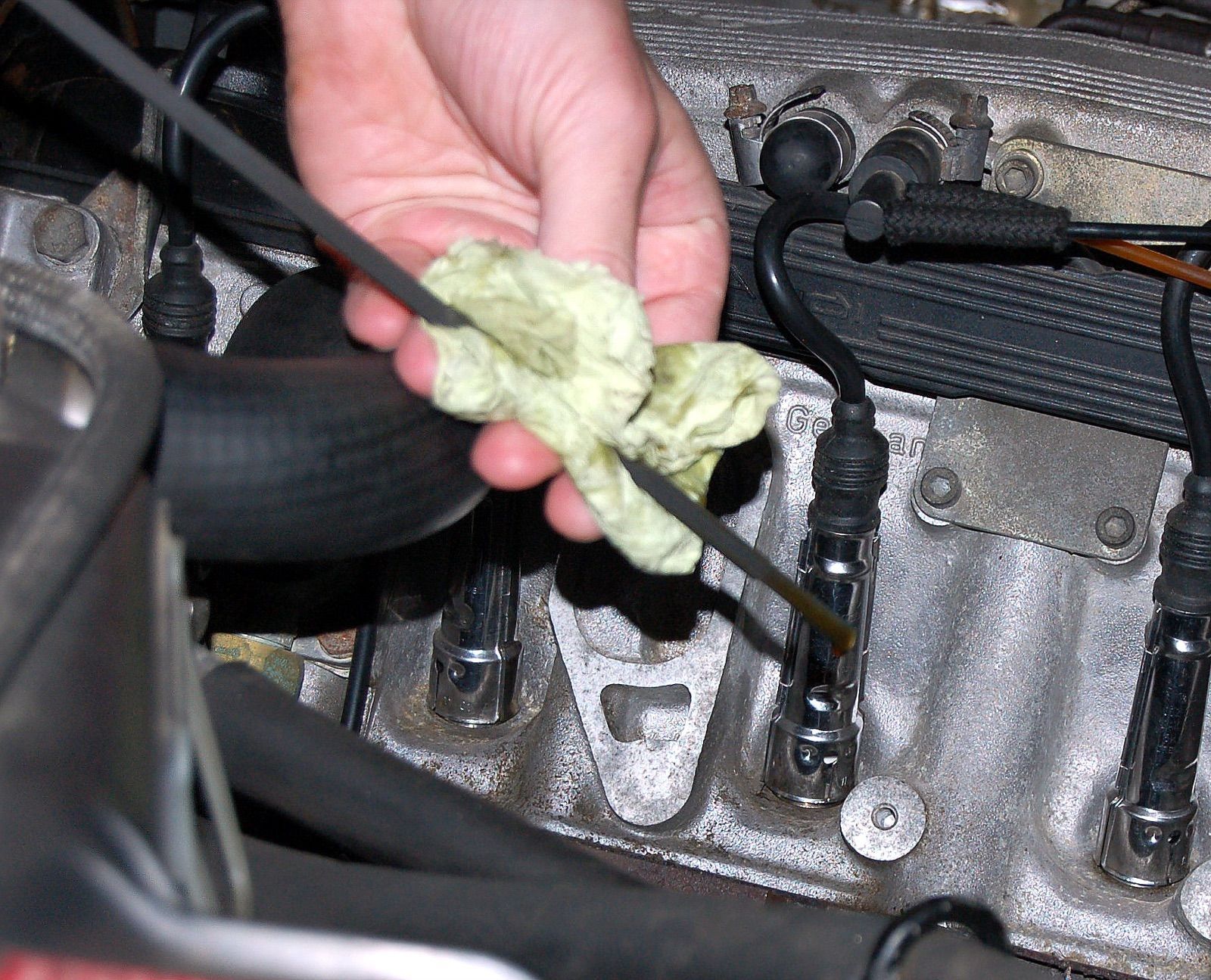
- Pull the dipstick, wipe it, reinsert it fully, then pull it again and read the level between the marks.
- Top up in small amounts with the correct oil, rechecking as you go. Don't overfill.
Some cars have no dipstick and show the oil level on the dashboard instead; the manual explains the procedure. If you're topping up often, or the oil looks milky or smells of fuel, have the engine checked.
Doing it yourself safely
- Hot oil and exhaust parts can cause burns; let the engine cool enough to work safely.
- Never work under a car supported only by a jack. Use axle stands or ramps on firm, level ground.
- Wear gloves and eye protection.
- Take used oil and filters to a recycling or collection point. Never pour oil down a drain or onto the ground.
The short version
- Use the viscosity grade in your manual; the W number is cold performance.
- Match the specification, and any carmaker approval, printed in the manual.
- Synthetic is required by many modern engines and is fine in most others.
- Change oil by distance or time, whichever comes first, and use the severe service schedule if it applies.
- Check the level regularly and recycle used oil.
For more on keeping a car in good health, see our guides to OBD2 scanners and car battery chargers and maintainers.
Bloiq is reader-supported. Some links may earn us a commission; it never affects what we write. How we make money.
Cover photo: Milchstraßenräuber, CC0, via Wikimedia Commons