Engine coolant explained: IAT, OAT and hybrid types, mixing and testing
What engine coolant does, how IAT, OAT and hybrid formulas differ, why colour is a poor guide, how to mix and test it, and what sets the change interval.
Coolant shelves are a wall of colours, acronyms and "universal" claims, and topping up with the wrong bottle can quietly shorten the life of a water pump or radiator. The good news is that your owner's manual names the specification your engine needs, and once you understand the main families of coolant, matching it is straightforward. This guide explains what coolant does, how the types differ, and how to mix, test and maintain it.
What coolant does
Engine coolant (often called antifreeze) circulates through the engine block, cylinder head, radiator and heater core. It has four jobs:
- Carry heat away from the engine to the radiator, and to the heater for the cabin.
- Lower the freezing point, so the water in the system doesn't freeze, expand and crack the block or radiator in winter.
- Raise the boiling point, working with the pressurised cap so the system can run hotter than 100 °C without boiling.
- Prevent corrosion, scale and cavitation on the many metals and seals inside the system, including aluminium, cast iron, copper, brass and solder.
The first three come mostly from the glycol and water. The fourth comes from the inhibitor package, and that is what the IAT, OAT and hybrid labels describe.
The base: glycol and water
Most coolants are based on ethylene glycol. Some use propylene glycol, which is less toxic but gives slightly different freeze and boil figures. Both are mixed with water, because water transfers heat better than glycol alone.
The usual mix is 50/50, which for ethylene glycol typically protects to around −35 °C to −37 °C. More glycol helps only up to a point: beyond roughly 60–70% the freeze protection gets worse again and heat transfer suffers. Pure concentrate should never go into the system on its own.
Coolant is sold two ways:
- Concentrate: you dilute it yourself, which lets you adjust strength for a very cold climate. Use distilled or deionised water; tap water adds minerals that can form scale.
- Pre-mixed (50/50 or "ready to use"): more convenient for top-ups and the safest choice if you don't want to measure.
The inhibitor families: IAT, OAT and hybrids
IAT (inorganic additive technology) is the traditional type, usually based on silicates and phosphates. It forms a protective layer quickly but the inhibitors are used up relatively fast, so change intervals were traditionally short. It is mainly found in older vehicles.
OAT (organic acid technology) uses organic acids that protect metal surfaces where corrosion starts, rather than coating everything. The inhibitors deplete slowly, which is why OAT coolants are often sold as "long-life" or "extended-life".
Hybrids combine an organic acid base with a small amount of inorganic additive:
- HOAT: OAT plus silicate or nitrite, used by a number of North American and European makers.
- Si-OAT: silicated OAT, common in many European cars.
- P-HOAT: phosphated hybrid OAT, common in many Asian cars.
Heavy-duty diesel engines have their own specifications, and some need supplemental additives. Follow the engine maker's requirements there.
| Type | Inhibitors | Typical use | Change interval (general) |
|---|---|---|---|
| IAT | Silicates, phosphates | Older vehicles | Shorter |
| OAT | Organic acids | Many modern vehicles | Long-life |
| HOAT / Si-OAT / P-HOAT | Organic acids plus silicate, phosphate or nitrite | Many modern European, North American and Asian vehicles | Long-life |
Why colour is a poor guide
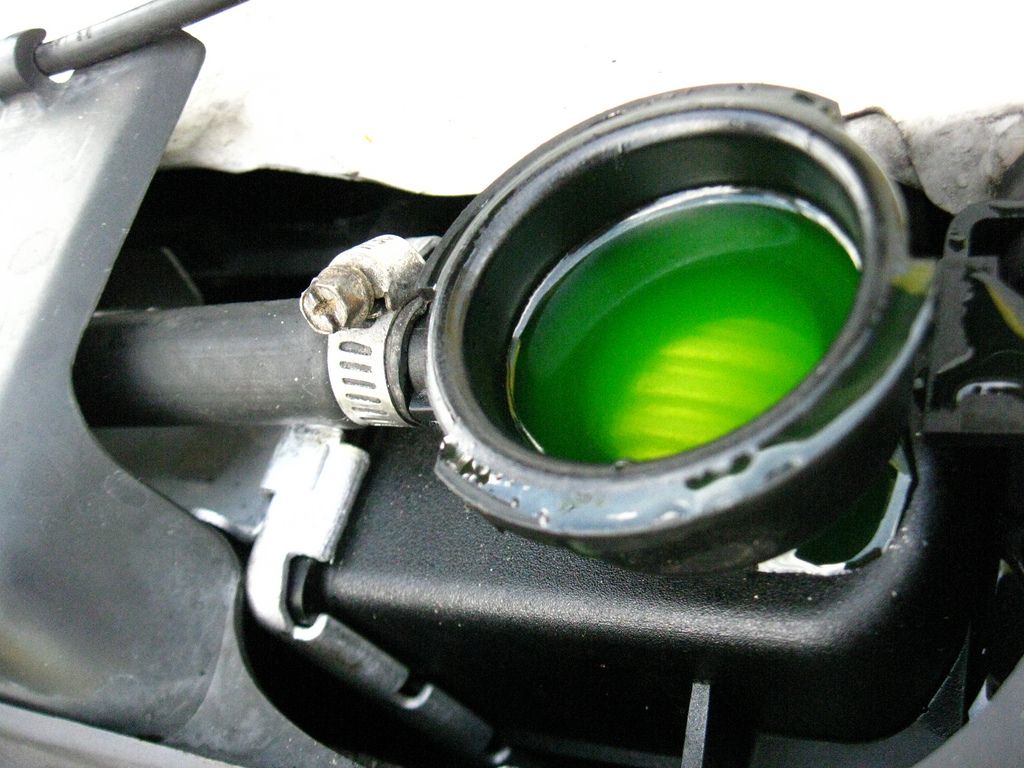
Coolant is dyed so you can see it and spot leaks, but there is no industry standard linking colour to chemistry. Green, orange, pink, red, blue, purple and yellow coolants exist across several families, and the same colour can mean different formulas from different makers.
Choose by specification instead: the manual will name a standard or the carmaker's own approval code, and the bottle should list the approvals it meets. If you can't find the original spec, a dealer parts counter can tell you from the vehicle identification number.
Mixing types and "universal" coolants
Topping up with a different coolant isn't usually an emergency, but it isn't ideal:
- Mixing dilutes the inhibitor package, which can shorten the life of the long-life product you started with.
- Some combinations can in rare cases form gel or sludge, which restricts flow.
- Universal or "all makes" coolants are designed to be compatible with most types and are a reasonable stopgap, but the manufacturer-specified product is still the best long-term choice.
Rule of thumb: in an emergency, plain distilled water is better than running low. Afterwards, check the freeze protection and correct the mix or change the coolant.
How to check the level safely
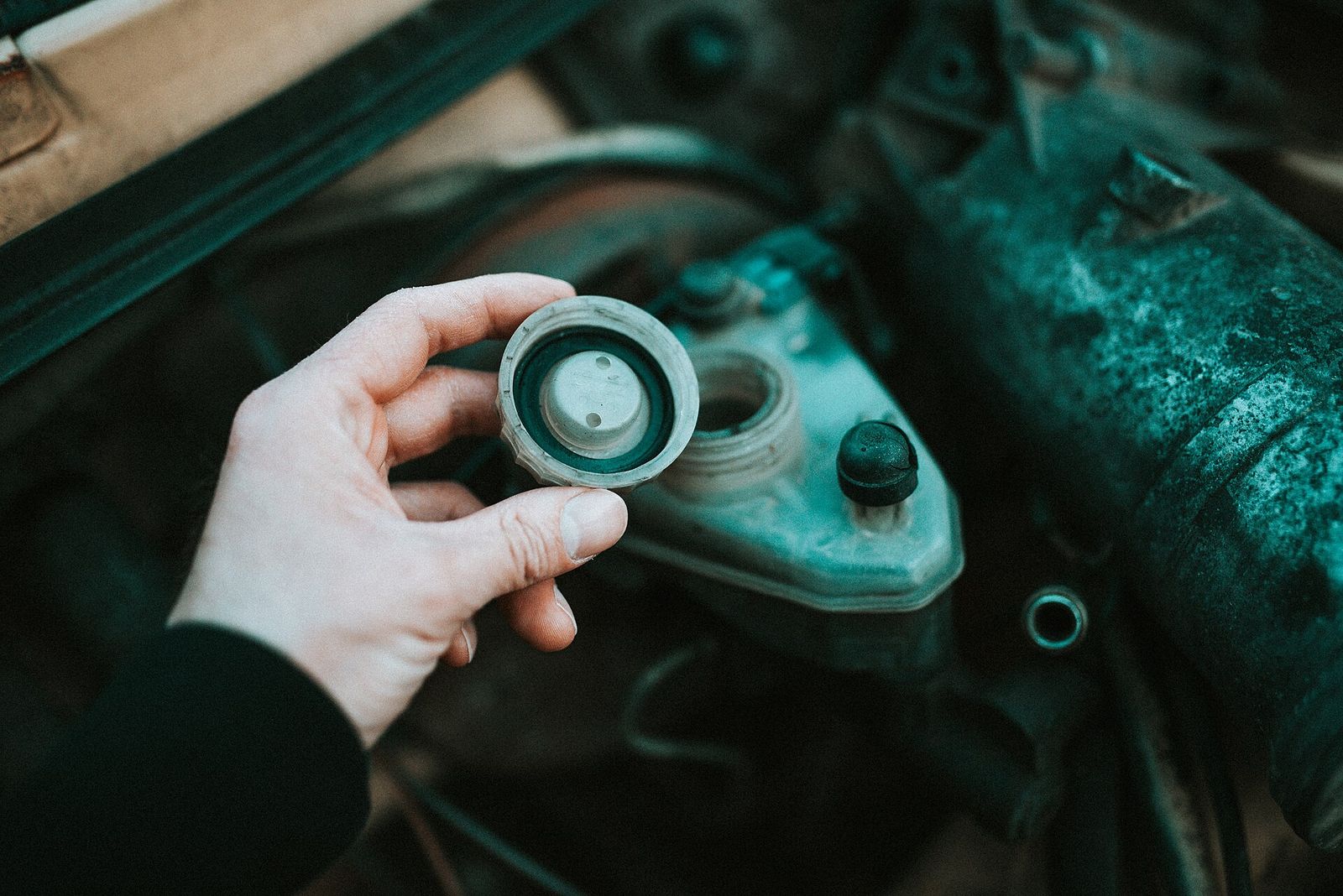
- Only open the system when the engine is cold. A hot cooling system is under pressure, and opening the cap can release scalding coolant.
- Check the level in the expansion tank (the translucent reservoir), which has MIN and MAX marks. Top up to the right mark with the specified coolant.
- If you're topping up regularly, there's a leak or an internal problem. Get it diagnosed rather than refilling indefinitely.
Testing strength and condition
Testing tells you whether the coolant is still protecting against freezing and corrosion:
- Refractometer: a few drops on the prism give an accurate reading of freeze protection, and many have scales for both ethylene and propylene glycol. It is the tool most garages use.
- Hydrometer: the float or ball type is inexpensive but less accurate, temperature-sensitive and usually calibrated only for ethylene glycol.
- Test strips: show freeze point and often pH or inhibitor reserve, which helps tell whether the corrosion protection is spent even if the freeze point is fine.
Also look at it. Coolant should be clear and bright. Brown, rusty or oily coolant, or a film on top, suggests corrosion, contamination or a head gasket or oil cooler problem, and needs a proper diagnosis.
When to change coolant
There is no single interval. It depends on the coolant type and the carmaker. Older IAT coolants were typically changed every couple of years, while modern long-life coolants are often specified for many years or a high distance. Your owner's manual or service schedule has the right figure, often with a shorter interval under "severe service".
Changing coolant usually means draining, sometimes flushing, refilling with the right mix and bleeding air from the system. Trapped air can cause overheating and poor cabin heat. Some cars have bleed screws or need a vacuum filler, so check the service procedure before you start.
Hybrids and electric vehicles often have separate cooling loops for the battery, motor and power electronics. Some require a specific, low-conductivity coolant, and servicing them may involve high-voltage components. Follow the manufacturer's procedure or leave this to a qualified technician. If you're planning a long electric trip, our guide to EV road-trip charging covers the rest.
Safety and disposal
- Ethylene glycol is poisonous to people and animals, and it tastes sweet. Wipe up spills at once, keep containers sealed and out of reach of children and pets.
- Wear gloves and eye protection when draining or mixing.
- Never pour old coolant down drains or onto the ground. Most municipal hazardous-waste depots and many garages accept it; check your local rules.
The short version
- Use the coolant specification in your owner's manual, not the colour.
- A 50/50 mix with distilled water suits most climates; pre-mix is the easy option.
- Check the level in the expansion tank, cold, between MIN and MAX.
- Test freeze protection with a refractometer or strips before winter.
- Change it at the interval in your service schedule, and bleed the air out afterwards.
- Treat old coolant as hazardous waste. For a broader pre-winter check, see our winter car kit checklist and, if you're buying used, the used car inspection checklist.
Bloiq is reader-supported. Some links may earn us a commission; it never affects what we write. How we make money.
Cover photo: EvelynGiggles, CC BY 2.0, via Wikimedia Commons