Roof racks, cargo boxes and bike racks: load limits, fit and drag
How roof rack systems fit different roofs, what dynamic load limits mean, roof versus hitch bike racks, and the real costs in fuel economy, noise and clearance.
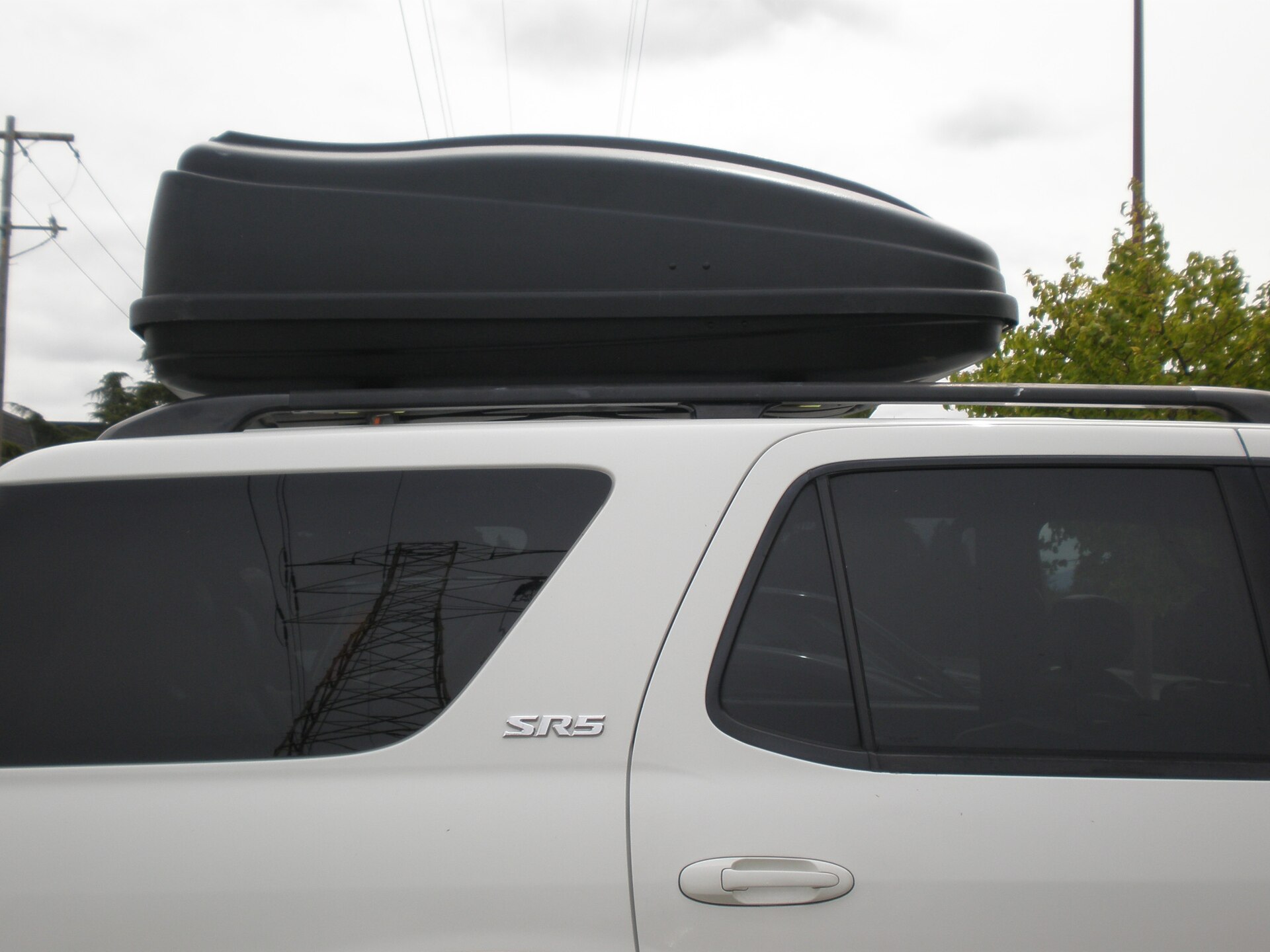
Carrying gear outside the car frees up the cabin for passengers and makes camping trips, ski weekends and cycling holidays possible without a bigger vehicle. But every carrier adds weight, height and drag, and the wrong fit or an overloaded roof can be dangerous. This guide explains how rack systems fit, what load ratings mean and how to choose between roof and rear-mounted carriers.
How a roof rack system fits
A roof rack is usually three parts:
- Crossbars, running side to side, that carry the load;
- Feet or towers, which attach the bars to the car;
- A fit kit, the pads and brackets shaped for a specific vehicle.
How it attaches depends on your roof:
| Roof type | How the rack attaches |
|---|---|
| Bare (naked) roof | Clamps that hook into the door frames |
| Raised side rails | Feet that clamp around rails with a gap underneath |
| Flush rails | Feet that grip rails fixed flat to the roof |
| Fixed mounting points | Feet that bolt to threaded points, often under trim flaps |
| Rain gutters | Gutter clamps, mostly on older vehicles and some vans |
Rack makers publish fit guides by make, model, year and body style; use them rather than guessing. Factory crossbars are an option too, but check their load rating and compatibility with the accessories you want.
Bar profiles matter: square steel bars are strong and inexpensive but noisy; aerodynamic aluminium profiles are quieter and cause less drag. Most accessories mount to either, but check clamp compatibility.
Load ratings: the lowest number wins
There are several limits, and you must stay under the lowest of them:
- The vehicle's maximum roof load, in the owner's manual. It's often surprisingly modest; many cars are rated for roughly 50–75 kg, with some larger SUVs higher.
- The rack system's load rating.
- The accessory's rating, such as a box or bike carrier.
Crucially, the weight of the rack and carrier counts towards the roof load. A heavy box on heavy bars can use a large share of the allowance before you pack anything.
The owner's-manual figure is a dynamic limit, for driving. Parked, a roof can bear more, which is why rooftop tents quote a separate static rating for people sleeping in them. Use each maker's figures for the tent, rack and vehicle; don't assume.
Rule of thumb: add up rack + carrier + contents, compare it with the lowest of the vehicle, rack and accessory limits, and pack heavy items inside the car, low and forward.
Cargo boxes
Roof boxes are rated by volume, typically from around 300 to over 600 litres.
- Length and position: a long box must clear the open tailgate or boot lid, and the aerial and sunroof. Check the maker's positioning guidance for your car.
- Opening: boxes that open from both sides are easier to load from the kerb.
- Mounting: quick-release clamps make fitting and removing much easier, which encourages you to take the box off when it's not needed.
- Security: locks deter casual theft, but don't leave valuables in a box.
- Packing: light, bulky items such as sleeping bags, clothing and skis go on the roof; heavy items, such as a 12 V fridge or cooler or a portable power station, stay inside the car. Respect the box's own load limit.
Rear-mounted hitch cargo carriers (trays or boxes) are an alternative for heavy gear, subject to the hitch's tongue weight limit; see our guide to trailer hitches.
Bike racks: roof, hitch or boot
| Type | Strengths | Drawbacks |
|---|---|---|
| Roof-mounted | Keeps the rear clear; uses bars you may already have | Lifting bikes overhead; drag; garage-clearance risk |
| Hitch-mounted platform | Easy loading; handles heavy bikes and e-bikes if rated; less drag | Needs a hitch; adds length; may block the boot or plate |
| Hitch-mounted hanging | Carries several bikes compactly | Bikes can swing and touch; some frames need adapters |
| Boot or strap-on | Inexpensive; no hitch or bars needed | Can mark paint; limited capacity; fit varies |
Things to check:
- E-bikes are heavy, often 20–30 kg or more. Use a carrier rated for their weight, usually a hitch platform, and remove batteries for transport if the maker recommends it.
- Carbon frames can be damaged by clamps that grip the tube; choose wheel- or fork-mount designs where recommended.
- Lights and plates: rear carriers can hide the licence plate and lights. Some places require a lighting board or repeated plate when a carrier obscures them; rules vary by province/state, so check local law.
- Reversing cameras and sensors may be blocked or triggered by rear carriers.
Fuel economy, noise and handling
Anything on the roof increases aerodynamic drag, and the effect grows with speed.
- US government fuel-economy guidance estimates that a large roof box can cut fuel economy by roughly 10–25% at highway speeds, and much less in town. Rear-mounted carriers cost considerably less.
- Empty bars still add drag and wind noise; take them off when you won't need them for a while.
- For electric vehicles, the same drag reduces range, sometimes noticeably on long highway drives.
- A roof load raises the centre of gravity, so the car will lean more in corners and feel more affected by crosswinds. Drive more gently, and follow any maximum speed the rack or box maker specifies.
Height and clearance
This is how many racks and bikes get damaged. With a box or bikes on the roof, your car may no longer fit:
- your own garage door;
- parking garages, which often have height limits around 2 m;
- drive-throughs, car washes and some ferries or tunnels.
Measure the total height once loaded, write it down, and put a reminder somewhere you'll see it, such as on the dashboard or garage door opener.
Installation and checks
- Follow the torque settings and positioning in the instructions; overtightening can dent a roof, and undertightening lets bars shift.
- Re-check clamps, straps and bolts after the first short drive and at every stop on a long trip.
- Keep fit kits and keys together; replacements can be hard to find later.
- Protect the paint: clean the roof and pads before fitting to avoid trapping grit under the feet.
The short version
- Buy a rack from a fit guide for your exact vehicle and roof type.
- Stay under the lowest load limit, counting the rack and carrier's own weight.
- Pack light and bulky on the roof, heavy inside.
- E-bikes usually belong on a rated hitch platform.
- Remove carriers when unused to save fuel and noise.
- Know your total height before driving into a garage.
Bloiq is reader-supported. Some links may earn us a commission; it never affects what we write. How we make money.
Cover photo: BrokenSphere, CC BY-SA 3.0, via Wikimedia Commons